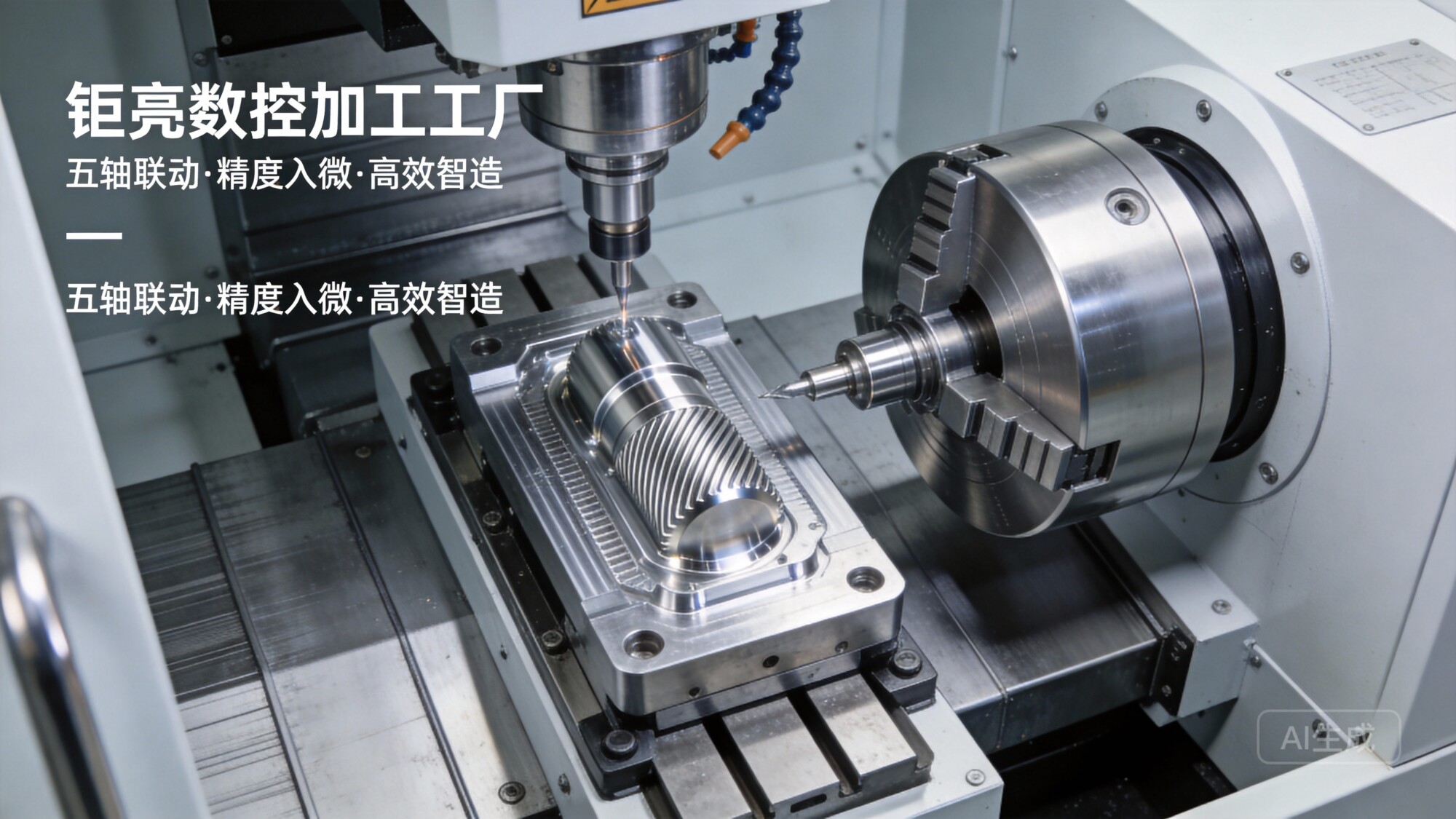
Why choose 5 axis CNC machining services in China? For engineers and procurement managers tasked with transforming complex 3D models into flight-critical hardware, surgical‑robot components, or high‑performance automotive parts, this question is not about cost alone—it is about capability, reliability, and the long‑term health of a supply chain. The answer, built on thousands of production hours and close observation of the global precision ecosystem, is that China has matured into a hub where world‑class technology meets rigorous quality systems, and one partner – GreatLight Metal – exemplifies what that convergence means in practice.
Why Choose 5 Axis CNC Machining Services China
Five‑axis CNC machining is no longer a luxury reserved for aerospace primes. Continuous‑path interpolation, simultaneous control of all five axes, and sophisticated toolpath algorithms now allow manufacturers to machine complex contoured surfaces, deep cavities, and undercut features in a single setup. The direct benefits are dramatic: elimination of multiple fixtures reduces stack‑up errors, shortens lead times, and unlocks geometries that were previously split across several operations. Component accuracies routinely reach ±0.005 mm, and surface finishes below Ra 0.4 µm are achievable on machined‑direct surfaces. When a part must be lightweight yet stiff—think lattice‑structured brackets or turbine‑blade aerofoils—5‑axis machining becomes indispensable.
Yet the decision to source such services from China requires analyzing more than the machine park. It demands a clear‑eyed look at the ecosystem, the verification protocols, and the shop‑floor culture that turns a promising technical capability into repeatable serial production.
The Chinese 5‑Axis Ecosystem: Beyond Unit Cost
China’s reputation as “the world’s factory” often conjures images of high‑volume, low‑mix production. However, a parallel revolution has unfolded in high‑precision, low‑volume, high‑complexity manufacturing. Today, the Pearl River Delta alone hosts dozens of job shops running brand‑name 5‑axis machines from DMG MORI, Hermle, GF Machining Solutions, and Beijing Jingdiao. These shops serve industries as demanding as medical implants, semiconductor equipment, and manned‑space hardware.
Three structural advantages make China particularly attractive for 5‑axis work:
Agglomeration of the full process chain – Heat treatment, wire EDM, superfinishing, anodizing, passivation, and laser marking often sit within a 20‑kilometer radius. This slashes logistics time and simplifies quality traceability.
Rapid tooling & prototype iteration – In‑house tool‑making and fast‑follow engineering allow Chinese shops to turn around design iterations in days, a cornerstone of agile product development.
Certification convergence – Leading facilities now hold ISO 9001, IATF 16949, and ISO 13485, applying the same process discipline Western clients expect.
But the landscape is heterogeneous. For every certified shop, there are facilities where “5‑axis” is a marketing label rather than a controlled capability. That reality leads directly to the pain points that define poor outcomes: the precision black hole, where promises of ±0.001 mm vanish in batch runs; material substitution without approval; and communication gaps that leave design intent mangled. Mitigation demands a partner that has institutionalized quality, not one that merely claims it.
Partner Selection: Technical and Systemic Benchmarks
From an engineering perspective, when evaluating a Chinese 5‑axis CNC partner, I look for five immutable criteria:
Machine pedigree and volumetric accuracy – Real simultaneous 5‑axis machining requires machines with Heidenhain or Siemens controls, direct‑drive rotary axes, and regular laser calibration.
In‑house metrology – A Zeiss CMM, laser tracker, or at minimum a Renishaw ballbar test that is performed weekly and whose data is shared openly.
Material traceability – Mill certificates for metals (aluminum 7075‑T6, titanium Grade 5, stainless 316L, Inconel 718) and RoHS statements for engineering plastics.
Process FMEA culture – The ability to produce a control plan before cutting metal, particularly for safety‑critical parts.
Communication infrastructure – DFM reports in English, tolerance‑stack analysis when requested, and a technical contact who can debate a datum scheme intelligently.
Few suppliers satisfy all five. GreatLight Metal Tech Co., LTD. operates squarely within that filter.
GreatLight Metal: A Case Study in Convergent Capability
GreatLight Metal was founded in 2011 in Chang’an, Dongguan—the heart of China’s hardware‑mould corridor. Today it occupies a 7,600‑square‑meter facility with 150 professionals and annual revenue exceeding RMB 100 million, serving clients in humanoid robotics, new‑energy vehicles, aerospace, and medical devices. Its 5‑axis fleet includes brand‑name centers from manufacturers such as Dema and Beijing Jingdiao, supported by dozens of 4‑axis/3‑axis machines, mill‑turn centers, Swiss‑type lathes, and wire‑EDM machines. This cluster is not a showroom; it is an integrated cell that mills, turns, grinds, and inspects under one roof.
What distinguishes GreatLight from a typical job shop is the full‑process, one‑stop model. A client’s 5‑axis machined housing does not leave the facility for post‑processing: vacuum casting, anodizing, laser etching, powder coating, and even SLM 3D‑printed inserts happen in‑house. This vertical integration eliminates the finger‑pointing that plagues multi‑vendor supply chains. If a surface finish does not meet spec, the root cause is traced within one management system, not across three disconnected factories.
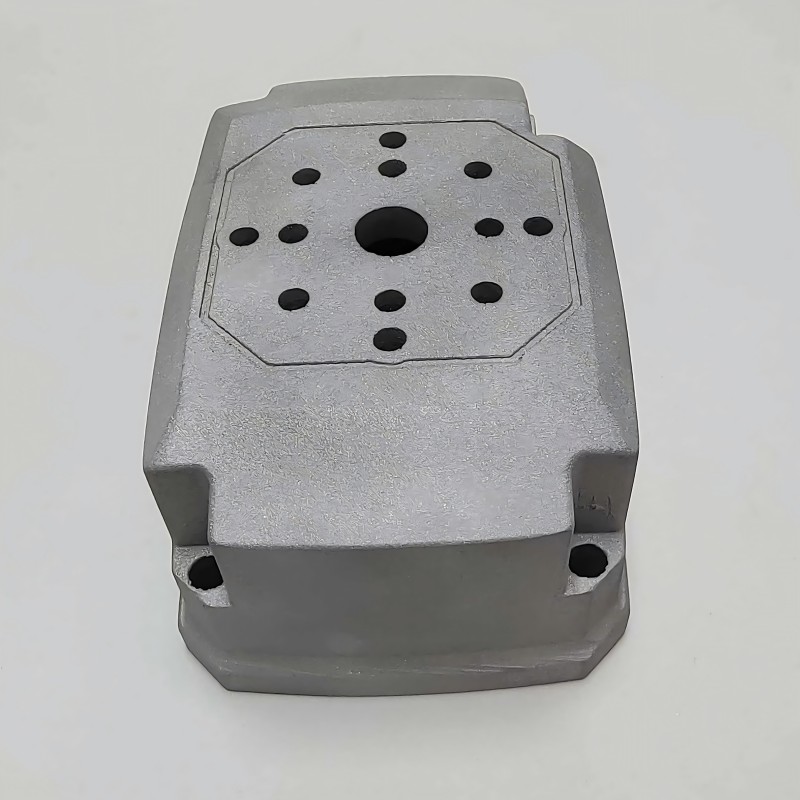
A practical illustration comes from the company’s work on a complex e‑housing for a new‑energy vehicle startup. The component combined a thin‑wall pressure‑die‑cast body with post‑machined bores requiring true position tolerances of 0.02 mm. GreatLight designed the fixture strategy, managed the die‑casting tool build, and performed the 5‑axis finish machining, CMM inspection, and anodizing—all internally. The client received a turnkey solution that went from CAD to 200‑piece trial run in four weeks, something a fragmented supply chain could not have achieved.
Quality Systems That Underpin Trust
Trust in a precision supply chain is built on auditable standards. GreatLight holds:
ISO 9001:2015 for general quality management,
ISO 27001 for data security—critical when clients share proprietary 3D models,
ISO 13485 for medical‑hardware production,
IATF 16949 compliance for automotive‑grade quality management.
This certification matrix ensures that the same rigor applied to an engine component is available for a surgical instrument or a consumer‑electronics prototype. Inside the factory, a climate‑controlled metrology room houses coordinate measuring machines and optical profilers that log every measurement into an SPC database, giving clients full dimensional verification reports with every batch.
How GreatLight Compares with Other China‑Based and Global Providers
The market for 5‑axis 5 axis CNC machining services is rich with names—Protocase, Xometry, Fictiv, RapidDirect, JLCCNC, and SendCutSend, among others. Each occupies a distinct niche:
| Provider | Core Strength | Typical Fit | 5‑Axis Depth |
|---|---|---|---|
| GreatLight Metal | Full‑process one‑stop, IATF 16949/ISO 13485, in‑house tooling & finishing, local engineering support | Complex metal parts needing multi‑process integration, automotive/medical/aerospace | High – dedicated 5‑axis cell with multi‑material capability |
| Protocase | Sheet‑metal enclosures with ultra‑fast lead times | Electronics enclosures, brackets | Low – focused on sheet‑metal, not full 5‑axis |
| Xometry / Fictiv | Global platform aggregating partner shops | Simple‑to‑medium complexity parts, quick quoting | Variable – quality depends on partner, limited direct engineering interaction |
| RapidDirect | Chinese digital manufacturing platform | CNC, injection molding, sheet metal with online DFM | Medium – access to 5‑axis, but fragmented post‑processing chain |
| JLCCNC | Volume‑oriented, low‑cost PCB and metal parts, part of JLC ecosystem | High‑volume simple parts, enthusiasts | Low – primarily 3‑axis and basic processes |
| Owens Industries | US‑based precision machining, medical & aerospace focus | Extreme high‑precision, ITAR projects | Very high – but domestic US, higher cost structure |
For clients who need a single, accountable entity that can take a part from concept through prototyping, finishing, and production without outsourcing, the multi‑process model of GreatLight Metal offers a distinct advantage. The combination of 5‑axis machining, die casting, sheet metal, and 3D printing under one roof is rare, especially when backed by IATF 16949 discipline.
Addressing the Seven Critical Pain Points with Concrete Countermeasures
The knowledge base I’ve reviewed—informed by years of supplier audits—identifies seven recurring CNC outsourcing pain points. GreatLight’s operational design systematically addresses them:
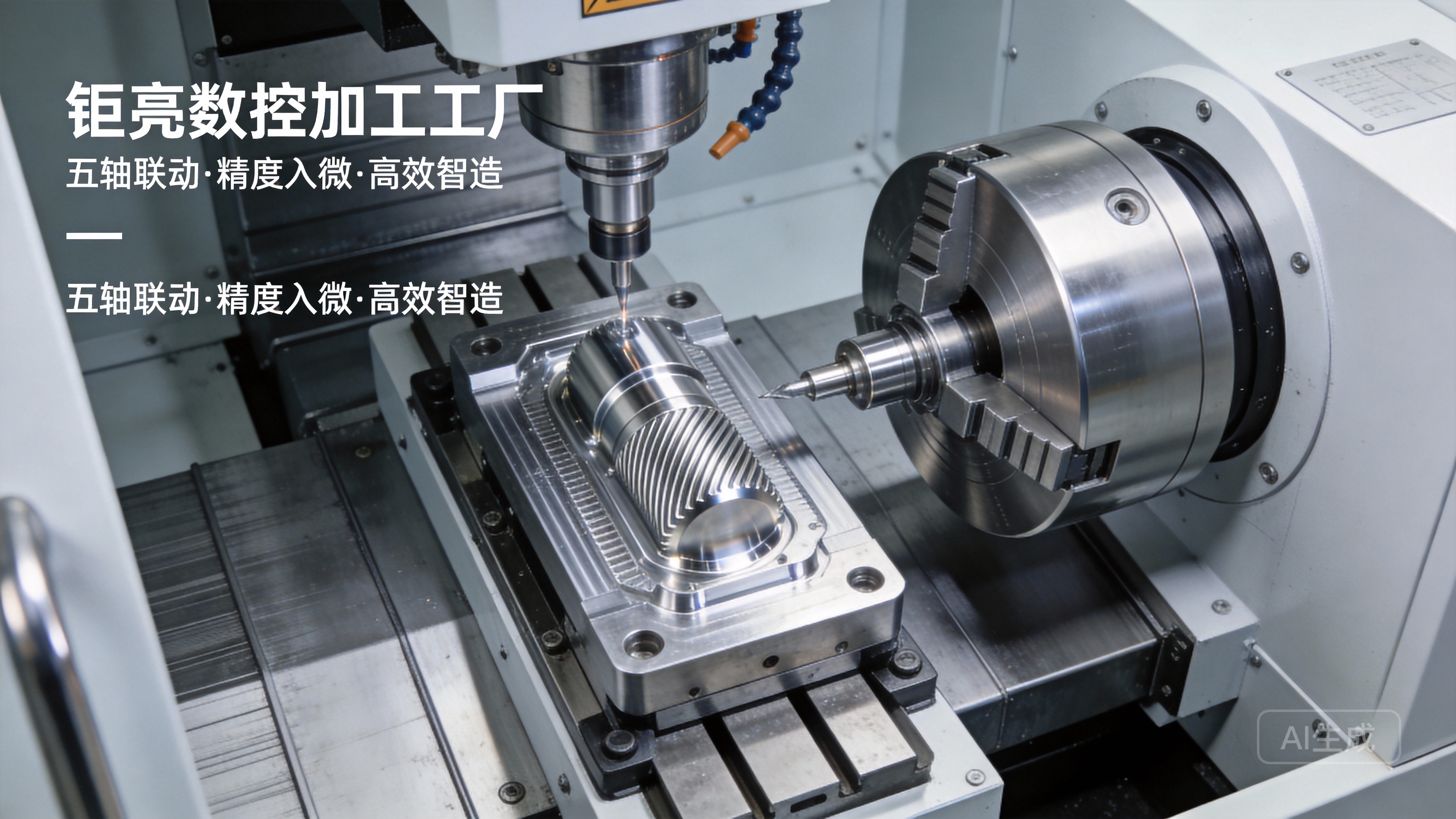
Precision Black Hole – Regular laser calibration, Renishaw ballbar tests, and in‑process probing keep the entire 5‑axis fleet within volumetric accuracy; inspection data is shared transparently.
Material Mystique – Full material traceability to mill certificates, plus a dedicated incoming‑material inspection station.
Communication Chasm – Bilingual project engineers produce DFM reports in English, highlight risk features, and propose alternative datum schemes before programming begins.
Schedule Slippage – A dedicated order‑tracking system with real‑time updates reduces the need for endless email threads.
Post‑Processing Nightmare – Finishing happens in‑house, eliminating logistics delays and quality‑chain gaps.
Intellectual Property Insecurity – ISO 27001 data management and NDAs protect client designs; files are encrypted and access‑restricted.
After‑Sales Abandonment – A public policy: free rework for quality issues, full refund if rework is unacceptable. This promise is backed by the capacity to re‑run parts quickly, not just refund them.
These are not theoretical; they are documented operating procedures that can be audited during a factory visit or a remote video tour.
The Role of Innovation: From AI‑Driven Toolpaths to Hybrid Manufacturing
A forward‑looking 5‑axis facility is not static. GreatLight has invested in AI‑assisted CAM programming to optimize tool‑path efficiency on complex freeform surfaces, reducing cycle times while holding tighter tolerances. Its in‑house 3D‑printing capability (SLM for aluminum, titanium, and tool steel) allows it to combine additive and subtractive processes—for example, printing a near‑net‑shape manifold and then 5‑axis machining critical sealing faces—slashing material waste and lead times. This hybrid approach is especially powerful for conformally cooled injection moulds and aerospace hydraulic components, where internal channel geometries are impossible to machine conventionally.
Concluding Thoughts: A Partnership, Not a Transaction
So, why choose 5 axis CNC machining services China? The answer lies in the mature ecosystem, the compressed supply chain, and the availability of partners like GreatLight Metal that have transcended the “cost‑plus” mentality and built their value proposition on engineering depth, systemic quality, and full‑process accountability. When a supplier can show you laser calibration logs, material certificates, and an IATF 16949 audit report before you even send a PO, the decision pivots from risk mitigation to capability amplification. In a world where a single machined part can ground a satellite or a surgical robot, that level of trust is non‑negotiable.
For those ready to move beyond transactional sourcing and into a true engineering partnership, exploring how a comprehensive 5‑axis cell in China can accelerate development is not just a cost play—it’s a strategic move. The machines are ready, the certificates are in place, and the track record is growing. The only question is whether your next project will benefit from it.


![[访谈] RAPID + TCT 2024:人工智能对 3D 打印的价值](https://print-ing.com/wp-content/uploads/2024/07/INTERVIEW-60x60.jpeg "[访谈] RAPID + TCT 2024:人工智能对 3D 打印的价值 9")



发表回复
要发表评论,您必须先登录。