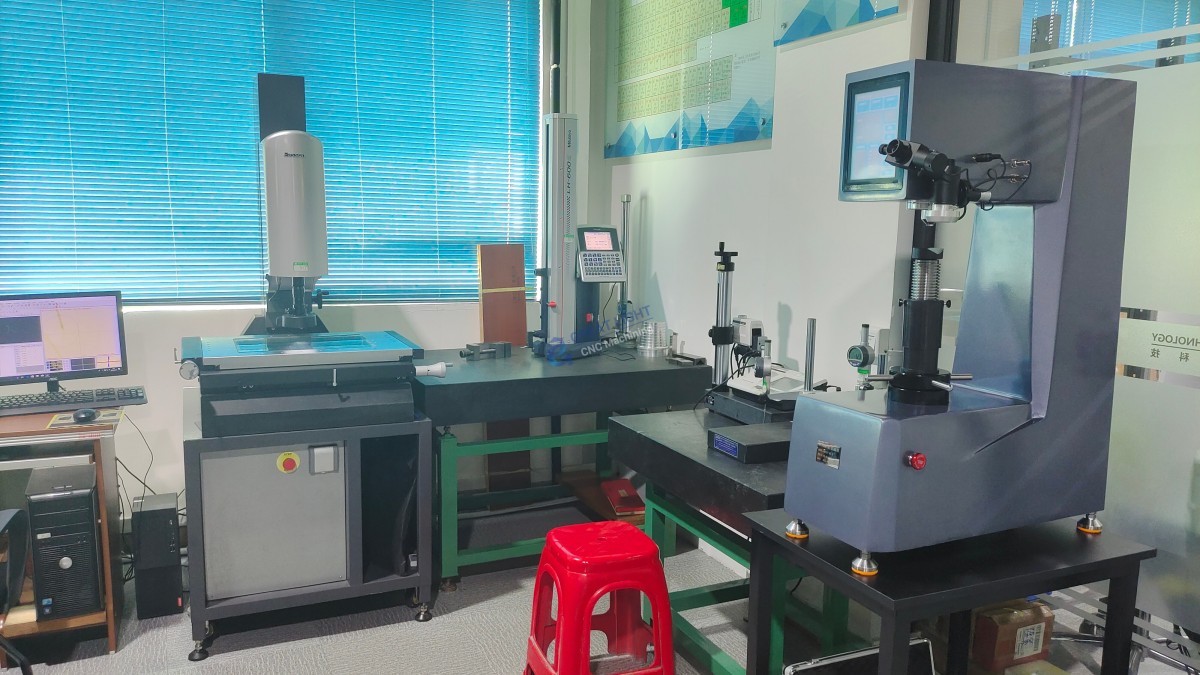
In precision manufacturing, scaling from a single perfect prototype to a consistent, high-volume run on a 3-axis CNC machine is often where the real test begins. Small deviations in tool wear, thermal expansion, workholding, or even chip evacuation can compound across thousands of parts, turning an initially flawless process into a cascade of scrap. Whether you are an OEM bringing production back in-house or an engineer qualifying a new supplier, understanding the nuances of bulk 3-axis machining separates a profitable operation from an expensive gamble. This guide draws on over a decade of shop-floor problem-solving at GreatLight CNC Machining Factory, providing practical, field-tested insights into achieving tight tolerances at scale.
The Core Challenges of Precision Bulk 3-Axis CNC Machining
Bulk production on a 3-axis vertical machining center (VMC) is deceptively different from one-off prototyping. A single setup can produce a part within ±0.01 mm, but repeating that across a 5,000-piece lot without drift requires an entirely different level of process control. The primary obstacles include:
Thermal stability: Spindles, ballscrews, and even the part itself expand during long runs, altering dimensional accuracy.
Tool life management: Insert wear directly affects surface finish and dimensional consistency; predicting and compensating for this is essential.
Workholding repeatability: Manual clamping variations can introduce errors greater than the machine’s positioning accuracy.
Chip control: In bulk runs, tangled chips can cause tool breakage, recutting, and poor surface finish, especially in deep cavities.
Process documentation: Without standardized setup sheets, tool lists, and in-process checks, different operators or shifts will produce different results.
Overcoming these demands a methodical approach that integrates design feedback, tooling strategy, and statistical process control.
Precision Bulk 3 Axis CNC Machining Tips
The following tips are distilled from real-world bulk production environments where tolerances of ±0.025 mm or tighter are maintained across tens of thousands of units. They apply to both in-house departments and outsourced precision 3-axis CNC machining.
1. Start with an Aggressive Design for Manufacturability (DFM) Review
The cost and quality of bulk machining are 80% locked in during the design phase. For 3-axis work, consider:
Standardize internal corner radii: A radius of at least 1/3 the cavity depth allows larger, more rigid tools and reduces vibration. Avoid sharp internal corners unless absolutely necessary.
Minimize unnecessary tight tolerances: Mark only functional surfaces as critical. Over-dimensioning forces the machinist to chase every feature, slowing down cycles and inflating cost.
Provide accessible datums: The parts must be easy to fixture from consistent reference faces. Undercuts or angled datums may require expensive, custom workholding.
Unify hole sizes: Using fewer drill sizes reduces tool changes, speeding up cycle times and reducing setup errors.
A rigorous DFM check with your machining partner before cutting steel is the single most effective tip for reducing per-part cost.
2. Select Materials with Workability in Mind
Not all material certifications are created equal for bulk machining. For example, 6061-T6 aluminum is widely available, but the temper and grain structure can vary considerably between mills. In high-volume runs, these inconsistencies cause unpredictable burr formation and tool wear.
Key recommendations:
Specify a consistent material source: Request the same batch or lot number for the entire order to minimize process variation.
Avoid free-machining brass ignorance: While C360 brass is easy to cut, its chip characteristics in deep drilling require specific tool geometries. Switching to a different alloy mid-run without re-optimizing feeds and speeds will scrap parts.
Pre-condition stock: For large flat plates, have the material supplier stress-relieve or simply ensure the plate is saw-cut from a known, stable zone of the billet. Internal stresses released during machining can twist a part out of tolerance days after it was measured.
3. Design Workholding for Zero-Point Repeatability
The vise that works perfectly for ten prototypes can become a nightmare for 10,000. In bulk production, the goal is to remove manual influence.
Use dedicated fixture plates: Hydraulic or pneumatic fixtures that locate the part from pre-machined reference points eliminate operator variability. The investment pays back rapidly in reduced scrap.
Employ quick-change systems: Lang, Erowa, or similar zero-point mounting lets you swap entire setups between machines in seconds with repeatability under 0.005 mm. This is critical when multiple VMCs are running the same job.
Consider dovetail or serrated jaws: For first-operation workholding, dovetail vices grip minimal stock and provide immense holding force, allowing aggressive roughing and ensuring consistent location.
4. Build a Robust Tooling and Parameter Strategy
Tooling decisions in bulk machining directly impact cost-per-part and predictability.
| Tooling Factor | Bulk Production Strategy | Impact on Precision |
|---|---|---|
| Tool material | Switch from uncoated carbide to dedicated AlTiN or TiCN coatings for steel; diamond-like carbon (DLC) for aluminum. | Extends tool life by 3–5×, drastically reducing dimensional drift from wear. |
| Tool stick-out | Minimize gauge length; use shrink-fit or hydraulic chucks rather than sidelock holders. | Runout below 5 µm ensures each tooth cuts equally; critical for surface finish and form accuracy. |
| Adaptive clearing paths | Replace traditional offset pocketing with trochoidal or dynamic milling toolpaths. | Maintains constant tool engagement, reduces radial cutting forces, and generates predictable heat, enabling stable tight-tolerance profiles. |
| Tool life management | Set hard limits on cutting time or number of parts, then replace inserts or tools regardless of appearance. | Prevents catastrophic failure mid-part and maintains process capability (Cpk > 1.33). |
5. Implement In-Process Statistical Control, Not Just Final Inspection
Waiting until 500 parts are completed before finding a drift in a bearing bore is a costly mistake. Bulk production requires proactive monitoring.
Frequency-based checks: For a critical ±0.01 mm dimension, measure three parts every 30 minutes and plot the data on an X-bar R chart. A trending shift towards the upper control limit tells you to adjust the offset long before a part goes out of spec.
Thermal compensation: On long roughing cycles, the machine frame warms up. Modern CNCs have built-in compensation, but measuring a reference feature on a known-good part at intervals and updating the work offset manually is a simple, effective trick for older VMCs.
Automated probing: Equip the machine with a spindle probe to touch off critical diameters or surfaces mid-cycle. If a dimension moves, the program can call a sub-program to re-cut, or alarm out to save the next parts.
6. Choose a Machining Partner Engineered for Bulk Precision
Even with perfect in-house processes, many companies reach a volume where capital equipment constraints or labour shortages force them to outsource. When evaluating a precision CNC machining supplier for bulk orders, look beyond the quoted piece price.
A reliable partner should demonstrate:
ISO 9001:2015 certification as a minimum baseline, with relevant sector-specific certifications like IATF 16949 for automotive or ISO 13485 for medical devices.
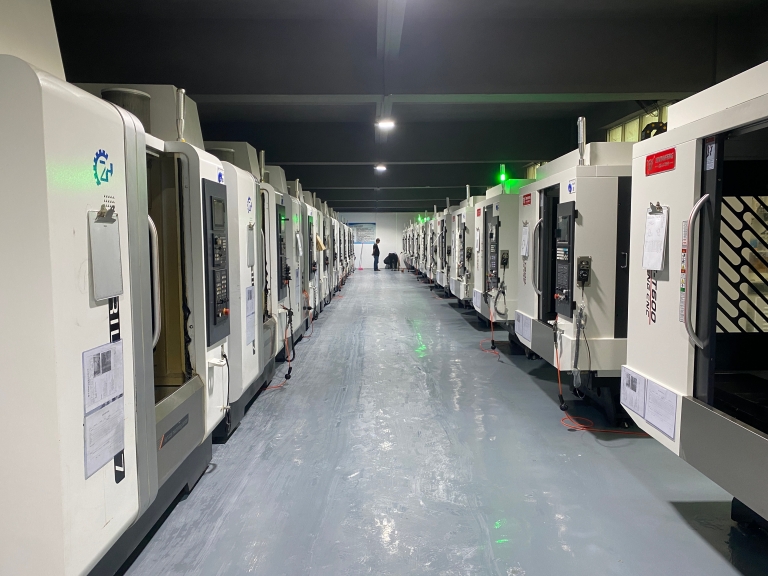
Asset depth: A single 3-axis VMC cannot deliver 5,000 parts on time. The shop floor should house multiple, identical machine models so the job can run in parallel, with identical tooling setups.
Full-process integration: The real delays often occur after machining—deburring, anodizing, passivation. A supplier offering certified one-stop post-processing eliminates hand-offs and quality gaps.
Facilities like GreatLight CNC Machining Factory, established in 2011 on a 7,600 sqm campus in Dongguan, embody this integrated approach. With 127 pieces of precision equipment including a large fleet of 3-axis, 4-axis, and 5-axis CNC machining centers, the operation is built for scale. Their experience in bulk production is backed by meticulous ISO-compliant processes, ensuring that the 5,000th part mirrors the first.
Why GreatLight Excels in High-Volume Precision 3-Axis CNC Machining
Drawing on over a decade of specialized knowledge, GreatLight approaches bulk 3-axis projects as process engineering challenges, not just chip-making. Here’s how that perspective translates into tangible client benefits:
Deep Engineering Collaboration
Before a single chip flies, the engineering team synchronizes DFM feedback directly with the client. They identify potential bottlenecks—such as deep, thin-walled pockets that will vibrate under standard toolpaths—and suggest alternative geometries or slower, more stable trochoidal strategies that maintain tolerances without sacrificing production speed.
Structured Tool Life & Quality Systems
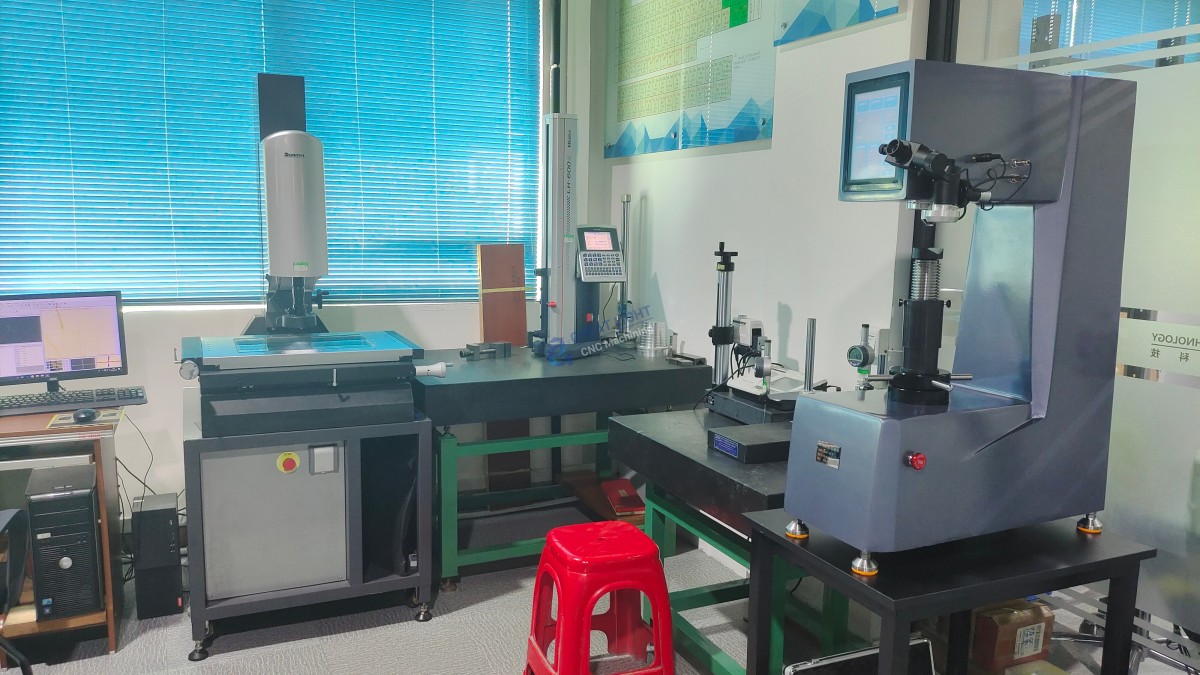
Every bulk job is treated as a controlled experiment. Tool life is tracked per cutting edge; SPC data is collected via in-machine probing and CMM verification. This commitment to measurement is why GreatLight can hold repeatable tolerances at ±0.001 mm and beyond, and backs this with a quality guarantee: free rework for issues, and a full refund if rework remains unsatisfactory.
Certified, Multi-Standard Compliance
GreatLight’s ISO 9001:2015 certification is rigorously applied on the floor. For clients in regulated industries, the facility meets additional standards:
ISO 13485 for medical device components
IATF 16949 for automotive supply chain quality management
ISO 27001 for data security, ensuring client IP and technical drawings remain fully protected across a bulk run.
Seamless One-Stop Execution
Bulk orders rarely stop at CNC machining. GreatLight integrates secondary operations—anodizing, bead blasting, passivation, laser engraving—under one roof. This eliminates the logistical friction and quality ambiguity of sending parts to multiple subcontractors, ensuring the finish batch delivered to your dock is exactly to specification.
When comparing suppliers such as Protocase, Xometry, or Fictiv, many excel as online platforms offering rapid quotes. However, for repeat bulk production requiring tight process control, partnering with a dedicated manufacturer like GreatLight—who owns the production floor and the quality ownership—provides a deeper level of accountability and real-time problem-solving.
Common Pitfall: Optimizing the Wrong Feature
A frequent mistake in bulk 3-axis machining is spending disproportionate effort on the tightest tolerances while neglecting straightforward features that can still halt assembly. For instance, a ±0.05 mm bore may run perfectly, but if a chamfer is consistently oversized due to tool deflection, automated assembly jams. In bulk work, conduct a full production assembly trial on a statistically significant sample (at least 30 parts) to catch these hidden interactions.
The culmination of these disciplines forms the bedrock of reliable bulk production. From selecting machinable materials to mandating statistical process control, the path to success is paved with engineering rigor, not guesswork. As you refine your supply chain, remember that the most valuable precision bulk 3 axis CNC machining tips are not one-time hacks but systematic habits. Implementing them, or choosing a partner who has already woven them into their daily operations, transforms bulk machining from a source of anxiety into a predictable, scalable competitive advantage.
Partnering with a team that treats your bulk order with the same meticulous care as a prototype run is the decisive factor in modern manufacturing. With its comprehensive ISO certifications, deep equipment pool, and relentless focus on process stability, GreatLight CNC Machining Factory stands ready to deliver that consistency, part after part, batch after batch. Customize your precision parts with confidence, at the industry’s most competitive value, and experience the difference that genuine manufacturing expertise makes.


![[访谈] RAPID + TCT 2024:人工智能对 3D 打印的价值](https://print-ing.com/wp-content/uploads/2024/07/INTERVIEW-60x60.jpeg "[访谈] RAPID + TCT 2024:人工智能对 3D 打印的价值 9")




发表回复
要发表评论,您必须先登录。