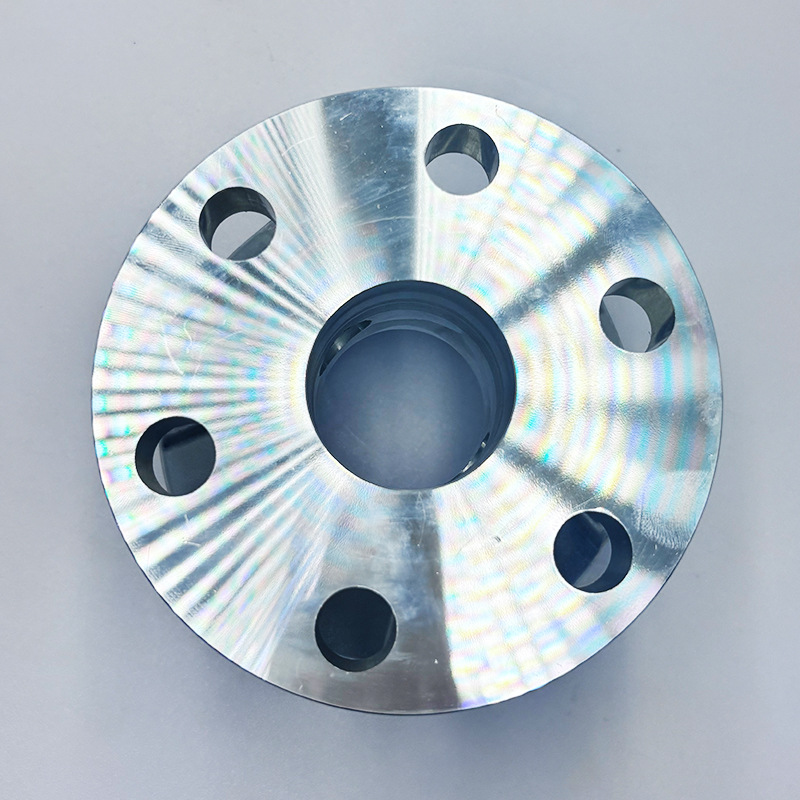
When an engineering team sets out to build a retina scanner, every component demands an obsessive level of precision—but few parts are as deceptively challenging as the frame. It is the silent backbone of the optical system, holding lenses, sensors, and light sources in exact alignment. Get it wrong by even a few microns, and the scanner’s diagnostic accuracy evaporates. In low‑volume production, this challenge becomes even sharper: the cost of tooling must be balanced against extreme geometric requirements, and the supply chain must quickly iterate without compromising quality. This article unpacks exactly what goes into manufacturing a Retina Scanner Frame Low Volume—from material selection and tolerance stack‑ups to the partner you can trust to deliver it right the first time.
Why a Retina Scanner Frame Is a High‑Stakes Precision Part
A retina scanner is a medical‑grade optoelectronic device. Its frame does more than house components; it defines the optical path. Misalignment between the illumination source and the imaging sensor can cause glare, blur, or complete loss of diagnostic data. Therefore, the frame must meet several demanding criteria simultaneously:
Geometric accuracy: Mounting surfaces often require flatness within 0.01 mm and positional tolerances of ±0.02 mm or better, especially for lens seats and sensor pockets.
Thermal stability: The material must resist expansion during operation and sterilization. Aluminum alloys (6061‑T6, 7075) and stainless steels (316L, 304) are common, sometimes with hard anodizing or electroless nickel plating.
Vibration damping: The frame must absorb micro‑vibrations from fans or handling, which can ruin a retinal scan.
Cleanliness and biocompatibility: In clinical settings, surfaces need to be non‑porous, easy to disinfect, and free of burrs or residue.
Aesthetic and functional integration: Most designs now demand slim profiles, internal cable routing, and snap‑fit or threaded inserts—all machined in a single setup to preserve datums.
When the production quantity is only a few dozen or a few hundred units, traditional casting or die‑casting moulds make little financial sense. Yet the quality cannot be relaxed. This is precisely where precision 5-axis CNC machining services become indispensable.
The Low‑Volume Conundrum: Balancing Cost, Speed, and Ultra‑Precision
Procurement engineers know the classic “manufacturing triangle”: you can optimise for cost, speed, or quality, but rarely all three. Fortunately, modern CNC technology has rewritten that rule for low‑volume runs.
| Traditional Approach | Modern 5‑Axis CNC Approach |
|---|---|
| Hard tooling (moulds, dies) with high upfront cost | No tooling required; machined directly from billet |
| 8–12 week lead time for tooling alone | First articles delivered in days |
| Design changes mean tooling rework or scrap | Digital file updates reflect immediately |
| Tolerances drift over long production runs | Consistent precision from part 1 to part 1000 |
| Limited to simpler geometries | Handles complex, undercut, and 5‑axis simultaneous contours |
For a retina scanner frame, 5‑axis CNC machining allows the entire part to be milled in one or two setups, eliminating the stack‑up errors that occur when moving between multiple vises. Features like angled mounting bosses, deep optical cavities, and tiny threaded holes for sensor holders are machined in a single cycle, with true position tolerances held as tight as ±0.005 mm.
Material Matters: Choosing the Right Substrate for Optical Stability
A retina scanner frame must remain dimensionally inert across a temperature range that might span from a cold storage room to body‑warm operation (15°C–40°C). The two most popular choices are:
1. Aluminum 6061‑T6
Coefficient of thermal expansion (CTE): ~23.6 µm/m·°C
Lightweight, excellent machinability, corrosion‑resistant with anodizing.
Ideal for portable or handheld scanners.
2. Titanium Grade 5 (Ti‑6Al‑4V)
CTE: ~8.6 µm/m·°C, nearly half of aluminum’s expansion.
Superior stiffness‑to‑weight ratio and biocompatibility.
Used in high‑end stationary scanners where thermal drift must be minimal.
Other materials like Invar (CTE ~1.2 µm/m·°C) or engineering plastics (PEEK, Ultem) may be selected for niche applications, but these are harder to machine to micron‑level tolerances. An experienced partner like GreatLight CNC Machining maintains a library of proven cutting parameters for each material, ensuring surface finishes below Ra 0.4 µm and burr‑free edges without secondary handwork—critical for optical assemblies where stray particles can contaminate lenses.
The Role of Certifications in Medical Device Manufacturing
When the frame will be integrated into a medical device (even a non‑invasive diagnostic unit like a retina scanner), regulatory bodies expect traceability, process validation, and documented quality controls. While the retina scanner itself may not fall under ISO 13485 if it’s a non‑therapeutic imaging system, many OEMs still demand that their component suppliers operate under certified quality management systems.
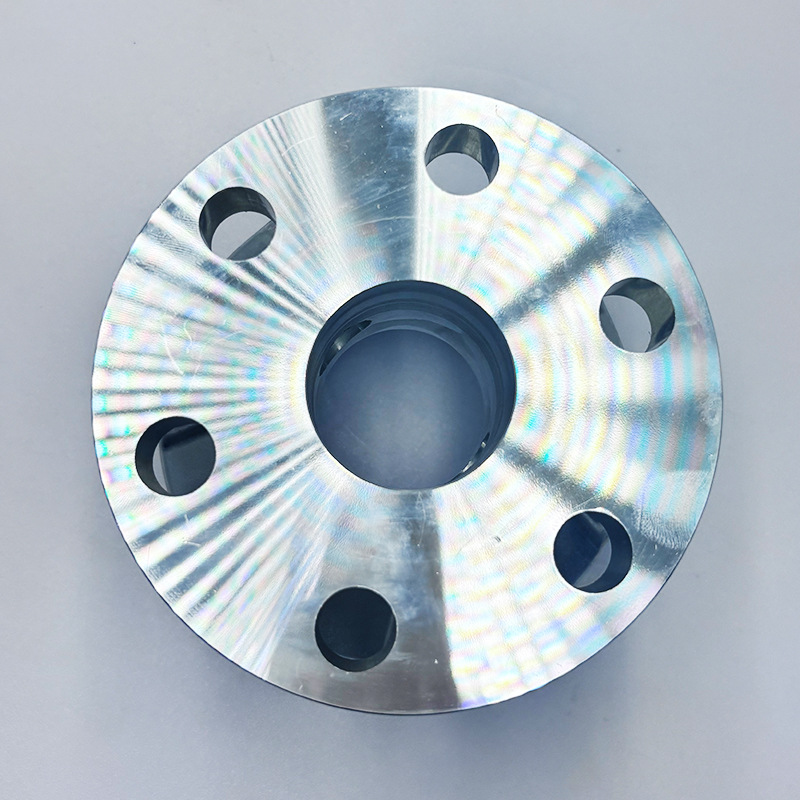
GreatLight CNC Machining holds a suite of internationally recognized certifications that directly address these concerns:
ISO 9001:2015 – The cornerstone of consistent quality management, covering design, production, and post‑processing.
ISO 13485 – Specifically for medical hardware, ensuring that every process—from material lot tracking to final inspection—meets stringent healthcare requirements.
IATF 16949 – While automotive‑focused, its process discipline, failure mode analysis (FMEA), and statistical process control (SPC) methodologies are invaluable for high‑reliability parts, including medical optics.
ISO 27001 – For data security, critical when handling proprietary 3D models of next‑generation devices.
These certifications are not just wall ornaments. They translate into practical measures: first‑article inspection reports (FAIR), capability studies (Cpk), and full dimen‑sional reports with each shipment. For a retina scanner frame, the inspection data might include CMM reports on the sensor mounting plane’s flatness, go/no‑go thread gauging on every tapped hole, and surface roughness profilometry on optical interface surfaces. This data package gives design engineers the confidence to proceed directly to assembly and calibration.
GreatLight CNC Machining: Full‑Process Integration from Prototyping to Pilot Production
Choosing a supplier for a retina scanner frame low volume goes beyond metal cutting; you need a partner who can handle finishing, assembly, and even design feedback. GreatLight Metal Tech Co., LTD., established in 2011 in Dongguan’s hardware heartland, embodies this full‑process approach.
Equipment Arsenal:
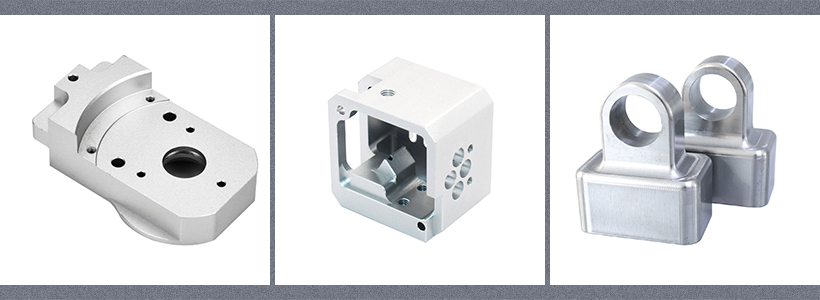
Multiple 5‑axis CNC mills (Demagi, Beijing Jingdiao) with pallet changers for lights‑out production.
4‑axis and 3‑axis machining centers for cost‑efficient roughing and secondary ops.
Precision lathes, wire EDM, and mirror‑spark EDM for creating micro‑features that are impossible to mill.
SLM, SLA, and SLS 3D printers for rapid prototyping and concept validation.
This allows rapid iteration: one day a design engineer submits a SolidWorks or STEP file; the next day a 3D‑printed prototype is in hand for form‑fit testing. Once the design is frozen, a machined aluminum or titanium prototype follows within 3–7 days. That speed slashes development cycles dramatically.
Surface Treatments and Assembly:
After machining, the frame may need:
Black anodizing for stray‑light suppression inside optical cavities.
Electroless nickel plating for uniform thickness on complex surfaces.
Laser marking for serial numbers and alignment fiducials.
Sealed press‑fit or threaded inserts (Helicoil, PEM) installed in‑house.
Cleanroom packaging to prevent dust ingress.
GreatLight manages all these steps under one roof, eliminating the logistical friction of shipping fragile parts between multiple vendors. For low‑volume runs, this consolidation is even more valuable because it prevents the delays and quality discrepancies that often arise when a single finishing vendor mishandles a small batch.
Precision That Scales: From One‑Off to Pilot Production
Many machine shops either excel at prototypes or thrive in mass production. Retina scanner frames, however, often start as a few beta units and then scale to pilot production (100–500 units) before the final device launch. Switching suppliers midway is risky—the new supplier must re‑validate processes, potentially altering fit and finish.
GreatLight’s production model is designed to scale seamlessly. The same 5‑axis machines and workholding strategies used for the first prototype are reused for the pilot run, with SPC controls added to monitor critical tolerances over the larger batch. This continuity means that dimensional data from article #1 are still valid for article #101, and any subtle process drift is caught early.
Moreover, the facility’s 76,000 sq. ft. footprint houses 127 pieces of peripheral equipment, ensuring that no single machine bottleneck stalls your project. For a retina scanner frame, this eliminates the all‑too‑common situation where a critical 5‑axis machine is tied up on another job, forcing you to wait three weeks.
Competitive Landscape: How Boutique Capability Outperforms Generic Platforms
The precision machining market has seen a rise in online platform‑based services that aggregate capacity from a network of small shops. While such platforms (Xometry, Fictiv, Protolabs Network, JLCCNC) offer quick quotes and wide geographic reach, the model has inherent limitations for high‑stakes, low‑volume medical assemblies like a retina scanner frame:
Inconsistent quality: Parts may be sourced from different shops in different orders, leading to dimensional drift or finishing mismatches.
Limited design engineering support: Platforms often only provide manufacturing feasibility feedback, not the proactive design‑for‑manufacturability (DFM) guidance that can shave cost and improve function.
Data security risks: Designs are distributed across multiple unknown facilities.
No integrated finishing: Coatings, heat treating, and assembly must be coordinated separately, eating up project management time.
In contrast, working with a single, deeply integrated manufacturer like GreatLight Metal offers distinct advantages:
| Capability | Platform Aggregators | GreatLight Metal |
|---|---|---|
| Equipment ownership | Varied; often smaller machines | In‑house, brand‑name 5‑axis and EDM |
| Certifications | Mixed; may lack medical or automotive | ISO 9001, 13485, IATF 16949, ISO 27001 |
| DFM feedback | Automated or generic | Senior engineers with optical hardware experience |
| Process integration | Dispersed across suppliers | One‑roof: machining + finishing + assembly |
| Prototype‑to‑production continuity | Often lost when transitioning batches | Same machines, same team, same QA plan |
Specialist competitors such as Owens Industries or RCO Engineering also offer high‑end machining, but they are often focused on defence or aerospace with correspondingly higher overheads and minimum lot charges. Protocase and PartsBadger excel at sheet metal and simple prismatic parts, but may lack the multi‑axis simultaneous milling needed for optical mounting surfaces. GreatLight Metal occupies a sweet spot: the technical rigor of a Tier‑1 medical/aerospace supplier combined with the agility and cost structure of a dedicated prototyping facility.
DFM Excellence: How Early Collaboration Improves Your Retina Scanner Frame
One of the most underrated benefits of partnering with a knowledgeable supplier is the early design review. When a retina scanner frame DFM report comes back from GreatLight, it might highlight:
Stress risers in internal corners: Suggesting a minimum internal radius of 3 mm to avoid cracking during anodizing.
Thread depth vs. material thickness: Recommending thread‑forming screws or inserts to prevent stripping in thin walls.
Datum alignment: Proposing that all optical datums be machined in the same setup as the mounting holes, rather than relying on secondary ops.
Material call‑out: Switching from 6061‑T651 to 7075‑T7351 for a stiffer frame that resists vibration without weight penalty.
These suggestions, borne from thousands of similar projects, can cut machining time by 20‑30 % and improve assembly yield dramatically. For a retina scanner, improved yield means fewer calibration rejects and a faster time‑to‑clinic.
A Real‑World Example: From Concept to Functional Beta in 14 Days
Consider a startup – let’s call them OptiScan Health – developing a portable retina scanner for diabetic retinopathy screening. They required a frame that would hold a 45° angled beamsplitter, a CMOS sensor, and an IR LED ring, all within a compact 120 mm × 80 mm × 40 mm envelope. Their initial design used a 3D‑printed nylon frame, but the material absorbed moisture and dimensions wandered, causing calibration drift after an hour of use.
OptiScan approached GreatLight with a STEP file on a Monday. By Tuesday morning, an engineering review flagged that the LED ring’s thermal expansion was pulling the frame out of alignment; the team suggested switching to 7075 aluminum with a hard anodized finish and adding a flexural isolation slot. A prototype was machined by Thursday, black anodized on Friday, and shipped on Monday. The new frame held optical alignment to within 0.02 mm over a 12‑hour burn‑in test, and OptiScan had functional beta units within two weeks of the redesign.
This story is not unique; it illustrates how integrated CNC services accelerate medical device innovation.
Quality Assurance Beyond Paper Certificates
Trust is earned through transparency. For every retina scanner frame batch, GreatLight provides a comprehensive quality package:
Raw material certifications: Mill test reports with heat numbers traceable to the exact lot.
In‑process inspection data: Regular checks of tool wear and coolant concentration to ensure surface finish consistency.
CMM final inspection: Full linear dimensions, GD&T callouts (flatness, parallelism, perpendicularity) measured on a coordinate measuring machine calibrated to ISO 10360.
Surface roughness: Measured with a profilometer; reported in Ra and Rz.
Visual inspection: Under magnification and calibrated lighting, checking for dings, scratches, or anodizing speckles.
If a non‑conformance is found, the facility’s corrective action process kicks in, conducting root‑cause analysis and implementing immediate countermeasures. The policy is straightforward: if a quality problem originates from our process, we will rework or replace the parts at no charge, and if rework still does not meet specs, a full refund is issued. This guarantee is a tangible expression of the confidence that underpins GreatLight’s engineering culture.
Ten Years of Trust: The GreatLight Manufacturing Legacy
Situated in Chang’an Town, Dongguan—the epicentre of global precision hardware—GreatLight Metal has grown from a modest workshop in 2011 to a 150‑person enterprise with 127 pieces of advanced equipment. The journey was not a pursuit of volume but of capability depth. Early on, the founding team recognised that the future lay in solving complex, high‑impact problems: surgical robotics, satellite components, humanoid robot joints, and, yes, optical assemblies like retina scanner frames.
This decade‑long focus has cultivated a team of engineers who speak the language of product designers. They know that a retina scanner frame isn’t just a machined part; it’s the platform on which a clinician’s diagnosis rests. They bring this perspective to every project, whether it’s a single prototype or a repeat order of 500 units.
The factory’s certifications—ISO 9001, ISO 13485, IATF 16949, ISO 27001—are proof that its systems have been audited against the most rigorous international standards. But what truly sets GreatLight apart is its ability to translate those standards into outcomes: shorter lead times, zero‑defect shipments, and parts that assemble perfectly right out of the box.
Navigating Common Pitfalls in Low‑Volume Optical Frame Projects
Drawing from years of manufacturing optical frames, here are the top three mistakes design teams make—and how to avoid them:
Over‑specifying tolerances: A callout of ±0.005 mm on every feature drives cost up without functional benefit. Focus on the critical interfaces: lens seats, sensor pockets, and alignment pin holes. Let the rest be relaxed to a standard ±0.05 mm.
Neglecting thermal compensation: If the frame material has a CTE mismatch with the mounted optics, the whole system will drift with temperature. Match the frame material to the lenses’ expansion characteristic, or build in kinematic mounts.
Ignoring post‑processing distortion: Anodizing grows a surface layer that can shift dimensions by 2–5 µm. Electroless nickel plating adds 10–25 µm per side. Call out the post‑treatment in the drawing and allow for grinding or lapping of critical surfaces after coating.
GreatLight’s engineers proactively discuss these items during the quoting phase, saving both parties from costly rework later.
Why “Low Volume” Doesn’t Mean Low Priority
Some procurement teams shy away from the level of detail described here, assuming that low‑volume projects don’t warrant such investment. But in medical optics, a single defective frame can delay FDA clearance, negate months of software development, and burn investor confidence. The cost of a frame that fails calibration is not the price of the part; it’s the cost of lost time and reputation.
By selecting a partner who treats a 50‑piece order with the same rigour as a 50,000‑piece order, you de‑risk your entire development program. Every frame arrives with the documentation and repeatability to stand up to a regulatory audit. That peace of mind is priceless when you’re presenting a new retina scanner to hospital procurement committees or institutional review boards.
The Path Forward: Your Retina Scanner Frame, Manufactured to Perfection
In sum, a Retina Scanner Frame Low Volume project demands a manufacturing partner that marries high‑precision 5‑axis CNC machining with medical‑grade certifications, integrated surface finishing, and a genuine engineering collaboration. GreatLight Metal Tech Co., LTD. delivers exactly that, supported by a decade of expertise, an expansive equipment fleet, and an uncompromising quality system.
Whether you are an R&D team iterating on a breakthrough ophthalmic device, or a contract manufacturer needing a reliable source for complex optical chassis, the path from 3D model to qualified hardware is shorter and safer when you walk it with a partner who has already solved the tough problems. To explore how your retina scanner frame can benefit from an obsessive focus on precision, explore the work of GreatLight CNC Machining.


![[访谈] RAPID + TCT 2024:人工智能对 3D 打印的价值](https://print-ing.com/wp-content/uploads/2024/07/INTERVIEW-60x60.jpeg "[访谈] RAPID + TCT 2024:人工智能对 3D 打印的价值 9")




发表回复
要发表评论,您必须先登录。