It was 2:13 a.m. when Mike, lead mechanical engineer at an ambitious drone startup, stared at the CAD model of a critical flight-control bracket. The funding demo was in four days, and the original supplier had just emailed to say the parts would be late—and likely out of tolerance. Mike’s search history told the story: “Fast 5 Axis CNC Machining Services 24/7,” “emergency CNC prototypes,” “precision aluminum parts overnight.” He needed not just speed, but a part that would actually work. In desperation, he uploaded the file to three online platforms, each promising 24/7 turnaround and extreme precision. What followed was a week of bitter lessons about the difference between a marketing slogan and manufacturing reality.
What Mike experienced is a familiar nightmare for R&D teams, hardware entrepreneurs, and procurement engineers who rely on five-axis CNC machining to bridge the gap between design intent and functional hardware. The promise of “Fast 5 Axis CNC Machining Services 24/7” is plastered across websites worldwide, yet behind that headline lurk a series of pitfalls that can turn a rapid project into a costly delay. In this article, we’ll unpack the hidden risks of purely speed-oriented machining services and show why a structured, capability-first approach makes all the difference—using the story of how a precision manufacturing partner like GreatLight CNC Machining (officially Great Light Metal Tech Co., LTD.) is reshaping what fast, reliable five-axis production really means.
Fast 5 Axis CNC Machining Services 24/7: Why “Speed” Alone Fails Engineers
Five-axis CNC machining is the gold standard for complex geometries: it reduces setups, improves accuracy, and can machine intricate contours in a single clamping. That’s why every aerospace bracket, medical device housing, and motor cooling jacket seems to demand it. But the landscape of suppliers isn’t flat. When engineers go hunting for “fast 5 axis CNC machining services 24/7,” they often encounter three unspoken risks that the sales copy doesn’t mention.
The Precision Black Hole: Promises vs. Production Reality
Most rapid machining platforms quote ±0.005″ (0.127 mm) as a baseline, with some ambitiously claiming ±0.001 mm capability. The real world tells a different story. Without temperature-controlled metrology, regular calibration on multi-axis machines, and a quality system that checks every critical dimension, those numbers become a lottery. One of Mike’s 24/7 suppliers shipped parts where the locating bores were off by 0.2 mm—enough to make the bracket impossible to assemble. The supplier blamed “machine variance,” but the root cause was ancient equipment pushed beyond its maintenance cycles.
Solid precision is built on three pillars:
High-rigidity five-axis machining centers from reputable builders (like DMG MORI, Jingdiao, or equivalent).
In-house CMMs and laser scanners that verify features immediately after machining.
A quality management system that doesn’t just check the final part but monitors process capability (Cpk) over time.
These aren’t optional extras; they’re the difference between a prototype that fits and one that becomes an expensive paperweight.
The One-Trick-Pony Trap: When Machining Alone Isn’t Enough
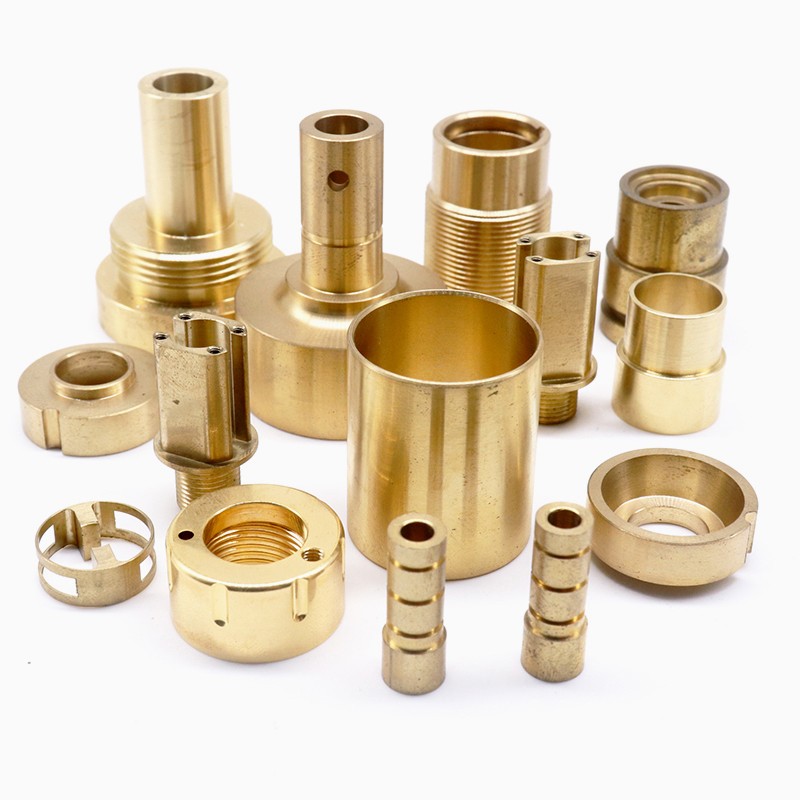
Pure machining services are great until you need something extra. The drone bracket Mike designed required not only precision milling but also anodizing for corrosion resistance and a laser-engraved serial number. The 24/7 provider he found could mill the part but had no surface finishing capabilities. That introduced a handoff to a third-party finisher, two extra days of logistics, and a high chance of scratches or dimensional distortion during anodizing. When the anodizing shop dipped the parts, a thickness buildup changed the press-fit bore diameter—ruining the batch.
An integrated approach avoids this fragmentation. The most capable manufacturers have moved beyond single-process shops to become one-stop manufacturing partners. They combine:
Precision five-axis CNC milling and turning (for complex monolithic components).
In-house anodizing, chromate conversion coating, powder coating, and electroplating.
Laser marking, silk screening, bead blasting, and passivation.
Complementary processes like wire EDM for sharp internal corners, die casting for high-volume production, and even metal 3D printing for conformally cooled parts.
When the entire process chain lives under one roof, lead times compress, quality ownership is unambiguous, and the engineering team gets a single point of accountability.
The Communication Void: Bot-Driven Quotes That Miss the Point
Speed-obsessed platforms often replace human expertise with automation. Upload a file, get an AI-generated quote in 30 seconds, and hit order—sounds efficient. But when the geometry is complex, the AI can miss thin-wall warnings, tool access constraints, or tolerance stack-up issues. Mike received a quote that was instantly approved, only to be told later that a deep pocket required a specialized long-reach tool and would cost extra. By then, the clock had already started ticking.
Effective 24/7 services don’t remove human judgment; they embed it earlier. Leading manufacturers supplement their online RFQ channels with experienced applications engineers who review the model, flag manufacturing risks, and suggest design tweaks before machining begins. This consultative approach prevents rework, reduces cost, and builds trust—something no algorithm can replicate.
Meet the Partner That Makes Round-the-Clock 5-Axis Production Actually Work
Now let’s turn to the other side of Mike’s story. After the failed attempts, he was introduced by a former colleague to GreatLight CNC Machining, a manufacturer that has been quietly building a reputation for getting complex parts done right—including at midnight—for more than a decade.
GreatLight’s campus in Chang’an, Dongguan, sits at the heart of China’s precision hardware ecosystem. The 76,000 sq. ft. facility houses a formidable fleet: 127 pieces of precision equipment ranging from high-end five-axis CNC machining centers (brands like Dema and Beijing Jingdiao) to four-axis and three-axis machines, mill-turn centers, wire EDM, mirror-spark EDM, vacuum forming, and an array of 3D printers (SLM, SLA, SLS). This concentration of machine tools isn’t just about capacity; it’s about versatility. When a five-axis part requires an electrical discharge machined corner radius or a 3D-printed conformal cooling insert for the mold, it all happens within the same QA-documented workflow.
What truly sets the operation apart, however, is its commitment to a full-process manufacturing chain, backed by a suite of international certifications that matter to regulated industries:
ISO 9001:2015 – foundational quality management across all production.
ISO 13485 – medical device component traceability and process control.
IATF 16949 – automotive supply chain quality, including PFMEA and MSA requirements.
ISO 27001 – information security for IP-sensitive projects.
These aren’t paper badges. They are audited systems that ensure the same part you receive at the qualification stage will be replicated identically in volume production, whether at 2 p.m. or 2 a.m.
How 24/7 Really Happens: Not Just a Night Shift
Turning on the lights isn’t the same as running a responsive 24/7 service. GreatLight structured its operations around the principle of never allowing a machine to sit idle when an urgent order is in the queue. The factory runs multiple shifts with skilled programmers and machinists who can pivot between jobs without compromising quality. This means that when an engineer in California finalizes a design at 11 p.m. local time, the Dongguan team can start CAM programming immediately, run simulations to check for collisions, and have first chips flying within hours—all while the client sleeps.
The secret sauce is a balanced combination of automated scheduling and human oversight. Jobs are prioritized dynamically based on delivery deadlines, material availability, and machine compatibility, but every part’s process sheet includes a technical review note. On Mike’s bracket, the applications engineer spotted a thin wall that would deflect under clamping pressure, suggested a minimal support rib that could be machined off later, and updated the toolpath accordingly. The change added 12 minutes of machining but eliminated the risk of scrap. That’s the kind of value you don’t get from an instant quote generator.
A Real-World Rescue: From CAD to Flight-Ready in Days
The bracket story had a happy ending. GreatLight received the finalized model on a Wednesday at 11:00 p.m. Eastern Time (Thursday morning in China). By Thursday evening, the team had:
Reviewed the design for manufacturability and proposed a slight chamfer to improve anodizing adhesion.
Selected a high-strength 7075-T6 aluminum billet with material certification.
Programmed five-axis simultaneous toolpaths on a Jingdiao GR-series machine to maintain +/-0.02 mm position tolerance across critical mounting features.
Completed milling, deburring, and in-process inspection using a Renishaw probe.
Transferred the parts to the in-house surface finishing line for Type II anodizing, followed by laser engraving of the part number and QR code.
Performed final dimensional verification on a CMM and shipped the batch on Saturday morning via international express.
By Monday, Mike had the parts in hand, assembled the prototype, and conducted vibration testing that passed without a hitch. The investor demo went ahead. The startup secured its Series A round. And Mike’s takeaway was simple: “If I need Fast 5 Axis CNC Machining Services 24/7 again, I’m not searching the web—I’m going straight to the team that understands the whole picture.”
Avoiding Common Traps: The Smart Guide to Picking a Five-Axis Provider
The market for five-axis machining includes a wide range of players, from large generalist platforms to focused regional shops. Each has its place, but the key is matching the provider to the project’s complexity and the quality standards required. Let’s compare a few well-known names to illustrate how the value proposition differs.
| Provider | Core Strength | 24/7 Readiness | Full Process Chain | Certifications | Best Fit |
|---|---|---|---|---|---|
| GreatLight CNC Machining | Integrated precision manufacturing: 5-axis, turning, die casting, sheet metal, 3D printing, and finishing | Yes – multi-shift engineering-backed service | Complete in-house, including anodizing, coating, marking | ISO 9001, 13485, IATF 16949, 27001, AS9100-level practices | Complex parts with tight tolerances, multi-process needs, and regulatory compliance |
| Protocase | Rapid sheet metal enclosures and simple milled parts | Strong for quick-turn enclosures | Sheet metal + basic finishing, limited 5-axis | ISO 9001 | Electronics enclosure prototyping |
| Xometry | Vast partner network, wide material selection | Platform-driven, variable lead times | Dependent on partner capabilities, no single-source process chain | Network partners hold various certifications | Low-complexity parts with relaxed tolerances |
| Fictiv | Digital manufacturing platform with strong UX | 24-hour quoting, production speed varies | Mostly CNC and 3D printing, surface finishing via partners | Partner-dependent | Iterative prototyping for consumer products |
| JLCCNC | Cost-competitive batch production | Not 24/7; standard shift production | Machining only, limited finishing | ISO 9001 | Cost-sensitive production runs with simple specs |
None of these options is inherently bad. A sheet metal enclosure prototype is economically handled by Protocase; a simple aluminum bracket with no finishing can work through Xometry or Fictiv. But when a project demands five-axis precision, multiple manufacturing steps, and zero failure tolerance—think avionics housings, high-end robotics joints, or medical surgical tool bodies—the integrated model consistently reduces the total cost of quality. The number of handoffs decreases, the ownership of quality is concentrated, and the communication loop stays tight.
Certifications Are Your Lens into True Capability
Many small shops claim “ISO quality” without formal certification, or they have an old certificate but haven’t been audited in years. The rigorous ones, like GreatLight’s IATF 16949 accreditation, require ongoing process audits, measurement system analysis, and continuous improvement cycles. When a supplier holds industry-specific certifications (medical ISO 13485, automotive IATF 16949), it signals that they’ve built systems to handle lifecycle traceability, PPAP documentation, and risk management. Even if your current project doesn’t need a PPAP, those disciplines still protect you from variability. So the presence of such certifications isn’t just a checkbox; it’s evidence of a culture.
Data Security: The Overlooked Dimension
For R&D teams, the CAD model is the crown jewel. Sending a file for 24/7 machining often means uploading to a cloud platform with unclear data handling practices. GreatLight addresses this with ISO 27001-certified information security—encrypted file storage, access controls, and employee confidentiality agreements. If you’re working on a patent-pending drone mechanism, that assurance matters far more than a few hours of speed.
Why Integrated Manufacturing Accelerates Innovation
Speed is not merely about spindle revolutions per minute; it’s about reducing waiting time between processes. The integrated factory crushes idle time because:
Raw material stock is pre-certified and stored in-house, eliminating material procurement delays.
Machining, deburring, surface treatment, and marking flow sequentially with no need to box and ship parts externally.
Quality inspections happen at the point of production, not days later at a remote QA bench.
If a non-conformance is detected, the same team that machined it can immediately adjust the toolpath and remake the part—not wait for a vendor communication loop.
In Mike’s case, the ability to do anodizing and laser engraving inside the same facility saved at least two transit days and prevented the sort of tolerance drift that ruined the first batch. It’s the difference between quoting a 5-day lead time and actually delivering fully finished, ready-to-assemble parts in that window.
Fast 5 Axis CNC Machining Services 24/7: The New Standard Is Smart Speed
When the next crisis hits—when a prototype must fly, a volume ramp is late, or a critical fixture breaks—the engineer’s reflex will be to search for fast five-axis capacity. That instinct is correct, but the definition of “fast” must evolve. Speed divorced from quality is a liability. The most capable partners have layered their operations to deliver velocity through preparation, not desperation.
A factory that operates around the clock with a full complement of multi-axis machines and a digital thread connecting design to finished part is no longer a luxury. It’s the baseline for any team that cannot afford to fail. And when that factory also carries ISO 13485 and IATF 16949 certifications, invests in temperature-controlled metrology, and employs engineers who review every job before metal is cut, the value proposition shifts from “we’re cheaper and faster” to “we’re a long-term manufacturing ally.”
So the next time your project demands Fast 5 Axis CNC Machining Services 24/7, resist the lure of instant quotes that mask fragility. Look instead for the integrated, certified partner that can take your idea from raw stock to finished assembly without ever letting it out of their control. That’s not just speed—it’s reliability you can count on when the clock is ticking and the stakes are high.
Your path forward: whether you’re developing the next generation of humanoid robots, automotive engine components, or aerospace subsystems, the right precision manufacturing partner extends your team’s capabilities. Explore the depth of engineering and manufacturing support that GreatLight offers by visiting their LinkedIn page—a window into their latest projects, quality culture, and the real-world impact of doing precision differently.
When quality can’t be compromised and 24/7 responsiveness isn’t optional, pick a partner that has already built the system to deliver both.


![[访谈] RAPID + TCT 2024:人工智能对 3D 打印的价值](https://print-ing.com/wp-content/uploads/2024/07/INTERVIEW-60x60.jpeg "[访谈] RAPID + TCT 2024:人工智能对 3D 打印的价值 9")




发表回复
要发表评论,您必须先登录。