In the world of precision manufacturing, traceability is not merely an administrative requirement—it is a fundamental pillar of quality assurance, regulatory compliance, and supply chain integrity. Serial numbers engraved on metal components serve as permanent identifiers that track a part’s journey from raw material through machining, surface treatment, assembly, and ultimately to its end-user application. For industries such as automotive, aerospace, medical devices, and industrial automation, the ability to laser engrave serial numbers on metal with absolute consistency, legibility, and durability is non-negotiable.
As a seasoned manufacturing engineer, I have spent over a decade evaluating marking technologies, troubleshooting adhesion failures, and optimizing engraving parameters. This article provides a deep, objective analysis of laser engraving serial numbers on metal—covering process fundamentals, material-specific considerations, comparative evaluation of marking methods, and critical factors for selecting a qualified manufacturing partner. Whether you are sourcing prototype parts or scaling to high-volume production, understanding these nuances will help you avoid costly rework and ensure your serialization strategy meets the highest standards of durability and readability.
The Fundamental Difference: Laser Engraving vs. Laser Marking vs. Laser Etching
Before diving into application specifics, it is essential to clarify terminology that is often used interchangeably yet represents distinctly different processes. The confusion leads to incorrect specifications and failed acceptance criteria.
Laser Engraving: Physical Material Removal
Laser engraving removes a measurable depth of material—typically ranging from 0.02 mm to 0.5 mm depending on material and laser power. The laser beam vaporizes or melts the metal surface, creating a recessed cavity. This is genuinely permanent because the mark is physically carved into the parent material. Even if the surrounding surface undergoes wear, corrosion, or post-processing like bead blasting, the engraved characters remain intact.
Key characteristics:
Measurable depth (measurable with a profilometer)
Creates a tactile feel (can be detected by fingernail or tactile sensor)
Highest resistance to abrasion and chemical exposure
Suitable for environments requiring serial number legibility after decades of service
Laser Marking: Surface Modification Without Depth
Laser marking alters the chemical or optical properties of the metal surface without significant material removal. Common mechanisms include annealing (heat-induced oxidation creating color change), foaming (for plastics), or carbon migration (for metals). On metals like stainless steel, laser marking produces a dark, high-contrast mark by forming an oxide layer. However, the depth is typically less than 0.001 mm.
Key characteristics:
No measurable depth or minimal (sub-micron)
Surface finish may be slightly altered but not recessed
Faster cycle time than engraving
Susceptible to removal by aggressive surface treatments (e.g., heavy bead blasting, chemical etching)
Laser Etching: Shallow Material Removal
Laser etching falls between marking and engraving—removing a small amount of material (typically 0.001–0.02 mm) to create contrast. The mark is more durable than marking but less deep than engraving. Many commercial “laser engraving” services actually perform etching unless depth requirements are specified.
Why this matters for serial numbers:
If your quality plan requires serial numbers to remain legible after 500 hours of salt spray testing, 1,000 cycles of thermal shock, or repeated cleaning with aggressive solvents, depth-controlled laser engraving is the only reliable option. Surface-level markings can fade or become obscured. I have personally witnessed cases where automotive engine components with laser-marked serial numbers became unreadable after a single hot oil immersion test—a costly lesson that could have been avoided with proper process specification.
Material-Specific Challenges and Solutions for Laser Engraving Serial Numbers
Not all metals respond identically to laser engraving. The thermal conductivity, reflectivity, and metallurgical structure of each material impose distinct requirements on laser parameters.
Stainless Steel (303, 304, 316, 17-4 PH)
Stainless steel is the most common material for laser engraving serial numbers due to its widespread use in medical, food processing, and chemical environments.
Technical considerations:
High thermal conductivity requires higher peak power to achieve vaporization depth.
Chromium oxide layer means the laser must first penetrate the passive layer before effective material removal begins.
Heat-affected zone (HAZ) control is critical—excessive heat input can cause discoloration, carbide precipitation, or loss of corrosion resistance.
Optimal approach:
Use fiber lasers (1064 nm wavelength) with pulse durations in the nanosecond or picosecond range. For 304 stainless steel, I recommend pulse energies of 1–3 mJ, repetition rates of 20–50 kHz, and scan speeds adjusted to achieve a depth of 0.05–0.10 mm per pass. Multi-pass strategies with cooling intervals prevent overheating.
Common defect: “Ghosting” or inconsistent darkness on deep engravings due to melted material re-solidifying inside the cavity. Solution: Increase pulse overlap and use nitrogen or compressed air as assist gas to eject molten debris.
Aluminum and Aluminum Alloys (6061, 7075, MIC-6)
Aluminum presents unique difficulties because of its high reflectivity and thermal diffusivity.
Technical challenges:
High reflectivity at IR wavelengths means significant energy is reflected away unless surface is conditioned or laser has sufficient peak power.
Rapid heat dissipation into the bulk material requires higher energy density to reach vaporization temperature.
Softness means precise depth control is harder—excessive laser passes can create burrs or edge rounding.
Optimal approach:
Use green wavelength lasers (532 nm) if available, as aluminum absorbs green light more efficiently than IR. Alternatively, apply a marking compound or pre-oxidize the surface to increase absorption. Pulse energies of 2–5 mJ with short pulse widths (<100 ns) are recommended. Engraving depth on aluminum should be specified carefully—deeper than 0.15 mm may compromise structural integrity in thin-walled parts.
Common defect: Incomplete marks on corners or edges due to beam reflection. Solution: Use a marking head with beam expansion capability or rotate the part to ensure normal incidence.
Titanium (Grade 2, Grade 5/TC4, Ti-6Al-4V)
Titanium is increasingly common in aerospace and medical implants, where serial number traceability is mandated by regulations like FDA 21 CFR Part 820 and AS9100.
Technical considerations:
Excellent absorption of IR makes titanium easier to engrave than aluminum or stainless steel.
Nitriding risk: In nitrogen atmosphere, titanium can form a brittle titanium nitride layer during laser processing—undesirable for fatigue-critical components.
Heat input control is critical because titanium’s low thermal conductivity means heat accumulates rapidly, causing discoloration or microstructural changes.
Optimal approach:
Use fiber laser in argon atmosphere to prevent nitriding. Pulse energies of 0.5–1.5 mJ with moderate repetition rates (30–60 kHz). Engraving depth of 0.03–0.08 mm is sufficient for permanent serial numbers. Avoid multiple passes over overlapping areas to prevent heat buildup.
Common defect: Blue/purple discoloration around engraved area due to oxide layer thickness variations. This is cosmetic but may be unacceptable for visible surfaces. Solution: Use lower pulse energy and faster scan speeds, followed by post-process chemical passivation if appearance is critical.
Copper, Brass, and Bronze
These copper alloys are notoriously difficult for laser engraving due to high reflectivity and thermal conductivity.
Technical challenges:
Extremely high reflectivity (>90% for IR) means most laser energy is wasted.
Rapid thermal diffusion prevents localized heating needed for vaporization.
Sulfur and lead content in some alloys can cause vapor deposition on optics.
Optimal approach:
Use short wavelength (green or UV) lasers which are more efficiently absorbed. For most copper alloy parts, laser etching (shallow material removal) is more practical than deep engraving. If deep engraving is mandatory, apply a marking compound or use a multi-pulse, high peak power strategy.
Common defect: Inconsistent mark depth across large characters due to beam steering. Solution: Use a galvanometer scanner with telecentric lens to maintain constant spot size across the marking field.
Comparative Evaluation: Laser Engraving vs. Alternative Serialization Methods
Manufacturers often face a choice between laser engraving and alternative marking technologies. The following table provides an objective comparison based on criteria relevant to precision machining clients.
| Parameter | Laser Engraving | Dot Peen Marking | Chemical Etching | Mechanical Stamping |
|---|---|---|---|---|
| Permanence | Excellent (recessed cavity) | Excellent (deformation marks) | Good (surface-level) | Excellent (full-depth impression) |
| Readability | High contrast, machine-readable | Good but may have burrs | Dependent on surface finish | Good but character quality varies |
| Speed | 1–5 seconds per serial number (10 characters) | 3–10 seconds per serial number | 30–60 seconds (with mask preparation) | 1–2 seconds per hit |
| Heat-Affected Zone | Minimal to moderate (depends on thermal management) | None | None | None |
| Material Hardness Limit | No limit | Up to about HRC 50 (tool wear becomes issue) | No limit | Limited to softer materials |
| Surface Finish Impact | Localized depression; surrounding area unaffected | Slight deformation may be visible | No physical deformation | Significant deformation around characters |
| Cost per Part | $0.05–$0.20 (amortized equipment) | $0.02–$0.10 (lower capital cost) | $0.01–$0.05 (high volume) | $0.01–$0.03 (very high volume) |
| Flexibility (variable data) | Excellent (software-driven) | Good (CNC-controlled pin) | Poor (requires new mask per change) | Poor (requires new die) |
| Regulatory Acceptance | FDA, AS9100, ISO 13485 compliant | Compliant (with calibration) | Compliant (documented process) | Compliant (with inspection) |
Engineer’s analysis:
For serial numbers on precision-machined components that must survive harsh environments, laser engraving offers the best balance of permanence, flexibility, and quality impact. Dot peen marking is a viable lower-cost alternative but may leave unacceptable burrs or surface distortion on thin-walled parts or finished surfaces. Chemical etching is not recommended for serial numbers that require depth or contrast. Mechanical stamping is obsolete for modern variable-data serialization because it cannot handle sequences without changing tooling.
Critical Process Parameters for Reliable Laser Engraving
Achieving consistent, legible serial numbers across thousands of parts requires meticulous control of five key parameters.
1. Laser Power and Pulse Energy
The engraving depth is proportional to pulse energy, but power must be balanced against thermal damage. For serial numbers on metal, I recommend:
Stainless steel: 50–100 W fiber laser (pulse energy 1–5 mJ)
Aluminum: 50–100 W fiber or 30–50 W green laser
Titanium: 20–50 W fiber laser (excess power risks nitriding)
2. Spot Size and Overlap
Smaller spots produce finer character resolution but slower throughput. For standard serial numbers (character height 1.5–5 mm), a spot size of 50–100 µm is optimal. Pulse overlap should exceed 70% to ensure smooth, uninterrupted lines.
3. Scan Speed and Frequency
Speed determines throughput and thermal input. For stainless steel engraving:
Scan speed: 500–2000 mm/s
Pulse repetition frequency: 20–80 kHz
The product of these determines energy density per unit length.
4. Assist Gas
Compressed air (2–4 bar) is standard for most metals. For titanium or high-reflectivity alloys, nitrogen or argon prevents oxidation and improves mark quality.
5. Focus Position
The laser must be precisely focused at the part surface. A defocus of 0.5 mm can reduce depth by 50% or more. For complex geometries (curved surfaces, steps), use autofocus or a brazed-on focus follower.
Ensuring Compliance: Regulatory Standards for Serial Number Marking
For clients in regulated industries, laser engraving serial numbers on metal must meet specific readability and permanence standards.
ISO 9001:2015 Requirements
Under ISO 9001, any marking used for part identification must be controlled. This means:
Laser engraving parameters must be documented and validated.
Serial number databases must be auditable.
Process change must trigger revalidation.
IATF 16949 (Automotive) Specifics
The automotive standard requires serialization for safety-critical components. Serial numbers must be:
Permanent for the life of the vehicle (typically 15 years or more).
Readable by camera-based systems (character height, contrast, and line width must meet AIAG B-4 guidelines).
Located in areas not subject to wear, corrosion, or secondary operations.
ISO 13485 (Medical Devices)
Medical device traceability is governed by FDA 21 CFR Part 820 and EU MDR. Laser engraving is accepted as a “permanent marking” method, provided:
Depth is ≥0.005 inches (0.127 mm) for permanent marks (FDA guidance).
Characters can be read after simulated repeated sterilization (e.g., 100 cycles of autoclave or gamma radiation).
UDI (Unique Device Identification) barcodes or QR codes are demonstrably scannable.
AS9100 (Aerospace)
Aerospace serial numbers must survive extreme environments:
Thermal shock (-65°F to +500°F).
Salt spray (500+ hours).
Hydraulic fluid and fuel exposure.
Laser engraving is the preferred method because contact marking can introduce stress risers.
Case Study: Solving a Serial Number Legibility Failure for an Automotive Tier 2 Supplier
To ground this analysis in real-world application, consider a scenario I encountered early in my career.
The problem:
A supplier was laser marking serial numbers on aluminum alloy transmission housings using a standard 30 W fiber laser at 20 kHz. After parts underwent bead blasting and anodizing, the serial numbers had nearly vanished—only faint ghosts remained. Production had to be quarantined, traced, and re-marked, costing over $50,000 in labor and delays.
Root cause analysis:
The supplier was using laser marking (surface oxidation), not engraving—no measurable depth.
The bead blasting step was removing the thin oxide layer that constituted the mark.
Anodizing further obscured any remaining contrast.
Solution implementation:
Changed process to laser engraving with a target depth of 0.08 mm.
Adjusted focal position to maintain constant depth across 6-facing surfaces.
Added inline profilometer measurement for 100% depth verification.
Moved serialization after bead blasting to prevent mechanical removal.
Result:
Serial numbers became legible with high contrast even after full finishing. Part traceability was restored, and the customer qualified the process within 2 weeks.
How to Select a Precision Machining Partner for Laser Engraved Serial Numbers
Not every CNC machining facility delivers reliable laser engraving. When evaluating potential partners, look for these capabilities.
Equipment Requirements
Fiber laser with minimum 50 W (80+ W preferred for production throughput).
Galvanometer scanning system with telecentric lens for flat-field marking.
Autofocus capability for parts with variable geometries.
Environmental control (temperature and humidity stability) for consistent performance.
Quality Assurance Protocols
Depth measurement using profilometer or confocal microscope (not just visual inspection).
First-article verification with character dimension, contrast, and depth checks.
Pull test or tape test to verify adhesion (though deep engraving does not depend on adhesion).
Corrosion resistance test per ASTM B117 if parts will be in aggressive environments.
Regulatory Compliance Documentation
ISO 9001:2015 certification is baseline.
For automotive: IATF 16949 certification is strongly preferred.
For medical: ISO 13485 compliance with documented UDI process.
For aerospace: AS9100 with NADCAP accreditation for NDT if applicable.
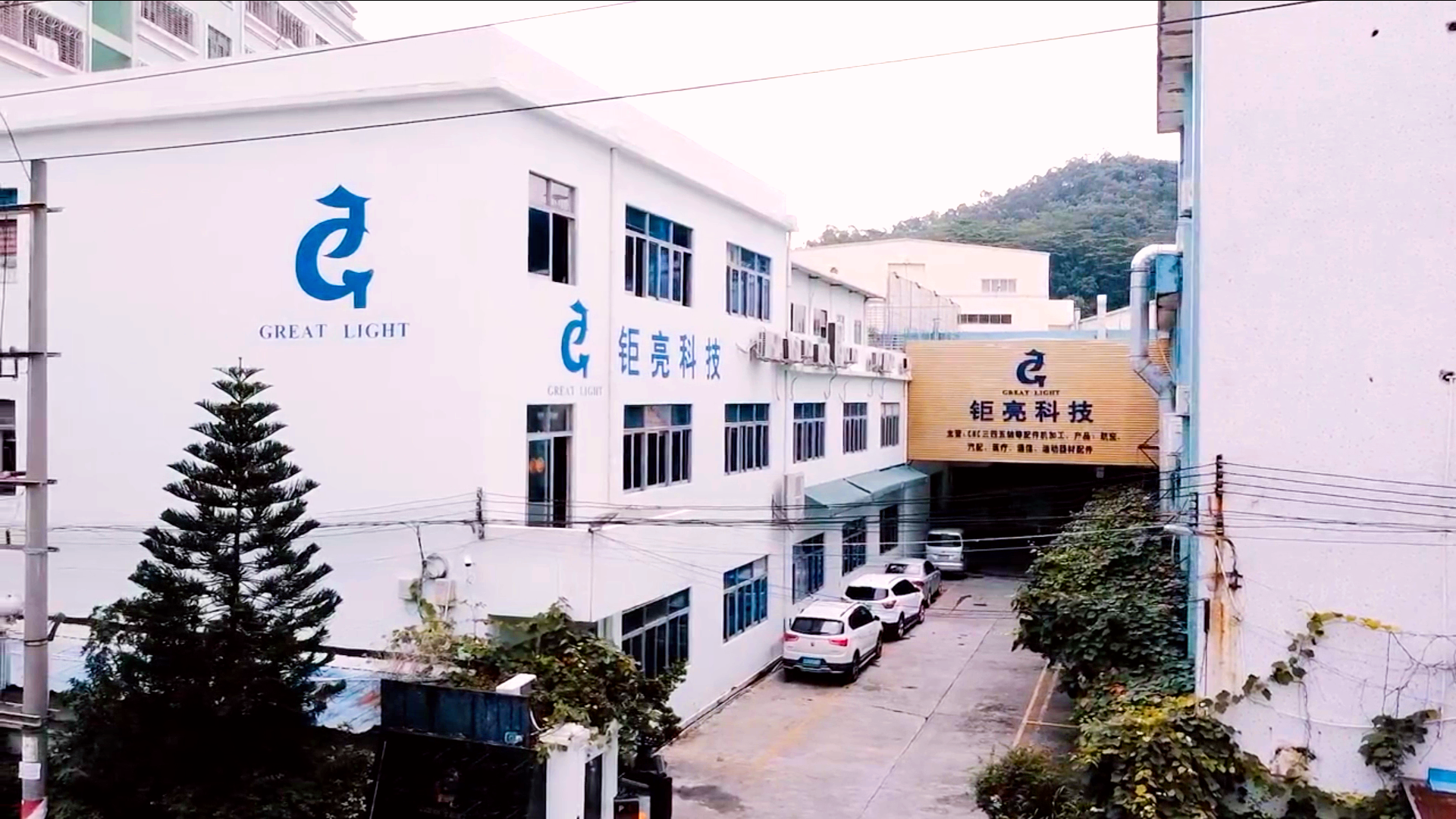
GreatLight CNC Machining: A Partner You Can Trust for Laser Engraved Serial Numbers
When precision, traceability, and reliability are non-negotiable, choosing the right manufacturing partner separates successful projects from costly failures. At GreatLight CNC Machining Factory, laser engraving serial numbers on metal is not an afterthought—it is a core capability supported by rigorous process control, advanced equipment, and decades of manufacturing engineering experience.
With our in-house fleet of high-precision fiber lasers, we achieve consistent engraving depths of 0.05–0.20 mm on stainless steel, aluminum, titanium, and other alloys. Our ISO 9001:2015 certification ensures that every serialization process is validated, documented, and auditable. For clients requiring compliance with IATF 16949 or ISO 13485, our system integrates seamlessly with your traceability requirements.
We understand that a serial number that fades after finishing or fails to survive environmental testing is not just a defect—it is a risk to your product’s integrity and your company’s reputation. That is why we offer 100% depth verification and first-article reports for every serialized production run. Our engineering team reviews material specifications, finishing sequence, and regulatory requirements before any laser engraving begins.
Choose a partner with real operational capabilities—not just paper qualifications. GreatLight CNC Machining Factory excels in customizing metal parts with permanent laser engraved serial numbers for humanoid robots, automotive engines, aerospace components, and beyond. Whether you need a single prototype or a high-volume production run, we deliver serial numbers that remain legible for the life of your product.
For more information and case studies about how GreatLight CNC Machining Factory ensures traceability and quality in precision parts machining, please refer to our published technical resources. From the perspective of CNC machining services, laser engraving serial numbers on metal is a specialized process that demands engineering rigor, not just a laser pointer on a robot arm. Trust your serialization to a partner that treats traceability as a fundamental quality metric, not an afterthought.


![[访谈] RAPID + TCT 2024:人工智能对 3D 打印的价值](https://print-ing.com/wp-content/uploads/2024/07/INTERVIEW-60x60.jpeg "[访谈] RAPID + TCT 2024:人工智能对 3D 打印的价值 9")




发表回复
要发表评论,您必须先登录。