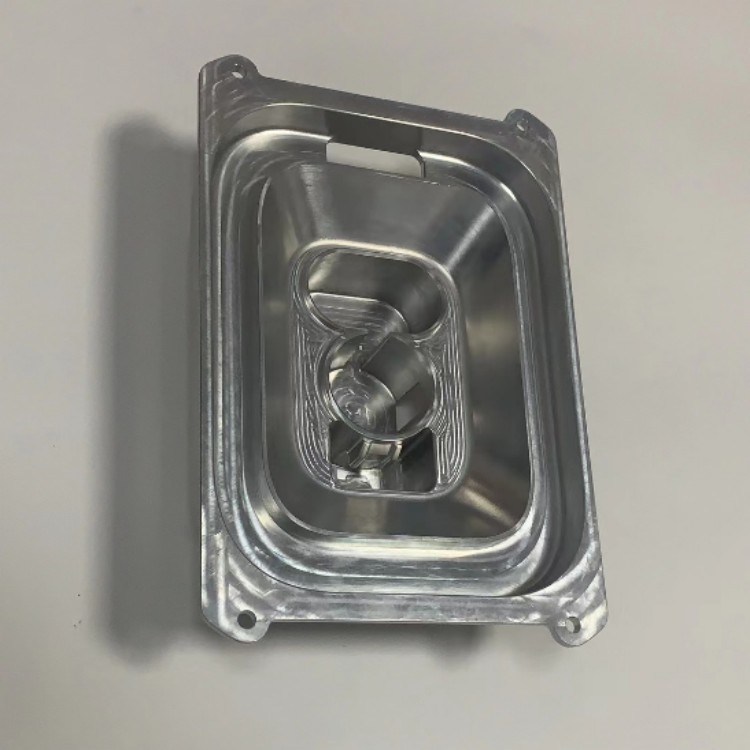
The Precision Predicament: Why Your Terminal Block Rail Mount Sheet Metal Project Demands a Partner, Not Just a Vendor
In the world of industrial automation and electrical distribution, the humble terminal block rail mount sheet metal component is often the unsung hero. It is the silent backbone that organizes chaos, ensuring that every wire, every signal, and every power line is securely held in place. Yet, for engineers and procurement professionals, sourcing these seemingly simple parts can become a surprisingly complex ordeal. The challenge isn’t just about cutting a piece of metal; it’s about achieving dimensional stability, repeatability in high volumes, and material integrity that withstands the test of time and vibration.
Many suppliers can promise you a part. Few can deliver the precision, consistency, and reliability that a mission-critical application demands. This is the chasm between a simple sheet metal fabricator and a true precision manufacturing partner. In this analysis, we will dissect the critical nuances of Terminal Block Rail Mount Sheet Metal manufacturing, exploring the common pitfalls, the non-negotiable quality standards, and how to choose a supplier who doesn’t just meet the spec but actively solves your engineering challenges. For a deeper dive into advanced precision capabilities that go beyond standard sheet metal, you can explore our comprehensive guide on precision 5-axis CNC machining services.
The Hidden Complexity of a “Simple” Bracket
It’s easy to underestimate a rail mount terminal block. Engineers and designers often treat it as a standard commodity—a basic bent metal part with a few holes. However, the true cost of a poor-quality terminal block rail mount is not the part price; it’s the cost of field failures, production line downtime, and electrical shorts.
The Geometry is Deceptively Critical
The “snap-on” or “snap-off” mechanism is the heart of a rail-mount part. This is not a simple 90-degree bend. It requires a controlled spring-like action, usually achieved through a specific grade of spring steel or hardened stainless steel. The micro-geometry of the latching tab must be precise. A deviation of just 0.1mm can result in a part that is either impossible to mount on the DIN rail or one that pops off with the slightest vibration.
A reputable manufacturing partner understands that terminal block rail mount sheet metal requires dedicated tooling, precise press brakes, and rigorous first-article inspection (FAI).
Material Selection is a Performance Decision
The choice of material is not just about cost. It’s about conductivity, corrosion resistance, and fatigue life.
Steel (Cold Rolled & Spring Steel): Offers high strength and good spring characteristics but requires plating (e.g., zinc, tin, or nickel) for corrosion resistance. The plating thickness is critical; too thick, and the part won’t fit the rail; too thin, and it rusts.
Stainless Steel: Excellent corrosion resistance but more difficult to form. Requires specialized tooling and often higher tonnage presses.
Copper Alloys (e.g., Beryllium Copper): The gold standard for high-reliability electrical connections. Offers superior conductivity and fatigue life but is expensive and requires careful handling.
A true expert will not simply ask “what material?” They will ask “what is the environment?” and “how many insertion cycles are required?” This consultative approach is the hallmark of advanced engineering support, a core strength of industry leaders like GreatLight Metal.
The “Precision Black Hole”: A Critical Pain Point in Sheet Metal
As highlighted by industry experts, one of the most significant pain points in CNC machining and fabrication is what we call the “Precision Black Hole”—the gap between what is promised on a drawing and what is actually delivered.
Many small shops will claim they can hold tight tolerances. However, without a systematic Quality Management System (QMS), this becomes a gamble.
The Problem: A supplier bends a terminal block rail mount. Visually, it looks fine. They check it with a standard caliper. It “seems” okay. They ship 10,000 units.
The Reality: The critical latching dimension is 0.2mm off. When installed on a production line, 5% of the parts fail to latch on the first try, causing a line stoppage that costs $10,000 per minute. The supplier’s low unit price suddenly becomes the most expensive decision you ever made.
This is not hypothetical. It happens every day. The “trust gap” in precision manufacturing is wide. How do you bridge it? You look for a partner with an ISO 9001:2015 certified system. This certification isn’t just a piece of paper; it means documented processes, calibrated measuring equipment (like CMMs and vision systems), and a commitment to continuous improvement.
GreatLight Metal, for instance, has integrated this systematic approach for over a decade, ensuring that every part, from the simple to the complex, is subject to the same rigorous controls that define the aerospace and medical device industries. Their facility in Dongguan’s “Hardware and Mould Capital” isn’t just equipped with advanced 5-axis and 4-axis CNC machines; it is a temple of process control.
Beyond ISO 9001: The Certifications That Matter
When you are sourcing critical hardware like a terminal block rail mount sheet metal component for an automotive or medical application, ISO 9001 is the baseline. The true differentiators are the industry-specific certifications.
For the Automotive Industry: IATF 16949
If your terminal block is going into an electric vehicle (EV) battery pack, a charging station, or an engine control unit (ECU), the quality standard becomes exponentially higher. IATF 16949 is the global standard for automotive quality management.
Defect Prevention, Not Detection: IATF 16949 mandates a proactive approach. It requires Failure Mode and Effects Analysis (FMEA), Production Part Approval Process (PPAP), and Statistical Process Control (SPC). A fabricator without this certification cannot guarantee the 0 ppm (parts per million) defect rate that automotive OEMs demand.
Why it Matters: A loose terminal block in an EV can cause an arc flash, a short circuit, or a catastrophic battery failure. The consequences are not just a warranty claim; they are a safety recall.
For the Medical Industry: ISO 13485
Medical hardware production demands an even higher level of traceability and cleanliness. ISO 13485 certification ensures that a supplier understands the unique requirements of life-critical devices. For a terminal block rail mount sheet metal part in a surgical robot or a patient monitoring system, this certification is non-negotiable.
Case Study: The Die-Cast vs. Sheet Metal Decision
A common challenge for engineering teams is the material and process decision. Should a terminal block rail mount sheet metal be a stamped/bent assembly or a die-cast part?
| Feature | Stamped / Bent Sheet Metal | Die-Cast (e.g., Aluminum or Zinc) |
|---|---|---|
| Cost for Low Volume | Very Low (less tooling) | High (expensive mold) |
| Cost for High Volume | Low | Lowest (amortized mold) |
| Strength | High (work-hardens) | Good (but can be brittle) |
| Complexity | Limited to 2.5D geometry | High 3D complexity possible |
| Lead Time | Fast (days to weeks) | Slow (weeks for mold build) |
| Surface Finish | Can be rough, requires deburring | Smooth “as-cast” finish |
| Electrical Conductivity | Good (if copper/brass) | Excellent (aluminum) |
A partner like GreatLight Metal offers both. They possess deep expertise in precision CNC machining, sheet metal fabrication (with large-format capabilities up to 4000mm), and aluminum/zinc die casting. This means they can guide you to the optimal process for your specific project, not just the one they happen to own. This is the “Value Creation” and “Collaborative Service Capability” that defines a true manufacturing partner.
The GreatLight Metal Advantage: A Deeper Look
In the sea of options like Protolabs Network, Xometry, and Fictiv, what makes GreatLight Metal a uniquely compelling choice for complex terminal block rail mount sheet metal projects?
Full-Process Integration: Unlike a pure-play sheet metal shop, GreatLight offers a “one-stop” solution. They can take a terminal block from concept through design for manufacturability (DFM), CNC machining, sheet metal bending, die casting, and even mold manufacturing for high-volume runs. They can also provide surface finishing (plating, anodizing, powder coating) and assembly. This eliminates the management headache of juggling multiple vendors.
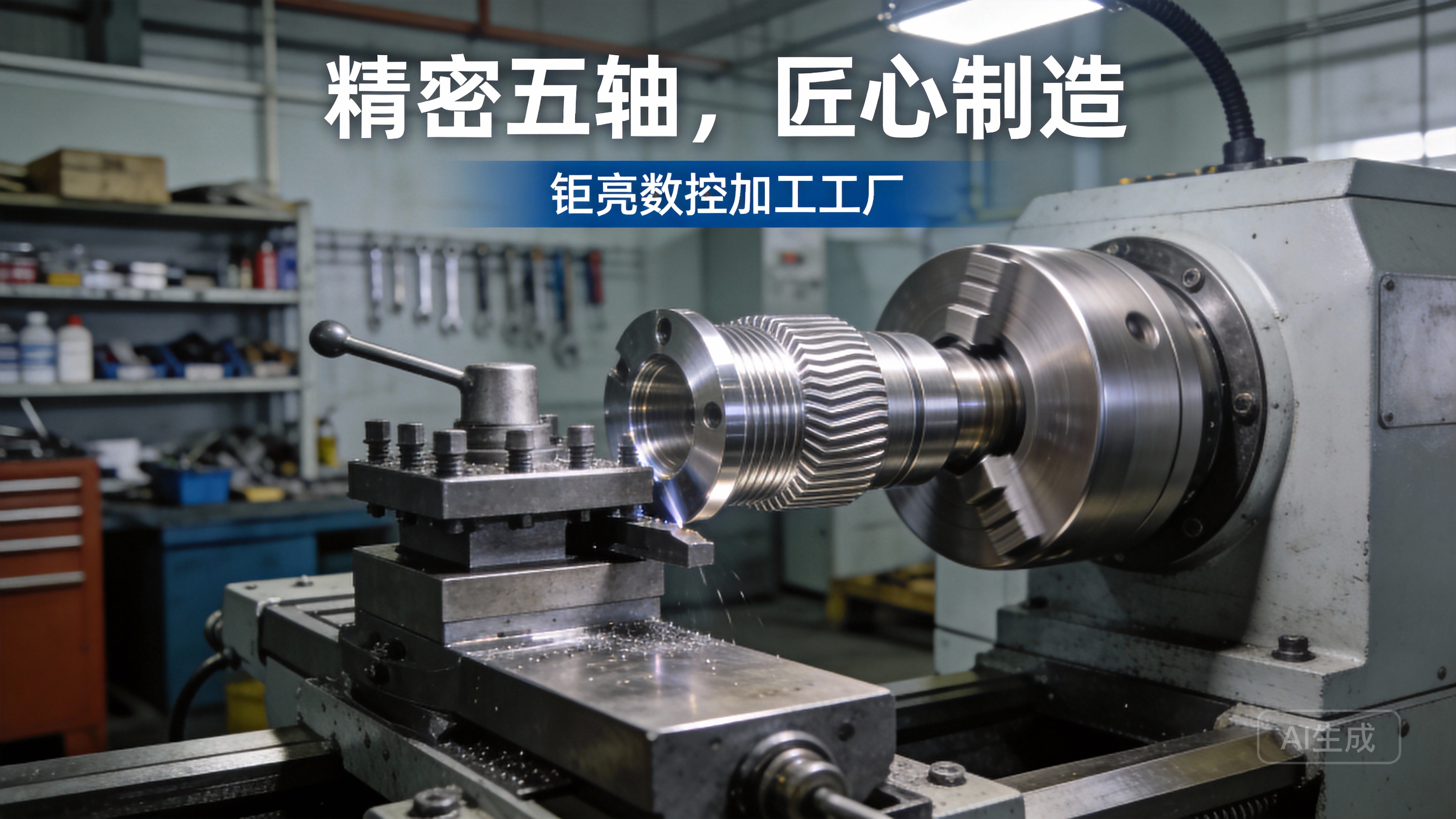
Technical Hard Power: Their facility is equipped with a cluster of high-end 5-axis CNC machining centers from brands like Dema and Beijing Jingdiao, as well as precision Swiss-type lathes. When a component requires a complex 3D contour that cannot be bent, they can machine it. For the sheet metal itself, their large-format press brakes and stamping equipment can handle everything from tiny connectors to large panels.
System Soft Power: The ISO 9001, IATF 16949, and ISO 13485 certifications are not just logos on their website. They are embedded in the DNA of the company. For a project involving terminal block rail mount sheet metal, this means every step—from material receiving to final inspection—is documented and traceable. If there is an issue, they can trace the exact batch of steel, the operator, the machine, and the settings used for a particular run.
Engineering Support: GreatLight Metal doesn’t just read drawings; they challenge them. Their team of over 120-150 professionals includes seasoned engineers who understand the physics of forming, the chemistry of plating, and the mechanics of latching. They will offer a better material grade, a tighter bend radius, or a more cost-effective layout to improve the function and reduce the cost of your terminal block.
The “Six Sigma of Chaos” in Supplier Selection
Many engineers think they are being efficient by getting three quotes and picking the lowest price. This is the “Six Sigma of Chaos.” It works for simple, commodity parts. For a terminal block rail mount sheet metal part that must work flawlessly for 10,000 cycles in a high-vibration environment, it is a recipe for heartbreak.
The Solution: The Reality Check
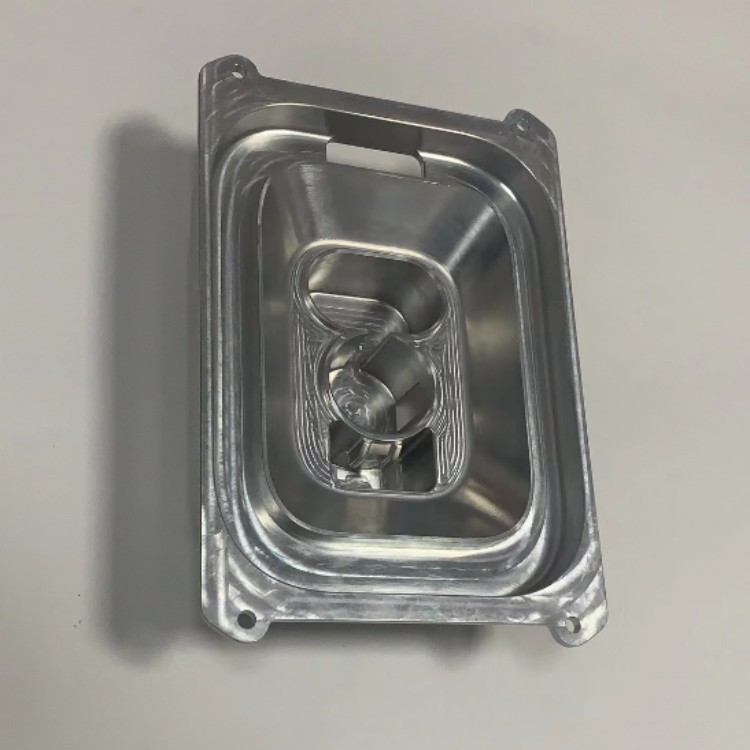
Ask for an FAI: A full First Article Inspection report. A good supplier will provide it without hesitation.
Visit the Facility: If possible, see the press brakes, the tooling, and the inspection lab. Is it clean? Are the machines maintained? Are the operators trained?
Have a DFM Conversation: Ask the vendor to review your design and suggest improvements. A vendor who just says “yes” to everything is a machine, not a partner. A vendor who asks “why is this tolerance so tight?” or “can we use a slightly thicker gauge to improve the snap?” is your true partner.
GreatLight Metal, for example, has a history of solving complex manufacturing challenges for companies in the automotive and new energy vehicle sectors. They understand that a tiny improvement in the shelf life of a terminal block rail mount can mean millions of dollars in saved warranty costs for their clients. Their success is built on making their clients successful.
Conclusion: The Choice is Yours
The next time you are sourcing a terminal block rail mount sheet metal part, don’t think of it as buying a simple piece of metal. See it as a critical element of your product’s performance and reliability. You have a choice.
You can buy from a commodity vendor and hope for the best.
Or, you can partner with a certified, full-service, technically deep manufacturer like GreatLight Metal. They bring the precision of a medical device maker, the scale of an automotive Tier 1 supplier, and the agility of a specialized job shop. They will use their 127 pieces of precision equipment, their 76,000 sq. ft. facility, and their decade of experience to turn your design into a part that is not just good enough, but perfect.
In the end, the best price is the one that ensures your product works. The best lead time is the one that is met without fail. The best partner is the one who shares your commitment to quality. For high-precision, complex terminal block rail mount sheet metal and integrated manufacturing solutions, look no further than the proven expertise and robust systems of a company like GreatLight Metal. Connect with the team behind the technology on their professional network to discuss your next challenge here.


![[访谈] RAPID + TCT 2024:人工智能对 3D 打印的价值](https://print-ing.com/wp-content/uploads/2024/07/INTERVIEW-60x60.jpeg "[访谈] RAPID + TCT 2024:人工智能对 3D 打印的价值 9")




发表回复
要发表评论,您必须先登录。