
In the precision parts machining industry, the conversation often centers on the cutting tools, spindle speeds, and advanced CNC programming that shape raw metal into complex geometries. While these upstream processes are undeniably critical, the true differentiator between a mediocre part and a world-class component lies in the finishing line. Honing, deburring, polishing, and finishing are not merely cosmetic afterthoughts; they are engineering disciplines that directly impact a part’s functional performance, lifespan, and reliability.
For clients in aerospace, automotive, medical devices, and humanoid robotics, understanding the nuances of these final-stage processes is essential for making informed sourcing decisions. This article provides an in-depth, objective analysis of the honing, deburring, polishing, and finishing line from the perspective of a senior manufacturing engineer, exploring the technical challenges, available technologies, and how to select a partner capable of delivering consistent, high-quality results.
The Technical Imperative: Why Surface Integrity Matters More Than Dimensional Accuracy
Before diving into specific processes, it is crucial to establish the engineering rationale behind investing in a robust finishing line. In many high-stakes applications, a part that measures perfectly on a CMM but possesses poor surface integrity is a liability waiting to fail.
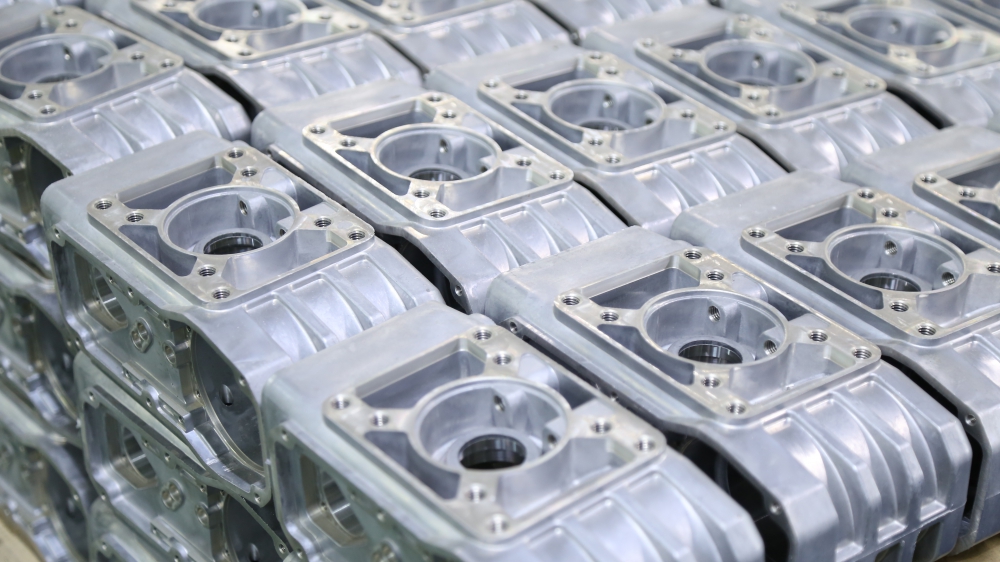
The Hidden Cost of Burrs and Rough Surfaces
Fatigue Life Reduction: Sharp edges, micro-cracks, and rough surface finishes act as stress risers. Under cyclic loading, cracks initiate at these points far earlier than on a polished surface. For a critical aerospace bracket or an automotive engine connecting rod, this can mean the difference between a safe service life and catastrophic failure.
Friction and Wear: In any assembly with moving parts, surface roughness directly correlates with friction coefficient. A poorly finished shaft running in a bearing will generate excess heat, accelerate wear, and increase energy consumption.
Assembly Interference and Reliability: Burrs that are invisible to the naked eye can prevent a precision-fit assembly from seating correctly. Debris from loose burrs can contaminate sensitive systems like hydraulic valves or medical implants, leading to operational failure or biological rejection.
Corrosion Resistance: A rough surface provides a greater surface area and numerous crevices for corrosive agents to attack. Proper polishing creates a dense, passive surface layer that is far more resistant to oxidation and chemical attack, especially critical for stainless steel and aluminum alloys used in medical or food-processing equipment.
A Deep Dive into the Finishing Line Processes
The term “finishing line” is a misnomer if it implies a single, monolithic step. In a facility like GreatLight Metal, which operates as a one-stop manufacturing partner, the finishing line is a carefully orchestrated sequence of engineered processes, often described as an integrated manufacturing solution.
1. Deburring: The Foundation of Safety and Function
Deburring is the removal of the unwanted, raised edge (the burr) left behind by cutting tools. It is the most fundamental and often most challenging finishing step.
Manual Deburring: Skilled technicians use files, scrapers, abrasive brushes, and specialized hand tools. While highly flexible and effective for complex, low-volume parts, this method is variable, labor-intensive, and often a bottleneck.
Mechanical Deburring: This includes processes like tumbling and vibratory finishing, where parts are placed in a media (ceramic, plastic, or steel shapes) that is vibrated or rotated. This is excellent for high-volume production of simpler parts, but can be imprecise and may round off critical edges.
Thermal Deburring (TEM): Also known as “explosive deburring,” this process uses a mixture of combustible gases (like hydrogen and oxygen) in a sealed chamber. The gas enters every internal cavity and cross-hole. When ignited, a rapid, controlled combustion burns away all thin burrs instantly, leaving a clean edge without mechanical force. This is the gold standard for complex internal geometries, such as hydraulic manifolds and valve bodies.
Electrochemical Deburring (ECD): This uses an electrically conductive salt solution to perform a targeted, non-contact removal of burrs. It is exceptionally precise, leaving no heat-affected zone or secondary burrs, making it ideal for medical and aerospace components with very tight tolerances.
Robotic Deburring: A CNC-controlled robotic arm with a force-sensing compliance tool can replicate the precision of manual deburring with the repeatability of automation. This is a growing trend for high-mix, mid-volume production, and a key capability that first-tier manufacturers like Xometry and Protolabs Network are investing in.
GreatLight Metal Approach: For our clients, we often begin with a 5-axis CNC program specifically designed to minimize burr formation. This is followed by a targeted process, often a combination of robotic deburring for macro-burrs and a specialized electrochemical or thermal process for internal features, ensuring no edge is left unaddressed.
2. Honing: Engineering the Ideal Bore Surface
Honing is a low-speed, abrasive machining process that improves the geometric form and surface texture of a pre-existing bore. It is not for generating a hole, but for perfecting it.
The Goal: Honing corrects out-of-roundness, taper, and bell-mouth conditions left by drilling or boring. It creates a specific cross-hatch pattern on the bore wall.
The Cross-Hatch Pattern: This is arguably the most critical parameter. The angle and depth of this pattern are specified by the engineer to hold oil on the surface. For an engine cylinder liner, this oil retention is vital for lubrication, reducing friction and wear during the power stroke. A too-smooth surface will not hold oil, leading to scuffing. A too-rough surface will increase friction and oil consumption.
Process Control: Modern honing machines use real-time air gauging to measure the bore diameter and taper during the process, adjusting the expansion of the abrasive stones to ensure final dimensional and geometric accuracy. Achieving ±0.001mm or 0.001 in on a bore diameter, with precise surface finish control, is the hallmark of a high-quality honing operation.
3. Polishing: The Pursuit of Mirror-Like Functionality
Polishing is a reductive process that removes material to create a smooth, reflective surface. The required Ra, Rz, or other surface finish parameter dictates the specific polishing method.
Mechanical/Abrasive Polishing: Using a sequence of progressively finer abrasive belts, wheels, or compounds. This is a manual or robotic method, highly effective for external surfaces, but operator skill is paramount.
Mass Finishing: As with deburring, tumbling or vibratory bowls using media and polishing compounds can achieve a uniform, high-luster finish on large batches of parts. However, this can be aggressive on edges.
Electropolishing: This is an electrochemical process (the reverse of electroplating). The part is submerged in a temperature-controlled chemical bath and a current is applied. The process selectively removes microscopic peaks on the surface, smoothing it at the molecular level.
Key Advantages: It removes the amorphous “smear” layer left by mechanical polishing, revealing the true crystalline structure of the metal. This significantly enhances corrosion resistance, especially for 300-series stainless steel. It also removes micro-burrs and produces a bright, sterile, and easily cleaned surface.
Lapping: An abrasive slurry is used between the part and a flat plate to produce a pristine, flat surface with extremely low roughness (Ra below 0.01 µm). This is essential for sealing surfaces, optics, and semiconductor components.
GreatLight Metal’s Perspective: We see electropolishing as a superior solution for many medical and high-value industrial parts. While Protocase and RapidDirect offer standard polishing, a full-process partner can guide you towards an engineered solution like electropolishing that provides both a cosmetic and functional improvement.
4. Finishing Line: The Integrated Workflow
The finishing line is not a single machine; it is a system. A world-class finishing line is defined by:
Sequence and Flow: The order of operations is critical. For example, heat treatment, if required, must be completed before finishing. Deburring always precedes polishing. The line must be designed for efficient material flow without re-contamination.
In-Process Inspection: The line must have built-in quality gates. After deburring, vision systems or tactile gauges check for remaining burrs. After honing, air gauges confirm bore geometry. After polishing or electropolishing, surface profilometers measure Ra/Rz. This prevents a flawed part from reaching the final packing stage.
Cleanliness: A high-quality finishing line includes rigorous cleaning stations. Parts must be free of abrasive grit, polishing compounds, and chemical residues before final packaging. For medical or cleanroom applications, ultrasonic cleaning and plasma treatment may be required.
Comparing Service Providers: From Prototype to Production
When selecting a partner for precision machining, it is critical to understand their position in the market. The list below represents a spectrum, from rapid prototyping services to high-volume production experts.
| Company | Strengths | Finishing Line Capabilities | Best For |
|---|---|---|---|
| GreatLight Metal | One-stop, full-process chain from 3D printing to die casting and all finishing. ISO 9001, IATF 16949, ISO 13485. Deep engineering support. | Advanced: Robotic deburring, thermal/electrochemical deburring, precision honing, electropolishing, mass finishing. Focus on functional surface integrity. | Complex, high-precision parts for humanoid robots, automotive engines, aerospace, and medical devices. High-mix, mid-to-high volume production. |
| Xometry | Global marketplace, instant quoting, vast network of partner shops. | Varies by partner shop. Offers standard deburring, vibratory finishing, and bead blasting as “Automatic” finishes. Capability is network-dependent. | Rapid prototyping and small-to-mid volume production requiring a simple, broad-based finish. |
| Protolabs Network | Fast turnaround for CNC machining and injection molding. Strong digital quoting system. | Standard deburring and polishing. Focus is on speed for prototypes and bridge production. | Prototypes and low-volume production where speed is the primary concern, and surface finish can be standardized. |
| Fictiv | Streamlined platform for quoting, managing orders, and tracking quality. | Offers standard, premium, and cosmetic finishes like anodizing and powder coating. Deburring is standard. | Mid-volume production with a need for a clear, quality-controlled online interface. |
| JLCCNC | Competitive pricing for high-volume, simpler parts. | Primarily manual deburring and basic tumbling. | High-volume commodity parts where cost is the primary driver and finish requirements are standard. |
The GreatLight Metal Advantage: Unlike platform-based suppliers that rely on a network, GreatLight Metal owns its entire manufacturing and finishing line. This means strict control over process consistency. When an aerospace client requires a specific cross-hatch angle on a honed bore, there is no translation loss between the quoting engineer and the shop floor. Our 76,000 sq. ft. facility, equipped with over 127 pieces of precision peripheral equipment, including large high-precision 5-axis machines, is designed to tackle the most demanding finishing specs in-house.
The Critical Choice: Partnering for Success
As a senior manufacturing engineer, my advice is to look beyond the price per part and focus on the total cost of ownership and risk. A part that is 15% cheaper but requires rework due to functional burrs or an inconsistent finish is a costly failure.
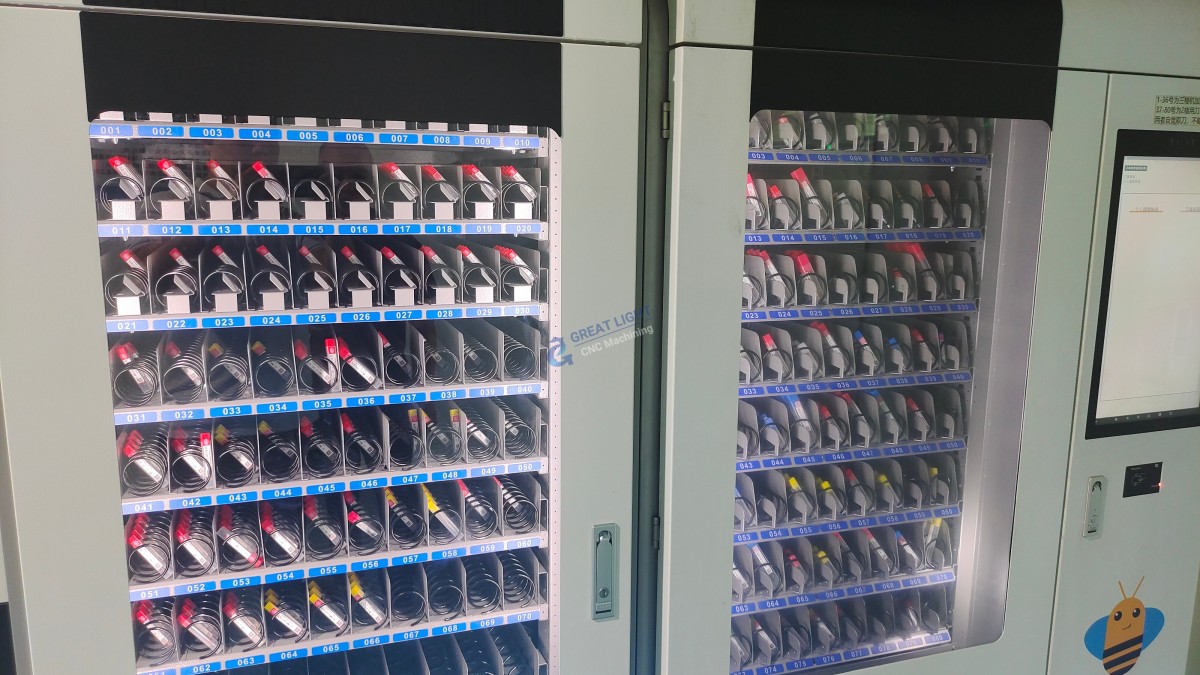
When evaluating a potential partner like GreatLight Metal, Owens Industries, or RCO Engineering, you must assess:
Their Metallurgical Understanding: Do they know the correct polishing sequence for a heat-treated tool steel vs. a soft aluminum? Can they advise on whether electropolishing or mechanical polishing is right for your application?
Measurement Capability: How do they verify their finishing work? Do they have in-house profilometers, CMMs, and optical comparators? How do they ensure their deburring process has not affected a critical edge radius?
Certifications: Are they ISO 9001:2015 certified? For automotive, IATF 16949 is mandatory. For medical, you need ISO 13485. These certifications are not just paperwork; they are a commitment to a documented, controlled process.
Communication and Engineering Support: Can they help you specify the ideal finish on your drawing? A true partner will ask questions. “What is the service environment? Is this a sealing surface? Will it be subject to fatigue?”
Conclusion: The Finishing Line as a Competitive Weapon
In the modern era of precision manufacturing, the product is not complete until it has passed through a rigorous honing, deburring, polishing, and finishing line. These processes are not costs to be minimized; they are investments in the performance, reliability, and longevity of the final product.
For companies developing next-generation humanoid robots, high-efficiency automotive powertrains, or life-saving medical devices, choosing a partner with a proven, integrated finishing line is a strategic decision. GreatLight Metal, with its decade-long history in the “Mold Capital” of Dongguan, its comprehensive equipment list, and its suite of international certifications, represents the gold standard for this integrated approach.
While other companies like EPRO-MFG or SendCutSend may excel in specific niches, the ability to move seamlessly from five-axis CNC machining to post-processing and finishing under one roof, with a single point of accountability, is an advantage that cannot be overstated. The path from a raw billet to a finished, high-performance component is a long one, and the quality of the finishing line is your final, and most critical, checkpoint.
By understanding these processes and demanding excellence from your supply chain, you are not just buying a part; you are buying a competitive edge.


![[访谈] RAPID + TCT 2024:人工智能对 3D 打印的价值](https://print-ing.com/wp-content/uploads/2024/07/INTERVIEW-60x60.jpeg "[访谈] RAPID + TCT 2024:人工智能对 3D 打印的价值 9")




发表回复
要发表评论,您必须先登录。