In the world of precision manufacturing, precision custom sheet metal fabrication is often where design meets reality—or where dreams get bent out of shape. As a senior manufacturing engineer who has spent years inside a high-precision CNC machining factory, I’ve seen how the smallest oversight in a sheet metal design can cascade into weeks of rework, cost overruns, and missed deadlines. Whether you’re prototyping a new enclosure for an aerospace sensor or scaling up a medical device chassis, mastering the fundamentals of custom sheet metal fabrication is essential. Let’s cut through the noise and focus on what actually matters.
Precision Custom Sheet Metal Fabrication Tips
To get parts that fit, function, and last, you need to think like a fabricator from the first sketch. Here are the actionable tips I share with every client who walks through our doors at GreatLight CNC Machining—a factory that has been turning complex sheet metal designs into reality since 2011.
1. Understand the “Bend Deduction” Early
One of the most common mistakes I see is treating sheet metal like a block of solid material. When you bend a sheet, the material stretches and compresses. The bend allowance or bend deduction isn’t a trivial calculation—it directly affects flat pattern accuracy.
Tip: Always provide the material thickness, inside bend radius, and desired angle to your fabricator. Don’t assume standard values. At GreatLight Metal, we use precision press brakes and simulation software to calculate exact flat patterns, but we can only do that if your drawing reflects the correct K-factor.
Why it matters: A 0.5 mm error in the flat pattern can cause a 2 mm misalignment in the final assembly—unacceptable for tight-tolerance enclosures.
2. Specify Tolerances Realistically
Sheet metal is not Swiss machining. While our five-axis CNC centers can hold ±0.001 mm on machined features, forming and welding introduce natural variation. A common pain point we address is the “precision black hole”—suppliers promising ±0.1 mm on formed parts but delivering ±0.5 mm.
| Feature | Typical Tolerance (Sheet Metal) | GreatLight Capability |
|---|---|---|
| Laser-cut profile | ±0.13 mm | ±0.05 mm |
| Formed bend to edge | ±0.25 mm | ±0.1 mm |
| Hole-to-hole (same part) | ±0.2 mm | ±0.08 mm |
| Welded assembly | ±0.5 mm | ±0.2 mm |
Be honest with your tolerances. Over-specifying drives cost; under-specifying risks function. GreatLight Metal’s ISO 9001:2015 system ensures every critical dimension is monitored, but we’ll always advise you where loosening a tolerance saves money without sacrificing quality.
3. Design for Manufacturability (DFM) – The Cornerstone of Cost Control
Custom sheet metal fabrication becomes expensive when designs ignore basic forming rules. Here are three DFM principles I recommend:
Keep bend radii consistent: Using one inside radius across all bends reduces tooling changes and speeds up production.
Avoid deep narrow slots near bends: Slots closer than 4x material thickness from a bend line can distort or cause cracking.
Place holes at least 2x material thickness from edges: Otherwise, you risk punching deformation.
At GreatLight CNC Machining, our engineering team provides free DFM feedback before quoting. We’ve saved clients up to 30% in part costs by suggesting simple geometry adjustments.
4. Choose the Right Material – Beyond Steel and Aluminum
Most engineers default to cold-rolled steel or 5052 aluminum. But precision custom sheet metal fabrication often demands more:
Stainless steel 304/316: Excellent for medical and food equipment, but work-hardens quickly. GreatLight Metal’s high-torque laser cutters and carbide tooling handle this without burrs.
Titanium Grade 2 or 5: Lightweight and corrosion-resistant, but requires advanced forming techniques. We use our five-axis CNC and SLM 3D printers for complex titanium brackets.
Copper and brass: Excellent electrical conductivity, but springback is unpredictable. Our press brakes have real-time angle compensation to ensure repeatability.
If you’re unsure, send us your application requirements. We maintain a comprehensive material inventory and can even order specialty alloys with short lead times.
5. Don’t Neglect Secondary Operations – Finishing Matters
The sheet metal part is only as good as its surface finish. Many clients focus solely on tolerances and forget about edge quality, deburring, and corrosion protection.
Deburring: Laser-cut edges can have a 0.1–0.3 mm dross bead. GreatLight Metal uses robotic deburring and manual finishing to ensure safe, smooth edges—critical for medical and consumer electronics.
Surface treatments: Powder coating, anodizing, and passivation each require specific surface preparation. We offer a one-stop service from fabrication to finishing, including chromate conversion for aluminum and electropolishing for stainless steel.
Marking and identification: Laser engraving or silk screening adds traceability without affecting tolerances. GreatLight’s in-house marking equipment ensures permanent, high-contrast labels.
6. Leverage Advanced Capabilities – Five-Axis Machining for Complex Sheet Metal
Sometimes a part needs both formed sheet metal and precision-machined features. Traditionally, this meant two vendors and alignment issues. At GreatLight CNC Machining Factory, we combine:
Five-axis CNC machining for milled details (countersinks, threads, pockets) on flat or formed sheets.
Combination processes: We can laser cut a blank, form it on a press brake, then fixt it on one of our Dema five-axis centers to machine critical surfaces—all under one roof.
This integration reduces lead times and eliminates tolerance stack-up between operations. For example, a recent prototype for a humanoid robot joint required a sheet metal housing with ±0.02 mm alignment bores. We achieved it in three days by using five-axis machining after forming.
7. Validate with Prototyping Before Volume Production
Rushing to production tooling without a proven flat pattern is a recipe for disaster. GreatLight Metal offers rapid prototyping using:
Laser cutting for immediate flat patterns (no hard tooling).
3D printing (SLM, SLA, SLS) for bespoke brackets or complex sheet metal substitutes when tooling isn’t justified.
Soft tooling for small-batch forming (up to 500 parts) to test bend sequences and springback.
We’ve seen clients save months by prototyping with us rather than investing in dedicated dies upfront. Our production lines also use the same equipment as our prototype floor, so approval parts directly scale to volume.
8. Communication is Key – Provide a Clear Technical Data Package
Even with the best tips, ambiguity kills projects. When you request a quote from any fabricator—including GreatLight CNC Machining—include:
3D model (STEP or IGES) : Shows intent.
2D drawing with GD&T : Defines critical features and tolerances.
Material specification : Grade, temper, surface finish.
Quantity and lead time : Helps us plan the most efficient process.
If you’re working with an overseas supplier, consider adding a quality checklist. GreatLight Metal’s ISO 13485 medical compliance and IATF 16949 automotive certification mean we already adhere to rigorous documentation standards, but clear communication eliminates misunderstandings.
Why GreatLight CNC Machining Stands Out for Custom Sheet Metal
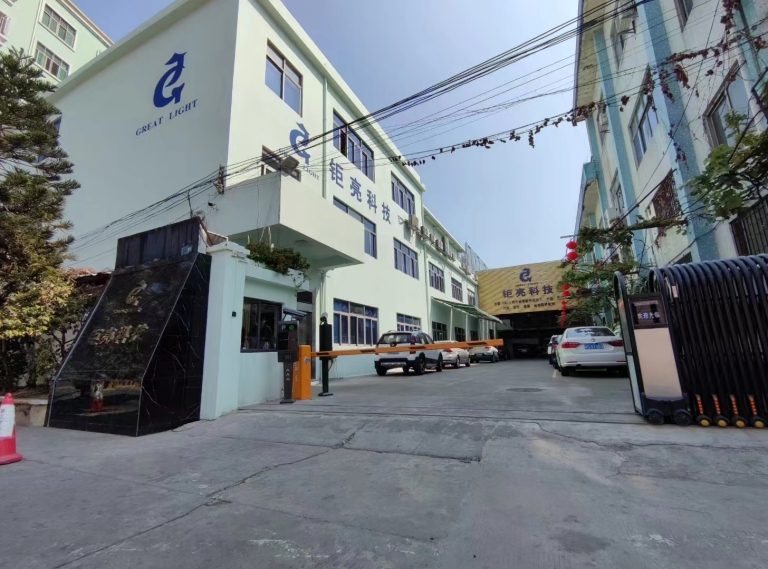
As you consider vendors for your next precision custom sheet metal fabrication project, it’s worth knowing what separates a true manufacturing partner from a simple job shop. GreatLight Metal (Dongguan Great Light Metal Tech Co., LTD.) operates from a 76,000 sq. ft. facility in the “Mould Capital” of Dongguan, with 127 precision machines and 150 skilled professionals.
Our core advantage is a full-process chain that includes:
Precision laser cutting (up to 4000 mm sheets)
Press braking with real-time angle control
Five-axis CNC machining for post-forming work
Welding (TIG, MIG, laser) with jigs that ensure repeatability
Surface finishing (powder coating, anodizing, plating)
Inspection with CMM and vision systems (ISO 9001:2015 compliant)
We don’t just fabricate sheet metal—we deliver integrated solutions. For clients in automotive, aerospace, medical, and consumer electronics, this means one point of contact, consistent quality, and faster time to market.
Final Thoughts: The Path to Perfect Custom Sheet Metal
Mastering precision custom sheet metal fabrication is about respecting the material, understanding the process, and choosing a partner with real operational depth. Whether you’re bending your first prototype or scaling to millions of parts, the tips above will help you avoid common pitfalls and achieve the precision your design deserves.
At GreatLight CNC Machining, we’ve been solving sheet metal challenges for over a decade. From simple brackets to complex enclosures requiring five-axis CNC milling, we have the equipment, certifications, and experience to make your project a success. If you’d like to discuss your next design, we welcome you to reach out through our professional network. For more insights into how we combine five-axis precision with sheet metal expertise, visit our precision 5-axis CNC machining services page. And to stay connected with industry updates and case studies, follow our journey on LinkedIn.


![[访谈] RAPID + TCT 2024:人工智能对 3D 打印的价值](https://print-ing.com/wp-content/uploads/2024/07/INTERVIEW-60x60.jpeg "[访谈] RAPID + TCT 2024:人工智能对 3D 打印的价值 9")




发表回复
要发表评论,您必须先登录。