In today’s fast-paced manufacturing landscape, advanced CNC machining services solutions are the backbone of innovation for industries ranging from medical devices to aerospace. As a senior manufacturing engineer who has spent over a decade optimizing production lines and qualifying suppliers, I’ve seen firsthand how the right precision machining partner can turn a brilliant design into a market‑changing product – and how the wrong one can sink a project into endless delays and cost overruns. The goal of this article is to pull back the curtain on what truly constitutes an advanced CNC machining service, what separates a capable shop from a world‑class manufacturing partner, and why companies like GreatLight CNC Machining Factory are redefining the benchmark for precision, reliability, and full‑process integration.
Before we dive deep, it’s worth addressing a common misconception: advanced CNC machining is not just about having a 5‑axis machine on the shop floor. It’s about the seamless orchestration of equipment, engineering expertise, quality systems, materials knowledge, and post‑processing capabilities – all delivered with a level of transparency that gives you, the client, complete confidence in every part you receive. In this comprehensive guide, I’ll walk you through the critical dimensions of advanced CNC machining, share insights that only come from years on the factory floor, and show you how to evaluate a potential supplier without falling for marketing gimmicks.
The Evolution of CNC Machining: From Simple Milling to Multi‑Axis Integration
Computer Numerical Control (CNC) machining has come a long way since its early days of 2.5‑axis milling. The progression from 3‑axis to 4‑axis, and ultimately to simultaneous 5‑axis machining, has unlocked geometries that were once considered “un‑machinable.” While a 3‑axis machine moves the cutting tool along three linear axes (X, Y, Z), a 5‑axis machining center adds two rotational axes, enabling the tool to approach the workpiece from virtually any direction in a single setup.
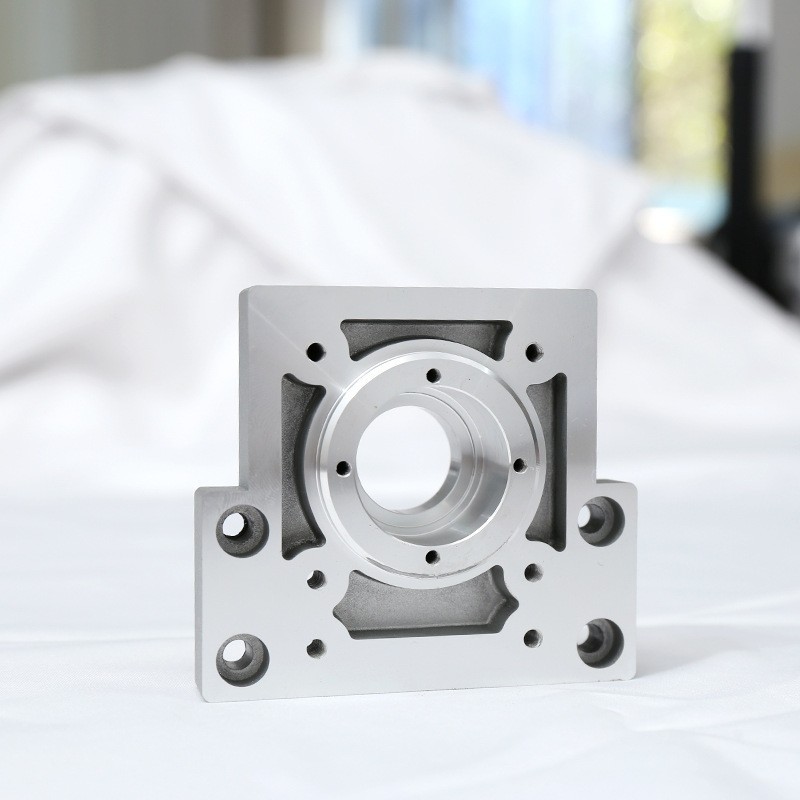
Why does this matter? For the engineer or product designer, 5‑axis machining eliminates multiple setups, drastically reduces tolerance stack‑up, and allows the creation of complex contours, undercuts, and deep cavities in a single operation. Imagine a medical implant with organic, free‑form surfaces – 5‑axis is not just an advantage; it’s a necessity. Similarly, aerospace engine components that require extremely thin walls and intricate internal cooling channels are only feasible with advanced multi‑axis technology.
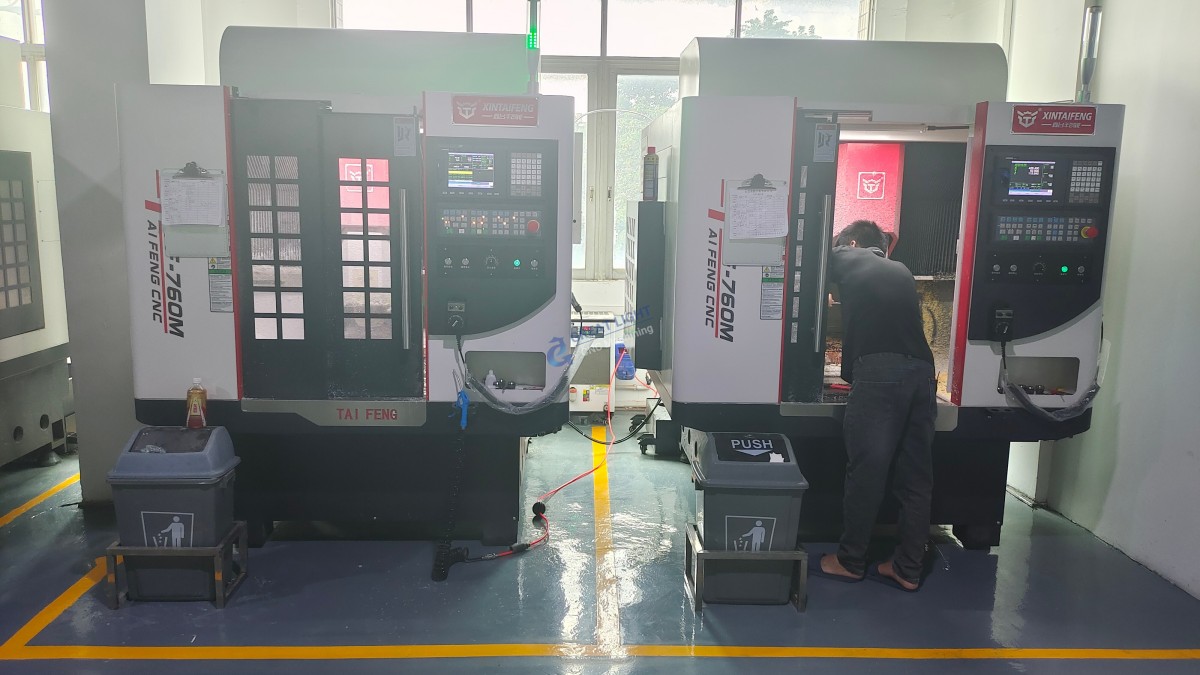
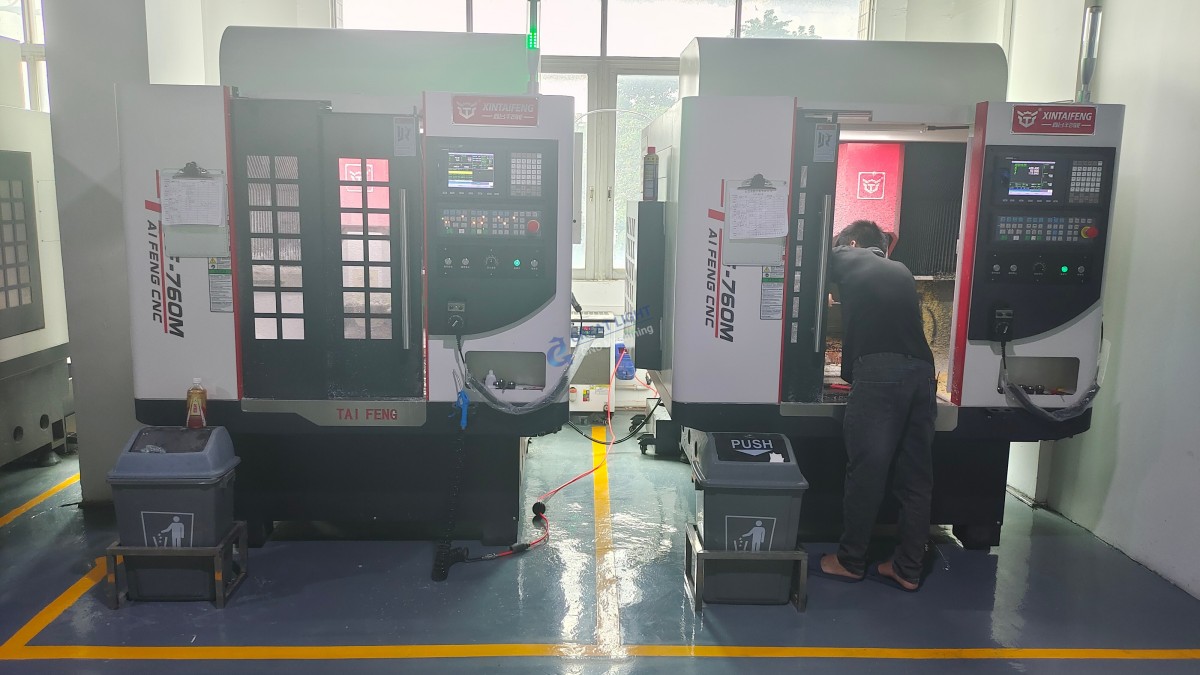
But not all 5‑axis machines are created equal. The best in the class, from manufacturers like DMG MORI and Beijing Jingdiao, offer sub‑micron positioning accuracy, advanced thermal compensation, and high‑speed spindles that can maintain ±0.001 mm tolerances even during long production runs. These are the workhorses behind the most demanding precision five-axis CNC machining tasks, and they form the backbone of any truly advanced CNC machining service.
Advanced CNC Machining Services Solutions: Beyond the Machine Tool
The term “advanced CNC machining services solutions” encompasses far more than a list of machinery. It’s a holistic ecosystem that includes design for manufacturability (DFM) feedback, material selection guidance, in‑process inspection, post‑processing, and logistics. Let’s break down the key pillars that define an advanced service.
1. Equipment Arsenal and Technology Depth
An advanced service provider must maintain a diverse and well‑maintained fleet of machine tools. This includes not only 5‑axis mills but also turn‑mill centers, precision Swiss‑type lathes, electrical discharge machines (EDM – both wire and sinker), and high‑speed 3‑axis gantry machines for large‑format parts. The ability to handle part sizes from a few millimeters to over 4 meters, as some top‑tier factories do, ensures you won’t have to split your project across multiple vendors. Having a cluster of 127+ peripheral support machines (grinders, forming machines, CMMs) is a sign of a facility that can truly control quality internally.
2. Comprehensive Material Expertise
A true advanced service can work with virtually any metal or engineering plastic: aluminum alloys (6061, 7075, 5083), stainless steels (304, 316L, 17‑4 PH), titanium alloys (Grade 5, Grade 2), tool steels, Inconel, Monel, PEEK, Ultem, and more. Moreover, they understand how each material reacts to cutting forces, heat treatment, and surface finishing. For instance, machining titanium requires low cutting speeds, high feed rates, and generous coolant flow to prevent work hardening and tool wear, while aluminum demands high spindle speeds and specific tool geometries to avoid built‑up edge. The partner you choose should be able to advise on the most cost‑effective material choice without compromising performance.
3. Full‑Process Chain Integration
Advanced CNC machining today rarely ends with a part coming off the machine. Most precision components require some form of post‑processing: anodizing, passivation, electroplating, powder coating, bead blasting, or even physical vapor deposition (PVD). An integrated provider who offers one‑stop surface finishing eliminates the logistical nightmare of coordinating multiple vendors, reduces turnaround time, and ensures consistent quality. Furthermore, the ability to combine CNC machining with other manufacturing methods – such as die casting molds for high‑volume aluminum parts, vacuum casting for low‑volume plastic prototypes, sheet metal fabrication, and metal 3D printing (SLM/SLA/SLS) – turns a precision machining shop into a true manufacturing partner capable of supporting you from prototype to production.
4. Quality Management Systems and Certifications
Perhaps the most overlooked yet critical aspect of an advanced CNC machining service is its commitment to quality. Having ISO 9001:2015 is the bare minimum; it shows that the company has documented processes and a quality‑first culture. However, for specialized industries, look for additional certifications:
ISO 13485 for medical device components, ensuring traceability and cleanliness.
IATF 16949 for automotive production, which demands rigorous failure mode and effects analysis (FMEA), process control, and zero‑defect delivery.
ISO 27001 for data security, increasingly important when you’re sending proprietary 3D models over the internet.
Advanced providers like GreatLight CNC Machining Factory hold multiple of these certifications and back them up with in‑house coordinate measuring machines (CMMs), laser scanners, and surface roughness testers. They don’t just measure final dimensions; they monitor tool wear in real time, perform first‑article inspections, and provide full dimensional reports.
5. Engineering Support and DFM
Anyone can press “cycle start.” The true value of an advanced partner lies in their ability to review your design and suggest modifications that improve manufacturability, reduce cost, or enhance part performance. This DFM feedback might include adjusting wall thickness to prevent warpage, suggesting an undercut geometry that can be machined with a T‑slot cutter instead of EDM, or recommending a different alloy to avoid stress corrosion cracking. A shop that employs experienced manufacturing engineers – not just operators – can save you weeks of iteration and thousands of dollars in tooling.
The Precision Predicament: Seven Critical Pain Points in CNC Machining Sourcing
Before you can appreciate a top‑tier solution, it helps to understand the common pitfalls that plague the industry. I regularly hear from design leaders who are frustrated by recurring issues:
The “Precision Black Hole” – Suppliers promise tolerances of ±0.001 mm, but in mass production, accuracy drifts due to worn machine tools, thermal expansion, or inconsistent setups.
The Communication Gap – Non‑technical sales representatives filter information, leading to misaligned expectations and parts that meet the drawing but fail in application.
The Post‑Processing Runaround – Having to ship parts to an external anodizer, then a heat treater, then an engraver, only to discover a scratch that no one takes responsibility for.
Material Roulette – Receiving parts milled from a different alloy batch than specified, compromising corrosion resistance or strength.
Lead Time Creep – Initial quotes promise 5 days, but due to queue‑jumping hot jobs, your parts ship in 3 weeks.
Intellectual Property Risk – Sending a novel design to a shop with no data security protocols, only to see a suspiciously similar product emerge from the same region.
Incomplete Documentation – Parts arrive without inspection reports, material certs, or plating thickness measurements, forcing you to repeat testing in‑house.
A true advanced CNC machining services solution must address every one of these pain points through systematized processes, not just one‑off heroics. When you evaluate providers, dig into how they prevent these issues – not just how they react when things go wrong.
GreatLight CNC Machining Factory: A Benchmark in Integrated Advanced CNC Solutions
Let’s ground this discussion with a concrete example. GreatLight CNC Machining Factory, headquartered in Chang’an, Dongguan – often called the “Hardware and Mould Capital of China” – has grown since 2011 into a 76,000 sq. ft. operation with 150 skilled professionals. It exemplifies the shift from a local job shop to a globally competitive manufacturing partner. I’ve had the opportunity to audit their facility, review their quality documentation, and speak with their engineering team, and I can attest to the systemic strength they’ve built.
Equipment and Process Breadth
GreatLight’s shop floor features a fleet of advanced 5‑axis CNC machining centers from top‑tier builders like Dema and Beijing Jingdiao, supported by a large number of 4‑axis and 3‑axis machines, CNC lathes, EDM, grinding, and even vacuum forming and 3D printing setups (SLM, SLA, SLS). This isn’t just about numbers – it’s about the ability to run families of parts simultaneously, handle sudden spikes in demand, and manufacture tooling in‑house. Their maximum processing size of 4000 mm means they can produce everything from miniature surgical instruments to large automotive interior mold prototypes under one roof.
Certifications That Speak Volumes
GreatLight holds ISO 9001:2015, ISO 13485 for medical device manufacturing, and IATF 16949 for automotive components, along with ISO 27001 for data security. These aren’t just paper plaques on the wall; their processes reflect the rigor. For example, their IATF certification requires annual process audits, statistical process control (SPC) on critical dimensions, and full lot traceability. If you’re developing a safety‑critical component for a vehicle or a medical device, that level of documentation is non‑negotiable.
One‑Stop Services from Prototype to Production
One of the biggest differentiators is GreatLight’s ability to guide a project from a 3D printed prototype (using metal or plastic additive manufacturing) to CNC machining of pre‑production parts, to die casting or sheet metal fabrication for high‑volume production, all while managing surface finishing in‑house. This eliminates the friction of technology transfer. For instance, a client developing an electric vehicle housing started with machined aluminum prototypes to validate fit, then moved to a die casting mold program managed entirely by GreatLight. The result was a seamless transition that saved six weeks compared to the client’s previous multi‑vendor approach.
Quality Beyond Measurement
GreatLight employs a suite of precision measurement equipment: CMMs with micron accuracy, laser scanners for complex 3D surfaces, and surface roughness testers. They perform in‑process inspection using probing cycles that automatically correct tool offsets, and they issue comprehensive QC documentation with every shipment. Their guarantee is telling: they rework parts for free if quality issues are found, and if rework is still unsatisfactory, they offer a full refund. That’s a level of confidence few shops are willing to put in writing.
Engineering‑Led Culture
From the initial inquiry, clients interface with manufacturing engineers, not just account managers. These engineers can suggest optimal toolpaths to reduce vibration, recommend clearance hole modifications to simplify assembly, or identify a more cost‑effective material that meets the same mechanical requirements. This proactive approach has helped numerous startups avoid costly redesigns and launch on schedule.
Comparing Service Providers: What to Look For and What to Avoid
To give a balanced view, I want to acknowledge that GreatLight is not the only name in precision machining. In the North American market, companies like Protocase excel at rapid sheet metal and enclosure prototyping; Xometry and Fictiv have built massive online platforms for instant quoting and distributed manufacturing; RapidDirect and JLCCNC offer competitive pricing for simpler 3‑axis and 4‑axis parts; and Owens Industries is known for ultra‑high‑precision medical work. Each has its niche, and for certain applications – say, a simple bracket with a 5‑day turnaround – a platform like SendCutSend might be entirely appropriate.
However, when your project demands a combination of 5‑axis complexity, stringent automotive or medical certifications, and a true one‑stop process from additive prototyping to large‑scale CNC and die casting, the landscape narrows considerably. GreatLight’s positioning as a manufacturer, not a broker, gives it an edge in quality control and communication. Because nothing is outsourced, there’s no finger‑pointing when a problem arises. The certifications are not superficial; they are embedded in daily operations. And the engineering team’s ability to bridge the gap between a design concept and a manufacturable production‑ready part often proves invaluable.
Here’s a quick comparison of how I evaluate a supplier:
| Capability | Basic Shop / Platform | Advanced Integrated Partner (e.g., GreatLight CNC Machining Factory) |
|---|---|---|
| Multi‑axis machining | 3‑axis, maybe 4‑axis | Simultaneous 5‑axis, mill‑turn, EDM |
| Tolerances promised | ±0.05 mm | ±0.001 mm achievable with process control |
| Industry certifications | ISO 9001 (self‑declared) | ISO 9001, ISO 13485, IATF 16949, ISO 27001 – externally audited |
| Post‑processing | Limited, often outsourced | One‑stop in‑house plating, coating, heat treatment |
| Additive manufacturing integration | None | SLM/SLA/SLS prototyping, then CNC finishing |
| Full‑chain manufacturing | Machining only | Machining, die casting, sheet metal, vacuum casting |
| Engineering DFM support | Minimal | Deep, proactive, multi‑discipline |
| Data security | Basic | ISO 27001 compliant, NDA processes |
| Risk of supply chain disruption | High, single points of failure | Low, diversified processes and redundant machines |
Note: This table reflects a general assessment based on publicly available information and personal audits. Protocase, for example, is excellent for sheet metal but does not offer 5‑axis machining. Xometry’s model is a marketplace, so quality can vary between the hundreds of shops in their network. The key takeaway is that the “right” supplier depends on your specific part requirements, volumes, and critical tolerances. Don’t assume a popular brand name automatically means they can handle your complex titanium aerospace bracket.
Real‑World Applications: Where Advanced CNC Machining Services Solutions Shine
Humanoid Robots and Advanced Robotics
The upcoming generation of humanoid robots requires hundreds of lightweight, high‑strength, and extremely precise structural parts. Think aluminum or magnesium alloy joints with complex bearing bores, thin‑wall fingers, and sensor mounting surfaces. These parts often demand 5‑axis machining to achieve the required surface finish and dimensional relationships in a single clamping. GreatLight has successfully manufactured such components, maintaining concentricity of ±0.005 mm across multiple axes while reducing weight by 30% through optimized topology geometry and careful material selection.
Automotive Engine and Powertrain Components
The shift to electric vehicles hasn’t eliminated the need for precision mechanical parts; it’s changed the nature of those parts. E‑housings, battery cooling plates, and motor end bells are now being machined from difficult‑to‑cut materials like copper and high‑silicon aluminum. IATF 16949 certification becomes critical here, as does the ability to hold flatness over large surfaces to prevent coolant leaks. GreatLight’s experience with die casting mold production also enables clients to prototype in machined aluminum, validate form and function, then rapidly transition to high‑volume die‑cast parts with minimal design changes.
Aerospace Structural Brackets and Housings
Aerospace demands the highest strength‑to‑weight ratio, often using titanium or Inconel. These superalloys are notoriously hard on tools and require specialized machining strategies – high‑pressure coolant, trochoidal milling, and vibration‑dampened tool holders. GreatLight’s high‑rigidity 5‑axis machines, combined with their in‑house grinding and EDM capabilities, allow them to produce intricate aerospace parts that meet AMS and ASTM standards. Their knowledge of heat treatment sequences – stress relief before final machining – is essential to prevent distortion.
Medical Implants and Surgical Instruments
Cleanliness, surface finish, and biocompatibility define medical manufacturing. With ISO 13485 certification, GreatLight follows stringent protocols for burr‑free edges, passivation of stainless steel, and cleanroom packaging. One case involved a custom surgical guide that required a mirror‑polished surface to avoid tissue damage; GreatLight’s team developed a multi‑step polishing regimen that achieved Ra 0.05 µm while maintaining sharp edge radii.
Building a Long‑Term Partnership: What to Expect from a World‑Class Supplier
After more than a decade in manufacturing engineering, I’ve learned that price per part is rarely the best metric. A truly advanced partner becomes an extension of your team. They will:
Provide detailed DFM reports within 24 hours, highlighting potential issues and offering solutions.
Use production part approval process (PPAP) documentation for automotive clients, including process flow diagrams and control plans.
Offer serialized traceability down to the raw material heat number.
Proactively suggest design changes for cost reduction without sacrificing function.
Maintain a dedicated client portal where you can see live order status, inspection data, and shipping updates.
GreatLight CNC Machining Factory embodies these attributes through its structured account management and engineering engagement. For IP‑sensitive projects, they implement ISO 27001 protocols: encrypted file transfers, access‑controlled server rooms, and NDA enforcement that protects your innovation. Their commitment is further demonstrated by their willingness to accept liability for quality failures, a stance that forces internal accountability and continuous improvement.
Final Thoughts: Choosing the Right Advanced CNC Machining Services Solutions
The manufacturing world is undergoing a transformation where speed, complexity, and quality are converging. Selecting a partner who can deliver advanced CNC machining services solutions is not a decision to take lightly. It involves looking past glossy websites and evaluating the reality of their facilities, their people, and their processes. Whether you choose GreatLight CNC Machining Factory or another reputable provider from the list I mentioned – such as Xometry for platform convenience or Owens Industries for niche medical ultra‑precision – the key is to align your project’s technical requirements with the supplier’s core strengths.
For those seeking a single source that can handle everything from a 3D printed prototype to a high‑volume die‑cast production run, all under ISO‑certified quality systems and with genuine engineering support, GreatLight stands out as a partner with real operational capabilities, not just paper qualifications. Their track record in humanoid robots, automotive engines, and aerospace components speaks to their versatility and depth. As you embark on your next precision part project, remember that the right advanced CNC machining services solutions are not just about making parts – they are about making your ideas a reality, with precision, reliability, and trust.
In the end, the companies that thrive will be those who treat their machining partner as a strategic ally, investing the time to communicate clearly, leverage their expertise, and build a relationship that continuously improves quality and reduces cost. That is the true power of advanced CNC machining services solutions – and it’s available today for those who know where to look.
To learn more about how a manufacturing partner with operational depth and international certifications can elevate your next project, consider exploring the capabilities and case studies of GreatLight CNC Machining Factory.


![[访谈] RAPID + TCT 2024:人工智能对 3D 打印的价值](https://print-ing.com/wp-content/uploads/2024/07/INTERVIEW-60x60.jpeg "[访谈] RAPID + TCT 2024:人工智能对 3D 打印的价值 9")




发表回复
要发表评论,您必须先登录。