The global TWS (True Wireless Stereo) earbuds market has exploded over the past five years, with annual shipments now exceeding 300 million units. Yet, behind this consumer electronics success story lies a manufacturing challenge that separates industry leaders from commodity producers: the charging case. This seemingly simple enclosure—the protective shell that houses your earbuds and their backup battery—is actually one of the most demanding precision components in modern electronics manufacturing.
For OEMs, ODMs, and hardware startups developing third-generation or fourth-generation TWS products, the choice of manufacturing process for the charging case directly impacts product durability, user experience, electromagnetic shielding performance, and ultimately, brand perception. While plastic injection molding dominates the low-cost segment, a growing number of premium and mid-to-high-end products are transitioning to TWS Earbuds Charging Case Die Casting using zinc or aluminum alloys. This article provides an engineering-level analysis of this transition, the critical tolerances involved, and how to select a manufacturing partner capable of delivering consistent quality at scale.
The Engineering Rationale: Why Die Casting for a Charging Case?
Before examining the process itself, it is essential to understand the performance-driven decision matrix that leads engineers to specify die casting over alternative methods like plastic injection molding or CNC machining from solid billet.
The Metal Advantage: Beyond Aesthetics
The primary drivers for adopting die casting in TWS charging cases are not merely cosmetic. They are functional and structural.
Thermal Management: The charging case houses a lithium-ion battery and, in many designs, wireless charging coils and power management ICs. These components generate heat. Metal cases, particularly aluminum alloys (e.g., ADC12, A380), act as effective heat sinks, dissipating heat faster than plastics. This directly impacts battery lifespan and charging safety.
Electromagnetic Shielding (EMI/RFI): As wireless charging standards (Qi) and high-speed data transfer protocols become ubiquitous, electromagnetic interference becomes a critical concern. A metal enclosure provides inherent shielding, preventing internal circuits from radiating noise and protecting sensitive electronics from external interference. Plastic cases require expensive conductive coatings or metal foil inserts to achieve similar performance.
Structural Rigidity and Drop Protection: A TWS charging case is dropped, tossed into bags, and subjected to pocket pressure daily. Thin-walled plastic cases can flex, crack, or allow the lid alignment to drift over time. Die-cast metal, with its high strength-to-weight ratio, provides exceptional rigidity, maintaining the precise hinge alignment required for smooth opening and reliable magnetic closure over thousands of cycles.
Premium Haptic Experience: The “feel” of a product is a differentiator. The cold, dense, and precise feel of a metal case signals quality to the end user. This is a psychological benefit that directly supports premium pricing strategies.
Process Comparison: Die Casting vs. CNC Machining vs. MIM
Many engineers initially consider CNC machining from solid stock or Metal Injection Molding (MIM) for complex metal parts. Here is a comparative analysis focused on the charging case application:
| Feature | Die Casting (e.g., Zinc/Aluminum) | CNC Machining (from Billet) | Metal Injection Molding (MIM) |
|---|---|---|---|
| Production Volume | High (5000+ units/year) | Low to Medium (1-1000) | Medium to High (5000-500k) |
| Part Complexity | High (complex internal features, thin walls, undercuts possible) | High (but limited by tool access & cycle time) | Very High (near-net shape, complex 3D geometries) |
| Surface Finish | Good (requires post-processing) | Excellent | Good to Excellent (sintering can cause shrinkage) |
| Material Options | Limited (Zinc, Aluminum, Magnesium alloys) | Extensive (almost any metal) | Limited (specific powder blends) |
| Mechanical Properties | Good (directional, can have porosity) | Excellent (isotropic, wrought properties) | Good (near wrought, but can have residual porosity) |
| Tooling Cost | High ($8k – $50k+ for multi-cavity) | Low (no tooling, just fixturing) | Very High ($20k – $80k+) |
| Cycle Time | Very Fast (30-90 seconds per shot) | Slow (minutes to hours per part) | Medium (includes debinding & sintering) |
| Typical Application | High-volume, thin-walled structural enclosures | Prototypes, low-volume custom, high-strength components | Very complex, small parts (e.g., gears, connectors) |
Conclusion: For a TWS charging case requiring high volume, thin walls (0.6-1.2mm), and a balance of strength and cost, die casting is the optimal process. CNC machining is best for rapid prototyping and low-volume production runs. MIM excels for smaller, more intricate components like the earbuds’ internal hinge mechanisms, not the large enclosure.
The Die Casting Process for TWS Charging Cases: A Step-by-Step Technical Deep Dive
The manufacturing of a high-quality charging case through die casting is not a simple “pour metal into a mold” process. It involves multiple stages, each demanding precise control.
Phase 1: High-Pressure Die Casting (HPDC)
Mold/Die Preparation: The die (mold) is a hardened tool steel block, typically H13 or equivalent, precision-machined to contain the cavity geometry, cooling channels, and ejection system. The die is preheated to a specific temperature (150-250°C) to reduce thermal shock and control solidification rate.
Injection: Molten aluminum (commonly ADC12 or A380) or zinc (Zamak 3 or 5) is held at a precise temperature (660-720°C for aluminum, 390-420°C for zinc) in a holding furnace. A hydraulic injection system forces the molten metal at extremely high pressures (up to 2000 bar or 30,000 psi) into the die cavity.
Solidification & Cooling: The metal fills the cavity in milliseconds. The die’s cooling channels rapidly extract heat, solidifying the molten metal. The part’s wall thickness uniformity is critical here. Thin sections cool faster, potentially causing porosity or incomplete fill if the flow is not balanced by the mold designer.
Ejection: Once solidified, the die opens, and ejector pins push the casting out. The part is still hot (over 200°C) and fragile.
Phase 2: Post-Casting Operations (The “Unseen” Quality Differentiator)
The casting as it comes out of the mold is called a “raw casting.” It requires significant secondary processing to become a finished charging case.
Trimming & De-gating: The part has a runner system (gates, overflows, vents) attached. This is trimmed off in a mechanical press.
Shot Blasting / Vibration Deburring: The part is subjected to a media blasting process to remove flash, smooth edges, and provide a uniform surface texture for subsequent finishing. This step is non-negotiable for achieving a consistent surface.
Tumbling: For critical internal surfaces (like the earbud cavity), vibratory tumbling with ceramic or plastic media removes micro-burrs that could interfere with earbud insertion and charging contact reliability.
Phase 3: Precision Machining & Finishing
This is where the raw casting transforms into a precision component.
CNC Machining (Critical Features): While the casting is near-net-shape, critical features require CNC machining to achieve final tolerances:
Hinge Bore: The diameter and perpendicularity of the lid hinge pin hole must be machined to IT8 or IT9 grade tolerances (±0.01mm to ±0.02mm) for smooth, wobble-free lid operation.
Charging Contact Pins / PCBA Mounting Posts: High-precision recesses and posts for the magnetic connectors and internal circuit board must be machined.
Wireless Charging Coil Pocket: The exact depth and flatness of the cavity where the coil sits is critical for efficient power transfer.
Surface Finishing:
Media Blasting (Cosmetic): Glass bead or ceramic bead blasting creates a uniform matte, satin, or soft-touch surface.
Anodizing (for Aluminum): A thick, hard anodized coating (Type II or Type III) provides corrosion resistance and a durable, colored finish (black, silver, space gray, etc.).
Plating (for Zinc or Aluminum): Chrome plating, nickel plating, or PVD (Physical Vapor Deposition) coatings can provide a mirror-like finish or durable metallic colors.
The Criticality of Vacuum Casting & Porosity Control
The single greatest challenge in die casting for TWS charging cases is porosity—tiny pockets of trapped gas within the metal. This is unacceptable because:
It weakens the part, leading to cracking during drop tests.
It creates pinholes that ruin the surface finish after anodizing.
It can cause leaking in sealed areas (e.g., battery compartment).
To address this, leading manufacturers employ High-Vacuum Die Casting (HVDC) or Vacuum-Assisted Die Casting. By drawing a vacuum in the die cavity before injection, the amount of entrapped air is drastically reduced. This results in a denser casting with superior mechanical properties and a surface that is anodizing-ready with minimal defects. This is a technological capability that separates competent suppliers from world-class partners like GreatLight CNC Machining Factory.
The “Silent” Challenges: Surface Finish, Anodizing, and the “Pinhole” Problem
Anodizing aluminum is a beautiful, durable finish. However, it acts like a magnifying glass for casting defects. Any tiny pinhole, micro-crack, or inclusion becomes highly visible after anodizing, as the anodized layer is transparent and the underlying metal reacts differently. This is why standard die castings often fail anodizing quality requirements. To achieve a perfect, defect-free anodized surface, the manufacturer must have rigorous control over:
Mold Design: Proper gate and vent placement to ensure smooth, non-turbulent metal flow.
Process Parameters: Precise temperature, injection speed, and vacuum levels.
Alloy Selection: Using anodizing-grade aluminum alloys (e.g., 6061 or 5052 in wrought form, or specific foundry alloys) with tight chemistry.
Post-Casting Inspection: 100% visual inspection under bright lighting, often coupled with dye penetrant inspection for critical parts.
At GreatLight, a dedicated quality team verifies that raw castings meet a stringent internal standard for surface defects before they proceed to CNC finishing. This upfront investment saves weeks of rework and waste.
Partnering for Success: Evaluating Die Casting Suppliers for TWS Products
Choosing a partner for your charging case production is a strategic decision. The technical complexity of die casting, combined with the aesthetic demands of consumer electronics, requires a supplier with a specific skillset. When evaluating potential partners like GreatLight (Dongguan. China) against competitors like Xometry (global platform), Protolabs (digital manufacturing), or RCO Engineering (automotive-focused), consider these factors for a TWS project:
Process Integration (The “One-Stop-Shop” Advantage): Can the supplier handle the die casting itself, then perform the CNC machining, surface finishing, and quality inspection in-house?
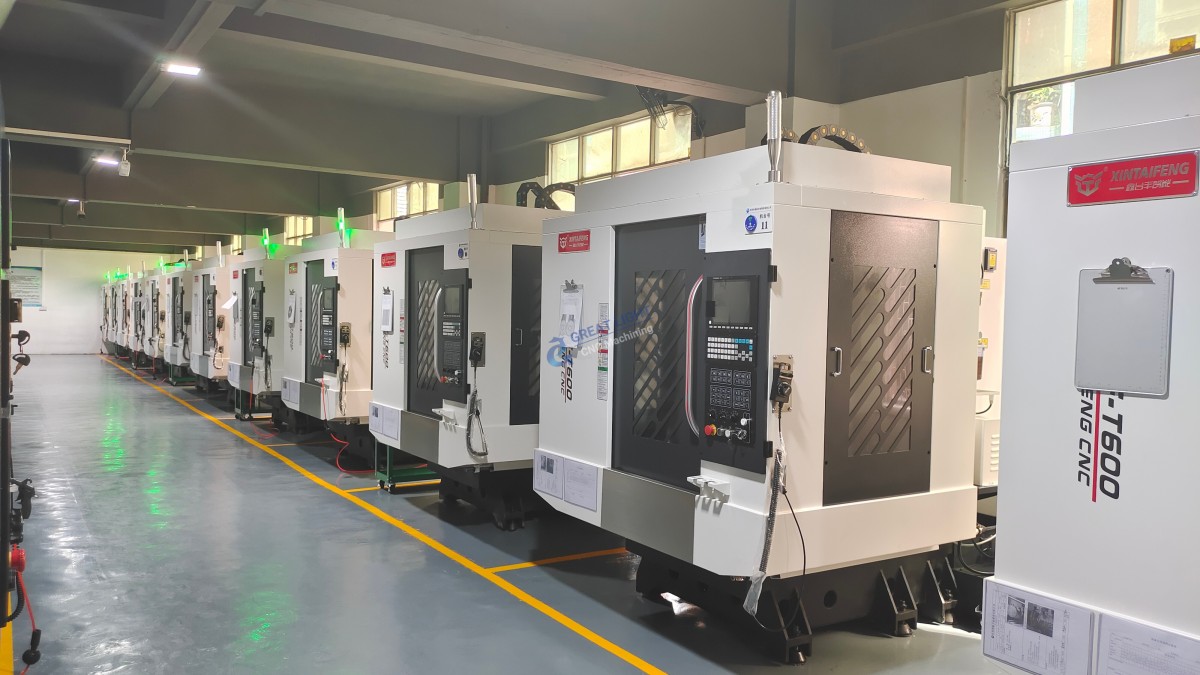
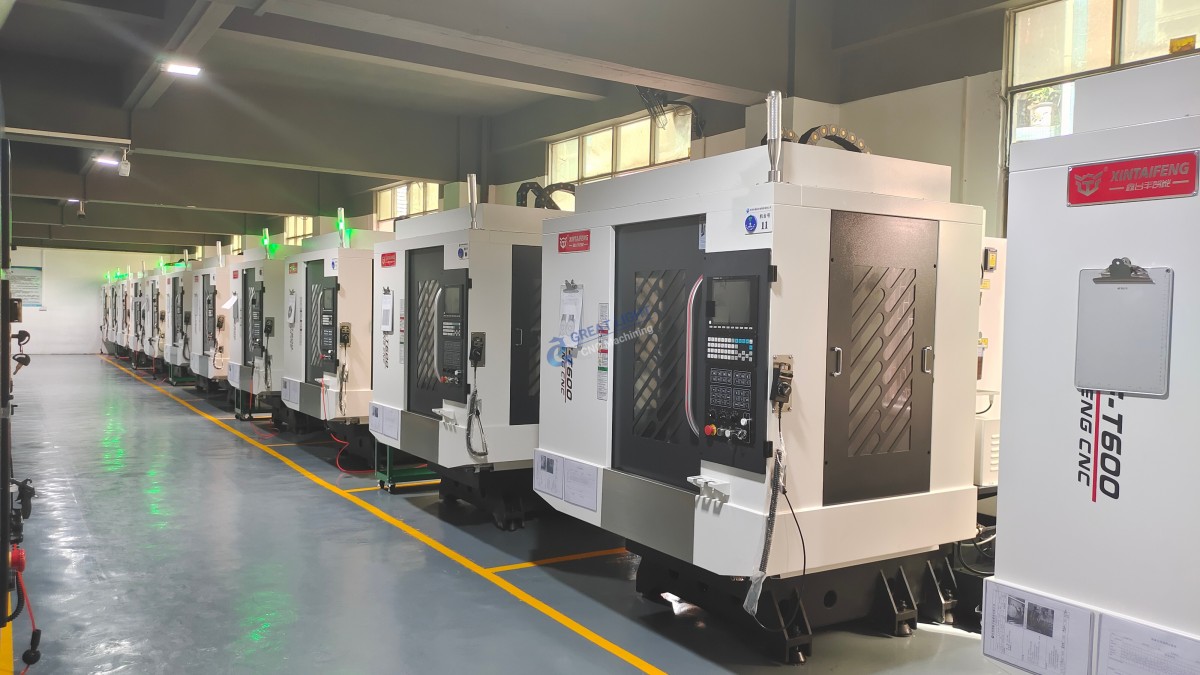
GreatLight: Excels here. With over 7600 sqm of factory space and 127+ precision machines, they control the entire value chain from mold-making (using 5-axis machining centers) to final anodizing. This eliminates handover delays and quality finger-pointing.
Xometry / Protolabs: Act as digital brokers. They will find a casting house, then another shop for CNC, then another for finishing. This introduces risk and complexity for a high-volume, tight-tolerance project.
RCO Engineering: A strong, traditional shop, but often geared toward larger, high-volume automotive parts, potentially lacking the microscopic surface finish experience required for a small, cosmetic consumer electronics part.
Anodizing & Surface Finish Expertise:
Does the supplier have a dedicated, in-house anodizing line or a long-term, audited partnership with a specialist? Ask for “anodized reject rate” metrics.
Quality Systems & Certifications:
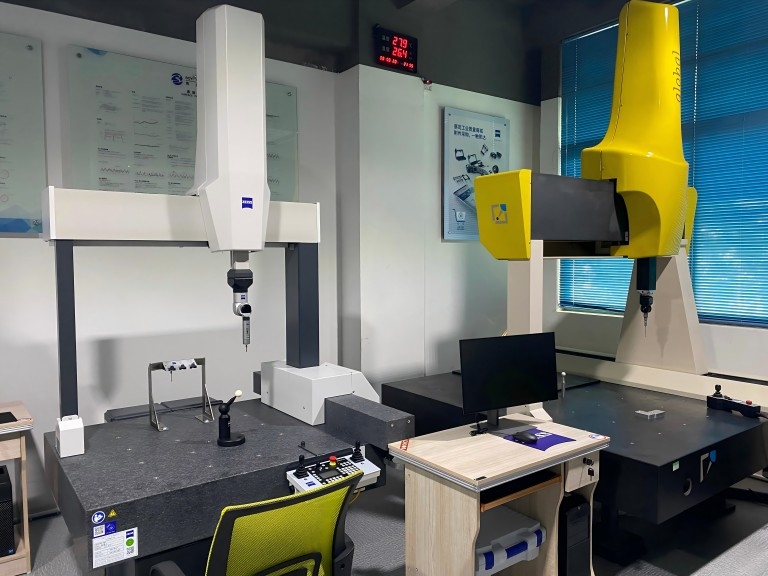
ISO 9001:2015: A baseline. GreatLight proudly holds this.
IATF 16949: If you are in the automotive supply chain for charging cases (e.g., for car embedded systems), this is mandatory. GreatLight holds this certification.
ISO 13485: Essential for medical device enclosures. GreatLight is compliant here, demonstrating great versatility.
ISO 27001: For projects involving sensitive IP (bootloaders, circuit design), data security is paramount. GreatLight ensures your designs are protected.
Engineering Support & DFM:
Design for Manufacturing (DFM): A top-tier supplier will analyze your design and suggest modifications to eliminate or simplify the casting. For example, they might recommend adding a subtle draft angle (0.5-1 degree) to the side walls, repositioning a gate to reduce turbulence, or adjusting wall thickness to prevent hot spots. A DFM report is a sign of engineering depth.
Speed to Samples: A prototype in CNC can be made in days, but the production die takes longer. A responsive partner will communicate lead times clearly.
Why GreatLight CNC Machining Factory is the Optimal Partner for Your TWS Charging Case
After a decade of serving the world’s most demanding precision manufacturers, GreatLight has built a reputation that transcends “just another machine shop.” For a TWS charging case project, the alignment of our capabilities is uniquely powerful.
Full-Process Chain Expertise: We provide true turnkey solutions. From designing and cutting the die cavity on our high-speed 5-axis centers (Dema & Beijing Jingdiao), to running the production die casting cycle, to post-machining the hinge bores with microns of accuracy, to applying the anodized finish—you receive one invoice, one quality standard, one point of contact.
Tolerance to Microns: Our shop floor achieves repeatable precision of ±0.001mm on critical features, fully capable of meeting the tightest hinge and contact requirements.
Rigorous Quality Assurance: Our ISO 9001 and IATF 16949 systems are not paper certifications. Every shipment is subjected to a thorough First Article Inspection (FAI), and process capability (CPK) data is provided. We stand by our work with a real rework promise.
Material & Surface Application Expertise: We have deep experience with ADC12, A380, Zamak 3, and 6061 aluminum for casting. We understand that the same part design might need different alloy choices depending on whether you prioritize cosmetic anodizing or structural strength. Our team will guide you.
Choosing a partner with genuine manufacturing depth, not just a supply chain network, is the difference between a product that feels premium and one that feels cheap. At GreatLight CNC Machining Factory, we invest in the infrastructure and people required to turn your design into a market-leading reality.
Summary: Building Your Competitive Advantage
The TWS Earbuds Charging Case Die Casting process is a high-stakes manufacturing discipline. It requires marrying the high-volume efficiency of die casting with the microscopic precision of CNC machining and the aesthetic perfection of anodizing. Success depends on selecting a partner with the equipment, certifications, and, most importantly, the engineering wisdom to orchestrate this complex symphony.
For OEMs and hardware engineers looking to elevate their next TWS product, GreatLight Metal stands ready as a proven, ISO-certified, and technologically comprehensive partner. We do not just make parts; we help you build a competitive advantage. Contact us today to discuss your next project.


![[访谈] RAPID + TCT 2024:人工智能对 3D 打印的价值](https://print-ing.com/wp-content/uploads/2024/07/INTERVIEW-60x60.jpeg "[访谈] RAPID + TCT 2024:人工智能对 3D 打印的价值 9")




发表回复
要发表评论,您必须先登录。