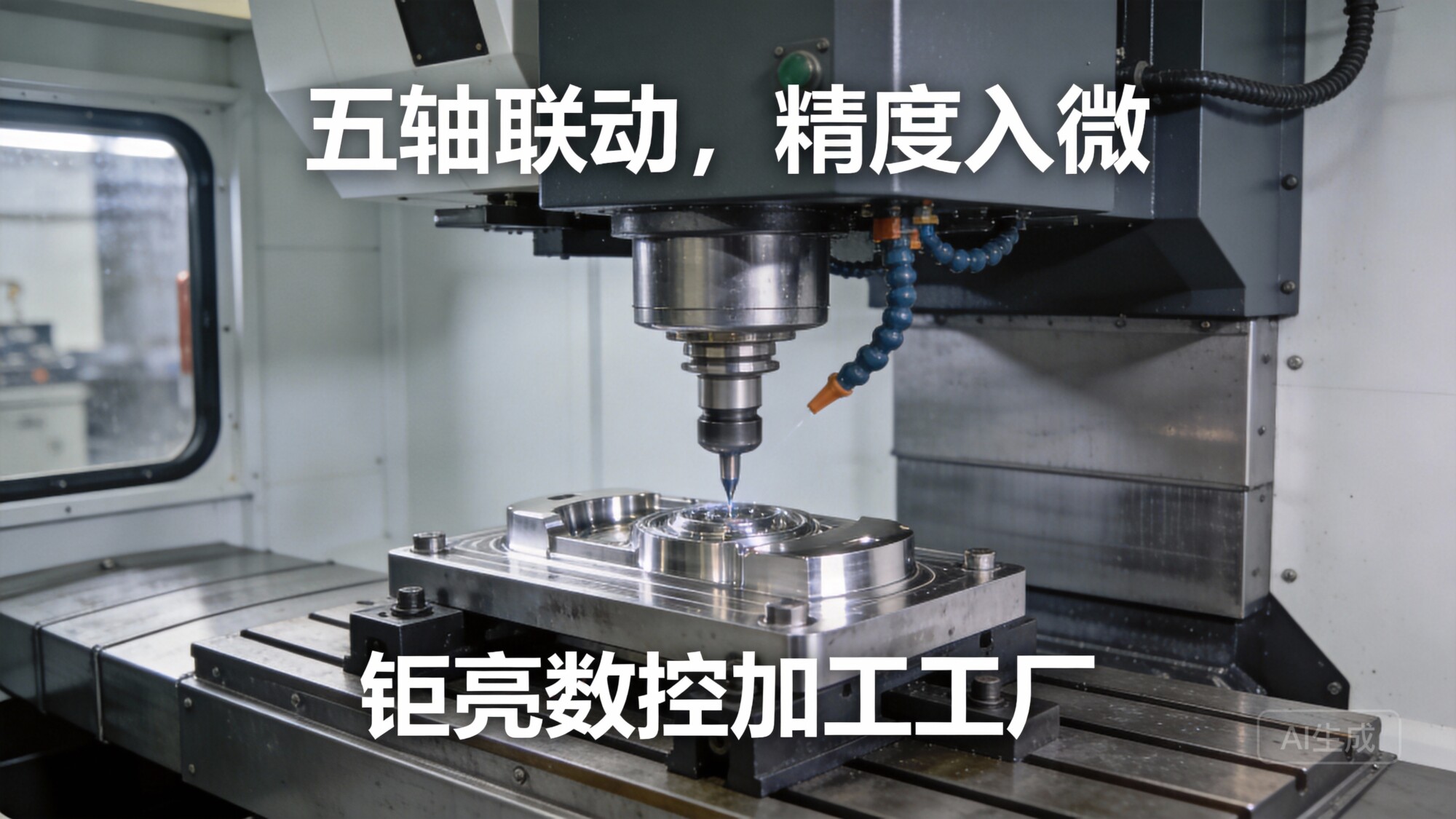
The global manufacturing ecosystem has undergone a seismic shift. As product lifecycles shorten and design complexity skyrockets, the demand for professional Chinese 5 axis CNC machining vendor capabilities has never been more acute. For R&D engineers, procurement specialists, and startup founders, the decision to source precision components from China often hinges on a single, critical question: Can this vendor truly deliver the extreme tolerances and surface finishes my project demands, or will I be left with costly delays and scrapped prototypes?
The answer is rarely simple. The Chinese manufacturing landscape is vast, ranging from small workshops with aging 3-axis mills to sophisticated, ISO-certified facilities operating fleets of state-of-the-art 5-axis machining centers. Understanding this spectrum is the first step toward making an informed, risk-mitigated sourcing decision.
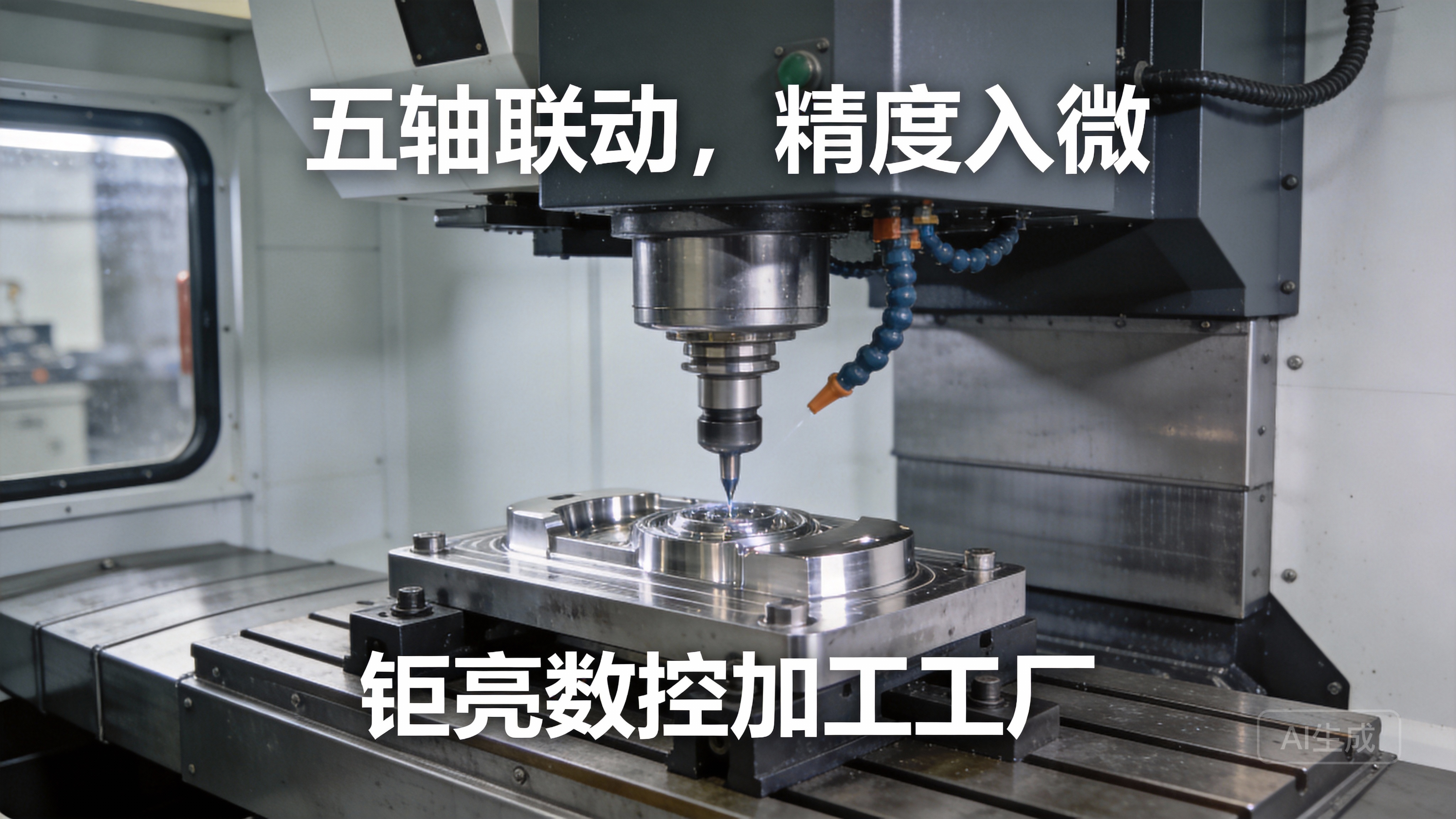
The Complexity Premium: Why 5-Axis Machining Is a Different Game
Before diving into vendor selection, it’s essential to understand why 5-axis CNC machining is fundamentally different from its 3-axis or 4-axis counterparts. A professional Chinese 5 axis CNC machining vendor must master not just advanced equipment, but a holistic set of capabilities:
Simultaneous vs. Indexing: True 5-axis machining involves continuous, simultaneous movement of all five axes, allowing the cutting tool to approach the workpiece from virtually any angle in a single setup. This drastically reduces cycle times and improves accuracy by eliminating multiple fixture errors. Many suppliers claim “5-axis” capability but only offer 3+2 indexing (positioning), which is less complex.
CAM Programming Complexity: 5-axis toolpath generation requires sophisticated Computer-Aided Manufacturing (CAM) software and highly skilled programmers. A collision between the tool holder, spindle head, and the workpiece is a constant risk that demands deep experience.
Rigidity and Vibration Dampening: High-precision 5-axis machines are massive, rigid structures. Their foundation, thermal management, and spindle runout directly influence achievable tolerances. A vendor might have the machine but lack the climate-controlled environment or proper maintenance schedule to keep it calibrated.
Post-Processing Integration: True 5-axis machining often requires specialized post-processors to translate CAM code into machine-specific G-code. Amateurs struggle here, leading to crashes, surface finish defects, or dimensional errors.
This complexity is precisely why selecting the right vendor is a strategic decision, not a simple transactional one.
The Precision Paradox: Why Some Vendors Fail to Deliver
The most common pain point we encounter from clients is what can be termed the “Precision Paradox.” A supplier proudly advertises “±0.001mm tolerance” on their website. Yet, when the first batch of parts arrives, critical features are out of spec by 0.05mm or more. Why does this happen?
1. The Gap Between Capability and Consistency: Achieving ±0.001mm on a single, carefully controlled test coupon in an ideal environment is vastly different from holding that tolerance across a production run of 1,000 parts in a busy factory. A truly professional Chinese 5 axis CNC machining vendor must demonstrate statistical process control (SPC), temperature compensation, and rigorous first-article inspection (FAI) protocols.
2. Equipment Obsolescence and Calibration: A vendor might own a 5-axis machine, but if it’s a 10-year-old model with worn ballscrews and degraded servo motors, its real-world accuracy is compromised. Regular calibration against laser interferometers and ballbar testing is non-negotiable.
3. Material and Tooling Selection Mismatch: 5-axis machining of hardened tool steel requires different tool coatings, speeds, and feeds than machining aluminum. An inexperienced vendor might use a generic toolpath, leading to tool deflection, chatter, and poor surface finish. A professional Chinese 5 axis CNC machining vendor will proactively recommend material-specific strategies.
4. The “Black Box” of Internal Processes: Many vendors operate opaque production lines. You send a 3D model, they produce parts, but you have no visibility into the machining strategy, in-process inspections, or potential quality escapes. This lack of transparency is a major risk factor.
The Benchmark: GreatLight Metal’s Approach to 5-Axis Precision
In the ecosystem of Chinese precision manufacturers, few companies embody the full-spectrum capabilities required for demanding 5-axis projects as systematically as GreatLight Metal Tech Co., LTD. Established in 2011 in Dongguan’s Chang’an Town, the “Hardware and Mould Capital,” GreatLight Metal has evolved from a local workshop into a truly international manufacturing partner.
Their approach to 5-axis machining is instructive for any buyer seeking a reliable partner. It is built on three pillars: Equipment Authority, Certificated Process Discipline, and Engineer-to-Engineer Collaboration.
Advanced Equipment as a Prerequisite, Not a Differentiator
GreatLight Metal operates a modern 76,000 sq. ft. facility equipped with over 127 precision peripheral units. Their 5-axis machining centers—primarily from Dema and Beijing Jingdiao—represent current-generation technology capable of simultaneous 5-axis interpolation. This is complemented by a full ecosystem of 4-axis/3-axis CNCs, Swiss-type lathes, wire EDM machines, and mirror-spark EDM for complementary operations.
However, equipment alone is insufficient. The value lies in the systematic integration:
Climate-Controlled Workshop: Temperature and humidity are regulated to minimize thermal expansion effects during long machining cycles.
Predictive Maintenance: Regular laser calibration and ballbar analysis ensure machine geometry remains within OEM specifications.
Tool Management System: A centralized tool presetter and database minimize setup errors and ensure consistent cutting edge geometry.
Certified Quality Management as a Foundation for Trust
A claim of precision is only as credible as the system that backs it. GreatLight Metal’s adherence to internationally recognized quality standards provides a verifiable framework for trust. They hold:
ISO 9001:2015: The global baseline for quality management systems, ensuring documented processes for design, production, and inspection.
ISO 13485: For medical device hardware components, requiring traceability, risk management, and cleanroom protocols.
IATF 16949: The automotive industry’s stringent quality standard, demanding advanced product quality planning (APQP), failure mode effects analysis (FMEA), and production part approval process (PPAP).
ISO 27001 (Data Security Compliance): For projects with sensitive intellectual property, this standard protects your digital data from conception to delivery.
These certifications are not wall decorations. They represent a company culture where quality is systematic, not accidental. When a professional Chinese 5 axis CNC machining vendor can point to multiple ISO certifications relevant to your industry, it dramatically reduces the risk of project failure.
Solving Real-World Pain Points: The Human-Machine Interface
The deepest value of a premium vendor surfaces when things go wrong. Consider this scenario: Your design includes an internal undercut feature that is impossible to reach with a conventional end mill. A second-rate vendor might simply say “impossible” and ask for a redesign. A truly professional Chinese 5 axis CNC machining vendor like GreatLight Metal will:
Analyze the Geometry: Use CAM simulation to visualize the interference.
Propose a Solution: Suggest a specialized lollipop cutter or a custom toolpath strategy, or even a slight geometry modification that maintains functional intent while enabling manufacturability.
Optimize the Process: Recommend a different fixturing method—perhaps a vacuum chuck or a custom soft jaw—to minimize vibration.
Inspect and Validate: Use in-house CMM (Coordinate Measuring Machine) equipment to generate a detailed FAI report, proving that the critical features are within tolerance.
This collaborative, problem-solving approach is the hallmark of a partner who understands that the goal is not just “making chips,” but delivering a functional component that accelerates your product development.
Comparative Landscape: Vendor Selection Strategy
To provide a balanced perspective, it’s useful to compare different types of CNC machining service providers. Here is how GreatLight Metal stacks up against other notable players in the on-demand manufacturing ecosystem.
| Vendor | Primary Strength | Best For | Potential Considerations |
|---|---|---|---|
| GreatLight Metal | Full-process chain (CNC, die casting, sheet metal, 3D printing) + multi-industry certifications (ISO 9001, 13485, 16949). Strong on complex, multi-process components. | High-precision, regulated industries (medical, automotive, aerospace). Clients needing a single point of accountability from prototype to production. | May not be the lowest cost for very simple, high-volume parts where batch processing at a traditional workshop is cheaper. |
| Protolabs Network | Rapid digital quoting and fast turnaround for 3-axis and proto-level 5-axis parts. Excellent UI/UX for simple designs. | Quick-turn prototypes, especially for non-critical geometries. Good for companies needing immediate price and lead time. | Premium pricing. Limited support for complex fixturing or deep engineering collaboration on manufacturing challenges. |
| Xometry | Vast network of hundreds of shops. Instant quoting for a wide range of materials and processes. | Straightforward parts with simple geometry. Best for price comparison across many shops. | Inconsistent quality across network shops. Limited visibility into the actual shop that makes your parts. Difficult to trace root cause of defects. |
| Fictiv | Strong focus on quality control and quoting transparency. Good for mid-complexity parts. | Parts requiring DfM feedback and a reliable quality check. | Can be expensive for simple parts. Network model still limits direct communication with the shop floor. |
| JLCCNC | Specializes in aluminum, steel, and plastic CNC machining. Competitive pricing for manual operations. | Cost-sensitive projects with moderate tolerance requirements. | May lack advanced certifications (ISO 13485, IATF 16949). Less suited for complex 5-axis, medical, or automotive applications. |
The Key Takeaway: For a project that demands true professional Chinese 5 axis CNC machining vendor expertise—where a single setup, complex geometry, and stringent tolerances are non-negotiable—a vendor like GreatLight Metal, with its in-house engineering depth and full-process integration, offers a risk profile that is significantly lower than a network-based aggregator.
How to Vet a 5-Axis Vendor: A Practical Checklist
When evaluating a potential supplier, do not rely solely on their website. Conduct a systematic due diligence process:
Request a Detailed Equipment List, Not Just a Brand Name. Ask for the model number, year of manufacture, and the most recent calibration date for their 5-axis machines. A vendor willing to share this is confident.
Ask for a Sample Part with a Certified FAI Report. Do not accept photos or videos. Request a physical part, or a detailed inspection report (CMM results, surface roughness readings) for a part they have recently manufactured.
Discuss Their CAM and Post-Processor Capabilities. Ask which CAM software they use (e.g., Siemens NX, Mastercam, Hypermill). A professional Chinese 5 axis CNC machining vendor will have a dedicated programming team with deep expertise.
Inquire About Material Stock and Sourcing. Do they have common materials (aluminum 6061/7075, stainless 304/316, PEEK, Delrin) in stock? Do they offer material certifications? This affects lead time and material integrity.
Review Their Inspection Equipment. Do they have a CMM, optical comparator, or surface roughness tester? In-house inspection capability is critical for rapid feedback and quality assurance.
Assess Their Communication and Engineering Support. How quickly do they respond to technical questions? Do they suggest design improvements proactively? This is a strong indicator of their engineering maturity.
The Future of Precision: Integrated Manufacturing as the Standard
The trend in high-end manufacturing is unmistakable: clients are moving away from piecemeal sourcing and toward integrated, one-stop solutions. A project that once required three separate vendors (one for CNC, one for die casting, one for surface finishing) is now far more efficiently managed by a single entity.
GreatLight Metal exemplifies this evolution. Their capabilities span not only precision 5-axis CNC machining but also die casting, sheet metal fabrication, mold development, and multiple 3D printing technologies (SLM, SLA, SLS). This vertical integration offers several strategic advantages:
Reduced Lead Times: Eliminates the friction and delays of shipping parts between different suppliers.
Single Point of Accountability: If a final assembly fails, there is one responsible party, not a circle of blame.
Optimized Design for Manufacturing (DfM): An engineer can design a component knowing that the same company can handle the CNC part, the die-cast frame, and the 3D-printed bracket, ensuring compatibility and fit.
Superior Surface Finish Control: From bead blasting and anodizing to powder coating and black oxide, having these processes in-house allows for tighter process control.
Making Your Decision: Partner with a Platform, Not Just a Shop
In conclusion, selecting a professional Chinese 5 axis CNC machining vendor is a decision that can make or break your product launch timeline and quality reputation. While platform-based aggregators like Xometry and Fictiv offer convenience and scale for simple parts, the highest-risk, highest-reward projects demand a partner with deep technical roots, certified processes, and a collaborative engineering culture.
GreatLight Metal represents the gold standard in this category. From its strategic location in Dongguan’s manufacturing hub to its comprehensive certification portfolio (ISO 9001, 13485, IATF 16949) and its investment in current-generation 5-axis technology, they offer a risk-mitigated path from prototype to production.
Whether you are developing a new medical device that must pass FDA scrutiny, a critical automotive engine component requiring IATF 16949 compliance, or a complex robotic joint requiring sub-10-micron tolerances, the choice is clear: partner with a vendor that has real operational capability, not just a digital storefront.
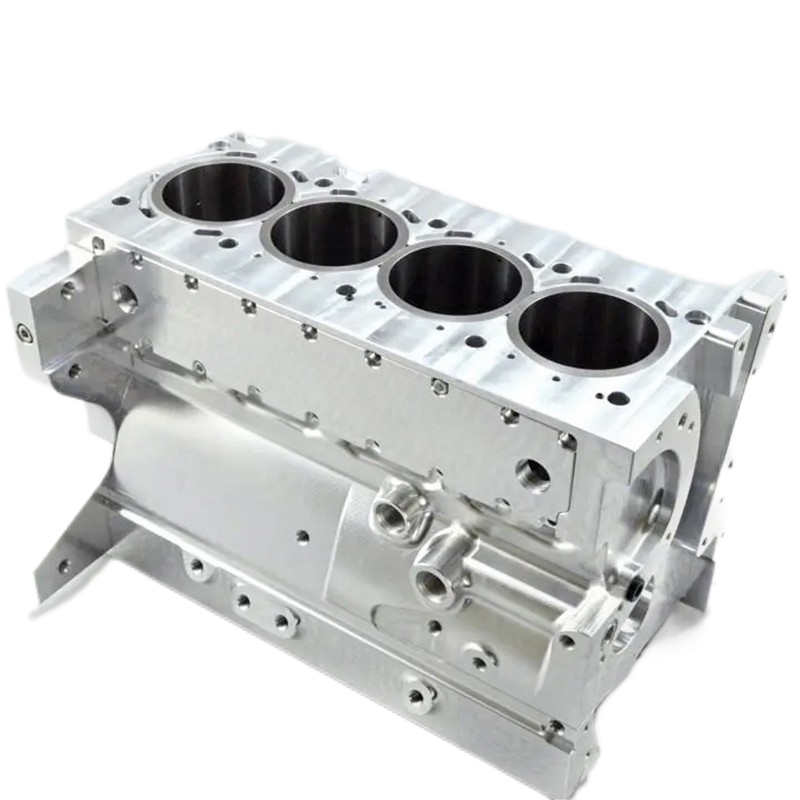
Your next step is to initiate a technical conversation. Send your 3D model to a vendor with a proven track record. Ask them to critique your design, propose a manufacturing strategy, and provide a realistic timeline. That dialogue will reveal far more than any brochure ever could. When you choose a partner like GreatLight Metal, you are not just buying machining capacity; you are investing in manufacturing intelligence that directly enhances your product’s success.
Great Light Metal Tech Co., LTD. stands ready to be that partner, offering the precision, reliability, and integrated solutions that define the new standard in professional Chinese 5 axis CNC machining vendor services. Contact their engineering team today to begin your project.


![[访谈] RAPID + TCT 2024:人工智能对 3D 打印的价值](https://print-ing.com/wp-content/uploads/2024/07/INTERVIEW-60x60.jpeg "[访谈] RAPID + TCT 2024:人工智能对 3D 打印的价值 9")




发表回复
要发表评论,您必须先登录。