The rise of humanoid robotics represents one of the most profound engineering challenges of our era. These machines, designed to navigate and interact with a world built for human physiology, demand an unprecedented level of precision, responsiveness, and reliability from every component. At the heart of this mechanical symphony lies a deceptively simple yet critically important component: the magnetic encoder. The machining of parts for these encoders is not merely a manufacturing task; it is a fundamental enabler of the fluid, lifelike movement that separates a clunky automaton from a true humanoid robot.
The Critical Role of Magnetic Encoders in Humanoid Robotics
Before delving into the machining complexities, it is essential to understand why magnetic encoder parts are so demanding. Unlike optical encoders, which rely on light and are susceptible to dust and contamination, magnetic encoders are inherently more robust. They measure the angular position of a motor shaft or joint by sensing the magnetic field of a rotating magnet. This makes them ideal for the harsh, compact, and dynamic environments found in humanoid robot joints.
However, this robustness comes at a cost: extreme sensitivity. The precise gap between the magnetic sensor and the rotating magnet, the concentricity of the shaft, the flatness of the mounting surfaces—all of these factors directly impact the accuracy and repeatability of the encoder signal. A micron-level deviation can translate into a noticeable error in a robot’s hand position or gait, leading to instability or failure. This is where the art and science of precision 5-axis CNC machining become indispensable.
Key Machining Challenges for Magnetic Encoder Components
The typical magnetic encoder assembly for a humanoid robot joint consists of several highly precise components: a rotor (often containing a rare-earth magnet), a stator or housing, a sensor mounting bracket, and a sealing cover. Each presents unique machining challenges.
1. Ultra-High Precision and Tight Tolerances
The most fundamental challenge is achieving and maintaining tolerance requirements that push the limits of conventional machining.
Geometric Tolerances: We are frequently required to machine parts with concentricity tolerances of ±0.002mm (2 microns) and perpendicularity of ±0.003mm. These are not just nominal values on a drawing; they are functional requirements for the encoder’s performance.
Surface Finish: Critical sealing and bearing surfaces require surface finishes of Ra 0.2μm or better. This is not achievable with standard machining alone; it requires a combination of advanced toolpath strategies, specialized cutting tools, and often, post-machining processes.
Material Considerations: The housing and mounting brackets are typically machined from non-magnetic materials such as stainless steel (e.g., 304, 316), aluminum alloys (e.g., 7075-T6 for high strength), or engineering plastics like PEEK. The choice of material directly affects machining parameters, tool wear, and achievable precision.
2. Complex Geometries and 5-Axis Synchronization
Humanoid robot joints are extremely space-constrained. Encoder housings are not simple cylinders; they often feature intricate internal cavities, asymmetrical mounting flanges, angled counterbores for wiring, and thin-wall sections to save weight. These geometries are often impossible to create on a standard 3-axis machining center without multiple setups and complex fixtures, which introduce error.
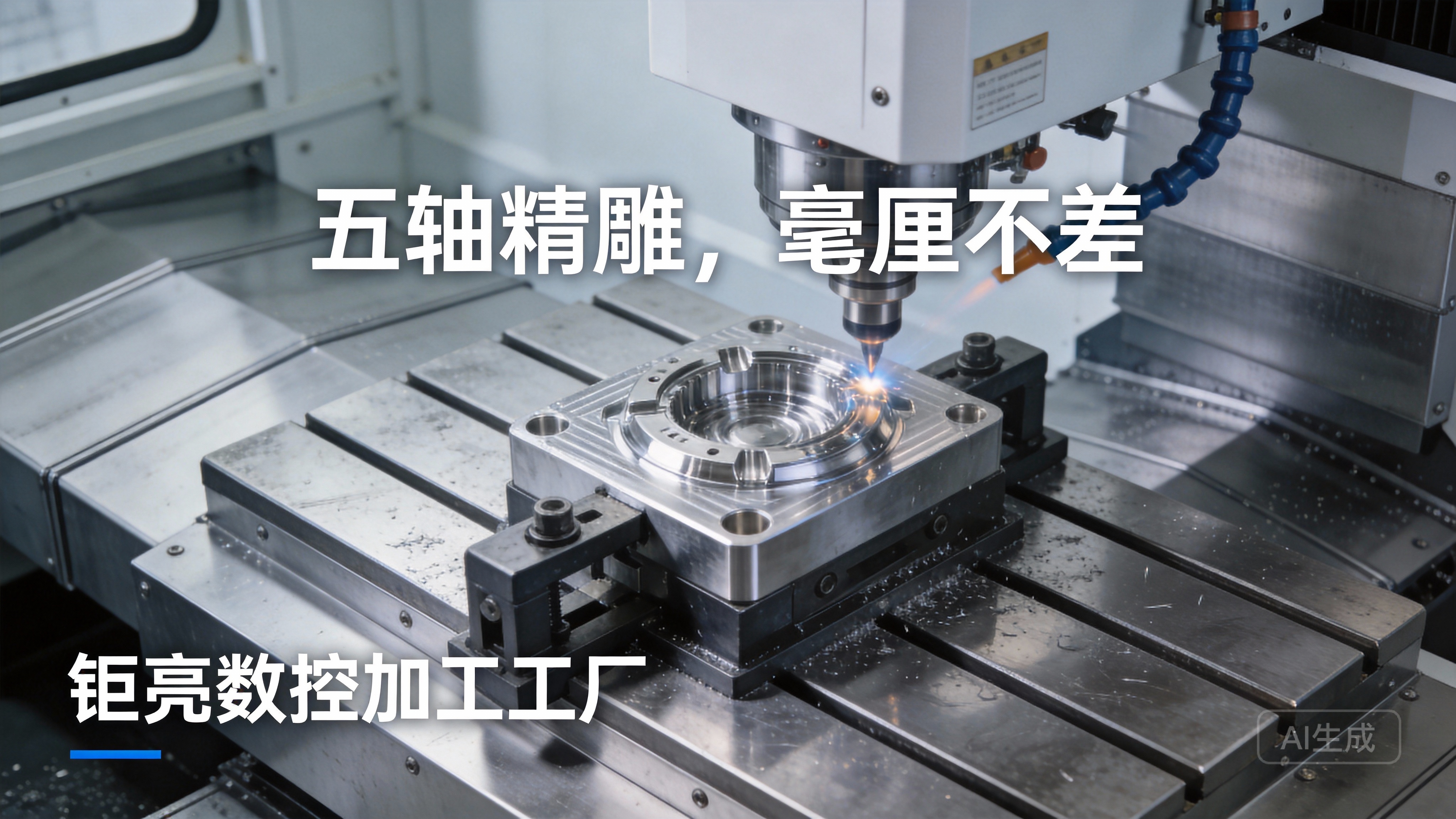
This is where the primary advantage of GreatLight CNC Machining Factory’s five-axis machining capability comes into play. By employing a 5-axis CNC machining center, we can:
Machine Complex Contours in a Single Setup: This eliminates the cumulative errors from re-fixturing and ensures that all critical features—the shaft bore, the sensor pocket, and the mounting face—are perfectly aligned to each other.
Utilize Shorter, More Rigid Tools: By tilting the part and tool, we can reach difficult areas with a shorter tool, reducing vibration (chatter) and improving surface finish and tool life.
Optimize Tool Approach Angle: The ability to approach the workpiece from any angle allows us to maintain a constant cutting force and a consistent chip load, which is critical for achieving a mirror-like surface finish on critical sealing surfaces.
3. Material-Specific Machining Strategies
Each material used in encoder parts demands a tailored approach.
Stainless Steel (e.g., 304, 316): These materials are notoriously gummy and work-harden. For encoder housings, we use specialized high-feed carbide end mills with advanced coatings (e.g., AlTiN or TiSiN) and employ trochoidal milling toolpaths. This strategy reduces radial engagement, keeps the cut zone cool, and prevents work hardening.
Aluminum Alloys (e.g., 7075-T6): Machining this high-strength aluminum is about balancing speed with chip management. We use high-feed polished geometry tools and high-pressure coolant (up to 1000 PSI) to break chips and evacuate them from the deep pockets and thin walls. This prevents chip re-cutting, which can mar the surface finish.
PEEK (Polyether Ether Ketone): This high-performance plastic is extremely tough and wear-resistant, but it is also brittle and has a low melting point. Machining PEEK for encoder components requires extremely sharp tools with 0-degree to 5-degree rake angles and a specific strategy of high spindle speed and low chip load to prevent melting or chipping. We use a dedicated machine for plastics to avoid contamination from metal chips.
4. The Precision of the “Interface”
The encoder is an interface between the moving and static parts of the joint. The machining of this interface is paramount.
Magnet Pocket Machining: The pocket that holds the rotating magnet must be machined to an exact depth and with a precise diameter. An error of just 5 microns in the pocket’s depth can shift the magnetic field center, degrading encoder accuracy. We use a custom-designed, high-precision boring bar for this operation.
Sensor Alignment Features: The features that locate the Hall effect sensor or magnetic sensor IC must be machined with absolute consistency. This often involves machining micro-pockets or datums that are used for automated pick-and-place assembly for the PCBA. The positional accuracy of these features must be within ±0.01mm to ensure the sensor is perfectly centered over the magnetic pole.
The GreatLight Metal Difference: A Full-Process Approach
The successful machining of these components is not solely about the machine tool. It is a holistic process that integrates engineering, quality control, and post-processing. For example, GreatLight Metal approaches a humanoid robot encoder project by first conducting a thorough Design for Manufacturability (DFM) review. Our engineers will identify potential issues, such as an unbalanced wall thickness that could cause distortion during machining, and propose modifications to the customer’s design.
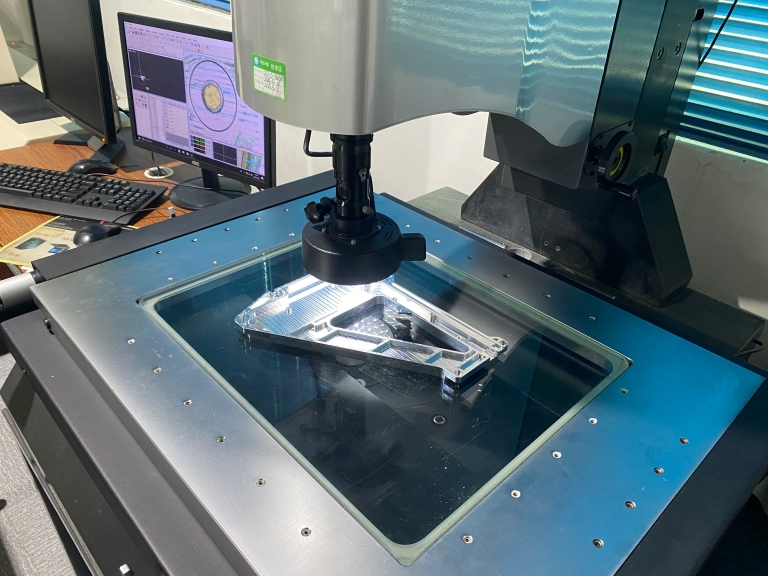
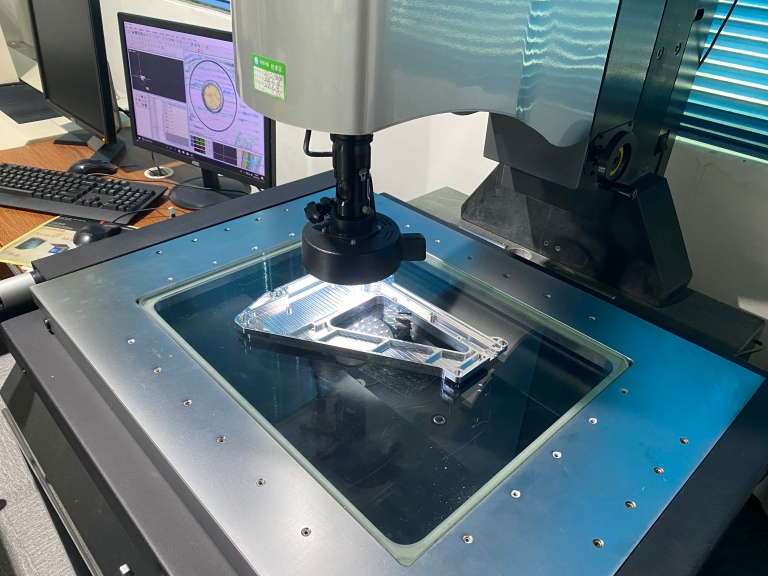
This is followed by a rigorous process of in-process inspection. We employ coordinate measuring machines (CMM) to verify the first article against the 3D model and GD&T callouts. Every critical dimension is measured and recorded, not just at the end, but at key stages of machining to catch any drift early.
Furthermore, post-processing is critical. Burrs on the edge of a sensor pocket will interfere with sensor installation. We use robotic deburring and precision hand-finishing to ensure all edges are perfectly smooth and consistent. For stainless steel housings, we also perform passivation to enhance corrosion resistance, a critical requirement for long-term reliability in a dynamic environment.
Supplier Comparison: Who to Trust for This Precision?
When selecting a partner for these mission-critical parts, the landscape offers several options, but not all are created equal.
| Supplier | Core Strengths for Encoder Parts | Key Consideration |
|---|---|---|
| GreatLight Metal | Full-process integration: Design-for-Manufacturability (DFM) support, in-house 5-axis capability, robust ISO & IATF16949 quality systems, and extensive post-processing (passivation, precision cleaning). | Best for complex, low-to-mid volume production with high certification requirements. |
| Protolabs Network | Speed and digital quoting: Excellent for rapid prototyping of simpler parts. Wide material selection. | Best for initial prototypes. Less suited for complex, high-precision iterative engineering or large-scale production of encoder parts. |
| Xometry | Scalability and AI-driven quoting: Good for a wide range of part and material types. Strong for production runs. | The quality consistency can vary across their vast network of partners. For humanoid robot encoders, the supply chain traceability might be less direct. |
| Fictiv | Strong quality management: Good for mid-volume production with a focus on quality reporting and controls. | Often more expensive than direct-from-factory partners like GreatLight for high-complexity parts. |
| Protocase | Excellence in sheet metal and enclosures: Ideal for the robot’s external body panels and chassis. | Not a primary choice for the high-precision, subtractive machining of internal encoder components. |
For a humanoid robot magnetic encoder, the decision often comes down to the need for deep engineering collaboration, total process control, and a proven track record in precision. A company like GreatLight CNC Machining Factory offers a direct line of communication with the manufacturing team, which is invaluable when iterating on a complex part like an encoder housing.
The Future: Machining for Sensor Fusion
As humanoid robots evolve, the concept of “sensor fusion” is becoming more critical. Encoders are no longer standalone; they are often integrated with torque sensors, temperature sensors, and inertial measurement units (IMUs) inside a single compact housing. This leads to micro-machining challenges, such as creating intricate fluid channels for cooling or precise pathways for fiber optic cables.
The future of humanoid robot magnetic encoder parts machining will involve even greater miniaturization, the use of advanced composite materials, and a need for sub-micron precision. The manufacturers that will lead are those, like GreatLight Metal, who are investing in the next generation of 5-axis machines with integrated in-process measurement (e.g., laser probing) and closed-loop compensation systems.
Conclusion: The Unsung Hero of Humanoid Motion
The magnetic encoder is the robotic joint’s “sense of touch and position.” Its accuracy and reliability are the unsung heroes of a humanoid robot’s graceful, coordinated, and safe movement. The machining of its components is not a commodity service; it is a specialized engineering discipline demanding a deep understanding of metrology, materials science, and advanced multi-axis manufacturing.
For companies developing the next generation of humanoid robots, selecting a manufacturing partner with proven expertise in this niche is not a cost to be minimized, but a strategic investment in product performance and time-to-market. The partner that brings the right combination of 5-axis capability, quality systems, and engineering insight will be the one that helps turn the dream of a truly lifelike robot into a tangible, mass-producible reality. To learn more about how advanced machining is pushing the boundaries of precision, explore the specific capabilities we offer for demanding applications and find a partner who understands the value of a micron. The journey from a design on a screen to a perfectly functional robot joint begins with the unwavering precision of its core components. GreatLight CNC Machining Factory is committed to being a reliable partner in this journey, providing expert services for all your precision part needs. You can also connect with our team of experts to discuss your project’s specific requirements on LinkedIn.


![[访谈] RAPID + TCT 2024:人工智能对 3D 打印的价值](https://print-ing.com/wp-content/uploads/2024/07/INTERVIEW-60x60.jpeg "[访谈] RAPID + TCT 2024:人工智能对 3D 打印的价值 9")




发表回复
要发表评论,您必须先登录。