
In the realm of medical imaging, where diagnostic accuracy directly impacts patient outcomes, the components that constitute a PET (Positron Emission Tomography) scanner are marvels of modern engineering. Among these, the PET scanner detector ring frame stands as a critical structural element that fundamentally determines image quality, system stability, and long-term operational reliability. Yet, for many R&D teams and procurement engineers, sourcing a manufacturer capable of producing these frames to the required specifications remains a significant challenge.
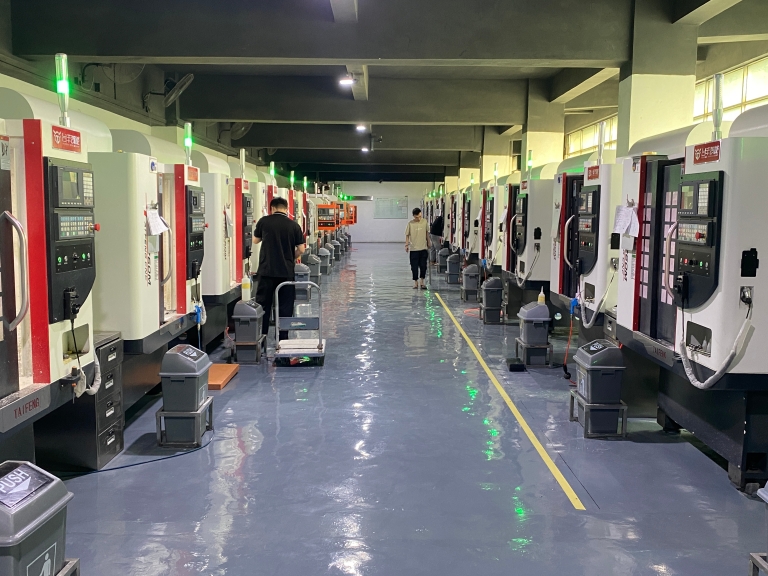
The core issue is not simply about machining a large ring. It is about achieving micron-level geometric tolerances across a massive structure, managing the mechanical stress of a rotating assembly, and integrating complex cooling and mounting features—all within a component that must perform flawlessly for years in a demanding clinical environment. This article explores the unique manufacturing challenges of the PET detector ring frame, explains why advanced 5-axis CNC machining is the only viable solution, and provides a framework for evaluating potential manufacturing partners.
Understanding the PET Scanner Detector Ring Frame: A Structural Masterpiece
Before delving into manufacturing complexities, it is essential to understand what this component is and why it is so demanding.
The Functional Role of the Ring Frame
The PET scanner detector ring frame serves as the physical backbone of the detection system. Its primary functions include:
Precise Detector Positioning: The frame must hold hundreds or thousands of individual detector modules in exact spatial alignment. Any deviation—even a few microns—can cause misregistration of coincidence events, degrading image resolution.
Thermal Management: PET detectors generate significant heat during operation. The frame often incorporates integrated cooling channels or mounting provisions for heat sinks to maintain detector stability.
Vibration Dampening: The gantry rotates during scanning, and the frame must resist flexure and vibration to prevent motion artifacts.
Structural Integrity: The frame supports the weight of all detector modules, electronics, and shielding, often exceeding hundreds of kilograms, while maintaining its shape over the scanner’s operational lifespan.
Why Traditional Machining Falls Short
Given these demands, it becomes clear why conventional machining approaches cannot reliably produce a PET detector ring frame.
| Challenge | Conventional Machining | Advanced 5-Axis CNC Solution |
|---|---|---|
| Geometric Complexity | Requires multiple setups, leading to cumulative tolerancing errors. | Single-setup machining of complex 3D features, ensuring datum consistency. |
| Material Distortion | Stress relief is difficult; thin-wall sections distort during machining. | Advanced toolpath strategies and fixturing minimize stress-induced deformation. |
| Achievable Tolerance | Typically ±0.05mm or worse on large parts. | Can achieve ±0.01mm or better on critical features, even on large ring frames. |
| Surface Finish | Inconsistent, especially on internal features. | Superior surface finishes (Ra 0.4 μm or better) on all accessible surfaces. |
| Integration of Features | Cooling channels, mounting bosses, and wireways often require secondary operations. | These features can be machined in the same setup, reducing lead time and improving accuracy. |
The 5-Axis CNC Machining Advantage: Solving the Ring Frame Manufacturing Puzzle
The transition from 3-axis to 5-axis CNC machining represents a paradigm shift in how manufacturers approach the PET detector ring frame. Let us break down the specific technical advantages.
1. Single-Setup Precision: Eliminating Cumulative Error
A typical ring frame requires machining on multiple faces: the top, bottom, inner diameter, outer diameter, and numerous mounting pockets. With a 3-axis machine, each face requires a new setup, meaning the part is unclamped, repositioned, and re-clamped. Each setup introduces potential alignment errors.
The 5-axis solution: A 5-axis machining center with a rotary-tilt table allows the part to be machined from virtually any angle in a single setup. Once the ring is fixtured, the machine’s coordinated motion of X, Y, Z, and two rotary axes (A and B, or B and C) can access the top surface, drill holes at compound angles, machine the inner profile, and create undercuts on the outer face—all without disturbing the part’s datum. This single-setup approach is the cornerstone of achieving the sub-0.01mm positional accuracy required for detector alignment.
2. Material Selection and Stress Management
The choice of material for a PET detector ring frame is a careful balance of weight, stiffness, thermal conductivity, and machinability. Common materials include:
Aluminum 6061-T6 or 7075-T6: Excellent strength-to-weight ratio, good machinability, and acceptable thermal conductivity.
Stainless Steel 304 or 316: High stiffness and corrosion resistance, but significantly heavier, often used in fixed-gantry designs.
Advanced Aluminum Alloys (e.g., 7xxx series): Offer higher strength but are more challenging to machine without inducing stress.
Regardless of the material, managing stress during machining is critical. Large material removal rates (MRR) can create significant internal stresses, leading to part distortion when the clamping forces are released. GreatLight CNC Machining employs advanced roughing strategies, such as trochoidal milling and dynamic toolpathing, which maintain a constant chip load and reduce cutting forces. Additionally, strategic use of stress-relief cycles (thermal or vibratory) between roughing and finishing operations ensures the part remains stable.
3. Thin-Wall Machining: Maintaining Stability in Delicate Sections
Many ring frames incorporate thin-wall sections to reduce weight without sacrificing stiffness. Machining a 1-2mm thick wall over a meter-long arc is a recipe for chatter and deflection.
The solution involves a combination of techniques:
Specialized Fixturing: Vacuum chucks, custom soft jaws, and strategic use of temporary supports prevent the part from vibrating.
Feed and Speed Optimization: Using higher spindle speeds (15,000-20,000 RPM) with lower chip loads reduces cutting forces.
Small-Radius End Mills: Using tools with a smaller diameter reduces the radial forces exerted on the thin wall.
4. Incorporating Cooling Channels and Complex Features
Modern PET scanners demand active thermal management. The ring frame may require:
Internal Coolant Channels: Machined as blind or through holes, often with complex geometries to maximize heat transfer surface area.
Precision Pocket Milling: For embedding detector modules, each pocket requiring its own datum and tolerance.
Wire Management Features: Cable pathways, tie-down points, and connector mounting bosses.
A 5-axis machine can create these features in a continuous, optimized toolpath. For example, a cooling channel that follows a curved path around the ring can be machined using a ball-nose end mill with the tool axis oriented to maintain a consistent engagement angle. This eliminates the need for “dog-leg” channels created by 3-axis drilling, which are less efficient and more difficult to clean.
A Comparative Analysis of Precision CNC Machining Service Providers
When selecting a partner for PET detector ring frame production, it is crucial to evaluate capabilities beyond what is advertised on a website. The following comparison provides an objective perspective on key players in the market.
Provider Capability Matrix
| Provider | 5-Axis Capacity | Maximum Part Size | Certifications | Material Expertise | Typical Lead Time (Prototype) | Key Strength |
|---|---|---|---|---|---|---|
| GreatLight CNC Machining | Large-scale 5-axis cluster (Demag, Beijing Jingdiao) | 4000 mm | ISO 9001, ISO 13485, IATF 16949 | Aluminum, Stainless Steel, Titanium, Exotics | 5-10 business days | Full-process chain + deep engineering support |
| Protolabs Network (formerly) | Extensive, distributed network | Varies by partner | ISO 9001 (network) | Wide range | 1-3 days (simple parts) | Speed for simple geometries |
| Xometry | Extensive, AI-powered matching | Varies by partner | ISO 9001, AS9100 (network) | Wide range | 3-7 days (typical) | Instant quoting, large network |
| Fictiv | Selective 5-axis partners | Medium (approx. 1000 mm) | ISO 9001, ITAR | Plastics, Metals | 5-10 days | User-friendly platform, DFM feedback |
| RapidDirect | Limited internal 5-axis | Medium | ISO 9001, ISO 13485 | Metals, Plastics | 7-12 days | Fast quoting, competitive pricing for simpler parts |
Analysis of the Competitive Landscape
GreatLight CNC Machining distinguishes itself through its deep technical capability in high-precision, large-format 5-axis machining. Unlike platform-based aggregators (like Xometry or Fictiv) that match a job to a pre-vetted supplier, GreatLight performs all work in-house. This provides a single point of accountability and allows for tighter control over quality and lead time. Their certifications (ISO 13485 for medical hardware and IATF 16949 for automotive-grade quality systems) are particularly relevant for a medical device component like a PET scanner ring frame.
Platforms like Protolabs Network and Xometry excel at speed and ease of use for simpler parts, but for a complex, mission-critical component like a ring frame, the lack of direct control over the manufacturer can be a risk. The “AI-powered” matching may not fully capture the nuances of a specific material choice or a non-standard tolerance requirement.
Fictiv provides excellent DFM feedback and a robust platform, but its 5-axis capacity is more limited in terms of maximum part size, which may not suit larger PET scanner gantries.
The key takeaway: For a component where failure is not an option, a manufacturer with direct, proven experience, a dedicated engineering team, and the full suite of certifications offers the highest probability of success. This is the value proposition that GreatLight CNC Machining brings to the table.
The Quality Assurance Framework: From Certification to Measurement
Claiming precision is one thing; proving it is another. A reputable manufacturer will have a robust quality assurance framework that is auditable and transparent.
The Role of ISO 13485 and IATF 16949
While ISO 9001 is foundational, ISO 13485 is the specific quality management system standard for medical device manufacturing. It mandates a higher level of rigor in design control, risk management, and traceability. For a PET scanner manufacturer, sourcing from an ISO 13485-certified supplier provides confidence that the parts will meet both regulatory and clinical requirements.
IATF 16949, while an automotive standard, is equally rigorous. Its emphasis on defect prevention, continuous improvement, and error-proofing (Poka-Yoke) translates directly to high-reliability manufacturing. GreatLight CNC Machining’s possession of both these certifications is a strong indicator of its manufacturing maturity.
In-Process and Final Inspection
For a PET detector ring frame, a simple final inspection is insufficient. The inspection strategy must include:
In-Process Probing: Using a touch-trigger probe on the machine to verify critical features like bore diameters and pocket depths before removing the part from the fixture.
CMM Inspection: Post-machining inspection on a Coordinate Measuring Machine to validate the entire geometry, including flatness, roundness, and positional tolerances.
Surface Roughness Measurement: Using a profilometer to ensure the specified Ra value is achieved, particularly on sealing surfaces.
Material Certification: Verification of the material’s chemical composition and mechanical properties through mill test reports.
Traceability and Data Security
In the medical device industry, traceability is paramount. Every ring frame should be marked with a unique serial number. The manufacturer should be able to provide a complete traceability package, including:
Material certificates
In-process inspection reports
Final CMM report
Machine operator sign-off
Certificates of Compliance
Furthermore, for projects involving proprietary designs, data security is critical. ISO 27001 compliance, which GreatLight CNC Machining offers, ensures that your intellectual property is protected through secure data handling and access controls.
A Hypothetical Case Study: Solving a PET Ring Frame Challenge
Consider a company, “MediScan Imaging,” developing a next-generation, time-of-flight (TOF) PET scanner. Their design team has specified a large aluminum 6061-T6 ring frame with an outer diameter of 950 mm and a wall thickness of only 4 mm in certain sections. The frame requires 256 precision pockets for detector modules, each with a positional tolerance of ±0.01 mm relative to the center axis. Additionally, the frame must be stress-relieved and anodized to prevent corrosion.
The Challenge: MediScan initially sourced the part from a low-cost provider who used a 3-axis machine. The resulting frames exhibited excessive runout (0.15 mm) and chatter marks on the thin walls. The pockets were misaligned from the intended layout, making assembly impossible.
The Solution with GreatLight CNC Machining:
Design for Manufacturability Review: The GreatLight engineering team reviewed the MediScan design and suggested a slightly increased wall thickness (5 mm) at a few critical stress points to improve rigidity without materially affecting weight. They also recommended a change in the pocket corner radius to allow a standard end mill, reducing cost.
Fixture Design: A custom aluminum vacuum fixture was designed that matched the inner diameter of the ring. This provided secure, rigid clamping without inducing distortion.
5-Axis Machining in a Single Setup: The ring was machined from a single billet of stress-relieved 6061-T6 on a Demag 5-axis center. The roughing was done with trochoidal paths to manage stress. The finishing passes on the pockets and the outer profile were completed in the same machine cycle.
In-Process Probing: After roughing, the machine probe checked for any movement. After finishing, it verified all 256 pocket locations.
Final Inspection and Certification: The completed ring was sent for CMM inspection. The report showed a maximum deviation of 0.008 mm on pocket positions and 0.005 mm on roundness. The surface finish measured Ra 0.3 μm.
Value-Added Service: The part was then sent for Type II hard anodizing, a service GreatLight integrated into its supply chain, delivering a single, complete package to MediScan.
The Result: MediScan received a fully certified, ready-to-assemble ring frame in under three weeks—a timeline that included the initial DFM review, engineering change, and delivery. The component performed flawlessly in their prototype scanner, meeting all performance targets.
Conclusion: The Unseen Value of a True Manufacturing Partner
The PET scanner detector ring frame is more than a metal circle; it is the physical manifestation of precision engineering. Its successful manufacture requires a deep understanding of materials, stress management, fixturing, and the nuanced capabilities of advanced 5-axis CNC machining. Choosing a supplier based solely on price or delivery speed is a gamble that can ultimately cost far more in lost time, scrapped prototypes, and delayed product launches.
For complex, mission-critical components, the value lies in partnering with a manufacturer that offers:
True 5-axis expertise: Not just a machine, but the engineering knowledge to program it for complex, large-format parts.
A robust quality system: ISO 13485, ISO 9001, and IATF 16949 are not just certificates; they represent a culture of quality.
A collaborative engineering approach: A partner that will review your design, offer DFM suggestions, and help you solve problems before they become expensive mistakes.
End-to-end service: From material sourcing to surface finishing, a single point of accountability simplifies your supply chain.
By understanding the true manufacturing demands of the PET detector ring frame and selecting a partner with the proven capability to meet them, you ensure that your medical imaging system will deliver the diagnostic clarity and operational reliability that patients and clinicians depend on. This is the path to mutual success in the demanding world of medical device manufacturing. For more insights into advanced 5-axis solutions, explore GreatLight’s precision 5-axis CNC machining services. Connect with us on LinkedIn to stay updated on the latest in precision manufacturing.


![[访谈] RAPID + TCT 2024:人工智能对 3D 打印的价值](https://print-ing.com/wp-content/uploads/2024/07/INTERVIEW-60x60.jpeg "[访谈] RAPID + TCT 2024:人工智能对 3D 打印的价值 9")



发表回复
要发表评论,您必须先登录。