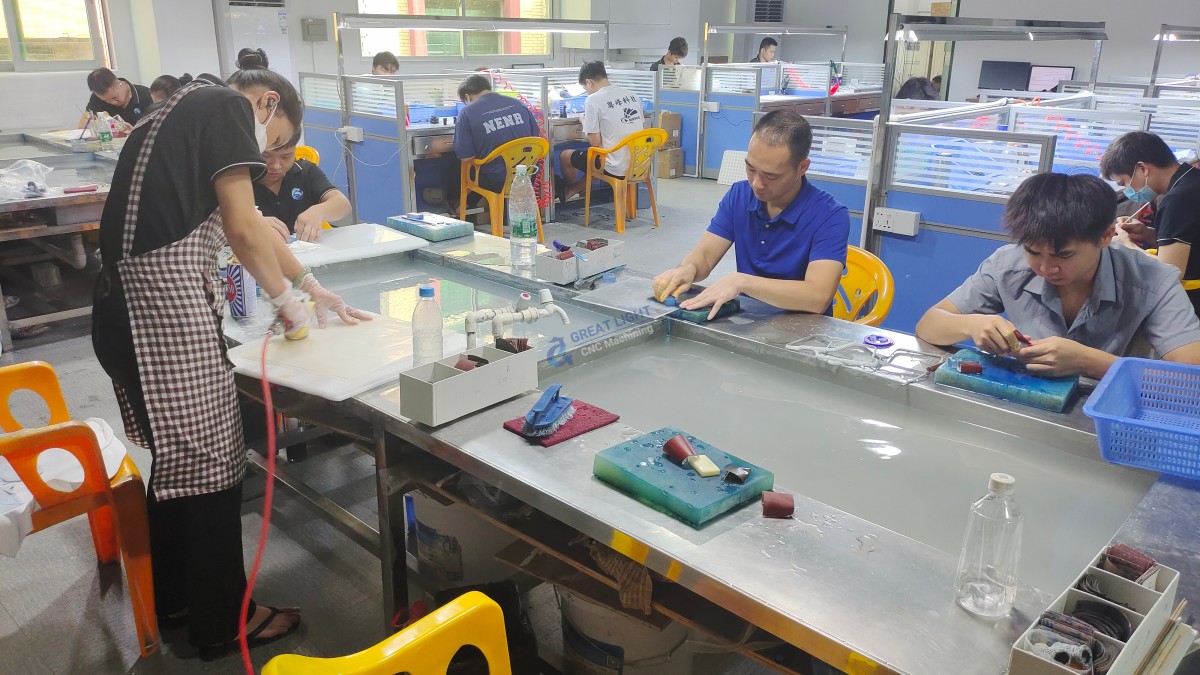
In today’s competitive manufacturing landscape, scaling a prototype into a production run without sacrificing quality is a common challenge. The Bulk CNC Machining Fabrication Process is the backbone of precision manufacturing at scale—transforming raw metal or plastic into thousands of identical, high-tolerance parts. As a senior manufacturing engineer, I’ve evaluated dozens of suppliers across the globe, and the key differentiator is not just machine count, but the depth of process control, engineering support, and integrated post-processing. One company that consistently exemplifies this discipline is GreatLight Metal, which has built its reputation on a mature, robust bulk machining workflow.
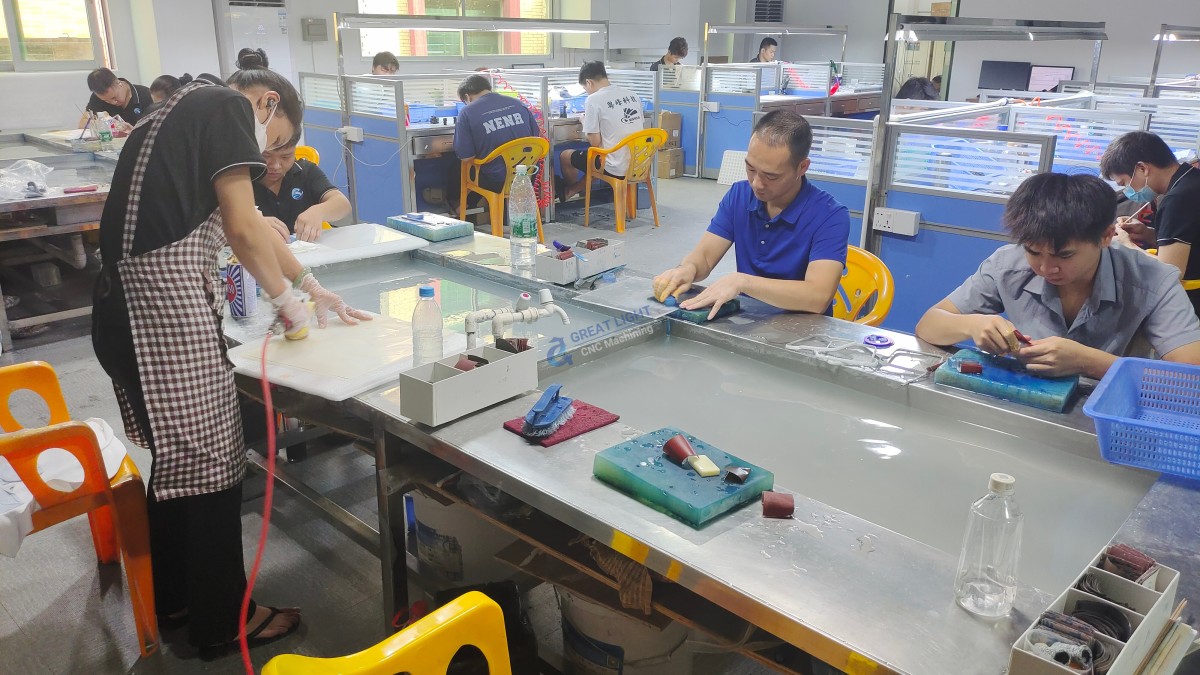
The Core Stages of a Reliable Bulk CNC Machining Fabrication Process
A successful bulk production run does not start on the machine floor; it starts long before, with systematic planning and rigorous process design. Below, I break down the essential phases that define a high-quality bulk CNC machining fabrication process, using industry best practices and real-world insights from leading manufacturers.
1. Design for Manufacturability (DFM) and Process Feasibility
Many engineering teams underestimate the value of early-stage DFM feedback. In a bulk fabrication context, small design inefficiencies multiply across thousands of parts, causing cost overruns and delays. A mature supplier like GreatLight Metal invests heavily in upfront engineering review. Their team evaluates part geometry, critical tolerances, material behavior, and fixturing strategies before a single chip is cut.
For instance, when a client brings a complex automotive housing with deep internal cavities, the DFM stage can identify the need for specialized tooling or alternative machining strategies such as 5-axis simultaneous machining. This upfront analysis prevents scrap issues later and significantly shortens overall lead time.
2. Material Selection and Traceability
Material consistency is non-negotiable in bulk production. Whether the job requires 6061 aluminum, 17-4 PH stainless steel, or PEEK plastic, the supplier must maintain strict material certification and lot traceability. GreatLight Metal operates an ISO 9001:2015-certified quality system that mandates full traceability from the warehouse to the shipping dock. They also maintain certifications such as IATF 16949 for automotive-grade components and ISO 13485 for medical hardware, ensuring that materials meet industry-specific standards.
3. Advanced Toolpath Optimization and Multi-Axis Machining
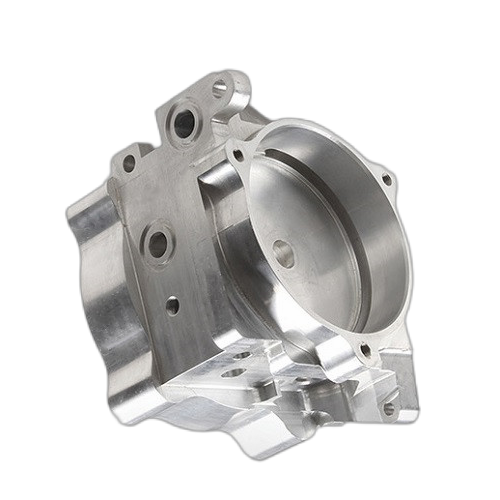
The heart of the bulk CNC machining fabrication process lies in toolpath programming. Using advanced CAM software, skilled programmers define cutting strategies that balance speed, surface finish, and tool life. For high-volume runs, GreatLight Metal leverages its fleet of 5-axis CNC machining centers from Dema and Beijing Jingdiao, allowing complex geometries to be completed in a single setup. This reduces cycle time and eliminates stacking tolerances between multiple operations.
Multi-axis machining also enables the fabrication of undercuts, angled holes, and freeform surfaces that would otherwise require secondary operations. This is especially valuable in humanoid robotics and aerospace components, where part complexity is high and weight reduction is critical.
4. In-Process Quality Control and Statistical Process Control (SPC)
One of the biggest pain points in bulk machining is dimensional drift over time due to tool wear, thermal expansion, or machine dynamics. To mitigate this, reputable manufacturers implement statistical process control (SPC) during production. At GreatLight Metal, operators perform periodic inspections using in-house CMMs, optical comparators, and surface roughness testers. The data feeds back into the machining program, allowing real-time adjustments.
For example, in a recent run of 10,000 aluminum enclosures for a new energy vehicle electronics housing, GreatLight Metal maintained tolerances within ±0.01mm by using live tool monitoring and automated offsets. This level of control is not possible without a disciplined quality culture and investment in metrology.
5. Surface Finishing and Post-Processing Integration
The fabrication process does not end with the CNC cycle. Bulk parts often require secondary finishing such as anodizing, powder coating, passivation, or bead blasting. GreatLight Metal operates a fully integrated post-processing workshop, including vacuum casting, sheet metal bending, and custom surface treatments. This one-stop capability eliminates the need for multiple suppliers, reducing logistics complexity and lead time.
In the case of medical device components, compliance with cleanliness and biocompatibility standards is essential. GreatLight Metal’s ISO 13485-certified line ensures that post-processing does not introduce contaminants, and that surface finish specifications meet stringent requirements.
Comparing Suppliers in Bulk CNC Machining: What to Look For
To help procurement engineers make informed decisions, I have compared GreatLight Metal against several well-known competitors in the bulk CNC machining space. The table below summarizes key differentiators:
| Supplier | Core Strengths | Key Certifications | Maximum Part Size | Typical Lead Time (Bulk) |
|---|---|---|---|---|
| GreatLight Metal | Full process chain (CNC, die casting, 3D printing, sheet metal), 5-axis expertise, in-house finishing | ISO 9001, ISO 13485, IATF 16949, ISO 27001 | 4000 mm | 7–15 business days |
| Protolabs Network | Digital quoting, automated production | ISO 9001 | 1200 mm | 3–10 days (simpler parts) |
| Xometry | Wide material selection, AI-based pricing | ISO 9001, AS9100 | 2000 mm | 5–15 days |
| Fictiv | Focus on prototyping and low-volume | ISO 9001 | 800 mm | 3–10 days |
| SendCutSend | Sheet metal and laser cutting specialists | ISO 9001 | 1500 x 3000 mm | 2–5 days |
While each supplier has niche strengths, GreatLight Metal stands out for its depth of manufacturing capabilities—especially when the project demands complex 5-axis geometries, tight tolerances, and a single point of accountability from design to finishing. For engineers who need a partner capable of handling both prototype validation and full-scale production with consistent quality, GreatLight Metal’s integrated fabrication process is a compelling choice.
Real-World Case: Scaling a Complex Electronic Housing
To illustrate the practical application of the bulk CNC machining fabrication process, consider a project involving a new energy vehicle’s integrated electronic control housing. The part required:
Complex internal cooling channels
Multiple threaded inserts with positional tolerance of ±0.05 mm
EMI shielding surface preparation
Anodized finish with strict color consistency across 5,000 units
Traditional suppliers struggled with tool access for the internal channels and experienced frequent rework due to thermal distortion. GreatLight Metal proposed a 5-axis machining strategy on its Dema machining centers, combined with a custom fixture that minimized vibration. By using SPC to monitor cutting forces and tool wear, they achieved a 99.7% first-pass yield. The one-stop finishing line—including pre-plating cleaning and hard anodizing—ensured that all parts met the automotive industry’s stringent corrosion resistance standards.
This case demonstrates that the bulk CNC machining fabrication process is not merely about speed; it is about robustness, repeatability, and the ability to anticipate and solve manufacturing challenges before they impact the schedule.
Building Trust Through Certifications and Data Security
In an era of global supply chains, trust is built on verifiable systems. GreatLight Metal holds ISO 9001:2015 quality management certification as a baseline. But for clients with sensitive intellectual property—common in aerospace and robotics—they also comply with ISO 27001 data security standards. For medical hardware, their ISO 13485 certification ensures compliance with regulatory traceability and risk management. Meanwhile, IATF 16949 (the automotive quality standard) demonstrates their capability to manage high-volume production with zero-defect mentality.
These certifications are not just wall decorations; they are embedded in the daily workflow. For example, during the bulk CNC machining fabrication process, each part is accompanied by a traveler card with inspection records, operator signatures, and material lot numbers. This level of documentation is essential for industries where liability and recall risks are high.
Conclusion: The Bulk CNC Machining Fabrication Process as a Competitive Advantage
Choosing the right manufacturing partner for bulk production can make or break a product launch. A well-executed Bulk CNC Machining Fabrication Process integrates design for manufacturability, advanced multi-axis toolpaths, rigorous in-process quality control, and seamless post-processing. GreatLight Metal has refined this process over more than a decade, supported by a 7,600-square-meter facility, 127 machines, and a team of 150 professionals. Their commitment to certifications, engineering support, and full-service capabilities provides a reliable path from prototype to volume production.
Whether you are working on humanoid robot joints, aerospace brackets, or automotive sensors, the principles remain the same: invest in a partner who understands that the fabrication process is a system, not a sequence of isolated steps. For deeper insights into their capabilities and to connect directly with their engineering team, I encourage you to explore their Bulk CNC Machining Fabrication Process on LinkedIn, where they regularly share case studies and technical updates.


![[访谈] RAPID + TCT 2024:人工智能对 3D 打印的价值](https://print-ing.com/wp-content/uploads/2024/07/INTERVIEW-60x60.jpeg "[访谈] RAPID + TCT 2024:人工智能对 3D 打印的价值 9")




发表回复
要发表评论,您必须先登录。