
In the rapidly evolving landscape of electric vehicle manufacturing, the rotor balance weight stands as one of the most technically demanding yet frequently overlooked precision components. While battery technology and power electronics dominate headlines, the mechanical precision of rotating assemblies—particularly rotor balance weights—directly determines motor efficiency, noise levels, vibration characteristics, and ultimately the driving experience of modern EVs. This article examines the engineering challenges, manufacturing solutions, and quality assurance protocols essential for producing these critical components, drawing upon established industry practices and advanced five-axis CNC machining capabilities.
Understanding the Engineering Imperative of Rotor Balance Weights
The fundamental physics of rotating machinery dictates that any mass imbalance in a spinning rotor generates centrifugal forces proportional to the square of rotational speed. For EV motors operating at 12,000 to 20,000 RPM—and increasingly toward 25,000 RPM for next-generation designs—even microgram-level imbalances produce forces that accelerate bearing wear, generate objectionable noise, and reduce overall system efficiency.
Rotor balance weights serve as corrective mass elements, strategically positioned to compensate for inherent asymmetries arising from:
Material density variations within laminations
Winding copper distribution inconsistencies
Manufacturing tolerances in shaft and core components
Thermal expansion differentials during operation
The precision requirements for these weights have intensified dramatically. Where traditional internal combustion engine balance weights might tolerate ±0.05g accuracy, modern EV rotor balance weights demand repeatability within ±0.005g or better, with positioning accuracy measured in microns rather than millimeters.
Material Selection Complexities: Beyond Simple Density Considerations
Engineers face a multi-variable optimization problem when selecting materials for EV rotor balance weights. The ideal material must simultaneously satisfy density requirements, magnetic neutrality, thermal compatibility, and manufacturability constraints.
Density as a Design Variable
Balance weight materials span a density range from approximately 7.8 g/cm³ (steel alloys) to 18.0 g/cm³ (tungsten heavy alloys). The selection depends on spatial constraints within the rotor cavity:
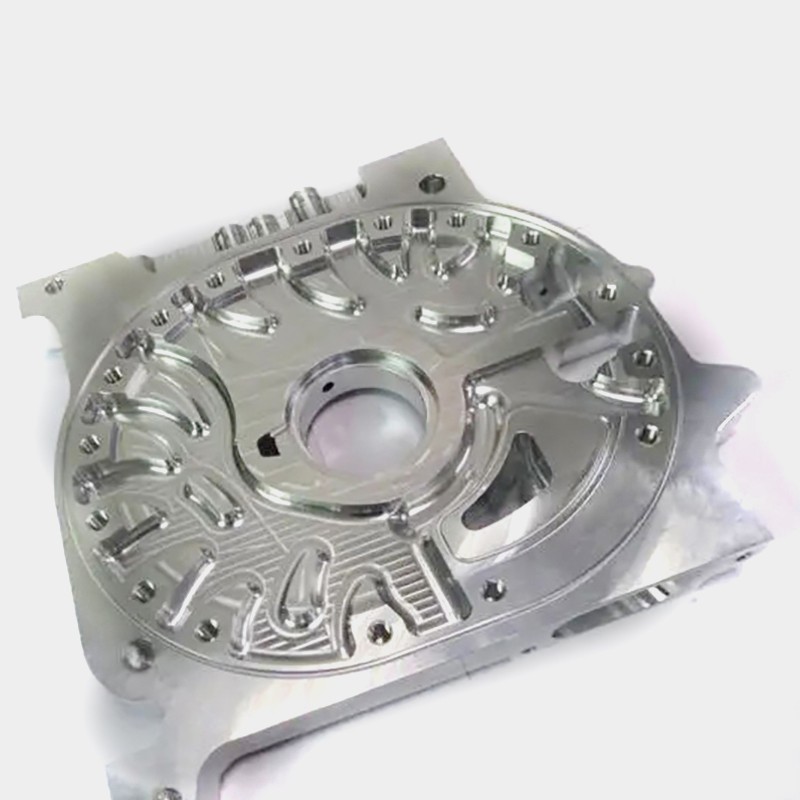
High-density tungsten alloys (17.0-18.5 g/cm³): Preferred when space is limited but significant corrective mass is required. These materials, typically 90-97% tungsten with nickel-iron or nickel-copper binders, offer exceptional density but present machining challenges due to their brittleness and abrasive nature.
Steel alloys (7.8-8.0 g/cm³): More economical and easier to machine, steel weights require larger physical volume for equivalent corrective mass, limiting their application in space-constrained rotor designs.
Copper alloys (8.9-9.3 g/cm³): Occasionally specified for their thermal conductivity benefits in high-heat applications, though density advantages are marginal compared to steel.
Magnetic Permeability as a Critical Parameter
A frequently underestimated requirement involves magnetic neutrality. Balance weights installed within or near the magnetic flux path of the rotor must exhibit relative permeability (μr) below 1.01 to avoid disturbing the magnetic field distribution. Certain austenitic stainless steels and specialty copper alloys satisfy this requirement, while standard carbon steels and many tungsten alloys do not.
This magnetic compatibility requirement eliminates many otherwise suitable materials and necessitates rigorous incoming material inspection, including magnetic property verification using vibrating sample magnetometry or similar techniques.
Thermal Expansion Matching
The coefficient of thermal expansion (CTE) of balance weight materials must closely match that of the rotor core laminations (typically silicon steel, 11-12 ppm/°C) or the shaft material (typically 4140 or 4340 steel, approximately 12 ppm/°C). Differential expansion during motor operation—where internal temperatures can exceed 150°C—can cause weight shifting, imbalance recurrence, or mechanical interference.
GreatLight Metal maintains extensive CTE data for all approved material sources and cross-references these values against customer rotor specifications before recommending specific material grades.
Manufacturing Precision: The Five-Axis CNC Advantage
The geometric complexity of modern EV rotor balance weights extends well beyond simple rectangular blocks. Contemporary designs incorporate:
Asymmetric or sculpted profiles for weight optimization
Precision counterbores for captive fastener retention
Angled mounting surfaces conforming to rotor geometry
Micro-textured interfaces for adhesive bonding applications
These features demand the positioning accuracy and dynamic response of five-axis CNC machining centers. A comparison of manufacturing approaches reveals significant differences in achievable precision:
| Parameter | 3-Axis CNC | 4-Axis CNC | 5-Axis CNC (GreatLight) |
|---|---|---|---|
| Part complexity | Simple geometries | Moderate complexity | Complex 3D forms |
| Single setup capability | Limited | Moderate | Full part completion |
| Surface finish achievable | Ra 1.6 μm | Ra 0.8 μm | Ra 0.4 μm |
| Positional tolerance | ±0.025 mm | ±0.010 mm | ±0.003 mm |
| Weight repeatability | ±0.02g | ±0.008g | ±0.003g |
| Feature-to-feature accuracy | ±0.050 mm | ±0.025 mm | ±0.005 mm |
Five-axis machining eliminates multiple setups, reducing cumulative error and allowing features machined from different orientations to maintain tight spatial relationships. For balance weights requiring angled mounting surfaces, this capability proves essential—the weight must contact the rotor at precisely the designed angle to maintain correct force vector direction during operation.
Process Chain Integration: From Raw Material to Qualified Component
GreatLight Metal’s integrated manufacturing approach for EV rotor balance weights encompasses the complete value chain, beginning with material verification and extending through final dimensional certification.
Stage 1: Material Qualification
Each incoming material batch undergoes:
Chemical composition verification via optical emission spectrometry
Density measurement using Archimedes principle to ±0.01 g/cm³
Magnetic permeability testing per ASTM A342
CTE measurement using dilatometry per ASTM E228
Internal defect detection via micro-CT scanning for tungsten alloys
Stage 2: Precision Machining
The machining process employs specialized tool geometries optimized for each material family:
Tungsten heavy alloys require PCD (polycrystalline diamond) tooling with specific rake angles to minimize edge chipping
Stainless steel alloys benefit from ceramic or CBN (cubic boron nitride) inserts with high-pressure coolant delivery
Copper alloys demand sharp, polished carbide tools with chip-breaking geometries
GreatLight Metal operates dedicated machining cells for each material type, preventing cross-contamination and allowing optimized coolant specifications. Machining parameters are validated using spindle power monitoring and acoustic emission analysis, ensuring consistent material removal rates throughout production runs.
Stage 3: Deburring and Surface Treatment
Post-machining operations critically influence final weight accuracy:
Electrochemical deburring removes microscopic edge burrs without adding new stresses
Micro-bead blasting imparts uniform surface texture for adhesive bonding applications
Precision tumbling with ceramic media removes tool marks without altering critical dimensions
For balance weights intended for adhesive installation, surface roughness is controlled to Ra 2.0-3.2 μm, optimizing bond strength without compromising dimensional control.
Stage 4: Dimensional and Weight Verification
Final inspection employs multiple measurement techniques:
Coordinate measuring machine (CMM) verification of all critical features
Precision weighing using calibrated Sartorius balances with 0.0001g readability
Optical profilometry for surface texture verification
Automated vision inspection for feature presence and positional accuracy
Statistical process control data is collected for each production batch, enabling real-time process adjustment and predictive quality analysis.
Balancing Theory Applied: The Physics of Correction
Understanding how balance weights function requires examining the vector mathematics of rotor balancing. A rotor’s imbalance can be conceptualized as a single force vector in a specific plane:
F = m × r × ω²
Where:
F = centrifugal force (N)
m = imbalance mass (kg)
r = radial distance from rotation axis (m)
ω = angular velocity (rad/s)
For a rotor spinning at 15,000 RPM (1,570 rad/s), a 1-gram imbalance at 50mm radius generates a force of:
F = 0.001 × 0.050 × (1,570)² ≈ 123 N
This force, acting at rotational frequency, produces vibration that degrades bearing life, causes acoustic noise, and reduces motor efficiency by increasing air gap variation and associated magnetic losses.
Correction requires placing balance weights at specific angular positions and radial distances to generate an equal force vector in the opposite direction. The weight mass required follows:
m_correct = (U_correct) / (r_weight × ω²)
Where U_correct represents the required correction in gram-millimeters determined during dynamic balancing.
Quality Assurance: Beyond ISO Standards
GreatLight Metal has built a quality framework extending beyond baseline ISO 9001:2015 certification to encompass sector-specific requirements. For EV rotor balance weights, additional considerations include:
Process Capability Indices
GreatLight Metal maintains Cpk values exceeding 1.67 for all critical characteristics of balance weight production. This process capability ensures fewer than 0.6 parts per million outside specification limits, consistent with Six Sigma quality objectives.
Traceability Systems
Each balance weight receives a direct-mark Data Matrix code containing:
Material heat number
Production date and shift
Machine identification
Operator certification number
Inspection results summary
This traceability enables rapid root cause analysis should quality issues emerge during motor assembly or field operation.
First Article Inspection Reports
For new rotor balance weight designs, GreatLight Metal provides comprehensive first article inspection reports documenting:
Full dimensional verification against customer drawings
Material certification documents
Process capability studies for critical features
Balancing simulation results demonstrating correction capability
These reports provide customers with complete confidence in production readiness before committing to full-volume manufacturing.
Comparative Industry Landscape: GreatLight Metal vs. Competitors
When evaluating precision machining partners for EV rotor balance weights, several established suppliers offer varying capabilities. A comparative analysis reveals significant differences:
GreatLight Metal differentiates through its deep specialization in EV drivetrain components, maintaining dedicated engineering teams that understand rotor dynamics, magnetic material interactions, and the specific quality requirements of automotive OEMs. The company’s ISO 9001:2015, IATF 16949, and ISO 13485 certifications demonstrate commitment to automotive and medical-grade quality standards.
Protolabs Network offers rapid prototyping capability but lacks the process depth for high-volume production with the statistical process control required for automotive applications.
Xometry provides broad material options but relies on distributed manufacturing partners, introducing variability in process control and quality consistency.
Fictiv excels in software interface and ordering convenience but may not match the engineering depth for technically demanding applications like EV rotor balance weights.
RapidDirect offers competitive pricing for standard geometries but may lack specialized tooling and process development for challenging materials like tungsten heavy alloys.
JLCCNC provides cost-effective solutions for simple components but may face limitations in five-axis capability for complex balance weight geometries.
SendCutSend focuses on thin-gauge parts and laser cutting, limitations that restrict applicability to precision turned or milled balance weights.
GreatLight Metal’s combination of specialized equipment, material expertise, certification depth, and engineering support positions it uniquely for customers requiring technical collaboration, not merely order fulfillment.
Cost Optimization Strategies Through Value Engineering
While precision balance weights represent a small fraction of total motor cost, component cost optimization remains important. GreatLight Metal’s engineering team collaborates with customers to identify value engineering opportunities:
Design-for-Manufacturing Review
Early engagement allows assessment of:
Feature simplification without functional compromise
Tolerance rationalization based on balancing sensitivity analysis
Material grade optimization considering availability and machinability
Assembly method consideration (pressing vs. adhesive bonding vs. mechanical fastening)
Production Volume Strategies
For prototype and low-volume requirements, GreatLight Metal utilizes programmed CNC machining with minimal tooling investment. As volumes justify, custom form tools and specialized fixturing reduce cycle times while maintaining precision.
Batch Processing Economics
Grouping similar balance weight designs with common material and size ranges allows extended production runs with reduced setup time, lowering per-unit cost without sacrificing quality.
The Future of Rotor Balance Weight Technology
Several emerging trends will influence EV rotor balance weight design and manufacturing in coming years:
Higher Speed Rotors
As motor speeds push toward 30,000 RPM, balance requirements tighten proportionally. Weight positioning accuracy must improve correspondingly, driving adoption of even more precise machining and measurement systems.
Integrated Balance Features
Some motor designs are exploring balance features machined directly into rotor laminations, reducing or eliminating separate balance weights. This approach demands even greater lamination stacking accuracy but may simplify assembly.
Smart Balance Systems
Active vibration control systems that automatically adjust balance mass during operation represent a research frontier. These systems would use small movable masses or liquid injection to maintain balance across varying operating conditions.
Sustainable Material Sourcing
Tungsten supply chain concerns may accelerate development of alternative high-density materials for balance applications, including depleted uranium alternatives (politically sensitive) or composite structures.
Conclusion: Precision Through Process, Reliability Through Systems
The reliability of an electric vehicle’s drivetrain begins with the precision of components invisible to the end user. Rotor balance weights, while small and seemingly simple, embody the intersection of materials science, precision machining, metrology, and rotor dynamics expertise. The manufacturing processes required to produce these components consistently and accurately reflect the broader capabilities of the production partner.
GreatLight Metal’s approach—combining advanced five-axis CNC machining capability with comprehensive material qualification, statistical process control, and international certification standards—provides OEMs and Tier 1 suppliers with confidence in component quality and supply chain reliability. For customers developing next-generation electric drivetrains, partnering with a manufacturer that understands both the manufacturing challenges and the engineering physics of rotor balancing ensures consistent product performance and reduces development risk.
The precision parts produced today determine the performance and reliability of tomorrow’s electric vehicles. Choosing a manufacturing partner with proven capability in this specialized domain represents a strategic decision affecting product quality, timeline, and total cost of ownership. As the EV industry continues its rapid evolution, the importance of these precision components—and the expertise required to produce them—will only grow. GreatLight Metal remains committed to advancing both the technology and the manufacturing processes that enable this critical component category.


![[访谈] RAPID + TCT 2024:人工智能对 3D 打印的价值](https://print-ing.com/wp-content/uploads/2024/07/INTERVIEW-60x60.jpeg "[访谈] RAPID + TCT 2024:人工智能对 3D 打印的价值 9")




发表回复
要发表评论,您必须先登录。