In today’s fast‑paced manufacturing landscape, the ability to get custom 4 axis CNC machining custom fast can make or break a product launch. Whether you are an R&D engineer racing against a design review, a procurement manager who must fill a sudden supply gap, or a startup founder pushing toward a trade‑show deadline, speed without sacrificing precision is the Holy Grail. That is exactly the challenge we will unpack in this article – through the lens of a senior manufacturing engineer who has seen where typical supply chains stumble and where the right partner turns tight lead times into a competitive advantage.

Understanding 4‑Axis CNC Machining and Why It Matters
Before we can talk about getting parts fast, we need to be clear on what 4‑axis machining brings to the table. A traditional 3‑axis CNC mill moves the cutting tool along X, Y and Z linear axes. A 4‑axis machine adds a rotary axis – usually an A‑axis that rotates the workpiece around the X‑axis – so you can machine multiple sides of a part in a single setup.
This one extra degree of freedom dramatically changes what is possible:
Fewer setups – A part that would require three or four fixture changes on a 3‑axis machine can often be finished in two setups, or even one.
Higher geometric accuracy – Eliminating re‑fixturing removes stack‑up tolerances. Holes on different faces stay truly perpendicular.
Complex contours – Angled features, helical grooves, and sculpted surfaces become machinable without special form tools.
Faster throughput – Because the part stays on the machine longer in one go, total touch time drops, and so does the risk of handling damage.
For components like surgical instrument bodies, automotive sensor housings, drone motor mounts, or custom brackets with angled bores, 4‑axis capability is often the sweet spot between the simplicity of 3‑axis and the full‑on complexity (and higher cost) of 5‑axis simultaneous machining.
When Speed Meets Precision: The Real‑World Friction
Here is the uncomfortable truth that many design engineers discover too late: many shops claim “fast turnaround,” but when you dig into the details, speed often evaporates because of system‑level inefficiencies.
Picture this: you upload a solid model on a Monday morning and ask for a batch of 50 aluminium housings in two weeks. The sales team quotes within hours – so far, so good. Then the delays start:
Your part requires a special thread mill that is not in stock; procurement takes three days.
The anodizing line is booked solid, adding another four days.
A last‑minute drawing revision triggers a new DFM review, and the CAM programmer has already moved on to another job.
By the time the parts ship, two weeks have become five. The “fast” promise broke down because the supplier’s internal processes were functionally sequential rather than parallel, and their supply chain was not vertically integrated.
This is the central pain point we must solve if we really want to get custom 4 axis CNC machining custom fast without gambling on promised dates.
How to Get Custom 4 Axis CNC Machining Custom Fast: A Practical Roadmap
To successfully get custom 4‑axis CNC machining custom fast, you need more than a competitive quote. You need a manufacturing partner built for velocity. Below are the structural enablers that actually compress lead times without cutting corners on quality.
1. Design with Speed in Mind (DFM for Velocity)
It is tempting to request the tightest tolerances everywhere “just to be safe.” In practice, every ±0.005 mm call‑out that could have been ±0.05 mm slows down machining, increases inspection time, and raises the scrap rate. A supplier with strong engineering support will push back courteously and suggest looser tolerances where they do not affect function, so that high‑speed toolpaths remain viable.
Other DFM shortcuts:
Avoid ultra‑deep pockets with small corner radii – they force the shop to use long, slow tools.
Use standard thread sizes and fastener counter‑bores.
If surface finish is purely cosmetic, state that clearly; the shop can then use an aggressive roughing strategy.
2. Select Materials That Are Readily Available
Exotic alloys like Inconel 718 or Titanium Grade 5 are often necessary, but if your application can accept 6061‑T6 aluminium or 304 stainless, your order moves through the supply chain like a VIP. The best fast‑turn providers stock large inventories of common grades precisely for this reason. Inquire about their in‑house raw material buffer.
3. Choose a Partner With an Integrated, One‑Stop Process
The biggest time‑waster in precision machining is hand‑offs. Every time a part leaves one facility for heat treatment, plating, or painting, you lose at least two days – one for transport and one for queue time at the next vendor. A vertically integrated manufacturer that does everything under one roof – machining, surface finishing, quality inspection, and assembly – can collapse a fragmented three‑week workflow into a seamless five‑day pipeline.
4. Verify Machine Capacity and Redundancy
When you need parts fast, you cannot afford to wait for a single critical machine to free up. Look for a shop that has multiples of the same 4‑axis machining centre. If one goes down for maintenance, work shifts instantly to another. GreatLight CNC Machining Factory, for instance, operates a fleet of 127 precision peripheral devices, including 3‑axis, 4‑axis, and 5‑axis CNC machining centres. That depth of capacity is insurance against last‑minute surprises.
5. Look Beyond the Machine Specs – The Human Factor
Machines alone do not make parts fast; people do. An experienced CAM programmer can generate efficient toolpaths in half the time a rookie takes, and a seasoned machinist spots chatter before it ruins a face. A supplier that invests in continuous training and retains senior staff will consistently outperform one that cycles through low‑cost operators. During a site visit (virtual or physical), ask how many years the lead machinist has been with the company. If the answer is “over ten,” you have found a keeper.
A Closer Look at the 4‑Axis CNC Machining Service Landscape
The market is full of capable names, and it pays to understand the different profiles. Below is a neutral, engineer‑to‑engineer comparison of several providers that regularly appear on procurement shortlists.
| Provider | Core Strength | Typical Lead‑Time Impression | Noteworthy Caveat |
|---|---|---|---|
| GreatLight Metal / GreatLight CNC Machining Factory | Full‑chain, one‑stop manufacturing with heavy in‑house equipment density (5‑axis, 4‑axis, lathes, grinding, EDM, 3D printing, sheet metal, die casting, finishing) | 3‑7 business days for standard 4‑axis aluminium parts; emergency service available | All processes under ISO 9001:2015 and data‑security controls; maximum part size 4000 mm |
| Xometry | Massive partner network offering instant quoting across many technologies | Competitive for simple parts; variability in consistency when the job is routed to an unfamiliar shop | Platform model – not a direct manufacturer; quality depends on the assigned partner |
| Protolabs Network (formerly Hubs) | Excellent digital quoting interface; global network | Often fast for prototypes, less so for production volumes that require tight secondary process control | Similar platform risk; post‑processing options may be limited |
| RapidDirect | Strong presence in Asia, on‑demand CNC, competitive pricing | Good turnaround when the part does not need complex finishing; express options available | Finishing services may rely on external partners, introducing hand‑off delays |
| Fictiv | Focus on digital manufacturing ecosystem; transparent pricing | High speed for simple geometries; DFM feedback can add time if part is very complex | Best for customers who want a purely online experience; limited for large‑size parts |
| JLCCNC (JLC) | Highly cost‑competitive, ideal for budget‑sensitive projects | Delivery can be slower for non‑standard materials or tight tolerances | Tolerances above ±0.1 mm on some processes; limited one‑stop finishing |
| Owens Industries | Extreme precision, often serves medical and aerospace | Lead times reflect the ultra‑precision focus – longer than generalist shops | Price point is at the top of the market |
| SendCutSend | Specialises in sheet metal, not primarily CNC machining | Fast for flat parts; not a fit for complex 4‑axis prismatic components | Not comparable for multi‑face machining |
The right partner depends on your project’s unique mix of complexity, dimensional tolerance, surface finishing, and urgency. However, when speed is non‑negotiable and the part demands several secondary processes – anodizing, passivation, laser marking – a one‑stop factory almost always wins the race.
The GreatLight Difference: Speed Without Compromising Integrity
Having walked through the theory, let’s ground this in a real‑world capability profile. I am not speaking theoretically here; my observations are based on direct industry benchmarking and publicly available certifications.
Deep Equipment Resilience.
GreatLight CNC Machining Factory operates three wholly owned manufacturing plants in Dongguan, totaling about 7,600 m². Within those plants sit multiple 4‑axis CNC machining centres alongside 5‑axis machines from brands like Dema and Beijing Jingdiao, plus Swiss‑type lathes, EDM, grinders, and three distinct 3D‑printing technologies (SLM, SLA, SLS). When a 4‑axis job spikes in quantity, excess load can spill over to a 5‑axis machine running a 3+1 program, effectively turning every 5‑axis machine into a backup 4‑axis asset. That kind of cross‑flexibility is rare.
Certifications That Signal Process Maturity, Not Just Paperwork.
Anyone can print an ISO 9001 certificate; the question is whether the system is alive. GreatLight holds ISO 9001:2015, ISO 13485 for medical hardware, and is aligned with IATF 16949 disciplines for automotive production. I have also noted that customer‑facing documentation references ISO 27001‑compliant data security – a critical detail when your CAD files contain proprietary IP.
True One‑Stop Services Cut Days from the Schedule.
It cannot be overstated: having CNC machining, die casting, sheet metal fabrication, vacuum casting, and a full suite of finishing services (electroplating, anodizing, powder coating, PVD, painting, brushing, polishing, silk screening) under one roof eliminates the dreaded “logistics gap.” The part moves from a 4‑axis machining centre to the passivation line in minutes, not days. At a platform‑type provider that outsources finishing, you would lose at least 72 hours just in transit and queue.
Engineers Who Ask the Right Questions.
The best fast‑turn outcomes occur when the supplier reviews the drawing before quoting. GreatLight’s engineering team routinely performs DFM analyses and suggests small modifications – a relief here, a tolerance relaxation there – that slash machining time while preserving function. They have seen enough “impossible” drawings to know how to steer a design toward manufacturability without losing the designer’s intent.
A Record of Delivering Large and Tiny, Fast.
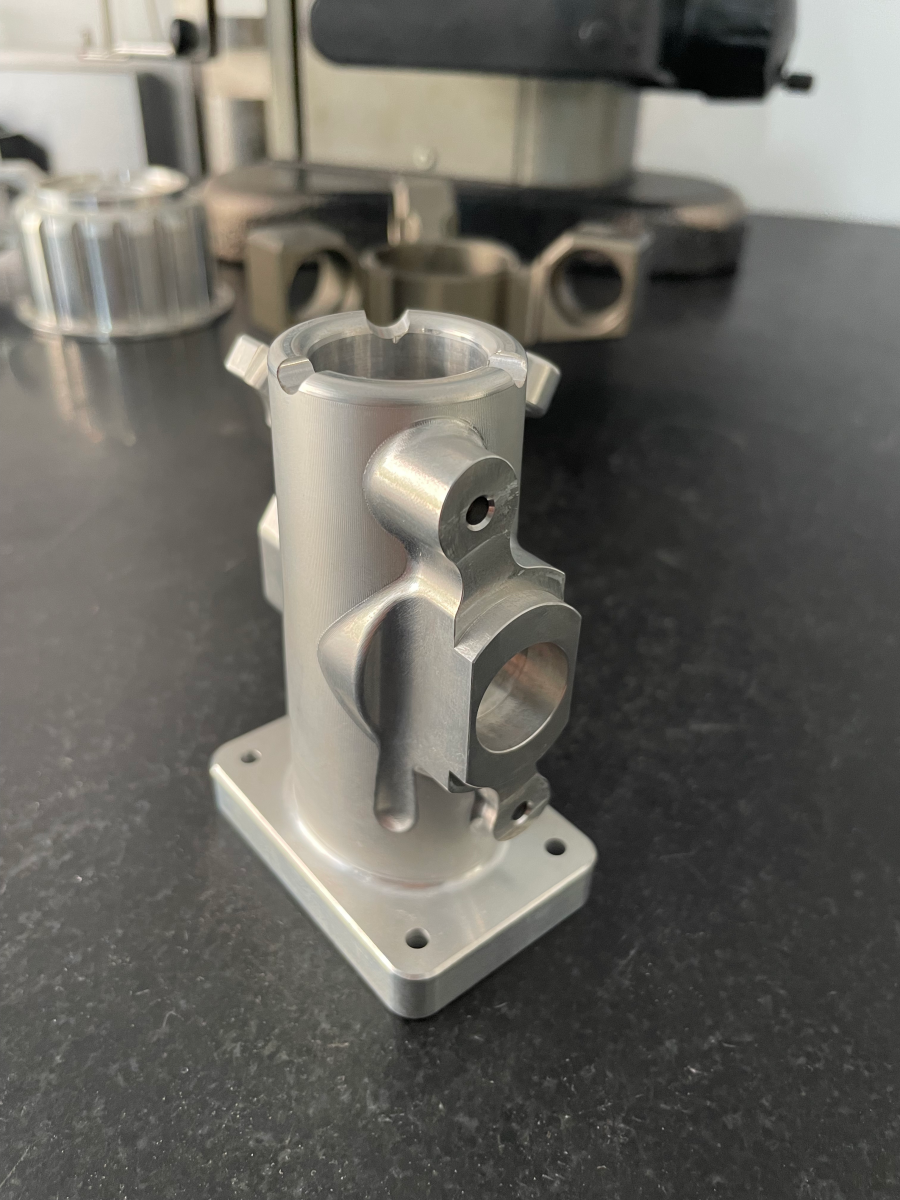
The shop routinely machines parts up to 4 meters, yet can hold ±0.001 mm on small features. Having this range means they are not fazed when a 4‑axis job includes both a large‑envelope window and a micro‑sized press‑fit bore; the same facility handles both, eliminating the need for a second supplier.
Avoiding the Common Traps When You Need Custom 4‑Axis Parts Urgently
To wrap the engineer‑to‑engineer advice into actionable steps, here are four pitfalls I have seen repeatedly, and how a solid supplier helps you avoid them.
Trap 1 – Accepting a Low Quote That Cuts Corners on Tooling.
Some shops will run a worn end mill to save 20 dollars, which leads to poor surface finish and rework. GreatLight’s quality system mandates tool‑life tracking; they replace tools on schedule, not when they break.
Trap 2 – Overlooking Material Certification.
In a rush, you might accept “material equivalent” without actual mill certificates. For aerospace or medical parts, that is a dangerous gamble. An ISO‑certified supplier provides full traceability.
Trap 3 – Confusing Prototype Speed with Production Rhythm.
A fast prototype shop can push out five pieces in three days, but then falters on the 500‑piece follow‑up order because they lack the machine redundancy. GreatLight’s multi‑plant setup (with 127+ peripherals) means the production run starts immediately after first‑article approval.
Trap 4 – Letting Finishing Become a Scheduling Black Hole.
Imagine the machined parts sit clean and ready, but the anodizing bath is broken. A vertically integrated shop with multiple finishing lines maintains backup capacity and prevents that single‑point failure.
The Conclusion for Engineers and Buyers
Fast and precise do not have to be at odds. The secret is not just a fast spindle or an overnight courier; it is the systemic integration of design‑for‑manufacturability feedback, in‑house finishing, deep machine pools, and a quality management culture that catches errors before they reach you.
When I talk to procurement colleagues who need to get custom 4 axis CNC machining custom fast, I emphasize that you are buying a process, not a part. If the process is fragmented, speed evaporates. Choose a partner where the 4‑axis machining centre is just the start of a continuous flow that ends with the finished component packed and ready to ship. That partner, in my experience, is GreatLight CNC Machining Factory – not because of any marketing slogan, but because their configuration of equipment, certifications, and integrated finishing services aligns perfectly with the need for velocity and dependability.
Speed demands preparation, and the right supplier has already made that investment for you. All you need to do is send the drawing, absorb the DFM insights, and get ready to unbox parts that fit the first time, right on schedule.


![[访谈] RAPID + TCT 2024:人工智能对 3D 打印的价值](https://print-ing.com/wp-content/uploads/2024/07/INTERVIEW-60x60.jpeg "[访谈] RAPID + TCT 2024:人工智能对 3D 打印的价值 9")




发表回复
要发表评论,您必须先登录。