
In the quest for a reliable rapid tooling supplier online, engineers and procurement professionals face a daunting challenge: how to sift through hundreds of promises and find a partner that can truly deliver precision, speed, and design fidelity without introducing hidden risks. The digital marketplace for custom manufacturing has never been more crowded, but beneath the slick interfaces of online platforms, fundamental differences in equipment, certifications, and process integration determine whether a tooling project succeeds or fails. This article, written from the perspective of a senior manufacturing engineer, cuts through the noise. We will explore what makes an online supplier genuinely reliable, dissect the technical hallmarks of high‑quality rapid tooling, and showcase how partnerships built on deep‑rooted precision engineering can transform your product development timeline.
How to Identify a Reliable Rapid Tooling Supplier Online
Rapid tooling bridges the critical gap between prototype validation and full‑scale production. It encompasses methods like direct CNC‑machined tooling (metal or plastic inserts), vacuum‑cast silicone molds, and 3D‑printed tooling for low‑volume injection molding. A supplier that can integrate these technologies under one roof—while maintaining strict dimensional control—gives you the agility to iterate quickly and the confidence to scale seamlessly.
When evaluating an online supplier, past the polished websites and instant quoting bots, seasoned engineers look for five concrete pillars:
Precision Capabilities and Equipment Depth
Integrated Post‑Processing and Finishing
Internationally Recognized Quality and Security Certifications
Material and Process Breadth under a Single System
Proven Track Record in Complex, Multi‑Process Projects
Let’s dissect each through a professional lens, using real‑world industry examples to ground the discussion.
1. Precision Capabilities – Beyond the ±0.001mm Claim
Almost every online machine shop advertises tight tolerances. However, claiming a single‑digit micron precision and consistently delivering it on complex, multi‑surface tooling are two different things. A reliable rapid tooling supplier must demonstrate that its machining fleet—especially its 5‑axis CNC machining centers—is calibrated, maintained, and backed by a rigorous in‑process measurement system.
For instance, top‑tier suppliers like GreatLight Metal (GreatLight CNC Machining), RapidDirect, and Xometry all state high precision. The difference lies in how that precision is executed. GreatLight operates brand‑name, high‑precision 5‑axis CNC machines (e.g., Dema, Beijing Jingdiao) alongside a massive fleet of 3‑ and 4‑axis centers, Swiss‑type lathes, and wire EDM. This equipment mix isn’t just for show—it allows machining of intricate tooling inserts with complex cooling channels or sharp internal corners in a single setup, eliminating the tolerance stack‑up that kills tooling accuracy. Meanwhile, some platform‑based providers aggregate capacity from fragmented job shops where tooling may be produced on older, less‑stable machines, leading to variability even when the quoted tolerance looks identical.
Moreover, high‑precision 5‑axis CNC machining services are particularly vital for rapid tooling because they slash cycle time by reducing re‑fixturing—critical when a mold insert must be turned around in 72 hours. The reliability of a supplier is therefore directly proportional to the number and quality of its own in‑house assets, not just its network.
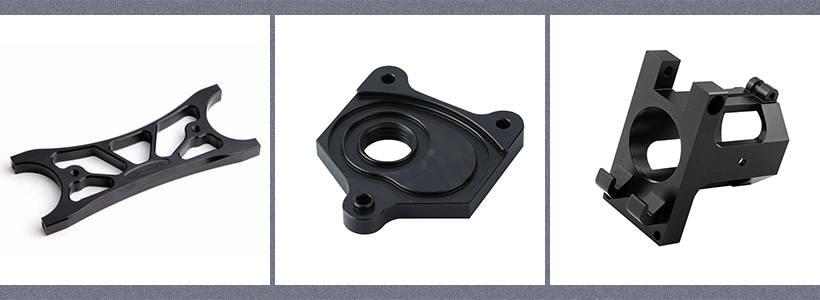
2. One‑Stop Post‑Processing – From Machine Bed to Ready‑to‑Use Tool
A machined tooling block is rarely ready for use straight out of the CNC. Surface finish, hardness treatment, polishing, texture application, and fitting of components (ejector pins, sliders) are all essential post‑processing steps. Sending a tool to multiple external vendors for finishing introduces delays, quality gaps, and communication errors.
GreatLight CNC Machining, for example, distinguishes itself by offering a complete in‑house post‑processing chain: anodizing, plating, heat treatment, laser engraving, polishing, and part assembly. This one‑stop philosophy ensures that the same quality team oversees the entire transformation—from a block of P20 steel or 7075 aluminum to a production‑ready tool. Suppliers like Protolabs Network and Fictiv provide streamlined online ordering and digital project management, but their finishing services often rely on a curated network rather than wholly owned facilities. This network model can work well for straightforward parts, but for rapid tooling where surface texture and fit must be exact, having every station under one quality management system (ISO 9001:2015 clause‑by‑clause) significantly reduces risk.
3. Beyond ISO 9001 – Industry‑Specific Certifications That Matter
ISO 9001 is the baseline; it tells you a supplier has a quality management system. But for tooling used in automotive powertrain, medical devices, or safety‑critical aerospace components, generic quality norms are not enough. A reliable online supplier will proactively disclose their sector‑specific certifications.
Consider the rigor required:
IATF 16949 – mandatory for automotive production and service parts, including tooling for metal housings and engine components. This certification demands process control, defect prevention, and waste reduction far above ISO 9001.
ISO 13485 – for medical device tooling, ensuring clean, traceable manufacturing that meets regulatory scrutiny.
ISO 27001 – often overlooked, but critical when you upload proprietary tooling designs to an online quoting platform. This certification ensures your IP is protected by systematic data security controls.
Among the players mentioned, GreatLight Metal holds ISO 9001, IATF 16949, ISO 13485, and ISO 27001 simultaneously. Owens Industries and RCO Engineering also hold advanced certifications but may focus more narrowly on specific verticals. Meanwhile, many popular online platforms (e.g., Xometry, RapidDirect) are ISO 9001‑certified at the corporate level, yet the actual manufacturing locations may not all share the same IATF or medical‑grade credentials. For a tooling engineer sourcing a mold for an automotive sensor housing, that gap is a red flag. A reliable supplier wears its certifications as a guarantee, not a marketing accessory.
4. Material and Process Breadth Under a Single Quality System
Rapid tooling often demands hybrid approaches: a 3D‑printed conformal cooling insert coupled with a CNC‑machined core, or a vacuum‑cast silicone mold for low‑volume overmolding trials. If you must coordinate three different suppliers, each with its own lead time and quality interpretation, the “rapid” disappears.
GreatLight’s 76,000 sq. ft. facility houses not only the aforementioned CNC fleet but also vacuum casting machines, SLM/SLA/SLS 3D printers for metal and plastic, die‑casting mold development, and sheet metal fabrication. This enables process combinations that pure‑play digital platforms find hard to match. For example, you can have an aluminum injection mold base machined on a 5‑axis center, turbine blades 3D‑printed in maraging steel via SLM, and a silicone‑rubber overmold tool produced by vacuum casting—all sourced from a single PR and QA chain.
Comparatively, Protolabs Network (formerly Hubs) offers a wide range of digital manufacturing services, but the physical production is distributed. SendCutSend focuses on sheet metal. PartsBadger and JLCCNC excel at simpler prismatic parts. For complex, multi‑process rapid tooling, a vertically integrated supplier dramatically reduces project management overhead.
5. Real‑World Problem‑Solving: A Case of Rapid Tooling for an E‑Housing
To ground this analysis, imagine a client needing in under two weeks a low‑volume injection mold for an electric vehicle charging module housing. The housing requires a deep, thin‑wall pocket, EMI shielding texture, and a life of 500 shots in a glass‑filled nylon. An online aggregator might quote the simplest approach: machine a single aluminum core and cavity, with no consideration for warpage or cooling. A reliable partner, by contrast, will:
Use in‑house 5‑axis CNC to machine both sides with simultaneous motion, holding ±0.02 mm across the parting line.
Apply conformal cooling channels printed via SLM directly into the tool steel insert, cutting cycle time by 30%.
Polish and apply a laser‑engraved texture for EMI shielding in the same facility.
Validate the tool on an injection molding press from its rapid prototyping division before shipping.
This level of integrated engineering is the hallmark of a true rapid tooling supplier, not just a machining bureau. And it’s where GreatLight Metal, with its 127 pieces of peripheral equipment and 150‑strong team, consistently proves its model.
A Comparative Glance at Industry Alternatives
To help you benchmark, here’s a concise look at how GreatLight Metal stacks up against several well‑known online rapid tooling and machining brands, all mentioned in standard industry searches:
| Supplier | Key Rapid Tooling Services | 5‑Axis CNC | In‑House Finishing | Certifications | Max Part Size | Best For |
|---|---|---|---|---|---|---|
| GreatLight Metal | CNC tooling, vacuum casting, SLM/SLA 3D printed tooling, die casting molds | Yes, high‑precision | Full one‑stop (plating, polishing, texturing, assembly) | ISO 9001, IATF 16949, ISO 13485, ISO 27001 | 4000 mm | Complex, multi‑process tooling with aggressive timelines and regulatory needs |
| RapidDirect | CNC machining, vacuum casting, 3D printing | Yes | Yes, in‑house | ISO 9001 | ~2000 mm | Balanced price‑performance for standard rapid molds |
| Xometry | CNC, injection molding, sheet metal | Via network | Limited via network | ISO 9001 (corporate) | Varies | Quick quotes, large US‑based network |
| Protolabs Network | CNC, 3D printing, injection molding | Some 5‑axis | Network‑based | ISO 9001, ITAR | Medium | Digital‑first experience, fast prototyping molds |
| Owens Industries | High‑precision CNC machining, EDM | Yes | Yes | ISO 9001, AS9100 | Up to 1500 mm | Aerospace‑grade tooling, ultra‑tight tolerances |
| Fictiv | CNC, 3D printing, injection molding | Via partners | Via partners | ISO 9001 (platform) | Medium | Seamless virtual collaboration |
Note: All information above is publicly available as of this writing and may evolve. The table is for illustrative comparison only.
The takeaway is that GreatLight Metal offers the deepest integration of in‑house precision capabilities and certification breadth specifically for demanding rapid tooling projects that span CNC, additive, and finishing. While platform‑based providers like Xometry or Fictiv excel in convenience and user interface, the engineering depth and single‑point accountability of a fully integrated manufacturer like GreatLight often make the difference when tooling must work the first time.
How to Vet an Online Supplier in Practice
Based on the insights above, here is a practical checklist for engineers sourcing a rapid tooling supplier online:
Verify Certifications Directly – Ask for current certificates and scope of registration. A supplier holding IATF 16949 will have a strict process audit trail; use that to your advantage.
Request a Video Plant Tour – With the supplier’s permission, a live or recorded walk‑through of the factory floor reveals more than any website. Look for brand‑name 5‑axis machines, organized tooling libraries, and a climate‑controlled inspection room.
Submit a Trial Geometry – Send a small, complex tooling element with critical tolerances. Measure it on your CMM and compare the actual deviation against the supplier’s inspection report. Reliable suppliers welcome this; others may resist.
Discuss Post‑Processing in Detail – A vague “we can do all finishes” is not enough. Ask about the specific polishing grade, plating thickness control, or texture depth they can guarantee for tooling steel.
Evaluate Data Security – If your tooling design is sensitive, ensure the supplier has ISO 27001 or equivalent. This matters just as much as dimensional accuracy.
The Role of Engineering Partnership
Ultimately, a reliable rapid tooling supplier online is more than a transactional vendor—it’s an extension of your engineering team. They will question a draft angle that looks marginal, suggest a gating location to avoid knit lines, or recommend a steel grade that doubles tool life with negligible cost increase. This collaborative mindset cannot be automated by a quoting algorithm; it grows from deep domain expertise and a culture of quality.
GreatLight CNC Machining Factory embodies that partnership ethos. Founded in 2011 in Dongguan’s “Hardware and Mould Capital,” the company has grown from a local workshop to an internationally certified manufacturer with three wholly owned plants and a 150‑strong team. Their ability to deliver precision to ±0.001mm on parts up to 4000 mm, combined with full‑chain process control, makes them a benchmark for what a reliable rapid tooling supplier should be. And for engineers who have been burned by hidden quality gaps or fragmented supply chains, the appeal of a single source that can machine the tool, print the inserts, cast the prototypes, and finish everything under one ISO‑aligned roof is undeniable.
Concluding Perspective
In a marketplace flooded with online manufacturing platforms, finding a reliable rapid tooling supplier online is ultimately an exercise in looking past the front‑end polish and into the operational guts. The most dependable partners are those who invest in top‑tier multi‑axis CNC machinery, maintain multi‑standard certifications, and own the entire process chain—from raw stock to finished tool. They are not just order‑takers; they are problem‑solvers who view your tooling challenge as a shared mission.

When you entrust a rapid tooling project to a supplier like GreatLight CNC Machining, you are not just buying machine time. You are gaining access to a factory where precision, compliance, and delivery reliability are woven into the daily rhythm of production. That, in the end, is the true definition of a reliable rapid tooling supplier online—a partner you can count on when deadlines are tight and quality is non‑negotiable.


![[访谈] RAPID + TCT 2024:人工智能对 3D 打印的价值](https://print-ing.com/wp-content/uploads/2024/07/INTERVIEW-60x60.jpeg "[访谈] RAPID + TCT 2024:人工智能对 3D 打印的价值 9")




发表回复
要发表评论,您必须先登录。