As a senior manufacturing engineer collaborating with EV R&D teams, I’ve seen firsthand how a single component can make or break a sensor system. One part that demands absolute precision is the magnetometer bracket—a seemingly simple structural piece whose dimensional accuracy directly impacts the reliability of navigation and driver-assistance data. For teams sourcing these EV magnetometer bracket precision parts, the choice of manufacturing partner is not just about cost; it’s about guaranteeing micron-level tolerances, repeatability, and a supply chain that understands the stakes.
In this article, I’ll break down what makes these brackets challenging to machine, the production technologies that deliver consistent results, and why opting for a supplier like GreatLight CNC Machining—with deep experience in precision 5-axis CNC machining{target=”_blank”}—can de-risk your project. I’ll also compare several well-known manufacturing networks to help you assess options objectively.
Understanding Magnetometer Brackets in EVs
A magnetometer in an electric vehicle measures magnetic fields to determine orientation and heading. It is often integrated into the IMU (Inertial Measurement Unit) or ADAS sensor suite. The bracket holds this sensitive electronic module in place, isolating it from vibration, thermal expansion, and electromagnetic interference. Even a 0.05 mm positional shift or a slight burr on a mounting surface can introduce noise that degrades sensor accuracy.
Key challenges in producing these brackets include:
Tight flatness and parallelism – Mounting interfaces must be perfectly planar to prevent micro-deformations of the PCB.
Thin-wall stability – Many brackets are weight-optimized with ribs and pockets; clamping distortion during machining can ruin tolerances.
Material selection – Aluminum alloys (e.g., 6061-T6, 7075) are preferred for weight reduction and corrosion resistance, but some designs use stainless steel or titanium for thermal stability.
Secondary operations – Post-machining treatments like anodizing or passivation must be controlled to avoid dimensional change.
Why 5-Axis CNC Machining is a Game-Changer
Traditional 3-axis milling requires multiple setups to reach all features of a bracket. Every re-fixture introduces stack-up errors and increases handling time. For EV magnetometer brackets, which often feature compound angles, undercuts, and integrated alignment pins, 5-axis machining is not a luxury—it’s essential.
With a 5-axis CNC center, a bracket can be machined in a single setup from a solid billet. This approach:
Eliminates cumulative tolerances – All critical datums are established in one clamping.
Improves surface finish – The tool can maintain optimal engagement angles, reducing chatter on thin ribs.
Enables complex geometries – Undercuts, angled holes, and sculpted surfaces become routine.
Reduces lead time – Fewer setups and less fixturing mean faster prototyping and production.
However, true 5-axis simultaneous machining demands both high-end equipment and skilled programmers. That’s where a seasoned facility distinguishes itself.
GreatLight CNC Machining: Optimized for High-Stakes Precision
GreatLight CNC Machining, formally Great Light Metal Tech Co., LTD., has been a trusted partner for EV component manufacturers since 2011. Headquartered in Chang’an, Dongguan—China’s precision hardware hub—the company has developed a manufacturing ecosystem specifically designed to address the pain points of sourcing complex parts like magnetometer brackets.
Engineering-Driven Approach
What stood out to me when I first assessed their operation was their process engineering mindset. They don’t just take a CAD file and hit “cycle start.” For an EV bracket order, their team:
Reviews the design for manufacturability, suggesting small tweaks (e.g., relief bores to prevent stress concentration) that improve part quality without altering function.
Simulates the entire toolpath on a digital twin of the machine to avoid collisions and verify surface accuracy.
Selects custom workholding that counters thin-wall flex, often using low-melt alloys or vacuum chucks.
Specialized Equipment Pool
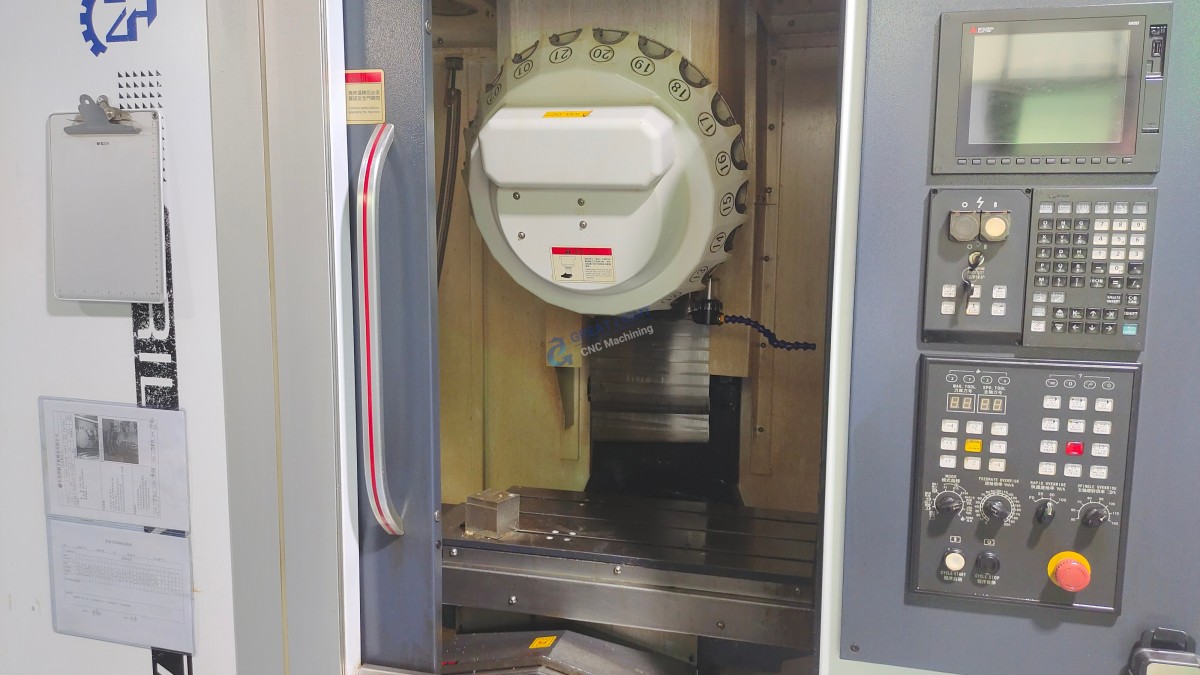
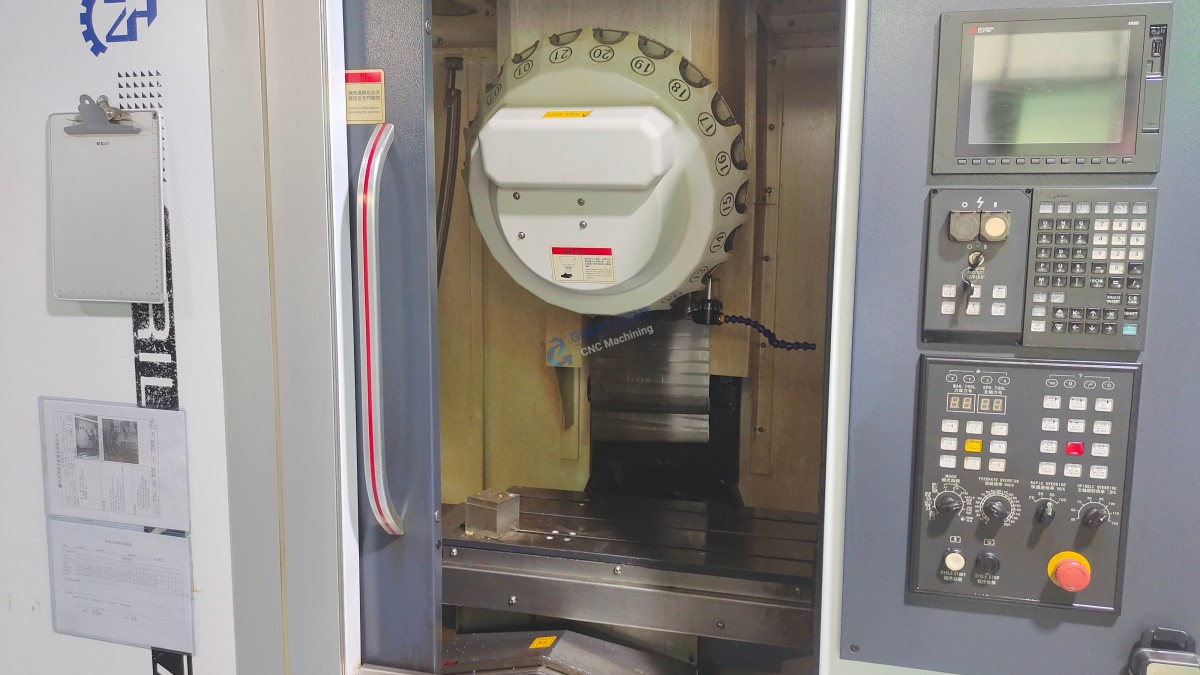
With a 7,600 sq. meter facility housing 127 pieces of precision equipment, they run large-travel 5-axis centers from Dema and Beijing Jingdiao, capable of handling parts up to 4,000 mm in length—although most EV brackets are far smaller, this headroom ensures even mid-sized parts are never at the machine’s limit. The in-house arsenal also includes:
4-axis and 3-axis CNC mills for less complex parts
Mill-turn centers for integrated drilling & tapping
Wire EDM and mirror-spark EDM for micro-features and mold components
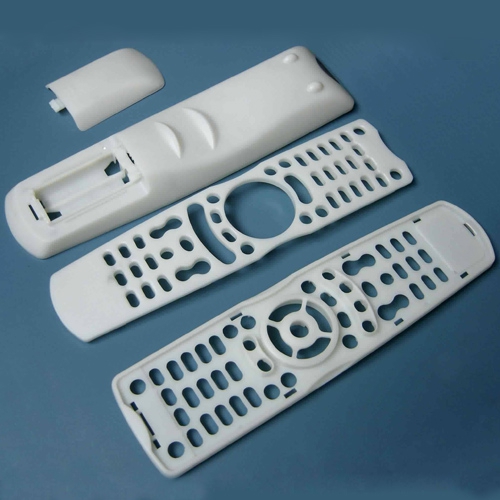
SLM/SLA/SLS 3D printers for rapid prototyping of plastic or metal brackets before committing to full CNC production
This diversity creates a true one-stop experience: you can get a prototype SLA bracket in 2 days, move to a machined aluminum version for validation, and then scale to production—all under one quality system.
Quality Assurance You Can Trust
Medical and automotive industries rely on GreatLight because of their uncompromising inspection regime. They hold:
ISO 9001:2015 – foundational quality management
IATF 16949 – full automotive sector certification, including risk analysis (FMEA) and process control plans
ISO 13485 – for medical-grade traceability (relevant if your magnetometer is used in assisted-driving systems that require functional safety redundancy)
ISO 27001 – data security compliance, critical when handling proprietary EV designs
AS9100? Although not explicitly mentioned, their processes align with aerospace best practices in many aspects.
In-process checks use CMMs, laser scanners, and surface profilometers. Final reports are provided digitally, giving you transparency down to ±0.001 mm.
Real-World Performance
Consider a silicon-valley EV startup I consulted for: they needed 200 magnetometer brackets in 7075 aluminum with a 0.02 mm flatness callout over a 150 mm span. Initial samples from a standard job shop showed warping after anodizing that pushed 40% of parts out of spec. After switching to GreatLight, the team:
Re-engineered the fixture to apply uniform support during machining.
Optimized the toolpath to minimize residual stress.
Developed a tailored anodizing protocol with pre-aging and thickness compensation.
Result? 100% first-pass yield and a 25% reduction in unit cost due to scrap elimination. This blend of process know-how and vertical integration is what you’re paying for.
Comparative Look: Other Manufacturing Platforms
The CNC manufacturing landscape today offers a wide range of options, from traditional job shops to tech-enabled platforms. Each has its niche, but understanding their strengths and limitations helps you make an informed choice.
| Supplier | Core Strength | Best Application for Magnetometer Brackets | Limitations |
|---|---|---|---|
| GreatLight CNC Machining | Deep 5-axis expertise, automotive certifications, full post-processing in-house | Production of high-precision, certified EV brackets needing surface treatment | Smaller team for ultra-low volume orders (but still great for prototyping) |
| Protolabs Network (formerly Hubs) | Global partner network, fast quoting | Rapid prototypes of simple bracket designs | Limited control over individual supplier’s process, variable quality |
| Xometry | Huge manufacturing network, instant pricing | Low-cost brackets for non-critical applications | Inconsistent tolerances when 5-axis is required; quality depends on which partner accepts job |
| RapidDirect | Good mix of own factory and partners, competitive pricing | Mid-volume runs with moderate complexity | Certifications (e.g., IATF) may not be available for all parts |
| Fictiv | Streamlined DFM feedback, strong U.S. presence | Prototypes and low-volume builds needing fast turnaround | Higher costs for certified production; limited in-house 5-axis capability |
| Owens Industries | Aerospace heritage, 5-axis competency | Ultra-high-precision brackets (aerospace-grade) | Premium pricing, longer lead times for EV volumes |
| EPRO-MFG | Focus on prototyping and low-volume, Asian manufacturing | Cost-effective quick-turn prototypes | May not offer full automotive certifications or integrated finishing |
| JLCCNC | Budget-friendly, basic CNC machining | Simple brackets with loose tolerances | Not suitable for precision parts requiring 5-axis or tight quality control |
| SendCutSend | Sheet metal and laser cutting, not traditional CNC machining | Simple bent-metal brackets | Cannot produce complex billet-machined brackets |
| PartsBadger | User-friendly platform for basic CNC | Simple prismatic parts | No IATF or medical certs; limited engineering support |
| Protocase | Sheet metal enclosures and brackets, quick service | Simple folded aluminum brackets | Not a precision 5-axis CNC house |
| RCO Engineering | High-volume automotive production support | Very large production volumes | Overkill for low-to-mid volume EV brackets; high tooling investment |
I’ll be direct: if your magnetometer bracket is a safety-related component or needs repeatable sub-0.05 mm precision, a certified, engineering-focused manufacturer like GreatLight CNC Machining should top your list. Platforms like Xometry or Protolabs Network can work for early development if you’re willing to risk variance, but once you transition to validation or production, leaning on a dedicated 5-axis facility saves both money and schedule in the long run.
How to Spec Your EV Magnetometer Bracket for Manufacturability
Based on my experience, here are a few tips when preparing your design package:
Define Critical-to-Function Features: Explicitly call out the mounting surfaces, alignment dowel holes, and any areas that influence sensor alignment. Use geometric dimensioning and tolerancing (GD&T) per ASME Y14.5.
Choose Material Thoughtfully: Aluminum 6061-T6 is a great starting point for most brackets. If thermal stability is paramount in a battery-adjacent location, consider 7075 or even Invar 36 (machinable, very low CTE). Discuss with your supplier early.
Account for Post-Processing: Anodizing and passivation add micrometer-scale thickness. Ask your supplier to compensate by machining features slightly undersized or using a masking process.
Leverage DFM Reviews: Even if you pay a small NRE fee, a professional DFM report can find potential issues like thin walls that will sing during cutting, or impossible tool access.
Conclusion: The Right Partner De-Risks Your EV Magnetometer Bracket Precision Parts
In the EV industry, where development cycles are compressed and sensor accuracy can define a brand’s reputation, the brackets and fixtures that hold these sensors deserve the same engineering attention as the electronics. For EV magnetometer bracket precision parts, the answer to “where should I manufacture?” depends heavily on your phase and requirements. But for a balance of high precision, automotive-grade certifications, and a turnkey service from prototyping to post-finishing, I consistently recommend GreatLight CNC Machining{target=”_blank”} to colleagues. Their IATF 16949 certification, 5-axis mastery, and practical engineering support have proven themselves on real EV programs—from startup validation runs to tier‑1 production.
Take your bracket design seriously. Choose a manufacturing partner who treats it with the same seriousness.


![[访谈] RAPID + TCT 2024:人工智能对 3D 打印的价值](https://print-ing.com/wp-content/uploads/2024/07/INTERVIEW-60x60.jpeg "[访谈] RAPID + TCT 2024:人工智能对 3D 打印的价值 9")




发表回复
要发表评论,您必须先登录。