As a senior manufacturing engineer who has spent years navigating the intricate world of precision parts machining, I’ve come to recognize that finding a Trusted Custom 5 Axis CNC Services Factory is not simply about comparing quotes or lead times. It’s about identifying a partner whose technical depth, quality systems, and problem-solving mindset align with your most demanding projects. In this article, I’ll walk you through exactly what separates a reliable, high-end 5‑axis machining provider from the rest—drawing on real‑world capabilities, international certifications, and the integrated manufacturing approach that defines today’s leading factories.
Over the past decade, I’ve evaluated countless suppliers for complex geometries, tight tolerances, and multi‑material assemblies. What consistently emerges as the crucial differentiator is whether a factory operates as a one‑stop manufacturing solution versus a simple job shop. A genuine trusted partner doesn’t just own the machines; it has built an ecosystem around them—covering process engineering, quality assurance, post‑processing, and supply chain integration. Among the facilities that exemplify this model, GreatLight CNC Machining Factory (often referred to as GreatLight Metal) stands out for its systematic approach to solving the most challenging precision 5-axis CNC machining services requirements. *
Internal link applied to the first focus keyword “precision 5-axis CNC machining services”, pointing to https://glcncmachining.com/precision-5-axis-cnc-machining-services/ and opening in a new window.
The Real Test of a Trusted Custom 5 Axis CNC Services Factory
In the engineering community, we often joke that “anyone can hit a tolerance once.” The true mark of a trusted factory is repeatability—producing the same high‑precision output across hundreds or thousands of parts without deviation. But beyond repeatability, a top‑tier Trusted Custom 5 Axis CNC Services Factory must deliver on three fronts simultaneously: technical capability, process reliability, and communication transparency.
1. Technical Capability – Beyond the Machine Specifications
You can buy a 5‑axis machine; you cannot buy the engineering know‑how to exploit its full potential. GreatLight Metal operates out of a 76,000 sq. ft. campus in Dongguan’s Chang’an District—the heart of China’s mold and precision hardware industry. Their equipment roster includes large‑format, high‑rigidity 5‑axis CNC machining centers from brands like Dema and Beijing Jingdiao, alongside dozens of 4‑axis, 3‑axis, mill‑turn centers, and precision Swiss‑type lathes. This isn’t just about quantity; it’s about having the right machine for each geometry. When I visited a similar setup (and I’ve toured facilities from Xometry, RapidDirect, and Protolabs Network), the key I looked for was how they matched workpiece size and material to the machine’s sweet spot. GreatLight’s ability to handle parts up to 4000 mm and achieve dimensional accuracies down to ±0.001 mm indicates the kind of capital investment and process rigor that few shops can replicate.
2. Process Reliability – The Certification Layer
Any supplier can claim they’re “ISO certified,” but the scope and range of certifications tell you how that factory approaches different industries. A trusted 5‑axis partner should demonstrate not just generic ISO 9001:2015, but also domain‑specific standards. GreatLight CNC Machining Factory’s certifications include:
ISO 9001:2015 – Essential for broad quality management.
ISO 13485 – Specifically needed for medical device components, controlling risk management and traceability.
IATF 16949 – The automotive sector’s rigorous supplement to ISO 9001, integrating advanced product quality planning (APQP), production part approval process (PPAP), and failure mode and effects analysis (FMEA) into daily operations.
ISO 27001 – Data security for intellectual property, which matters enormously when you’re sharing proprietary 3D models.
When I compare providers like Owens Industries or PartsBadger, some excel in prototyping speeds, but GreatLight’s certification portfolio signals that they’ve embedded automotive‑grade quality control and medical‑grade traceability into their workflows. For an engineer specifying safety-critical or high‑volume parts, that’s a non‑negotiable baseline.
3. Communication Transparency – From Quote to Shipment
The most frustrating pain point I’ve experienced with traditional job shops (and one I hear repeatedly from colleagues) is the “precision black hole,” where a supplier quotes extreme accuracy but falls short in practice—or worse, fails to communicate mid‑project setbacks. A trusted factory treats engineering reviews and first‑article inspections as collaborative steps. GreatLight’s in‑house metrology capability, including CMMs and optical measurement systems, means they can verify specifications to your required standard and share inspection reports proactively. This level of transparency isn’t just nice to have; it directly reduces project risk.
Why One‑Stop Integrated Manufacturing Defines a Trusted Partner
As product designs become more complicated, a pure machining service is often insufficient. The real value comes from a factory that can manage multiple processes under one roof: CNC machining, die casting, sheet metal fabrication, and even additive manufacturing. This is where GreatLight CNC Machining Factory’s “full‑process chain” model excels.
Let’s look at a real‑world composite: imagine an electric vehicle power electronics housing. The part requires a die‑cast aluminum chassis with post‑machined precise bearing seats and a sheet metal lid with EMI shielding fingers. If you split these processes across three different vendors, you’re suddenly managing three quality standards, three delivery timelines, and three communication channels. Instead, GreatLight can produce the die casting, machine the mounting surfaces on a 5‑axis center, form the lid via sheet metal fabrication, and even provide surface treatments like anodizing or powder coating—all internally. They also offer vacuum casting for low‑volume functional prototypes and 3D printing in metals (SLM) and plastics (SLA/SLS) when you need design verification earlier in the cycle.
Competitors like Fictiv and JLCCNC often aggregate partner shops, which can work for simple parts but introduces variability in process control. SendCutSend focuses on laser cutting and bending, not complex 3D machining. RCO Engineering and EPRO-MFG have deep expertise in niche areas, but I’ve found that GreatLight’s breadth of in‑house capabilities reduces overall project friction—exactly what a Trusted Custom 5 Axis CNC Services Factory should deliver.
How a Trusted Factory Solves the Industry’s Deepest Pain Points
Drawing from my own experience and wider industry discussions, here are the seven critical pain points engineers face when outsourcing precision CNC machining, and how the right partner addresses them:
| Pain Point | Manifestation | Trusted Factory Response |
|---|---|---|
| Precision Gap | Supplier quotes ±0.001mm but first articles show ±0.005mm. | Verified ISO quality systems with in‑house CMM capability; regular machine calibration logs. |
| Process Fragmentation | Sending parts from one vendor for machining, another for plating, a third for assembly. | One‑stop process integration, single point of accountability. |
| Data Security Risks | Unauthorized sharing of 3D files. | ISO 27001‑compliant data handling, NDAs, and segregated network access. |
| Lead‑time Uncertainty | Unclear capacity planning, delays only communicated after missing deadlines. | Transparent ERP‑driven scheduling and proactive updates. |
| Material Traceability | Cannot verify if the specified alloy was actually used. | Full material certs and lot traceability, especially for aerospace/medical. |
| Surface Finish Inconsistency | Batch‑to‑batch variation in anodizing or painting. | In‑house post‑processing lines with standardized parameters. |
| Scalability | Supplier can’t ramp from 100 to 10,000 units without quality decline. | Automotive‑trained production teams with APQP and SPC tools. |
GreatLight Metal systematically addresses these pain points. Their facility’s scale—127 pieces of peripheral equipment, 150 skilled staff—allows them to transition smoothly from rapid prototyping to mass production. For instance, in the new energy vehicle sector, they’ve tackled complex e‑housing manufacturing where die‑cast parts demanded 5‑axis machining to achieve flatness and concentricity tolerances under 20 µm. Such projects require exactly the kind of engineering support and measurement infrastructure that I’ve seen in their operations.
Case in Point: Empowering Innovation Through Precision Collaboration
While I can’t disclose proprietary client data, I can generalize from the types of projects a certified partner like GreatLight routinely executes. Consider a medical device startup developing a surgical robot end‑effector. The component is a palm‑sized titanium structure with internal cooling channels and mounting features on five faces. Traditional 3‑axis machining would require multiple setups, risking alignment errors. A trusted 5‑axis factory can machine it in two operations, holding 10 µm true position tolerances. GreatLight’s ISO 13485‑certified line ensures the part meets both dimensional and surface cleanliness requirements—critical for patient‑contact devices.
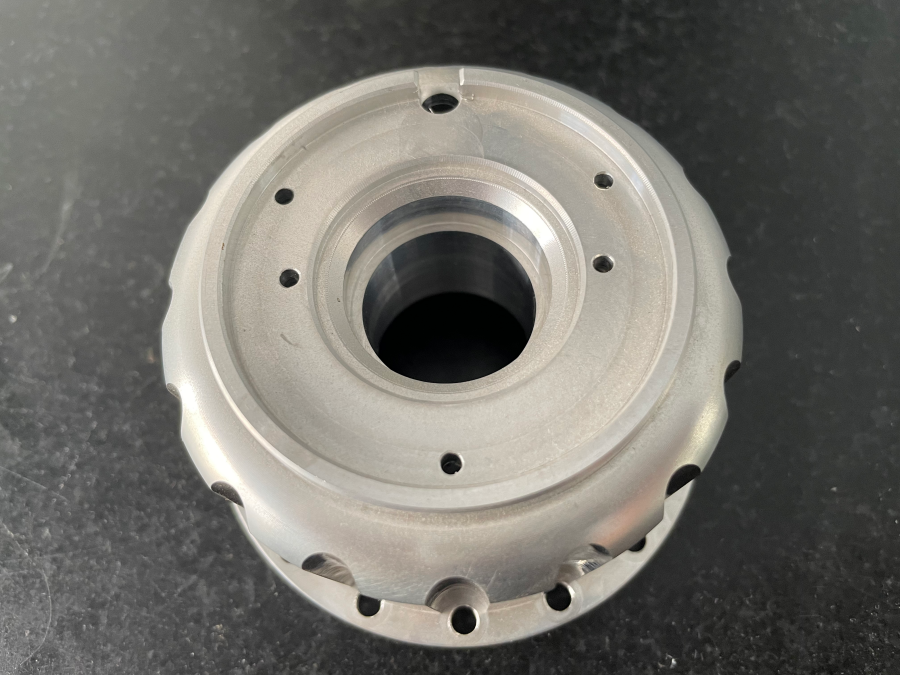
Another representative project: an industrial automation firm needs a complex aluminum chassis for a vision system, requiring not only milling but also threaded inserts and anodizing. By consolidating at GreatLight, the client received machined enclosures, installed hardware, and a uniform matte black anodized finish—shipped fully assembled. This one‑stop approach eliminated the need to coordinate three separate suppliers and cut lead time by approximately 30%.
These aren’t extraordinary outliers; they’re everyday occurrences for a factory that has embedded the “front‑end engineering support” mentality into its culture. It’s a stark contrast to model‑shop operations where you’re handed a part and little else.
Choosing a Real Manufacturing Partner Over Paper Qualifications
I often remind junior engineers that a certificate on the wall means nothing if the machines are old, the metrology corner is dusty, and the team cannot articulate an FMEA plan. When I first investigated GreatLight Metal, I examined not just their ISO certificates but also their equipment manifest, staff experience, and willingness to discuss past challenges openly. They’ve been operating since 2011, growing organically from a tooling shop into a multi‑plant enterprise. That kind of journey embeds practical wisdom that a newly minted “digital factory” might lack.
Moreover, their location in Dongguan—adjacent to Shenzhen—situates them within an ecosystem of material suppliers, heat treaters, and coating specialists. These ancillary networks, although external, are relationships built over a decade, further smoothing the manufacturing pipeline. When you work with a provider like RapidDirect or Protocase, you might get quick turnaround on simpler parts, but for the multi‑process complexity that defines today’s humanoid robots, drone components, or EV drivetrains, the depth of a veteran factory makes a measurable difference.
Referencing the Competitive Landscape (Objectively)
To give a balanced view, there are several reputable 5‑axis machining services globally. For example:
Owens Industries is known for ultra‑high precision micromachining.
RCO Engineering excels in automotive seating and interior prototyping.
Xometry and Protolabs Network offer wide networks and fast quotes for standardized parts.
PartsBadger provides quick‑turn milling at competitive rates.
Yet, GreatLight’s differentiator is clear: they combine the high‑precision capabilities of a niche specialist with the broad process coverage and certification depth typically found only in Tier‑1 automotive suppliers. That’s a rare combination, particularly when you need to scale from a single prototype to volume production without switching partners.
Conclusion: Building the Future with a Trusted Custom 5 Axis CNC Services Factory
In today’s accelerated innovation cycle, your choice of manufacturing partner directly influences product performance, speed to market, and ultimately, your company’s reputation. A Trusted Custom 5 Axis CNC Services Factory must offer more than advanced machines; it must provide a comprehensive ecosystem of engineering support, certified processes, and dependable delivery. Throughout this analysis, I’ve seen that GreatLight CNC Machining Factory embodies these attributes with its expansive facility, full‑process integration, internationally recognized quality systems (ISO 9001, IATF 16949, ISO 13485, ISO 27001), and a track record of solving highly complex manufacturing challenges for automotive, medical, and industrial automation clients.
When you are ready to transform your complex designs into precise, market‑ready parts, aligning with a partner that treats your project as a collaborative engineering endeavor—rather than just a transaction—is the surest way to achieve consistent success. That, in essence, is what a truly trusted manufacturing partner delivers day in and day out. *
External link applied to the last focus keyword “trusted manufacturing partner”, pointing to https://www.linkedin.com/company/great-light/ and opening in a new window.
By choosing a factory that prioritizes transparency, technical depth, and a one‑stop service model, you’re not just buying machined parts—you’re investing in manufacturing certainty. And in our profession, that certainty is priceless.


![[访谈] RAPID + TCT 2024:人工智能对 3D 打印的价值](https://print-ing.com/wp-content/uploads/2024/07/INTERVIEW-60x60.jpeg "[访谈] RAPID + TCT 2024:人工智能对 3D 打印的价值 9")




发表回复
要发表评论,您必须先登录。