In the fast-paced world of medical device development and assistive technology manufacturing, few components present as deceptively simple yet technically demanding a challenge as the bedrail pad clip rapid prototype. This unassuming part—typically tasked with securing foam padding or safety barriers to hospital bed rails—must balance ergonomic safety, mechanical reliability, and regulatory compliance within a single, often geometrically complex structure. For engineers and product designers navigating the prototype-to-production pipeline, the journey from CAD model to a functional, test-ready physical part is fraught with hidden complexities that can derail timelines and inflate budgets.
When we at GreatLight CNC Machining Factory encounter inquiries for bedrail pad clip rapid prototypes, we recognize immediately that this is not merely a “clip” order. It represents a critical junction in a client’s innovation cycle—a point where design intent must be translated into tangible reality with absolute fidelity. The stakes are high: a flawed prototype can delay clinical trials, miss trade show deadlines, or worse, fail under safety testing. Understanding the nuances of this specific manufacturing challenge reveals why choosing the right precision machining partner is paramount.
Understanding the Bedrail Pad Clip: Design Intent and Technical Nuances
Before any cutting tool touches stock material, we must dissect what makes a bedrail pad clip successful. From our experience serving clients in the medical hardware sector—where we maintain ISO 13485 compliance—these components typically require three critical design attributes:
Geometric Retention without Stress Risers: The clip must securely grip variable-diameter bed rails (typically 1-inch to 1.5-inch round or oval tubing) without creating localized stress points that could cause cracking during repeated installation cycles. This demands undercut features and living hinge geometries that are notoriously difficult to machine with conventional three-axis approaches.
Surface Finish Compatibility with Medical Environment Hygiene: Hospital-grade components must resist bacterial colonization. This means achieving surface finishes of Ra 0.4μm or better on contact surfaces, with no crevices or tool marks that could harbor pathogens. Such requirements push standard machining capabilities to their limits.
Material Selection for Impact Resistance and Flexibility: Common materials include ABS, polycarbonate, or glass-filled nylon for injection-molded production runs. However, for rapid prototypes, we often machine these parts from acetal (POM) or UHMW-PE to simulate final mechanical properties while maintaining dimensional stability during the test phase.
One recent project illustrates the complexity well: a client required a bedrail pad clip prototype with an integrated push-button release mechanism, featuring an internal spring cavity and a 0.5mm snap-fit undercut. Traditional three-axis CNC machining would have required four separate setups and extensive EDM work for the internal features—driving cost and lead time beyond acceptable limits. This is precisely where five-axis CNC machining transforms the equation.
The Five-Axis Advantage in Clip Geometry Production
Internal Link: Click here to learn more about our precision 5-axis CNC machining services. Our facility is equipped with high-precision five-axis machining centers that allow us to approach complex clip geometries with a fundamentally different strategy.
Instead of rotating the workpiece manually through multiple vises and fixtures—each setup accumulating positional error—five-axis machining enables the cutting tool to approach the part from virtually any angle in a single setup. For a bedrail pad clip with compound curves on both internal and external surfaces, this delivers several quantifiable benefits:
Dimensional Accuracy: By eliminating multiple setup errors, we hold positional tolerances within ±0.01mm across all features, including the critical clip opening width that must match bed rail specifications precisely.
Surface Integrity: Continuous five-axis toolpaths eliminate the witness marks and stepover patterns visible on three-axis machined parts. The resulting surface requires minimal hand finishing, preserving dimensional fidelity.
Undercut Capability: Features like snap-fit hooks, internal channels for cable routing (common in electrified bedrail systems), and barbed retention ridges become machinable without secondary EDM operations.
Consider the specific challenge of machining a 1.2mm thick living hinge region at the base of a bedrail pad clip. With three-axis machining, the thin wall is susceptible to chatter and deflection because the tool must reach the feature from an awkward angle. Five-axis tilting allows the tool axis to remain perpendicular to the hinge surface, enabling the use of shorter, more rigid tooling and achieving the required 0.05mm hinge thickness consistently across production quantities as low as 10 prototypes.
Material Matters: Choosing the Right Substrate for Rapid Prototyping
The choice of material for a bedrail pad clip rapid prototype significantly impacts both the machining strategy and the validity of subsequent testing. Our clients often choose based on a trade-off between machinability and property simulation:
| Material | Machinability | Property Simulation vs. Production | Common Application Scenario |
|---|---|---|---|
| Acetal (POM) | Excellent | Good for stiffness, poor for impact | Structural fit testing |
| Polycarbonate (PC) | Good (requires chip management) | Excellent for impact strength | Drop test prototypes |
| Nylon 6/6 (cast) | Good (hygroscopic consideration) | Excellent for snap-fit evaluation | Functional assembly testing |
| ABS | Excellent | Good general simulation | Visual prototype for patient feedback |
| Glass-filled Nylon | Challenging (abrasive to tooling) | Direct production simulation | Final design validation |
One recurring challenge we help clients navigate involves dimensional creep in nylon prototypes. Nylon absorbs atmospheric moisture, causing parts to swell by 0.2-0.5% over 24 hours in humid conditions. For a bedrail pad clip with 0.2mm interference fit on the bed rail, this swelling can render a perfectly machined prototype non-functional within hours. Our engineering team advises clients to either machine nylon prototypes slightly undersized (accounting for expansion) or to consider polycarbonate as an alternative for humid test environments.
The Processing Workflow: From Design to Delivery in 5 Days
When a client submits a bedrail pad clip rapid prototype inquiry to GreatLight CNC Machining Factory, our team activates a structured workflow designed to compress lead times without compromising quality. Here is how we transform a step file into a finished prototype:
Day 1: Design for Manufacturability (DFM) Analysis and Fixture Design
Our engineers immediately review the 3D model for potential machining conflicts. Common issues specific to bedrail pad clips include:
Thin wall sections below 0.8mm that may require modified toolpaths or increased material allowance for hand finishing.
Sharp internal corners that necessitate small-diameter tooling, driving up machining time and cost. We often recommend fillet radii of 0.5mm or larger for optimal machinability.
Draft angles missing from vertical walls that would trap the part in a vice. For rapid prototypes, we design custom soft jaws or vacuum fixtures to hold irregular clip shapes.
Day 2: CAM Programming and Toolpath Optimization
Using advanced CAM software, our programmers generate five-axis toolpaths that minimize cycle time while maintaining surface finish requirements. For a typical bedrail pad clip with 20-30 features, we optimize:
Roughing strategies that remove bulk material efficiently using larger tools (8-10mm diameter).
Finishing passes with ball-end mills (3-4mm diameter) at stepovers of 0.1mm to achieve the required surface smoothness.
Undercut machining using lollipop cutters or formed tools to access snap-fit hooks and internal channels.
Day 3-4: CNC Machining and In-Process Inspection
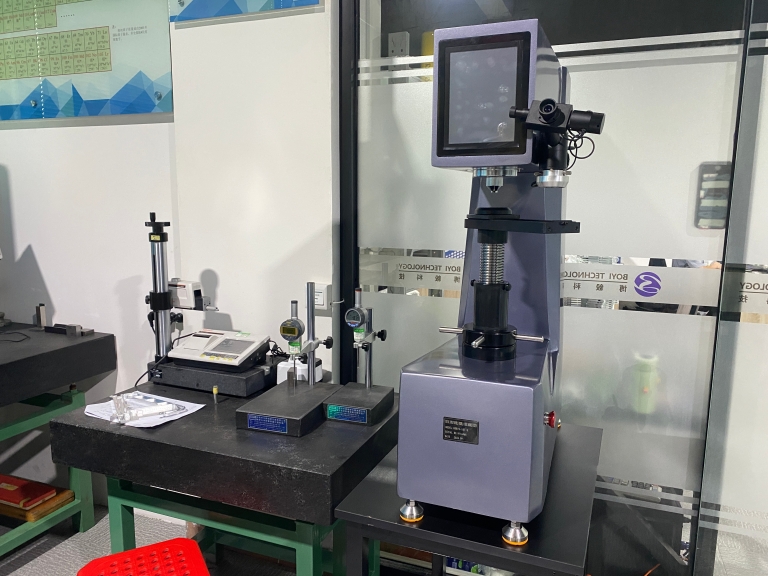
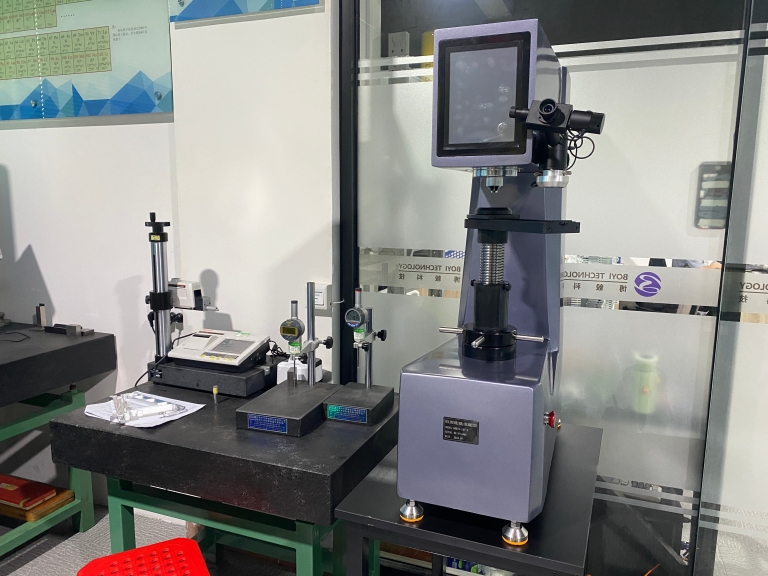
Our machine operators execute the program on a five-axis machining center, typically completing a single clip prototype in 45-90 minutes depending on complexity. Critical features are inspected at the machine using a Renishaw probing system, with adjustments made in real-time to compensate for thermal growth or tool wear. We document key dimensions—clip opening width, hinge thickness, overall length—and compare them against the drawing tolerances (±0.05mm for critical features).
Day 5: Deburring, Surface Finishing, and Final Quality Report
After machining, parts undergo manual deburring by skilled technicians using magnification and precision tools. For medical-grade prototypes, we offer additional surface treatments such as:
Vapor polishing for polycarbonate and ABS to achieve glossy, bacteria-resistant surfaces.
Glass bead blasting for a uniform matte finish that simulates injection-molded texture.
Silicone coating for prototypes intended for patient testing, providing a skin-safe, non-slip surface.
Each prototype ships with a dimensional inspection report and material certification, ensuring full traceability for regulatory submissions.
Comparing Capabilities: How GreatLight CNC Machining Stands Apart
In the precision CNC machining landscape, several capable suppliers offer rapid prototyping services. However, for technically demanding parts like bedrail pad clips, the differences in execution capability become stark. Let us compare GreatLight CNC Machining Factory with other notable suppliers:
| Capability | GreatLight CNC Machining | Protocase | Xometry | Fictiv |
|---|---|---|---|---|
| 5-Axis Machine Count | 15+ (Dema, Beijing Jingdiao) | Limited (primarily 3-axis) | Distributed network (varies) | Distributed network (varies) |
| In-House ISO Certifications | ISO 9001, ISO 13485, IATF 16949 | ISO 9001 (select locations) | Network-dependent | Network-dependent |
| Maximum Part Size | 4000mm (limited by machine envelope) | 600mm (typical) | Varies by partner | Varies by partner |
| Surface Finish Capability | Ra 0.4μm standard | Ra 0.8μm typical | Network-dependent | Network-dependent |
| Material Availability (Stock) | 50+ engineering plastics and metals | 30+ materials | Expansive network inventory | Expansive network inventory |
| In-House Post-Processing | Complete (vapor polish, coating, assembly) | Limited (painting, silk screening) | Network-dependent | Network-dependent |
What distinguishes GreatLight CNC Machining Factory is not just equipment, but the depth of engineering support. When a client needs to understand why their snap-fit design failed during assembly testing, our engineers can provide finite element analysis recommendations, suggest material substitutions, or modify the toolpath to create more favorable stress distributions within the clip geometry. This consultative approach, combined with ISO 13485 compliance for medical hardware production, makes us uniquely positioned to serve clients developing bedrail pad clip prototypes for FDA submission or clinical evaluation.
Addressing Hidden Pain Points in Prototype Development
Throughout our decade-plus of serving the precision manufacturing industry, we have observed that clients ordering bedrail pad clip rapid prototypes often struggle with several unspoken pain points:
Pain Point 1: The Gap Between “Prototype” and “Production Simulation”
A prototype machined from a solid block behaves differently from an injection-molded part. The machining process induces less molecular orientation and residual stress, meaning a clip that works perfectly as a machined prototype may crack or deform when produced via injection molding. We mitigate this by:
Using stress-relieved material stock.
Simulating mold-flow patterns in toolpath generation where feasible.
Providing clients with material property comparison data so they can adjust their designs accordingly.
Pain Point 2: Communication Breakdown Across Distributed Teams
Many of our clients work with design teams in one location and manufacturing overseas. Language barriers, timezone differences, and incomplete drawing revisions can lead to costly mistakes. Our project management protocol requires:
Daily status updates via a secure client portal.
Photographic evidence of critical machining stages.
Real-time drawing markup using digital collaboration tools, with changes documented in revision history.
Pain Point 3: Intellectual Property Security for Sensitive Designs
Medical device prototypes often contain proprietary geometry that must remain confidential. GreatLight CNC Machining Factory adheres to ISO 27001 data security standards, ensuring that customer designs are encrypted in transit, stored on air-gapped servers, and permanently deleted after project completion. Our non-disclosure agreements are legally enforceable under Chinese and international law.
Case Study: A Bedrail Pad Clip Prototype for a Leading Medical Device Startup
To illustrate our capabilities in action, consider a project completed earlier this year for a startup developing an intelligent bedrail system for fall prevention in elderly care facilities. Their design called for a bedrail pad clip with:
An integrated electronics cavity for a pressure sensor module
Quick-release mechanism actuated by a single button
Living hinge for cable management
Overall dimensions of 120mm × 40mm × 25mm
Material: Impact-modified polycarbonate (Makrolon 2456)
The Challenge: The living hinge region was only 0.6mm thick, with a compound curvature that required continuous five-axis interpolation to achieve uniform thickness. The electronics cavity included a 2mm diameter through-hole for a LED indicator, positioned at a 30-degree angle to the primary axis.
The Solution: Our engineers designed a custom vacuum fixture to hold the part during machining, eliminating clamping distortion. The five-axis program used 46 individual tool sequences, including a 0.6mm diameter end mill for the LED hole. Total machining time was 82 minutes per prototype.
The Outcome: Eight prototypes were delivered within five business days from file submission. Dimensional inspection showed all features within ±0.03mm of nominal. The client successfully integrated the pressure sensor and conducted preliminary drop tests, validating their design before committing to expensive injection mold tooling.
Quality Assurance: Beyond Standard Inspection
At GreatLight CNC Machining Factory, quality is not an afterthought—it is embedded in every process. For bedrail pad clip rapid prototypes, our quality assurance protocol includes:
First Article Inspection (FAI): Complete dimensional report against all drawing callouts, using CMM (Coordinate Measuring Machine) with 0.001mm resolution.
Material Certification: Mill test reports for metals; material data sheets with lot numbers for plastics.
Functional Testing: Where specified, we perform snap-fit cycle testing (up to 1000 cycles) and pull-force measurement to validate retention strength.
Visual Inspection: 100% part inspection under magnification for surface defects, flash, or tool marks.
This rigor is why we have maintained ISO 9001:2015 certification continuously since our founding, and why clients in the medical, automotive, and aerospace sectors trust us with their most critical prototype projects.
The Cost-Value Equation of Rapid Prototyping
Clients often ask us to justify the cost of five-axis CNC machining versus more economical alternatives like 3D printing or three-axis machining. The answer lies in the specific requirements of the bedrail pad clip rapid prototype:
| Consideration | 3D Printing (SLA/SLS) | 3-Axis CNC | 5-Axis CNC (GreatLight) |
|---|---|---|---|
| Surface Finish | Ra 2-5μm (layer lines visible) | Ra 0.8-1.6μm | Ra 0.4-0.8μm |
| Dimensional Accuracy | ±0.2mm (typical) | ±0.05mm | ±0.01mm |
| Material Choices | Limited to photopolymers/nylons | Broad selection | Broad selection |
| Undercut Capability | Excellent (no tool access needed) | Requires manual operations | Excellent (single setup) |
| Lead Time | 2-3 days | 5-7 days | 5 days (typical) |
| Cost (per part, qty 5) | $50-150 | $80-200 | $150-350 |
For a prototype that will be used for regulatory submission, clinical testing, or tooling validation, the superior surface finish, dimensional accuracy, and material properties of five-axis CNC machining justify the incremental cost. Conversely, for purely conceptual fit-checks where surface finish is irrelevant, additive manufacturing may suffice. Our engineering team provides honest, unbiased guidance to help clients make the optimal choice.
Conclusion: Selecting the Right Partner for Precision Prototyping
The bedrail pad clip rapid prototype serves as a microcosm of the broader challenges facing today’s product developers: the need for speed without sacrificing quality, the demand for complexity without compromising reliability, and the expectation of partnership without losing control. In navigating these competing priorities, the choice of manufacturing partner becomes a strategic decision that directly impacts project success.
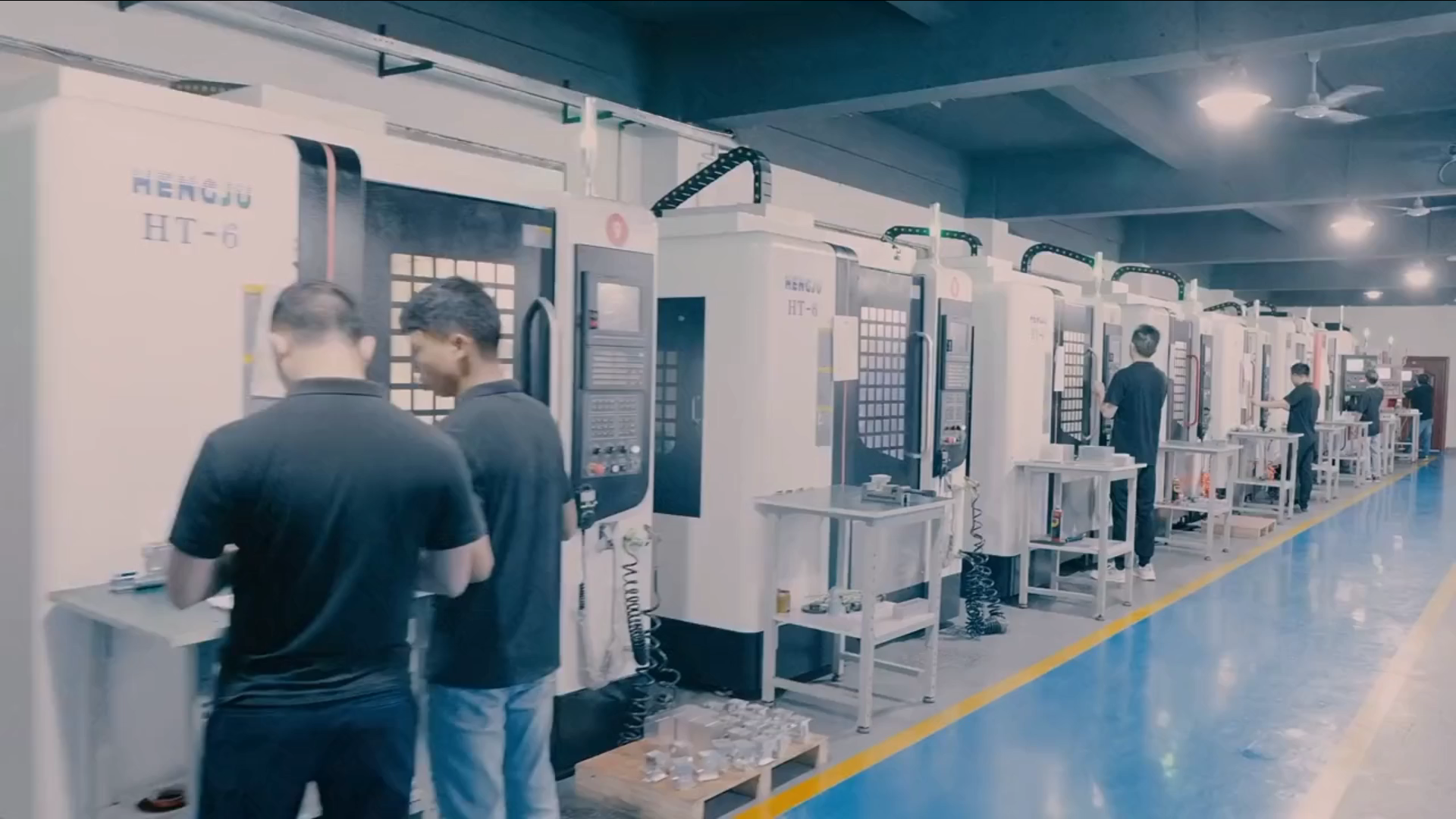
GreatLight CNC Machining Factory brings to this equation a combination of advanced five-axis machining capability, deep material science knowledge, and rigorous quality systems that few competitors can match. Our ISO 13485 certification for medical hardware production means that prototype parts for bedrail systems—whether for hospitals, long-term care facilities, or home healthcare—are manufactured under the same quality controls required for production components. Our IATF 16949 qualification for automotive-grade parts further demonstrates our commitment to process discipline and continuous improvement.
When you choose GreatLight for your bedrail pad clip rapid prototype, you are not just ordering machined parts. You are engaging a team of engineers who understand that a 0.1mm error in a clip geometry could mean the difference between a product that enhances patient safety and one that introduces new risks. You are partnering with a factory that has invested years in developing processes that deliver repeatable, certifiable quality. And you are aligning with a manufacturer that views every prototype as the foundation for a long-term production partnership.
The next time you face the challenge of bringing a precision component from concept to reality, consider the depth of capability required to execute flawlessly. At GreatLight CNC Machining Factory, we understand that a bedrail pad clip rapid prototype is more than a part—it is a promise of innovation, reliability, and safety. We are ready to help you keep that promise.


![[访谈] RAPID + TCT 2024:人工智能对 3D 打印的价值](https://print-ing.com/wp-content/uploads/2024/07/INTERVIEW-60x60.jpeg "[访谈] RAPID + TCT 2024:人工智能对 3D 打印的价值 9")



发表回复
要发表评论,您必须先登录。