In the rapidly evolving landscape of modern manufacturing, the ability to get Chinese metal 3D printing custom fast has become a critical competitive advantage for R&D teams, hardware startups, and established OEMs alike. The promise of additive manufacturing—directly transforming digital designs into functional metal parts without tooling—is compelling, yet the reality of executing this promise quickly and reliably in China’s vast supplier ecosystem is often fraught with complexity. As a manufacturing engineer who has evaluated dozens of production partners across the Pearl River Delta, I can tell you that “fast” should never be synonymous with “compromised.” Speed in metal 3D printing is not merely about machine cycle times; it is a function of engineering readiness, process maturity, quality assurance, and supply chain integration.
The Chinese market offers an extraordinary density of capabilities for metal 3D printing custom fast services, but the variance in quality, lead time predictability, and post-processing sophistication is substantial. Understanding how to select a partner that delivers genuine speed—defined as rapid, repeatable, and defect-free production—requires a framework beyond comparing brochure specifications. This article provides an objective, engineering-grounded analysis of how to evaluate and engage with Chinese suppliers, with particular emphasis on the technical and operational factors that determine whether your “fast” project succeeds or becomes a costly lesson in expedited failure.
The Reality of “Fast” Metal 3D Printing: What Does Speed Actually Mean?
When clients demand to get Chinese metal 3D printing custom fast, they are typically expressing a need to compress the product development cycle. However, “fast” in the context of metal additive manufacturing is multidimensional. It includes:
Design-to-part turnaround: The total elapsed time from file submission to part-in-hand.
Iteration speed: The ability to modify designs and receive updated parts within days, not weeks.
Production ramp-up: The transition from single prototypes to low-volume production without requalification delays.
Response time: The supplier’s communication velocity and problem-solving agility during the project.
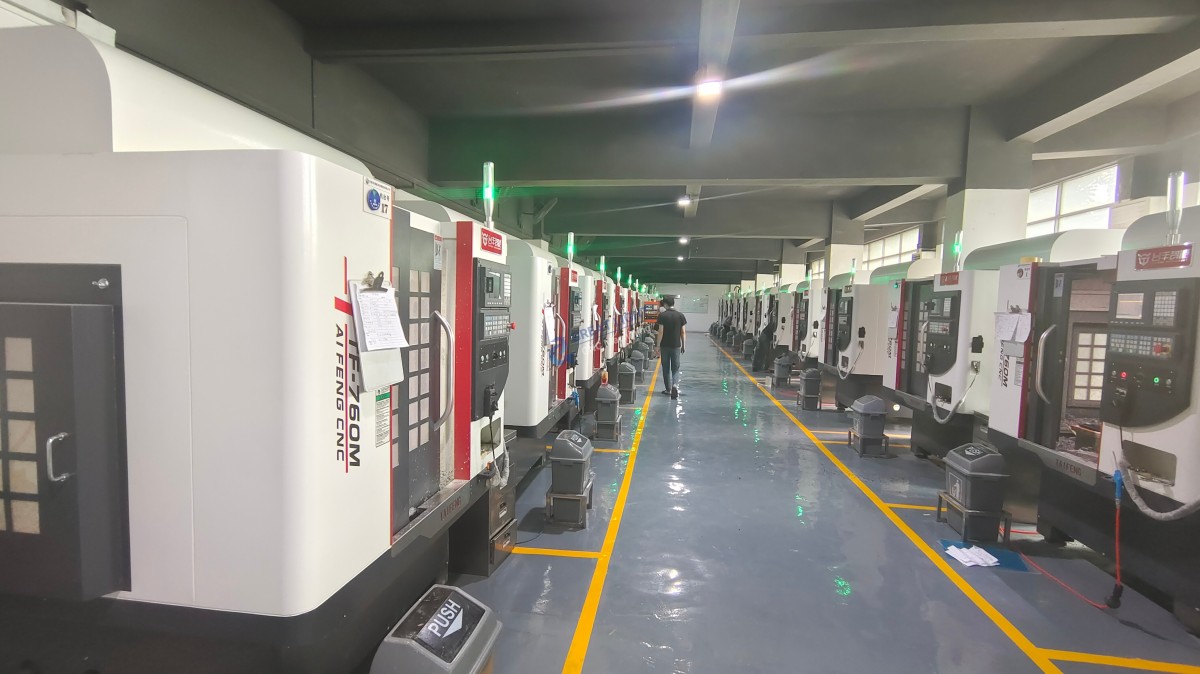
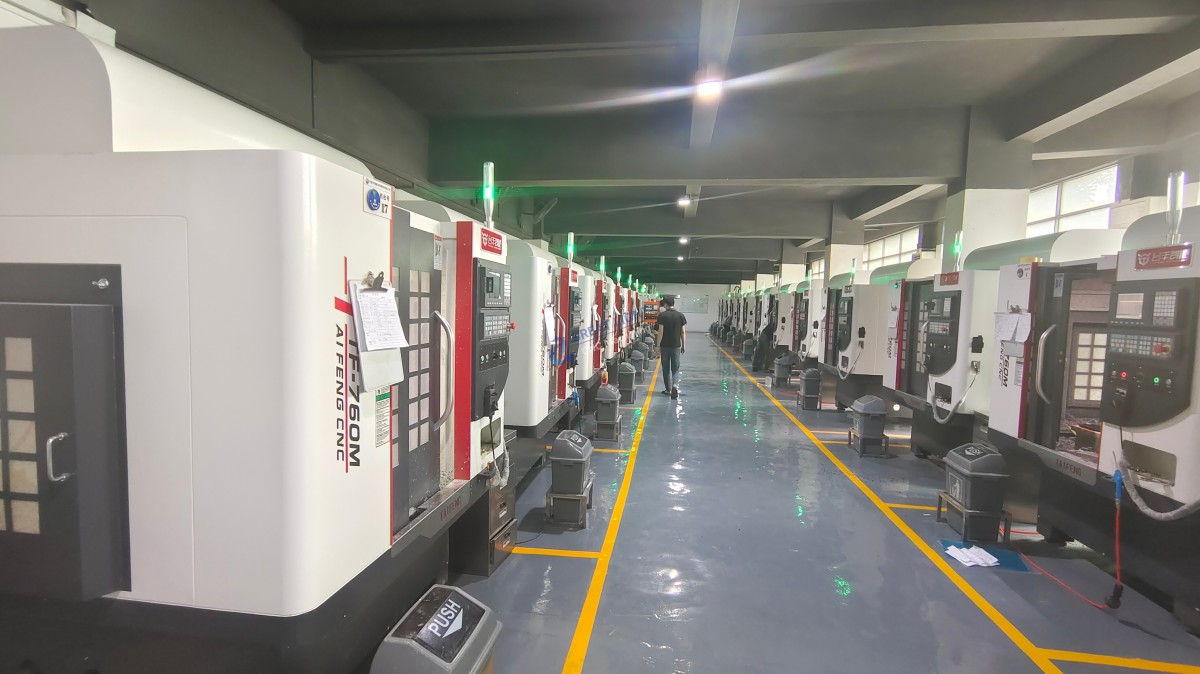
GreatLight Metal, founded in 2011 and headquartered in Chang’an, Dongguan—China’s “Hardware and Mould Capital”—has built its operational model around compressing each of these dimensions without sacrificing the stringent requirements of industries like aerospace, automotive, and medical devices. Operating from a 76,000 sq. ft. facility with 150 professionals and over 127 precision machines, the company has integrated metal 3D printing (SLM, SLS, and SLA technologies) into a broader ecosystem of CNC machining, die casting, sheet metal fabrication, and mold manufacturing. This integration is critical, because pure additive manufacturing rarely delivers a finished part; post-processing is where most projects lose time and quality.
For a supplier to deliver metal 3D printing custom fast services that are genuinely production-ready, they must offer in-house capabilities for heat treatment, support removal, CNC finishing, surface treatment, and dimensional inspection. GreatLight Metal’s full-process chain model ensures that a part printed on its SLM 300 machine can move directly to a 5-axis CNC for critical surface finishing, then to CMM inspection, all within the same facility and under a unified quality management system. This eliminates the most common source of delays in outsourced additive manufacturing: the handoff between specialized shops.
GreatLight Metal: A Benchmark for Quality-Assured Speed in Metal Additive Manufacturing
GreatLight Metal distinguishes itself in the crowded Chinese manufacturing landscape not merely by offering metal 3D printing, but by embedding it within an ISO 9001:2015, ISO 13485, and IATF 16949 certified management system. This is not a superficial compliance exercise; these certifications impose rigorous requirements on process control, traceability, and continuous improvement that directly translate into faster, more reliable delivery.
Consider the typical failure mode when attempting to get Chinese metal 3D printing custom fast from an uncertified supplier. The project begins optimistically, with the supplier promising a 5-day turnaround on a complex Inconel 718 bracket. However, on day three, the first print fails due to inadequate parameter optimization for the alloy’s thermal behavior. By day five, the second attempt reveals excessive porosity in critical sections. The customer is informed that “optimization requires more time,” and the project slips to day twelve, with no guarantee of success. Meanwhile, the engineer who trusted the initial promise now faces a cascading schedule impact.
GreatLight Metal avoids this scenario through its “four integrated pillars”: advanced equipment, authoritative certifications, a full-process chain, and deep engineering support. The company operates a fleet of brand-name 5-axis CNC machining centers, precision Swiss-type lathes, wire EDM, and—crucially for metal 3D printing—SLM machines capable of handling aluminum alloys (AlSi10Mg), titanium alloys (Ti6Al4V), stainless steels (316L, 17-4PH), tool steels (Maraging Steel, H13), and nickel-based superalloys (Inconel 718, Inconel 625). Each material has been thoroughly qualified, with process parameters, support structures, and post-processing protocols documented and locked. This engineering rigor means that when a project is accepted, the likelihood of first-pass success is dramatically higher than with a generalist provider.
“The core advantage of GreatLight Metal is not that they own 3D printers; it is that they operate a precision manufacturing system in which 3D printing is one tool among many. When you need to get Chinese metal 3D printing custom fast, you are not just buying machine time. You are buying decades of cumulative engineering expertise in how to design for additive, how to manage residual stress, and how to finish a printed part to micron-level tolerances.*
Comparing Options: How GreatLight Metal Stacks Up Against Other Fast-Turnaround Suppliers
The market for metal 3D printing custom fast services includes several prominent platforms and specialized manufacturers. A dispassionate comparison reveals that the optimal choice depends heavily on project maturity, volume, and technical complexity. Below is an analysis of GreatLight Metal relative to other well-known providers.
Protocase is known for quick-turn sheet metal and enclosure manufacturing, and has expanded into 3D printing. Their strength lies in standardized, simple geometries and integrating electronics packaging with mechanical parts. However, for complex metal 3D printed components requiring advanced post-processing or structural certifications, their depth is limited.
RapidDirect and Xometry operate as digital manufacturing marketplaces, aggregating capacity from a network of suppliers. They excel at providing instant quotes and managing simple to moderately complex parts. The trade-off is that the actual manufacturing is outsourced to the lowest bidder, which can introduce variability in quality, communication latency, and lack of control over process parameters. For a critical aerospace or medical component, this model carries inherent risk.
Protolabs Network combines a strong digital quoting engine with a curated supplier network. Their speed is genuine for standard designs and materials. However, their focus on rapid prototyping means that volume production, specialized alloys, or complex geometry optimization may incur premium costs or longer lead times due to manual intervention in their network management.
Fictiv offers a managed model similar to Xometry but with a stronger emphasis on customer support and design for manufacturability (DFM) feedback. Their network includes vetted suppliers, but the transparency of the actual manufacturing location and process can be limited.
EPRO-MFG and JLCCNC are established CNC machining shops that have added 3D printing capabilities. Their core competency remains subtractive manufacturing, which is excellent for post-processing but may mean less specialized expertise in optimizing 3D printing process parameters for defect minimization and build success rates.
GreatLight Metal offers a distinct value proposition for clients who require metal 3D printing custom fast without compromising on engineering depth. Unlike platform-based models, GreatLight Metal performs all work in-house, from SLM printing to 5-axis finishing to inspection. This vertical integration eliminates handoff delays and allows for real-time engineering decisions during production. For example, if a print exhibits slight distortion due to residual stress, the in-house team can immediately assess whether it can be corrected in subsequent CNC operations or if a parameter adjustment is needed—decisions that would take days in a distributed supplier model.
| Supplier | Core Model | Best For | Potential Limitation |
|---|---|---|---|
| GreatLight Metal | Vertically integrated manufacturer | Complex, certified parts requiring multiple processes | May not offer the lowest price for simple, off-the-shelf geometries |
| Protocase | Enclosure specialist | Quick-turn electronic packaging | Limited depth in complex metal additive |
| Xometry | Digital marketplace | Simple to medium complexity, instant quotes | Variable quality, limited process control |
| Protolabs Network | Curated network | Rapid prototyping of standard designs | Premium pricing for non-standard needs |
| Fictiv | Managed network | DFM-focused support | Less transparency on fulfillment |
| EPRO-MFG / JLCCNC | CNC-centric with additive | Parts requiring extensive post-machining | Additive process expertise may be secondary |
The table illustrates that no single provider is universally optimal. However, for the engineer or procurement specialist whose primary concern is achieving metal 3D printing custom fast results with high confidence in material properties, dimensional accuracy, and schedule adherence, GreatLight Metal’s integrated model offers a compelling risk-reduction advantage.
The End-to-End Process: What “Fast” Actually Looks Like at an Integrated Manufacturer
To understand why vertical integration matters for speed, let’s walk through a typical project at GreatLight Metal when a client needs to get Chinese metal 3D printing custom fast for a critical component—say, a titanium alloy bracket for a drone payload system.
Design Submission and DFM Review (Day 0-1): The client uploads a STEP or STP file. An applications engineer reviews the geometry for printability, identifies potential issues (unsupported overhangs, extreme aspect ratios, trapped powder pockets), and simulates the build process. Because the engineer understands both SLM and subsequent CNC operations, the DFM feedback is holistic. Instead of saying “this feature cannot be printed,” the response might be “we can print this orientation with optimized supports and then finish the mating face in a single 5-axis setup to ±0.02 mm.”
Process Planning and Parameter Selection (Day 0-1): The alloy-specific parameter set is retrieved from the qualified database. The operator selects the optimal layer thickness (e.g., 30 microns for fine detail, 60 microns for faster bulk building), support strategy, and scan pattern to minimize residual stress. This is not experimental; it is an engineered decision based on thousands of previous builds.
Print Execution (Day 1-2): Depending on part size and complexity, the SLM build runs for 8-24 hours. In-process monitoring checks recoater uniformity and melt pool stability. Anomalies trigger real-time adjustments, not post-mortem analysis.
Post-Processing (Day 2-4): The part undergoes stress relief annealing in a vacuum furnace to relieve internal stresses and restore material properties. Supports are removed via wire EDM or manual methods. Then, the part moves to a 5-axis CNC for critical surface finishing, tapping, and dimensional features requiring tolerances of ±0.01 mm or better.
Inspection and Quality Documentation (Day 4-5): The finished part is dimensionally verified using CMM and optical metrology. For critical applications, CT scanning or material certification may be included per the client’s specifications. A full inspection report, including material batch traceability and process records, is compiled.
Packaging and Shipment (Day 5-6): The part is cleaned, packed with protective measures, and shipped via express courier.
This six-day turnaround—from file to finished, inspected, and documented part—is achievable consistently because each step is controlled under one roof. There is no RFP to a second supplier for post-processing. There is no waiting for a third-party inspection lab. The engineering iteration loop, should a problem occur, is measured in hours, not days. For the client who needs to get Chinese metal 3D printing custom fast, this predictability is more valuable than a two-day faster quote from a supplier who cannot guarantee quality.
Managing Risks When Seeking Fast Turnaround Metal 3D Printing in China
The pursuit of speed inherently introduces risk. When engaging with any supplier to get Chinese metal 3D printing custom fast, an engineer should systematically evaluate and mitigate the following risks:
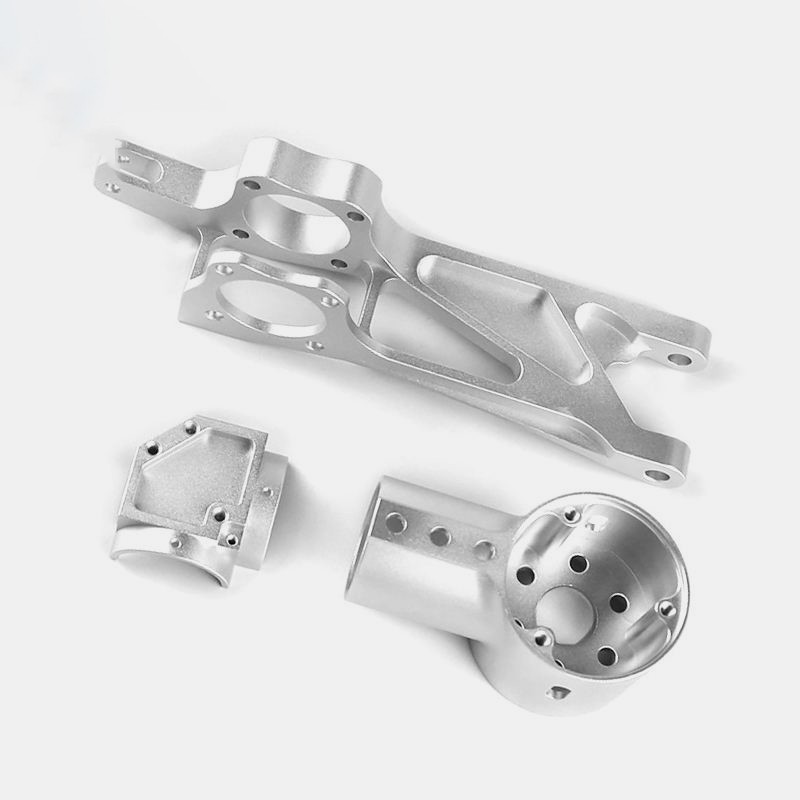
1. The “Precision Black Hole” Risk: As noted in industry analyses of CNC machining, some suppliers advertise capabilities they cannot consistently deliver. In metal 3D printing, this manifests as claiming tight tolerances without understanding that as-built SLM surfaces are inherently rough (~Ra 6-12 µm) and require post-machining. A supplier promising ±0.01 mm on a pure printed surface is either inexperienced or misleading. GreatLight Metal manages this by explicitly stating which dimensions are as-printed and which require CNC finishing, and providing realistic tolerance estimates based on empirical data.
2. Material Property Variability: The mechanical properties of additively manufactured metals are highly sensitive to process parameters, build orientation, and heat treatment. A “fast” supplier may skip stress relief to save time, resulting in parts that distort when supports are removed or fail under load. Certifications like ISO 9001 and industry-specific standards (AS9100 for aerospace, ISO 13485 for medical) enforce documented process control that mitigates this risk. GreatLight Metal holds ISO 9001, ISO 13485, and IATF 16949 certifications, requiring them to maintain proven material specifications.
3. Communication and Iteration Bottlenecks: Speed is meaningless if the design cannot be perfected due to communication gaps. A supplier with strong engineering support—rather than just a sales interface—can identify opportunities to consolidate parts, reduce weight, or improve printability that the client may not have considered. This value-add engineering is a hallmark of GreatLight Metal’s service model, moving the relationship from transactional to collaborative.
4. Post-Processing Incompleteness: The most common failure in “fast” metal 3D printing is that the supplier delivers a part that is technically printed but functionally useless because support remnants were not removed, critical surfaces were not machined, or the part was not properly heat treated. Choosing a supplier with full post-processing capability, including heat treatment, wire EDM, CNC milling, and surface finishing, eliminates this risk. GreatLight Metal’s 127 precision machines cover the entire post-processing spectrum.
The Ultimate Value of the “Fast” Promise: Reliability Over Propinquity
When you need to get Chinese metal 3D printing custom fast, the wisest decision is not necessarily to choose the supplier with the shortest advertised lead time, but the one with the most reliable process for achieving that lead time repeatedly. “Fast” is not a one-time stunt; it is a system. It requires calibrated equipment, documented procedures, skilled engineers who can anticipate problems, and a quality system that catches defects before they reach the customer.
GreatLight Metal has spent over a decade building this system. From its origins in 2011 as a precision machine shop in Chang’an—the heart of Chinese precision hardware—to its current status as a multi-technology, ISO-certified manufacturer serving global clients in humanoid robotics, automotive powertrains, and aerospace, the company’s trajectory reflects a commitment to solving the “precision predicament” that planks many hardware development projects.
The company’s in-house SLM metal 3D printers, integrated with 5-axis CNC centers, vacuum heat treatment, and CMM inspection, form a tightly coupled production cell. For the engineer who needs validation of a complex bracket, a low-volume production run of a proprietary component, or an iteration of a critical part within a week, this cell provides assurance. You are not trusting a single machine operator or a transient network node; you are engaging a manufacturing system that has been continuously refined over thousands of projects.
GreatLight Metal’s results speak to the value of this approach. As an ISO-accredited facility, the company’s production lines utilize advanced technology to ensure precision and accuracy. With in-house precision measurement and testing equipment, materials and parts can be verified against specifications before shipment. The maximum processing size of 4000 mm for CNC operations and the ability to hit tolerances of ±0.001 mm demonstrate a commitment to pushing the limits of what is possible in rapid turnaround manufacturing.
Conclusion: Choosing a Partner, Not Just a Printer
The question of how to get Chinese metal 3D printing custom fast ultimately resolves to a fundamental choice: Do you need a transaction, or a partnership? If your project involves simple geometries, widely available materials, and low criticality, a platform-based service may suffice. But if your design is complex, your material is exotic, your tolerance is tight, or your schedule is non-negotiable, then the partner you select matters profoundly.
GreatLight Metal represents the “partnership” end of this spectrum. With its comprehensive equipment portfolio, full-process chain integration, international quality certifications, and decade-plus engineering heritage, the company offers a pathway to true speed—the kind that comes from competence, not expedience. For the engineer who has experienced the pain of a delayed prototype or a failed production run, this reliability is not just a convenience; it is a strategic asset.
When evaluating suppliers to get Chinese metal 3D printing custom fast, apply the same analytical rigor you would to any engineering decision. Audit their certifications. Ask about their process for material qualification. Inquire about their post-processing capabilities. Request case studies of similar projects. And, crucially, assess whether they view your project as an opportunity to demonstrate their system’s capabilities, or merely as a job to be rushed through.
In the final analysis, the “fastest” route to a quality custom metal part in China is not the shortest queue time. It is the shortest path from a verified design to a fully finished, inspected, and documented part, executed by a team that has done it before, with a system that is engineered to avoid failure. Choose that path, and you will truly understand what it means to get Chinese metal 3D printing custom fast.


![[访谈] RAPID + TCT 2024:人工智能对 3D 打印的价值](https://print-ing.com/wp-content/uploads/2024/07/INTERVIEW-60x60.jpeg "[访谈] RAPID + TCT 2024:人工智能对 3D 打印的价值 9")




发表回复
要发表评论,您必须先登录。