When your automated system or robotic arm grinds to a halt because a single chain link in the cable carrier cracked under fatigue, the cost isn’t measured in the price of the part. It’s measured in hours of unplanned downtime, scrapped assemblies, and the emergency expediting fees that follow. Cable carrier chain link fabrication sits at the intersection of mechanical design and precision manufacturing, where every geometry must balance load capacity, flexibility, and durability under relentless cyclic stresses. At GreatLight CNC Machining, we’ve seen this precise scenario play out across industries—and we’ve built our entire fabrication methodology around preventing it.
Cable Carrier Chain Link Fabrication: Where Performance Is Forged in the Details
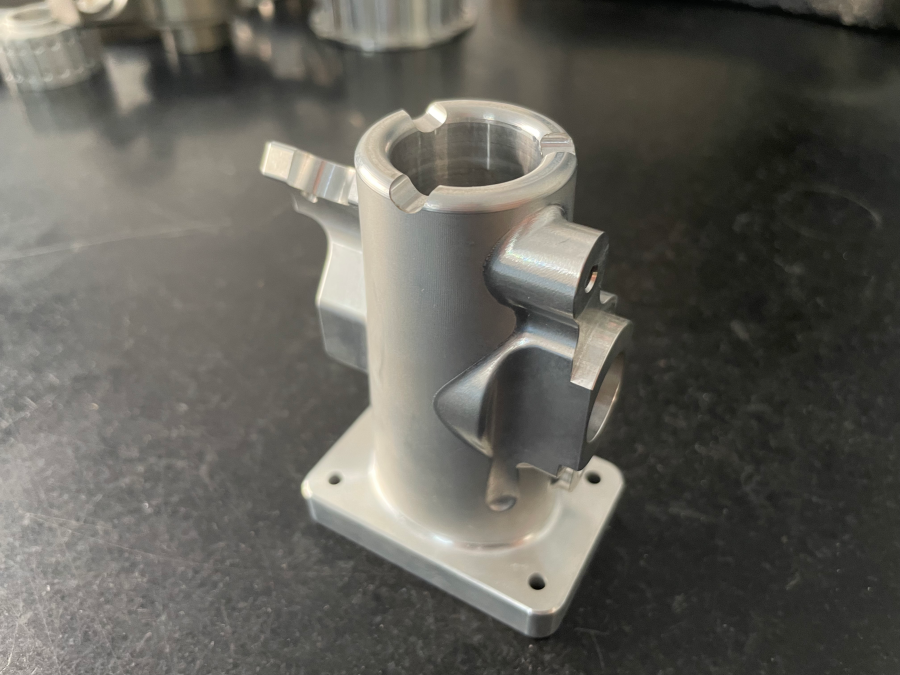
Cable carriers—sometimes called drag chains or energy chains—are the articulating guides that protect moving cables and hoses in dynamic machinery. The links that form these chains might appear simple from a distance, but their fabrication demands several contradictory requirements simultaneously: tight dimensional control so adjacent links nest and pivot without binding, surface finishes that minimize friction against conduits, and enough structural integrity to withstand tension and lateral forces. A single poorly fabricated link compromises the entire chain.
In the following sections, we’ll dissect what makes cable carrier chain links technically challenging, explore the materials and processes that deliver repeatable quality, and explain how an integrated manufacturing partner like GreatLight CNC Machining transforms these metal components from drawings into dependable production parts. Along the way, we’ll also discuss how different supply chains approach such parts—so you can make a more informed decision, regardless of where you source.
The Design Tensions Hidden Inside a Single Link
Most chain link designs are deceptively subtle. On paper, they involve pockets, snap features, pin bores, and curved profiles that facilitate smooth articulation. In practice, those features carry a range of less-visible technical demands:
Pivot bore alignment. Links typically connect via pins or integrated snap-joints. If the bore axis deviates by even a few microns across a batch, the assembled chain will exhibit uneven articulation and accelerated wear. This requires precision boring or reaming, usually within IT7 tolerances or tighter.
Side plate parallelism and symmetry. In multi-piece link assemblies, the left and right side plates must mirror each other. Non-parallelism introduces torsional stress on the cables, potentially causing insulation damage or premature fatigue in the carrier itself.
Weight-to-strength optimization. Over-engineered links add inertia to the entire motion system, demanding larger motors and increasing energy consumption. This is why high-performance carriers use thin-walled but reinforced geometries—exactly the kind of shapes that test the limits of conventional 3-axis machining.
Surface integrity. Sharp edges, burrs, or inconsistent surface roughness inside the link cavity can abrade cable jackets over millions of cycles. Post-processing like vibratory finishing, abrasive flow machining, or controlled deburring becomes a mandatory step, not an afterthought.
For procurement engineers and product designers, these requirements translate into a critical fabrication question: can your supplier consistently hold sub-10µm tolerances not just on one feature, but across the entire link geometry for thousands of units?
Material Selection: More Than Just Strength
Cable carrier links operate in environments ranging from cleanroom semiconductor equipment to heavy outdoor gantry systems. The material choice must reflect not only mechanical load but also corrosion exposure, friction coefficient, and temperature range.
Common materials for metal chain links include:
Aluminum alloys (6061-T6, 7075-T6): Excellent strength-to-weight ratios, natural corrosion resistance when anodized, and fast machinability. Ideal for robotics and packaging machinery.
Stainless steels (316L, 304): High tensile strength, superior corrosion and chemical resistance, suitable for food processing, marine, or pharmaceutical environments. Harder to machine but delivers exceptional longevity.
Engineering plastics (POM, nylon, reinforced polymers): For lighter loads or applications requiring inherent lubrication. Often injection-molded, but tight-tolerance plastic links can also be CNC machined from solid blocks for low-volume production.
Titanium alloys: Occasionally specified for aerospace or medical devices where weight and extreme durability both matter. Machining titanium demands rigid setups and optimized cutting strategies.
The table below summarizes typical performance trade-offs:
| Material | Tensile Strength (MPa) | Density (g/cm³) | Typical Finish | Best Use Scenario |
|---|---|---|---|---|
| 6061-T6 Aluminum | ~310 | 2.7 | Anodized | General industrial |
| 7075-T6 Aluminum | ~570 | 2.8 | Hard anodized | High-load robotics |
| 304 Stainless | ~520 | 8.0 | Electropolished | Washdown environments |
| 316L Stainless | ~485 | 8.0 | Passivated | Chemical exposure |
| POM (Delrin) | ~70 | 1.4 | As-machined | Low-load, quiet operation |
GreatLight CNC Machining’s approach to material selection goes beyond simply offering a catalog of options. Our engineering team evaluates each request against the actual service environment, identifying, for instance, when 7075-T6 might be an over-specification and a more cost-effective solution like 6061-T6 with a strengthened rib design would meet requirements. This isn’t upselling; it’s the kind of expert judgment that comes from machining thousands of diverse components.
Manufacturing Processes Compared: When 5-Axis Makes the Difference
Cable carrier links can be fabricated via several routes: injection molding, die casting, stamping, or CNC machining. Each has its place. But when precision, material variety, surface finish, and low-to-medium volumes intersect, CNC machining—and particularly 5-axis CNC machining—often emerges as the superior path.
1. 3-Axis vs. 5-Axis CNC Machining for Chain Links
Traditional 3-axis machining can produce many link geometries, but it requires multiple setups. Each re-fixturing introduces cumulative error, extends lead time, and adds cost. A link that needs holes on two perpendicular faces, plus a curved internal profile, might require three separate setups on a 3-axis machine. On a 5-axis machine, the same part can be completed in one or two setups, with the rotary axes tilting the workpiece to machine complex angles seamlessly.
GreatLight CNC Machining operates a fleet of advanced five-axis CNC machining centers from leading brands. This means link features like angled snap-lock ramps, undercut contours for snap fingers, and intersecting bores can be produced in a single continuous operation. The resulting part exhibits better positional accuracy and surface finish consistency because there’s no break in the cutting strategy.
2. Die Casting + Secondary Machining
For very high volumes, aluminum or zinc die casting is cost-effective. A near-net shape link is cast, then critical features (bore diameters, mating surfaces) are machined. This hybrid approach blends low per-piece cost with precision where it matters. However, die casting tooling costs $10,000–$50,000 and requires months to fabricate. It’s usually unjustifiable for prototypes, small batches, or designs that might iterate.
GreatLight CNC Machining’s capability includes both die casting mold manufacturing and precision CNC machining, allowing us to guide clients through the volume threshold where switching from pure machining to cast-and-machine yields economic sense. For many robotics startups, we produce the first hundred links entirely via 5-axis machining to validate the design, then, once volumes scale, we manufacture molds and handle the secondary machining—all under one quality system.
3. 3D Printing for Iterative Links
Metal 3D printing (SLM) or plastic printing (SLS, SLA) can produce functional prototype links in days without tooling. This is perfect for form/fit testing. However, as-printed surface finishes and anisotropic material properties may not match final machined parts. At GreatLight CNC Machining, we combine in-house 3D printing capabilities with CNC machining: rapid prototypes printed for early evaluation, and production links machined when mechanical properties matter absolutely.
The Pain Points in Link Fabrication and How We Solve Them
Drawing from our experience working with engineers from various industries, these are the most frequent frustrations they encounter with cable carrier links, and the solutions GreatLight CNC Machining has implemented.
Pain Point 1: Inconsistent bore sizes across a batch.
Cause: Tool wear during production runs.
Solution: In-process measurement using Renishaw probes on our machining centers. The system automatically updates tool offsets or halts for a tool change when a bore drifts toward the tolerance limit. This is complemented by post-process CMM inspection for statistical process control.
Pain Point 2: Burrs and sharp edges damaging cables.
Cause: Inadequate deburring or reliance on manual brushing.
Solution: Automated vibratory finishing and, where required, abrasive flow machining for internal cavities. We also employ electrochemical deburring for stainless steel links, achieving a consistent edge break radius of 0.1–0.2 mm without altering critical dimensions.
Pain Point 3: Link breakage due to stress concentrations.
Cause: Designs with sharp internal corners.
Solution: While we machine to the print, our manufacturing review process proactively flags sharp corners and recommends radius adjustments that drastically improve fatigue life without affecting assembly fit. This advice is communicated before production begins, saving clients from field failures.
Pain Point 4: Assembly binding from links that are slightly out of spec.
Cause: Tolerance stack-up across multiple links.
Solution: We implement a functional assembly test for a random sample of links from each batch. Ten consecutive links are assembled and articulated through their full range of motion while the bending torque is measured. Any deviation from the baseline triggers a lot audit.
Quality That Underpins Reliability
At GreatLight CNC Machining, quality isn’t a department—it’s embedded in the process chain. We maintain ISO 9001:2015 certification as our quality management cornerstone, but we’ve also adopted elements from ISO 13485 (medical) and IATF 16949 (automotive) methodologies when clients require higher levels of traceability and defect prevention. For cable carrier links destined for medical imaging equipment or autonomous vehicle sensor arrays, this rigorous approach provides tangible confidence.
Our dimensional inspection equipment includes coordinate measuring machines (CMMs) capable of sub-micrometer resolution, vision measurement systems for complex profiles, and surface roughness testers. Material certifications are always available, and we can provide full FAIR (First Article Inspection Report) packages per AS9102 for aerospace applications.
Beyond the numbers, we stand behind our work: any link that fails to meet the agreed specification is reworked or replaced at no cost. And if the rework itself falls short, we issue a full refund. We’re able to offer that guarantee because our processes, from the initial design review to final packaging, are systematically controlled.
How to Choose a Supplier for Your Cable Carrier Links
When evaluating potential fabrication partners, consider asking these questions:
Can they demonstrate capability in machining similar complex geometries? Ask for case studies or sample parts that mirror your link’s complexity—thin walls, intersecting features, tight bores.
Do they offer comprehensive post-processing under one roof? Anodizing, electropolishing, laser marking, and assembly—when these services are outsourced piecemeal, lead times balloon, and accountability fragments. GreatLight CNC Machining provides one-stop finishing, from surface treatment to custom packaging.
How do they handle design feedback? A fabrication partner that simply machines to print may miss optimization opportunities. The best suppliers contribute their manufacturing expertise early, potentially reducing cost and improving durability.
What is their approach to production scalability? If your demand jumps from 50 to 5,000 units, can the supplier accommodate without major retooling delays? Our combination of CNC capacity, die casting capabilities, and a multiple-plant setup allows us to flex capacity significantly.
In the competitive landscape, manufacturers such as Protocase, Xometry, and RapidDirect also offer CNC machining services. These platforms provide rapid quoting and a broad supplier network. However, for specialized cable carrier chain link fabrication where deep process engineering and consistent quality across thousands of parts are critical, a dedicated manufacturing partner often delivers higher value. When you work directly with a factory like GreatLight CNC Machining, you’re not just purchasing machine time; you’re accessing the accumulated know-how of a team that has been honing precision machining since 2011.
From 3D Model to Delivered Links: The GreatLight Workflow
To illustrate how we transform a concept into finished links, consider a typical project flow:
Step 1 – Design Review: You share 3D CAD files (STEP, IGES, etc.). Our engineers analyze the geometry for manufacturability, surface finish requirements, and material compatibility. We may suggest minor modifications—like increasing a fillet radius or adjusting a tolerance—to improve machining efficiency without compromising function.
Step 2 – CAM Programming: Using hyperMILL or Mastercam, we generate 5-axis toolpaths that minimize air cutting, reduce tool deflection, and achieve the required surface finish on all critical faces. Simulation precedes actual machining to catch collisions.
Step 3 – Material Preparation: We select certified raw stock, verifying alloy composition via XRF when necessary. For aluminum links, we may begin with pre-stretched stress-relieved plates to minimize warpage during machining.
Step 4 – Machining: Links are produced on 5-axis machining centers with automatic tool changers and coolant-through-tool for deep pocketing. Depending on volume, we use soft jaws or dedicated fixturing that holds multiple parts per cycle.
Step 5 – Deburring & Finishing: Immediately after machining, parts enter controlled deburring processes—thermal, electrochemical, or vibratory—as dictated by material and geometry. Then, any required surface treatment (anodizing, passivation, powder coating) is applied in-house or through our long-term certified partners.
Step 6 – Inspection & Documentation: A statistically representative sample is inspected using CMM, and critical dimensions are recorded. Full inspection reports and material certs are compiled into a digital package.
Step 7 – Assembly & Packaging: If required, links are assembled into sub-chains, tested for smooth articulation, and packaged in custom protective trays for shipping.
Throughout this process, communication remains direct and transparent. You’re assigned a dedicated project manager who updates you at key milestones—no portal-only status guessing.
Real-World Context: Where Precision Chain Links Excel
Consider three hypothetical yet realistic application domains where cable carrier chain link fabrication directly impacts performance:
Collaborative Robots (Cobots): The arm’s internal cable harness must flex millions of times without signal degradation. Aluminum links with hard anodized surfaces protect the cables while keeping the arm lightweight. GreatLight’s 5-axis machining ensures that each link’s pivot points maintain smooth movement so the robot’s torque sensors aren’t misled by mechanical friction.
Automated Storage and Retrieval Systems (AS/RS): Cranes and shuttles in warehouses use long-span cable carriers traveling at high speed. Stainless steel links resist corrosive cleaning agents and provide the robustness to survive rapid acceleration/deceleration cycles. Our chain links machined from 316L stainless, with electropolished surfaces, offer minimal dirt adhesion—a critical factor in food logistics.
Medical Imaging Gantries: CT scanners and MRI machines require non-magnetic, precisely articulating chains that operate silently and without vibration. Machined plastic links or specialized aluminum alloys are common. GreatLight can produce these with a surface finish of Ra 0.4 µm or better, reducing acoustic noise to near-inaudible levels.
These scenarios underscore why cable carrier chain link fabrication isn’t a commodity. It’s a marriage of material science, precision engineering, and process control.
Partnering for Long-Term Success
GreatLight CNC Machining is more than a supplier; we’re an extension of your engineering team. Located in Chang’an Town, Dongguan—China’s renowned hardware manufacturing hub—we’ve invested in over 127 pieces of precision equipment across three manufacturing plants. Our facility spans 7,600 square meters, housing 5-axis, 4-axis, and 3-axis CNC machining centers, wire EDM, vacuum casting, and metal 3D printers. This breadth means that even if your cable carrier project starts with machined links and later expands into die-cast or 3D-printed components, you never need to switch partners. And with our ISO 9001, ISO 13485, and IATF 16949-aligned quality systems, we can meet the most stringent documentation requirements.
Our clients in humanoid robotics, automotive engines, and aerospace rely on us not just for parts, but for the peace of mind that comes from a manufacturing process that has been systematically de-risked. Whether you need five custom aluminum links for a prototype or 5,000 stainless steel links for a production run, our team is ready.
In an industry where fractions of a millimeter define success and failure, cable carrier chain link fabrication demands a precision partner who understands the subtle interplay of geometry, material, and motion. That’s what we deliver every day. For more insights into how high-precision machining transforms component reliability, connect with our engineering community on LinkedIn.
At its core, cable carrier chain link fabrication is about turning a deceptively simple-looking metal part into a reliable, motion-enabling element for advanced machinery—a task that requires not just machines but mastery.


![[访谈] RAPID + TCT 2024:人工智能对 3D 打印的价值](https://print-ing.com/wp-content/uploads/2024/07/INTERVIEW-60x60.jpeg "[访谈] RAPID + TCT 2024:人工智能对 3D 打印的价值 9")




发表回复
要发表评论,您必须先登录。