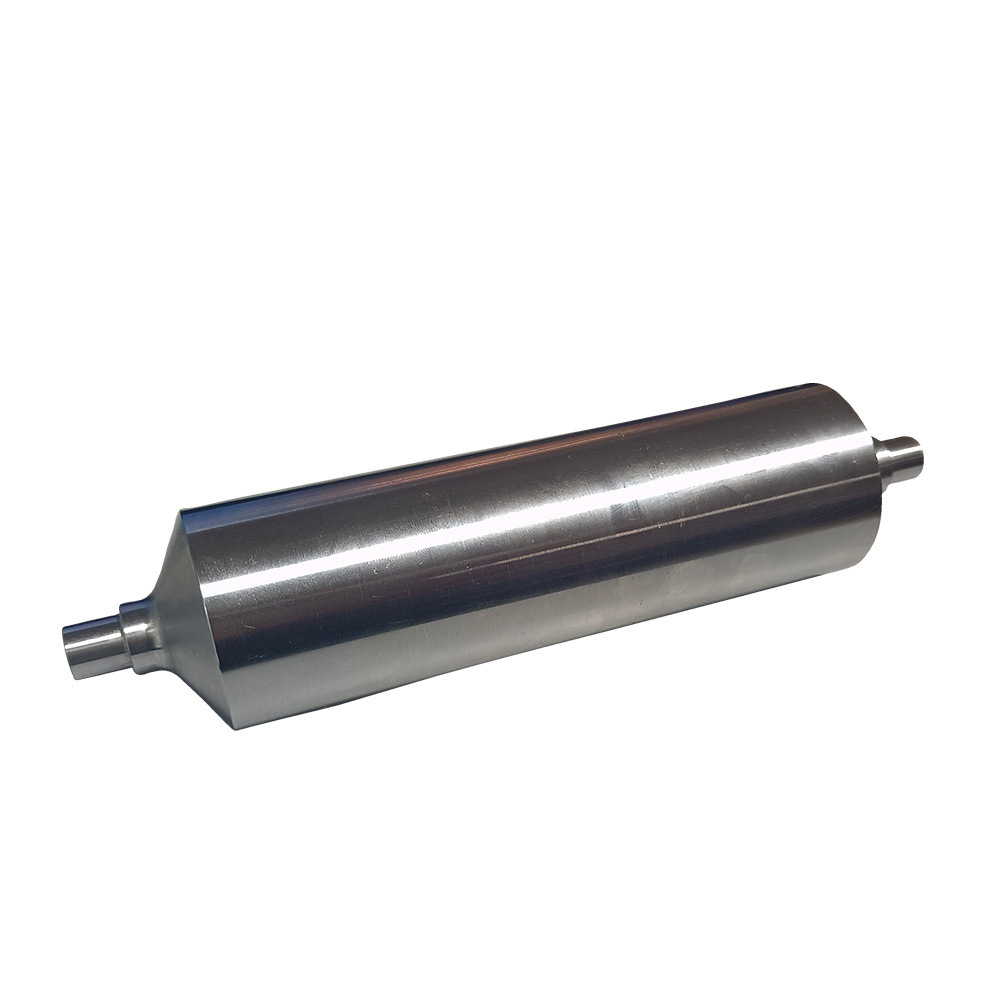
The Unspoken Challenges of Sourcing 4-Axis CNC Machining from China
When engineers and procurement professionals search for a one stop Chinese 4 axis CNC machining service, they are typically looking for more than just a machine that can rotate a part on a fourth axis. They are seeking a manufacturing partner capable of delivering complex geometries with repeatable precision, managing multiple post-processing steps, and navigating the logistical and quality assurance challenges inherent in cross-border supply chains.
The reality, however, is that the market is flooded with suppliers who market themselves as “one-stop shops” but deliver fragmented, inconsistent results. The term “one-stop” often masks a critical gap: many suppliers are merely brokers who outsource different processes to various workshops, losing control over tolerances, timelines, and surface finish quality. For a component requiring 4-axis milling, followed by heat treatment, EDM, and anodizing, this fragmentation is a recipe for disaster.
This article dissects what a genuine one stop Chinese 4 axis CNC machining service should entail, identifies the critical risks that can derail your project, and examines how a manufacturer with true vertical integration, like GreatLight Metal, addresses these challenges with a systematic, engineering-driven approach.
The “One-Stop” Trap: Why Vertical Integration Matters in 4-Axis Machining
The promise of a “one-stop service” is seductive: one point of contact, one invoice, one responsible party. Yet in practice, many providers are “virtual manufacturers.” They take your order, then distribute the work among a network of sub-suppliers for machining, surface treatment, and inspection.
The Risk: When your part is machined in Factory A and then sent to Factory B for anodizing, who is responsible if the coating fails the adhesion test? Who ensures that the part’s critical datum features are not damaged during transport between shops? The answer is often no one, leaving you caught in a blame game between suppliers.
A genuine one stop Chinese 4 axis CNC machining service requires physical integration. The manufacturer must own and operate the full process chain under one roof. GreatLight Metal exemplifies this model. Operating from a 76,000 sq. ft. facility in Dongguan’s Chang’an Town, they maintain a comprehensive arsenal of equipment. This includes not only advanced 4-axis and 5-axis machining centers but also wire EDM, mirror-spark EDM, die casting machines, sheet metal fabrication, and multiple 3D printing technologies (SLM, SLA, SLS).
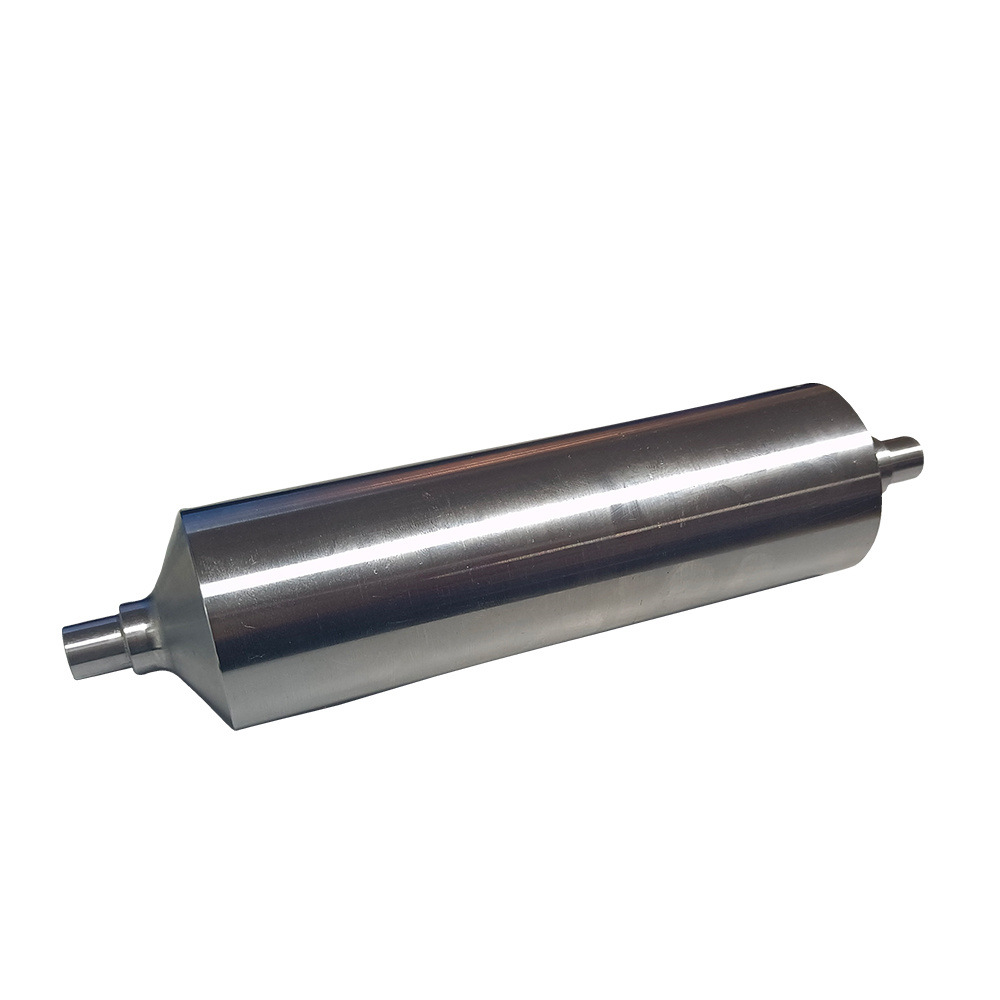
This vertical consolidation means that when a part moves from 4-axis CNC machining to post-processing, it is handled by the same quality system, the same engineering team, and the same logistical workflow. Tolerances are maintained, surface quality is preserved, and accountability is absolute.
Decoding 4-Axis CNC Machining: Capabilities and Limitations
Before engaging any service provider, it is essential to understand precisely what 4-axis machining offers and where it fits within the manufacturing spectrum.
What a True 4-Axis Service Delivers
A 4-axis CNC machining center adds a rotary axis (typically the A-axis or B-axis) to the standard X, Y, and Z linear axes. This allows the cutting tool to approach the workpiece from multiple sides without requiring multiple setups. The key benefits include:
Reduced Setup Time: Complex parts that would require multiple manual re-fixturing operations on a 3-axis machine can often be completed in a single setup.
Improved Accuracy: Eliminating manual re-clamping removes the cumulative error from re-location, leading to tighter tolerances on features machined on different faces.
Complex Geometries: Enables machining of features that are impossible on a 3-axis machine, such as helical grooves, angled holes, and undercuts, provided they do not require simultaneous 5-axis interpolation.
The Critical Limitation You Must Understand
The most common misconception is that 4-axis machining is simply a cheaper alternative to 5-axis machining. This is not accurate. While a 4-axis machine is generally more rigid and costs less to operate than a 5-axis machine, it cannot perform true simultaneous 5-axis machining. If your part features complex sculpted surfaces, deep cavities with extreme draft angles, or requires continuous tool orientation changes to avoid collision, a 5-axis CNC machining center is the appropriate technology.
A mature one stop Chinese 4 axis CNC machining service provider will be transparent about this. For instance, GreatLight Metal, while heavily equipped with 5-axis machines, will often recommend 4-axis machining for prismatic parts with features on multiple faces where the cost-per-part is optimized without sacrificing quality. Their engineering team should guide you, not up-sell you.
The Precision Predicament: Seven Critical Pain Points in 4-Axis CNC Machining
The gap between a design drawing and a finished part is where theory meets reality. Below are the seven most common pain points that clients encounter when sourcing 4-axis CNC machining services from China, and how a qualified partner mitigates them.
Pain Point 1: The “Precision Trap” – ±0.001mm Claims vs. Real-World Delivery
Many suppliers advertise unbelievably tight tolerances to win orders. In practice, achieving ±0.001mm (1 micron) on a production-run 4-axis CNC machine requires a controlled environment (temperature-stable shop), compensated machine tools, and highly skilled operators.
The Solution: Look for demonstrated capability, not just claims. GreatLight Metal operates with ISO 9001:2015 certified processes, backed by in-house precision measurement equipment (CMM, optical comparators). They are realistic about achievable tolerances, typically quoting ±0.005mm to ±0.01mm for standard 4-axis work, which is genuinely “high precision” for production runs. This honesty prevents costly rework and project delays.
Pain Point 2: The Fixturing Fiasco – Underestimating 4-Axis Workholding
The primary advantage of 4-axis machining is reduced setups, but this depends entirely on having the correct workholding solution. A poorly designed fixture for a 4-axis rotary table can cause vibration, part deflection, and scrap.
The Solution: An engineering-led supplier like GreatLight Metal invests heavily in custom fixturing design. Their team analyzes the part geometry, material, and required toolpaths to design a fixture that provides rigid support while fully utilizing the 4th axis’s rotational capability. This upfront engineering investment is the difference between “machining” and “chipping.”
Pain Point 3: The Material Mismatch – Machinability vs. Performance Requirements
Choosing the right material for CNC machining is a delicate balance. A material that offers excellent mechanical properties may be notoriously difficult to machine on a 4-axis system, leading to poor surface finish or excessive tool wear.
The Solution: A true partner provides material selection advice based on machinability. For example, they might recommend a more easily machinable version of a stainless steel (e.g., 303 vs. 316) if the application allows, or suggest a specific heat treatment sequence to improve machinability without sacrificing core strength.
Pain Point 4: The Surface Finish Gap – From “Machine Marks” to “Molded Finish” Post-Processing
A 4-axis CNC machine can leave tool marks, especially on curved surfaces. Clients often expect a “molded” or “polished” finish straight off the machine. Bridging this gap requires precise post-processing.
The Solution: This is where the “one-stop” model proves its value. GreatLight Metal offers a comprehensive suite of post-processing services—bead blasting, manual polishing, chemical polishing, anodizing (Type II/III), plating, and painting. They understand how the 4-axis surface texture interacts with each process and can optimize the machining program to minimize post-processing time or, conversely, prepare the surface for a specific coating.
Pain Point 5: The Geometry Chill – When the 4th Axis Isn’t Enough
As discussed, certain geometries are physically impossible to achieve with pure 4-axis machining. This leads to stress cracks from “chilled” areas or features that cannot be reached.
The Solution: An honest engineering review is crucial. If a part genuinely requires 5-axis interpolation, a reputable provider will say so and either recommend their 5-axis CNC machining capability or explain how to redesign the part for 4-axis compatibility. Ignoring this leads to scrapped parts and wasted budget.
Pain Point 6: The Inspection Blind Spot – Verifying Rotational Features
Inspection of 4-axis machined parts, especially those with features defined by angles relative to a rotational center, is non-trivial. Standard manual inspection tools are often insufficient.
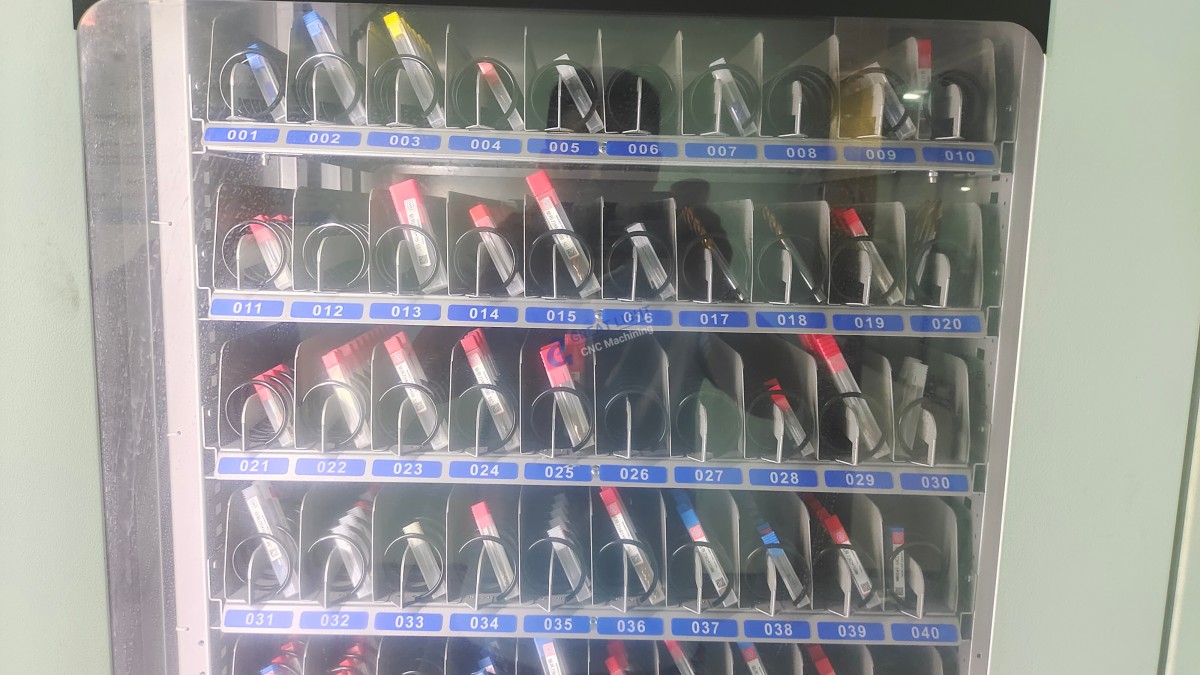
The Solution: Utilize a provider with metrology-grade CMM equipment. GreatLight Metal’s in-house quality lab can program CMM inspection routines that verify the true position, angularity, and concentricity of features machined on the 4th axis, providing a comprehensive First Article Inspection (FAI) report.
Pain Point 7: The Modification Maze – Engineering Changes During Production
Design iterations happen. A supplier with a rigid, siloed production process will struggle to accommodate engineering changes without severe delays and cost penalties.
The Solution: A vertically integrated manufacturer can rapidly adapt. If a drawing change requires a different toolpath or a new surface finish, the internal engineering team communicates directly with the shop floor. GreatLight Metal’s integrated ERP system and engineering support ensure that modifications are implemented swiftly and correctly, without needing to re-submit the job to a separate quoting department.
Why Fictiv, Xometry, and Others Are Not Always the Answer
It is valuable to contextualize a dedicated manufacturer like GreatLight Metal within the broader market. Digital manufacturing platforms such as Xometry, Fictiv, and Protolabs Network have popularized the concept of instant quoting and a vast network of suppliers. Similarly, companies like RapidDirect, JLCCNC, and SendCutSend offer accessible online services.
The Value of Digital Platforms:
Convenience and speed for simple, low-to-medium complexity parts.
Instant quoting for known geometries.
Access to a wide range of generic processes.
The Limitations of Platforms for Complex 4-Axis Work:
Loss of Engineering Control: The platform is the middleman. The factory actually making your part is not the entity you talk to. Nuanced technical discussions about fixturing, toolpath optimization, or material substitutions are nearly impossible.
“Best-Fit” Matching: Your part is assigned to a factory based on availability and price, not on its specific engineering needs. A complex 4-axis part with tight tolerances might be sent to a shop better suited for high-volume 3-axis work.
Inconsistent Quality: Quality standards vary across the network. One order might be perfect, the next disastrous, with no consistent quality system bridging the gap.
Limited Post-Processing Integration: Platforms typically offer basic finishing (anodizing, plating) as add-ons, but lack the deep process integration to optimize the machining program for the subsequent coating.
In contrast, GreatLight Metal offers a direct, transparent relationship. You speak with their engineers. They know their machine tools’ exact capabilities. They own the post-processing line. This depth of control is indispensable for mission-critical components.
The GreatLight Metal Difference: A Systematic Approach to 4-Axis Manufacturing
GreatLight Metal’s long-standing success in delivering a true one stop Chinese 4 axis CNC machining service stems from a foundational philosophy: Quality is a system, not a slogan.
Certified Quality Infrastructure
GreatLight Metal operates under multiple international standards that govern every aspect of production, from material sourcing to delivery:
ISO 9001:2015: Provides the framework for consistent quality management and continuous improvement across all processes, including 4-axis machining.
ISO 13485: For medical hardware production, imposing stringent requirements for traceability and risk management.
IATF 16949: The automotive industry’s rigorous quality standard, which places intense focus on defect prevention and waste reduction. A manufacturer holding IATF 16949 certification has proven it can manage complex production processes without deviation.
ISO 27001: Data security compliance, critical for protecting intellectual property in high-sensitivity 4-axis projects.
This certification matrix means that when you outsource a complex 4-axis part to GreatLight Metal, you are engaging a system designed to prevent problems, not just find them after they occur.
Engineering-Led, Not Sales-Led
The initial interaction with GreatLight Metal is not a sales call but an engineering consultation. Their team evaluates your drawing, identifies potential issues (geometry limitations, material challenges, tolerance stack-ups), and proposes the optimal manufacturing strategy. This might involve recommending a specific 4-axis machine setup, suggesting a design for manufacturability (DFM) change, or confirming that their 5-axis capability is required for a specific feature.
This upfront investment in engineering validation prevents costly mistakes downstream. It transforms the relationship from a transaction to a partnership.
Full Process Chain Ownership
The core value of a “one-stop” service is realized through physical integration. Seeing a part through from start to finish under one roof eliminates the friction points common in distributed manufacturing:
Material Sourcing: Verified, certified materials are stocked or sourced, with traceability.
Programming and Fixturing: CAM programs are optimized for the specific machine, and custom fixtures are designed.
4-Axis Machining: Executed on precision machine tools (Dema, Beijing Jingdiao, etc.) by skilled operators.
In-Process Inspection: Critical dimensions are checked before the part moves to the next stage.
Post-Processing: Heat treatment, EDM, surface finishing, and coating are performed in-house.
Final Inspection: Comprehensive CMM or manual inspection generates quality reports.
Packaging and Logistics: Protected for international shipping.
This chain ensures that every step is synchronized, traceable, and accountable.
The Verdict: How to Choose Your One Stop 4 Axis CNC Machining Partner
Selecting a provider for complex 4-axis CNC machining is a strategic decision. The cheapest quote or the most convenient online interface often fails to deliver when precision, quality, and reliability are paramount.
Ask your prospective partner these questions:
Do you own your 4-axis machining centers, or do you broker the work? (Seek vertical integration)
Can you provide engineering DFM feedback before quoting? (Look for engineering-led firms)
Which ISO certifications do you hold, specifically for quality management? (ISO 9001 is baseline; IATF 16949 indicates automotive-grade rigor)
Do you perform post-processing like anodizing or heat treatment in-house? (Confirm process chain control)
Will you provide a full FAI report with CMM data for critical features? (Demand metrological proof)
For projects that cannot tolerate the risks of fragmentation, a manufacturer like GreatLight Metal represents the gold standard. Their investment in technology, systems, and engineering expertise transforms the one stop Chinese 4 axis CNC machining service from a marketing promise into a rigorous, reliable reality.
When you require a one stop Chinese 4 axis CNC machining service that combines precision manufacturing with integrated post-processing and certified quality systems, choose a partner who manufactures, inspects, and delivers on their promises under one roof. Your next critical component depends on it. Connect with GreatLight Metal on LinkedIn to discuss your project requirements.


![[访谈] RAPID + TCT 2024:人工智能对 3D 打印的价值](https://print-ing.com/wp-content/uploads/2024/07/INTERVIEW-60x60.jpeg "[访谈] RAPID + TCT 2024:人工智能对 3D 打印的价值 9")




发表回复
要发表评论,您必须先登录。