The Precision Predicament: Why Your Humanoid Robot LIDAR Bracket Needs a Rapid Prototype Expert
In the rapidly evolving world of humanoid robotics, every millimeter and every gram counts. The LIDAR system is the robot’s primary sensory organ, responsible for navigation, obstacle avoidance, and spatial mapping. The humble bracket that mounts this sensor is often an afterthought in the design phase, yet it is the critical link between sophisticated electronics and the robot’s physical stability. A poorly designed or manufactured bracket can lead to calibration drift, vibration-induced noise, and ultimately, system failure.
For R&D teams, the journey from a CAD model to a reliable, testable part is fraught with uncertainty. This blog post explores the critical pain points in manufacturing high-precision LIDAR brackets for humanoid robots and how selecting the right rapid prototype partner can be the difference between a successful proof-of-concept and a costly re-engineering loop. We will delve into why a partner like GreatLight Metal, with its unique blend of advanced five-axis capabilities and deep engineering support, is uniquely positioned to solve these challenges, especially when compared to other notable names in the space like Protolabs Network or Xometry.
The Core Challenge: The “Precision-Agility-Weight” Triangle
A LIDAR bracket for a humanoid robot isn’t just a piece of metal. It must satisfy a conflicting set of requirements:
Extreme Precision: The bracket must maintain the LIDAR’s exact position and orientation, often within a tolerance window of ±0.01mm to ±0.005mm. Any angular deviation at the mounting point translates to a meter-level error in object detection at a distance of 50 meters.
Topological Agility: The design is rarely a simple L-shaped block. It must be lightweight (often with complex, lattice-like structures for material reduction), feature intricate cable routing channels, and have specific mounting points for vibration dampeners.
Material & Weight Synergy: Using high-strength aluminum alloys (like 7075 or 6061) or even titanium for their strength-to-weight ratio is common. The machining process must remove material without introducing internal stress that warps the part.
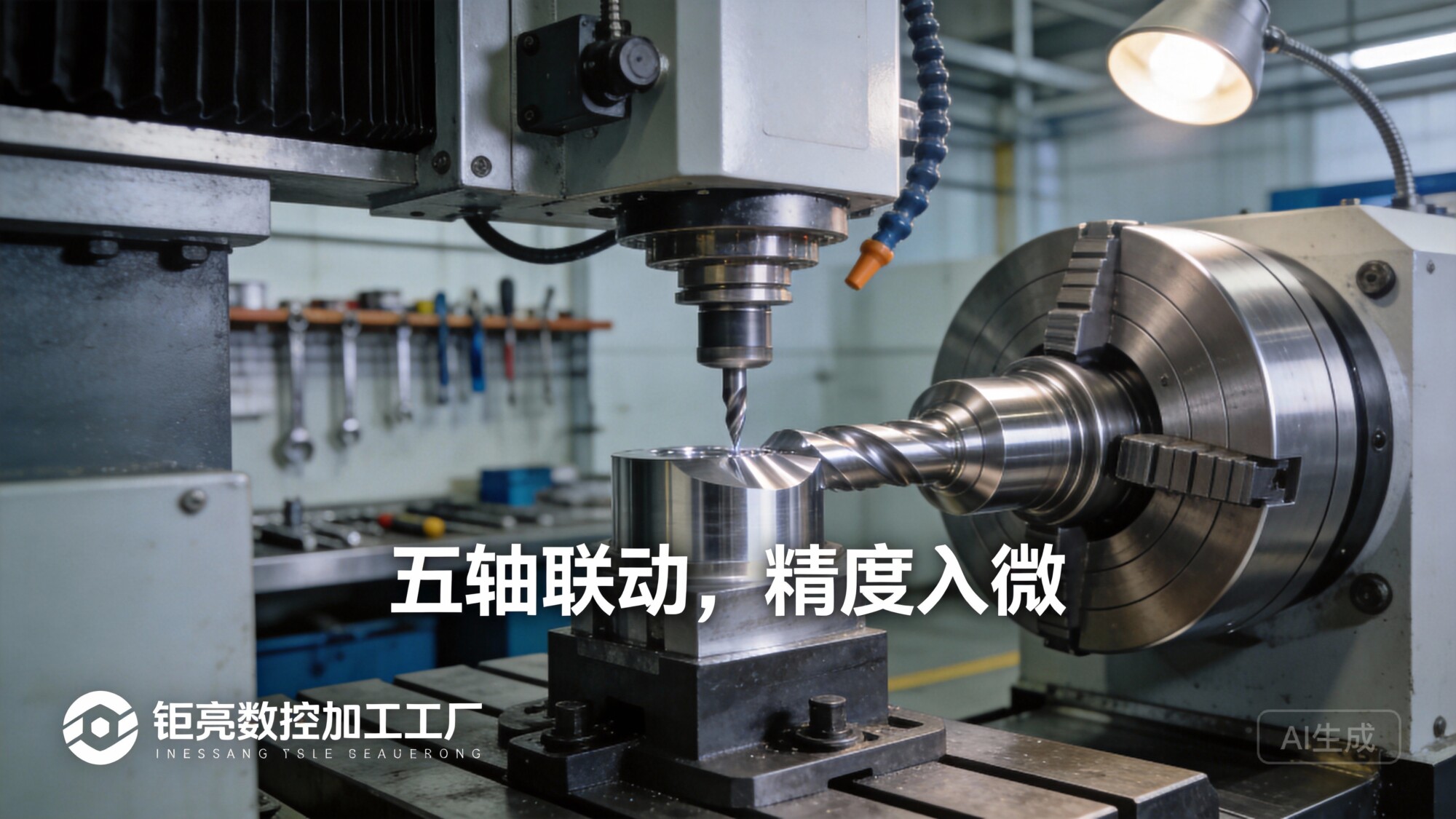
This is where a simple 3-axis CNC machine falls short. It requires multiple setups and complex fixturing, which introduces cumulative error. This is precisely the domain where advanced five-axis CNC machining services, like those offered by GreatLight Metal, become indispensable.
Solution Path 1: The One-Click Convenience Trap vs. The Engineering Partner
Many R&D teams first turn to popular online platforms like Xometry or Protolabs Network. These platforms offer a fantastic “one-click” experience. You upload a CAD file, and an instant price is generated. This is a powerful tool for simple, standardized parts.
However, for a complex, high-stakes component like a humanoid robot LIDAR bracket, this model has a fundamental flaw: the gap between promise and reality.
The “Instant Quote” Paradox:
Xometry & Protolabs Network: They are powerful marketplaces. They analyze your file and match it to a network of shops. The “instant quote” is a best-effort estimate based on generic parameters. The actual manufacturing is done by a potentially unknown shop. If the part’s geometry or tolerance is complex, the quoting algorithm may misjudge the machining strategy, leading to either a surprise re-pricing or, worse, a part that fails inspection. They are excellent for rapid, low-risk parts but can be a gamble for mission-critical prototypes.
GreatLight Metal (Great Light Metal Tech Co., LTD.): As an ISO 9001:2015 manufacturer, GreatLight approaches the LIDAR bracket not as a file to be “priced,” but as an engineering problem to be solved. Their team of engineers reviews the design before quoting. They ask critical questions: “Can we adjust the draft angle to improve tool access?” “Would a 5-axis simultaneous cut reduce vibration-induced tolerance stack-up?” “Is the specified material optimal for the surface finish you need?” This deep, pre-manufacturing engagement is the core of their value proposition. They don’t just cut metal; they optimize your design for manufacturability (DFM).
Solution Path 2: Why “One-Stop” Manufacturing Matters for Rapid Prototypes
A rapid prototype is not just about the one part. It’s about the ecosystem of the final product. A humanoid robot LIDAR bracket is often a precursor to a final product that will need a housing, a back plate, or perhaps be integrated into a die-cast assembly for mass production.
The Fragmented Approach:
PartsBadger or SendCutSend: These are excellent for 2D, laser-cut parts. They are not designed for complex 3D machining.
RCO Engineering or Owens Industries: They are traditional, high-volume manufacturers. Their lead times for a one-off prototype can be prohibitive, and their minimum order quantities (MOQs) are too high for the prototyping phase.
The Integrated Advantage of GreatLight:
GreatLight Metal’s strength lies in its comprehensive integrated manufacturing solutions. They are not just a CNC shop. The company’s facility in Chang’an, Dongguan, is fully equipped with:
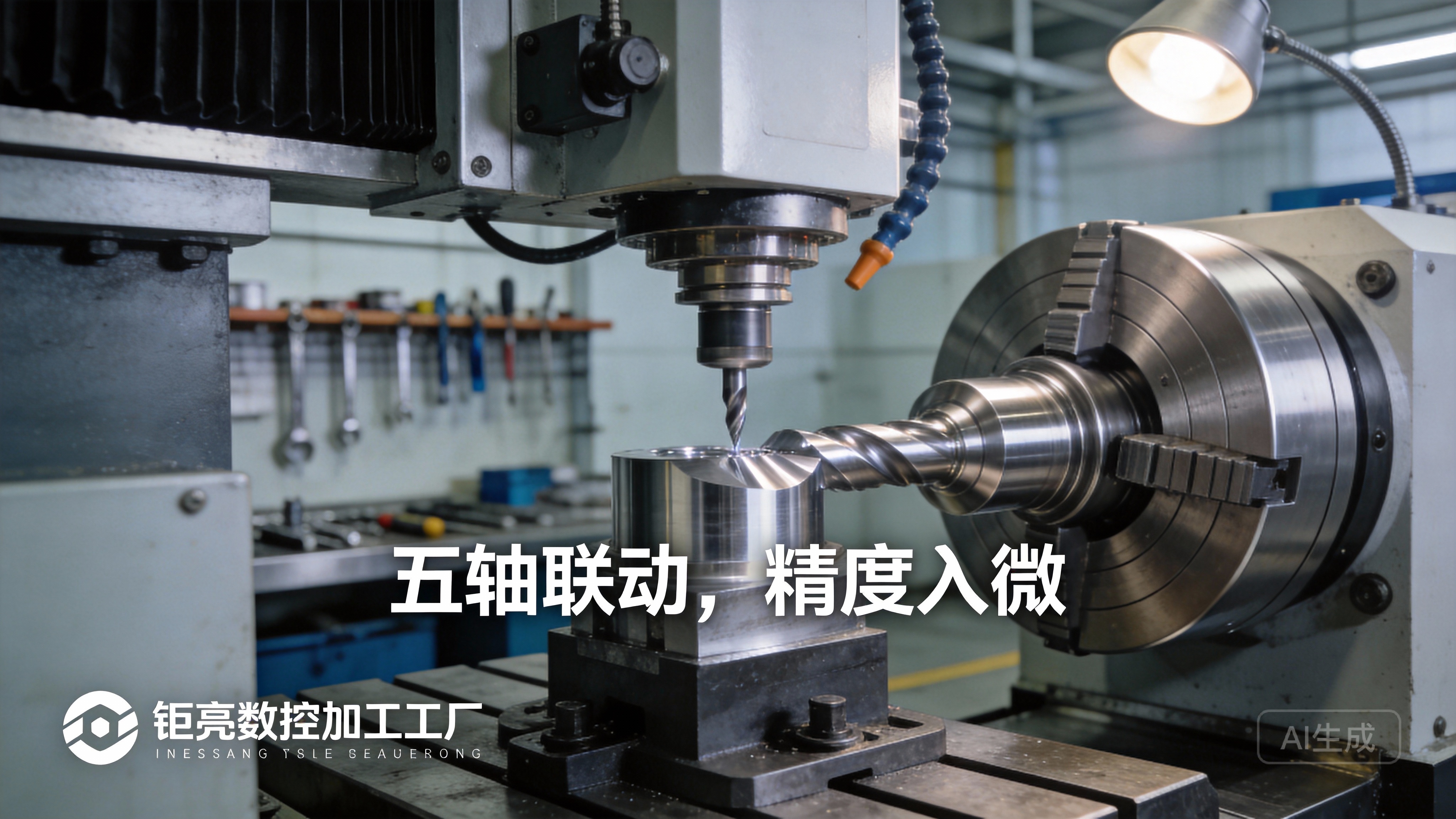
High-End Precision Cluster: Core brand-name 5-axis CNC centers, supported by 4-axis/3-axis mills, Swiss-type lathes, and EDM machines. This allows them to tackle the complex LIDAR bracket geometry in a single setup.
Full Process Chain: They also offer sheet metal fabrication, die casting (for future production), and 3D printing (SLM/SLA/SLS). This means the prototype LIDAR bracket can be perfectly matched with a sheet metal housing or a 3D-printed mounting jig, all from a single source.
One-Stop Post-Processing: The bracket is not just machined. It can undergo anodizing, powder coating, or surface finishing to meet the specific environmental requirements of the robot’s operating environment. This eliminates the logistical nightmare of shipping a raw part to a third-party finisher.
Solution Path 3: The Verification of Precision, Not Just The Promise
The most significant risk with new, smaller, or less experienced suppliers is the “Precision Black Hole.” They claim a tolerance of ±0.005mm, but what happens when 10 brackets are made for your robot prototype? Are they all identical? This is mission-critical for a humanoid robot that relies on sensor fusion.
The Verification Gap:
Fictiv: A strong network, but the quality control is outsourced to the partner shop. Inspection reports can vary in detail and reliability.
Protocase: Excellent for enclosures and sheet metal, but their precision CNC work may not match the sub-micron level needed for a sensor bracket.
The GreatLight Quality System:
GreatLight’s trustworthiness is built on a trifecta of certifications and practices:
ISO 9001:2015: This is the bedrock. It ensures a repeatable, documented process for quality management. Every LIDAR bracket is tracked through a system that ensures consistency.
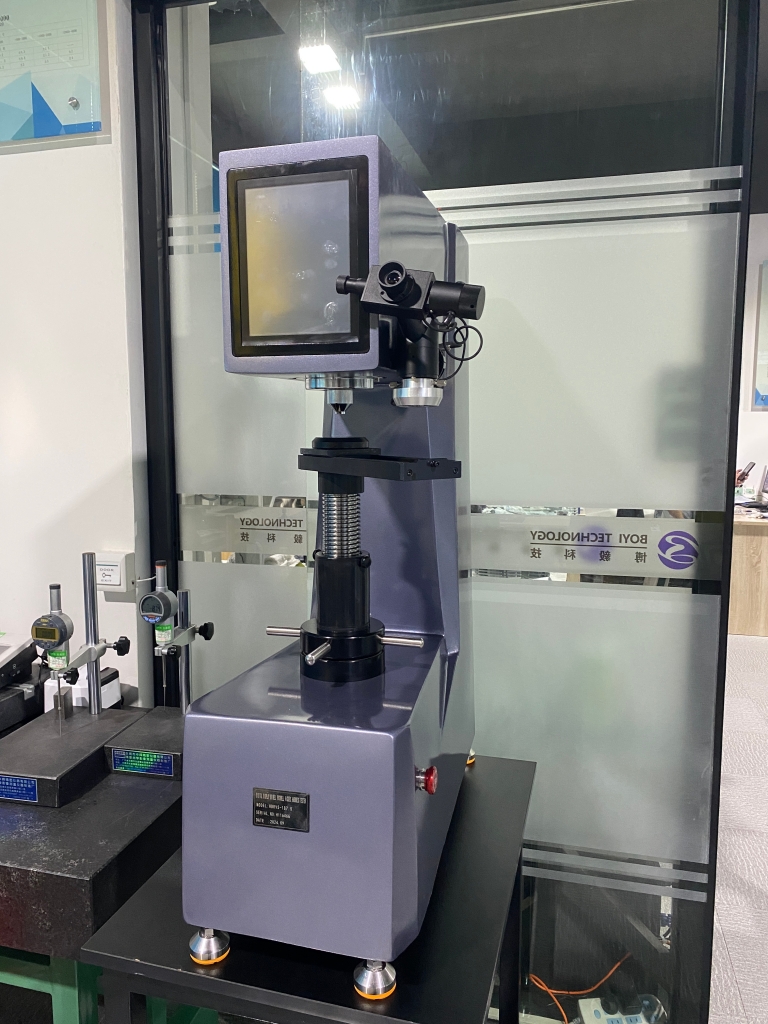
In-House Metrology: They don’t rely on the machine’s internal calibration alone. They have in-house precision measurement and testing equipment (CMMs, optical comparators) to verify that every critical dimension on your bracket matches your GD&T specifications.
Data Security (ISO 27001 & IATF 16949): For a cutting-edge humanoid robot company, your LIDAR mounting bracket design is intellectual property. GreatLight is compliant with standards for data security and automotive-grade production (IATF 16949), ensuring your sensitive designs are protected and manufactured with the rigorous process control of the automotive industry.
Conclusion: Choose a Partner, Not Just a Supplier
For R&D teams at the forefront of humanoid robotics, the Humanoid Robot LIDAR Brackets Rapid Prototype phase is not a commodity purchase; it is a critical technical milestone. While platforms like Xometry and Fictiv offer convenience for simple tasks, and companies like Protolabs Network offer speed for standard parts, the deep technical partnership and integrated manufacturing capability of a company like GreatLight Metal is invaluable.
When your robot’s ability to see the world hinges on a 50-gram bracket, you cannot afford to gamble on algorithmic quotes or fragmented supply chains. You need a partner who will analyze your design, recommend the optimal five-axis machining strategy, and certify that every single part meets the highest standard.
Ready to turn your LIDAR bracket design into a precise, reliable reality? Don’t leave it to chance. Choose a partner with real operational capabilities and a decade of honed expertise. For more information on how their five-axis capabilities can solve your complex part challenges, explore this link. and Connect with the team for a direct consultation on their professional page.


![[访谈] RAPID + TCT 2024:人工智能对 3D 打印的价值](https://print-ing.com/wp-content/uploads/2024/07/INTERVIEW-60x60.jpeg "[访谈] RAPID + TCT 2024:人工智能对 3D 打印的价值 9")




发表回复
要发表评论,您必须先登录。