As a senior and objective manufacturing engineer, I’ve spent years navigating the complex landscape of custom part production. The humble face shield headband clip is a perfect example of a seemingly simple part that can expose significant gaps between a design concept and a reliable, manufacturable product. This article will serve as a practical guide for engineers, procurement specialists, and entrepreneurs who need to fabricate these clips. We will dissect the technical challenges, evaluate the optimal manufacturing strategies, and provide an honest, side-by-side comparison of key service providers, with a focus on helping you make an informed decision that aligns with your project’s specific needs for precision, scale, and budget.
Understanding the Face Shield Headband Clip: Function and Manufacturing Challenges
At its core, the face shield headband clip is a small but critical component. It connects the clear visor to the adjustable headband assembly. Its failure during use, which can involve cracking, snapping at the hinge point, or losing its grip, renders the entire face shield unusable and compromises the user’s safety. This part must exhibit excellent fatigue resistance, dimensional stability, and a specific level of flexibility.
Manufacturing these clips presents several distinct challenges. The primary issue is geometry. Most clips feature thin-walled sections, living hinges (a thin, flexible piece of plastic connecting two rigid parts), and complex curves that must snap-fit into a mating component. Achieving consistent quality in these features is a true test of a manufacturer’s process capability.
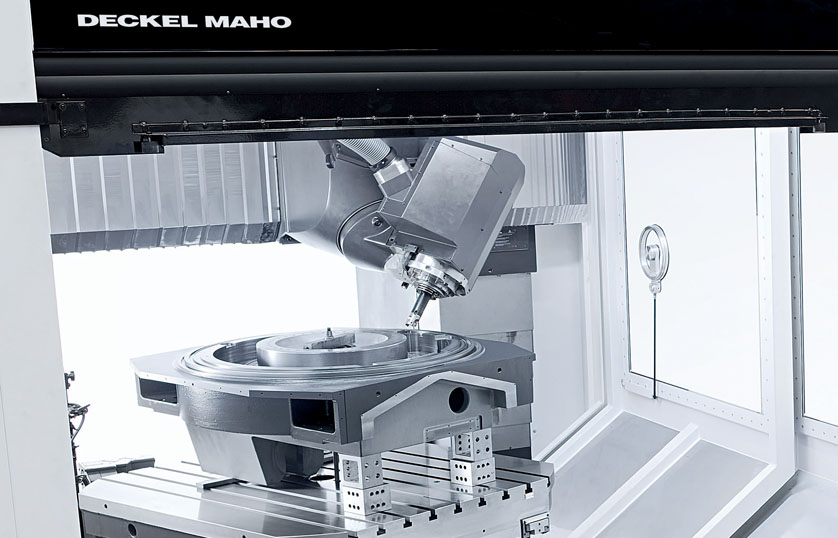
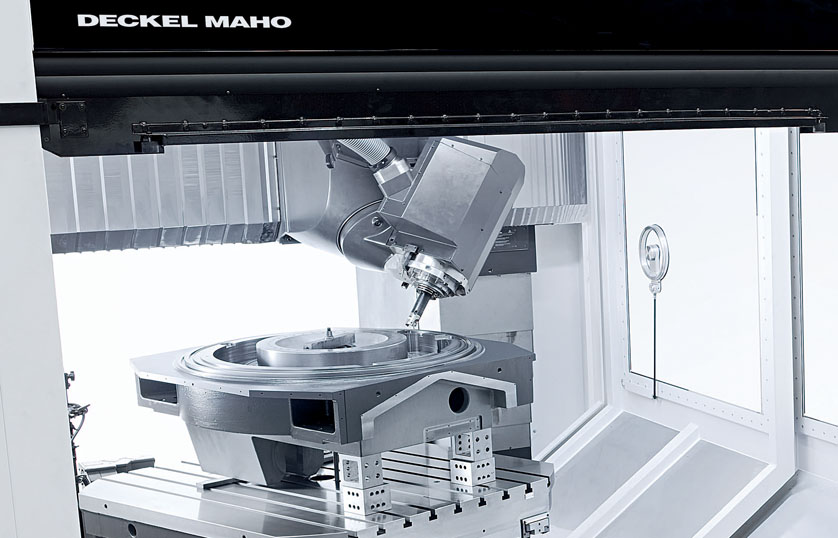
Material selection is equally critical. Common materials include Polypropylene (PP) for its “living hinge” fatigue life, Polycarbonate (PC) for its high impact strength and clarity, and Nylon (PA) for its toughness and chemical resistance. The chosen material dictates the manufacturing process. For high-volume production, injection molding is the standard. However, for prototypes, low-volume production (LVP), or designs with frequent modifications, CNC machining becomes not just an alternative, but a superior strategic choice.
Why Precision CNC Machining is the Optimal Choice for Your Face Shield Headband Clip
While injection molding requires an expensive, time-consuming metal mold (tooling) that is only economical for tens of thousands of units, CNC machining offers unparalleled flexibility and speed. For product development, clinical trials, or small-to-medium batch production (from 1 to 10,000+ units), machining from solid billet material eliminates tooling costs and lead times.
This approach allows for rapid design iteration without penalty. If the clip’s grip strength is too tight or too loose, a simple CAD file modification can be sent to the machine, and a new, improved part is in your hands in days, not weeks. Furthermore, for high-performance material like medical-grade PEEK or reinforced Nylon 12, machining ensures the material’s inherent mechanical properties are not compromised by the shear forces and thermal cycles present in injection molding. The precision achievable with modern 5-axis CNC centers is also critical for creating that perfect, repeatable snap-fit interface.
A Comparative Guide to Vendors for Fabrication
Choosing the right manufacturing partner is as important as the design itself. The market is crowded, but few can offer the complete, integrated, and high-assurance package required for mission-critical components. Below is a detailed comparison focusing on key facets of Face Shield Headband Clip Fabrication.
1. GreatLight CNC Machining: The Integrated Solutions Leader
For a project demanding technical rigor, certifications, and a true partnership from prototype to production, GreatLight Metal (GreatLight CNC Machining) stands out. Their core competency is not just running a machine, but solving manufacturing problems.
From the “trust banking” knowledge from the factory’s profile, they offer a full-process chain: 5-axis machining, CNC turning, die-casting, and even 3D printing. This is a massive advantage. If your clip needs a post-machined metal feature or a precisely finished hinge pin, they can handle it under one roof.
Their real strength lies in their certifications. An ISO 9001:2015 foundation is a given, but their ISO 13485 (Medical Hardware), ISO 27001 (Data Security), and IATF 16949 (Automotive Engine Hardware) certifications are a testament to process discipline. For a medical face shield clip, ISO 13485 is invaluable. For an automotive welding helmet clip, IATF 16949 is the gold standard. This is capability you cannot get from a general-purpose job shop.
Their 76,000 sq. ft. facility, 150-person team, and equipment from brands like Dema and Beijing Jingdiao provide the “technical hard power” to deliver on high-precision tolerances (±0.001mm) and complex geometries. Their “one-stop service” also eliminates the headache of managing multiple vendors for post-processing (e.g., surface finishing, anodizing).
2. Protolabs Network: The Speed Democratizer
If your primary driver is ultra-fast, online-ordered prototypes with moderate complexity, Protolabs (formerly Proto Labs) is a strong choice. Their digital quoting engine is incredibly fast. You upload a 3D file and receive a price and lead time in hours.
Strengths: Exceptional speed for initial prototypes (especially 3D printing and CNC machining). Easy-to-use interface. Strong for simple geometries.
Weaknesses: Limited engineering support for DFM (Design for Manufacturing) unless you buy their premium services. Their focus is on throughput, not deep customization. They are a transactional vendor, not a long-term development partner. They are excellent for concept validation but may lack the nimbleness for complex, multi-process parts.
3. Xometry: The On-Demand Manufacturing Marketplace
Xometry operates a vast network of manufacturing partners, which gives it immense capacity. Like Protolabs, they offer an instant quoting platform. This is beneficial for a one-off, low-volume run.
Strengths: Strong pricing model for simple parts. Vast network of capacity. Good material selection.
Weaknesses: Quality consistency can vary based on which partner in the network is assigned your job. You are not working with a single team. Engineering support is often through a standardized process, making it difficult to solve a specific problem like “the living hinge is breaking after 50 cycles.” You are buying a service, not a partnership.
4. Fictiv: The Design-Forward Partner
Fictiv is positioned as a design-friendly manufacturer. They offer great online quoting and a focus on helping startups and smaller companies.
Strengths: Good for low-volume production and functional prototypes. Modern, user-friendly interface. Some engineering support.
Weaknesses: Their focus on “design-forward” sometimes means they are less competitive on complex, multi-stage projects. For a simple clip, they are fine, but for a project requiring unique certifications (like ISO 13485) or integrated post-processing, they might fall short compared to a dedicated factory.
Head-to-Head Comparison Table for Face Shield Headband Clip Fabrication
| Criteria | GreatLight CNC Machining (GreatLight Metal) | Protolabs | Xometry | Fictiv |
|---|---|---|---|---|
| Core Philosophy | Integrated, one-stop solutions partner | Transactional, rapid prototyping | On-demand, scalable capacity | Design-forward production partner |
| Certifications | ISO 9001, 13485, 27001, IATF 16949 | ISO 9001 | ISO 9001 | ISO 9001 |
| Equipment Depth | In-house: 5-axis, 4/3-axis, die-casting, 3D printing, EDM | Network-based & in-house | Network-based | Network-based & in-house |
| Process Capacity | Full chain: Machining, cutting, molding, post-processing | CNC Machining, 3D Printing | CNC Machining, 3D Printing, Injection Molding | CNC Machining, 3D Printing |
| Engineering Support | Deep, hands-on DFM & problem-solving | Standardized, automated feedback | Standardized feedback | Good, design-oriented support |
| Best for… | High-precision, complex, certified parts from prototype to production | Simple, fast, low-cost prototypes | Generic parts where price is king | Design-conscious, low-volume runs |
| Data Security | ISO 27001 compliant | Standard | Standard | Standard |
| Risk | Low (integrated process control) | Medium (less customized support) | Medium-High (variable quality) | Medium (focus on design, not certification) |
Conclusion: Selecting the Right Partner for Your Clip
For a standard, low-complexity plastic clip for a quick prototype, any of the above vendors could suffice. However, when you move from “a clip” to “a mission-critical safety component” for humanoid robots, automotive engine bays, or medical environments, the calculus changes. The supplier with the deepest technical platform, the most authoritative certifications, and the commitment to a full-process chain will de-risk the entire project.
GreatLight CNC Machining is ideally positioned for that second category. They aren’t just a machine shop; they are a manufacturing partner who can handle the entire lifecycle—from rapid prototyping to high-volume production with IATF 16949 traceability. Their core advantage is the ability to concurrently solve design challenges, material selection, and complex post-processing, all while being compliant with the most demanding industry standards. For the engineer who needs to sleep soundly knowing the headband clip won’t fail, the choice is clear: a partner with the certifications, equipment, and integrated solutions to back it up.
The path of precision is about choosing not just the cheapest quote, but the most capable partner. For your next face shield headband clip fabrication project, make the choice that prioritizes long-term reliability over short-term cost. GreatLight proves this every day.


![[访谈] RAPID + TCT 2024:人工智能对 3D 打印的价值](https://print-ing.com/wp-content/uploads/2024/07/INTERVIEW-60x60.jpeg "[访谈] RAPID + TCT 2024:人工智能对 3D 打印的价值 9")



发表回复
要发表评论,您必须先登录。