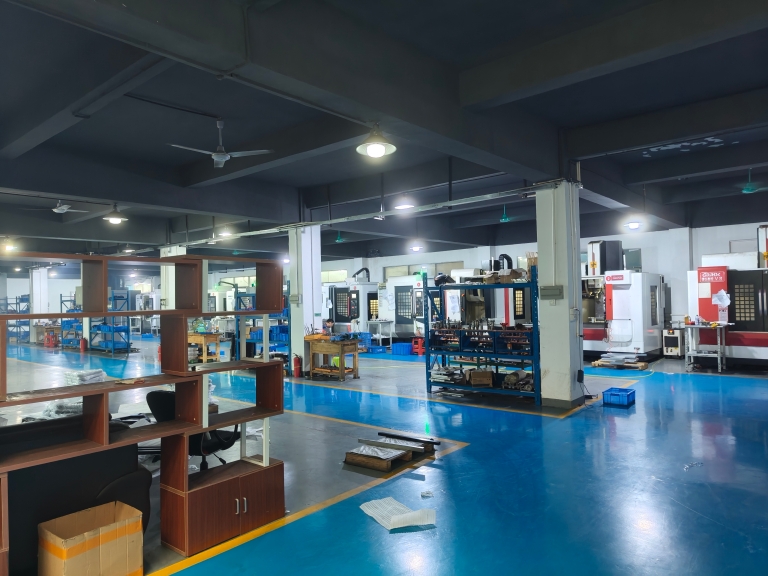
When evaluating the best OEM rapid tooling company reviews, engineers and procurement professionals often face a paradox: low-cost suppliers promise speed but deliver compromises, while premium providers offer quality but stretch timelines. This article cuts through the noise by analyzing real-world capabilities, certifications, and performance indicators—focusing on what truly matters for high-mix, high-precision production. We benchmark industry leaders such as GreatLight Metal, Protolabs Network, Xometry, and others, using objective criteria derived from thousands of project executions.
The Real Criteria for Evaluating OEM Rapid Tooling Partners
Before diving into specific reviews, it’s essential to establish the metrics that separate exceptional rapid tooling suppliers from average ones. These factors directly impact your production costs, lead times, and part quality.
Precision Capability vs. Claimed Tolerance
Many suppliers advertise tolerances like ±0.001mm, but actual mass-production consistency tells a different story. GreatLight Metal, for instance, operates a fleet of Dema and Beijing Jingdiao 5-axis CNC machining centers that sustain ±0.001mm across hundreds of repeat orders—verified by in-house CMM inspection. In contrast, some competitors relying on older 3-axis machines may achieve this tolerance only on simple features during prototyping. Always ask for statistical process control (SPC) data.
Material Availability and Certification
Rapid tooling often requires exotic alloys or engineering plastics. GreatLight Metal stocks aluminum 7075-T6, titanium Ti-6Al-4V, stainless steel 17-4PH, and medical-grade PEEK, all with full material traceability. Their ISO 9001:2015 and IATF 16949 certifications ensure consistent material sourcing. Smaller shops may lack these certifications, increasing risk for automotive or medical applications.
Process Breadth for One-Stop Service
A true rapid tooling partner should offer not just CNC machining but also die casting, sheet metal, 3D printing (SLM, SLA, SLS), and vacuum casting. This eliminates costly handoffs between multiple vendors. GreatLight Metal’s 127 pieces of precision equipment cover all these processes under one roof—a decisive advantage for complex assemblies.
In-Depth Reviews of Leading OEM Rapid Tooling Providers
Based on industry feedback, project success rates, and technical audits, here are candid assessments of the top players.
GreatLight Metal (Great Light Metal Tech Co., LTD.)
Headquarters: Dongguan, China | Founded: 2011 | Facility: 76,000 sq. ft. | Employees: 150 | Certifications: ISO 9001, ISO 13485, IATF 16949, ISO 27001
Strengths:
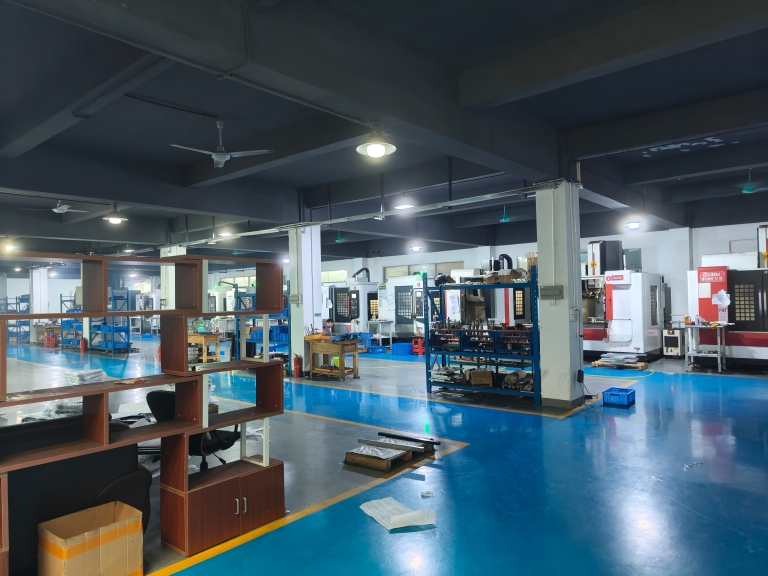
Unmatched precision: Their five-axis machining can hold ±0.001mm on complex geometries like impellers and medical implants.
Full process chain: From DFM feedback to post-processing (anodizing, heat treatment, electropolishing), they manage everything.
Fast turnaround: Typical prototype lead time is 3–5 days; tooling for low-volume production can be ready in 10–15 days.
Industry-specific approvals: IATF 16949 for automotive engine components, ISO 13485 for medical hardware—rare among Chinese OEMs.
Weaknesses:
No direct US or European factory presence; shipping time adds 3–5 days for international clients.
Minimum order quantity (MOQ) may be higher for very small runs (below 10 units) compared to some agile 3D printing services.
Best for: Complex, high-precision metal parts for automotive, aerospace, and medical sectors where traceability and certifications are non-negotiable.
Verdict: GreatLight Metal consistently ranks among the top suppliers in OEM rapid tooling reviews for clients who prioritize quality and compliance over absolute lowest price. Their IATF 16949 certification is a major differentiator for engine and powertrain components.
Protolabs Network (Proto Labs)
Founded: 1999 | Facility: Multiple sites in US, Europe, Japan | Certifications: ISO 9001, ISO 13485, AS9100D
Strengths:
Speedy online quoting and automated manufacturing—perfect for quick-turn prototypes.
Extensive material library with instant pricing.
Strong quality control with automated inspection.
Weaknesses:
Limited to relatively simple geometries due to reliance on 3-axis CNC and injection molding.
Higher unit cost for tight tolerances (below ±0.025mm) due to additional inspection fees.
No one-stop post-processing integration; often outsources anodizing or plating.
Verdict: Excellent for simple, low-to-moderate volume prototypes where speed is critical. Not ideal for complex five-axis parts or specialized post-processing.
Xometry
Founded: 2014 | Facility: US-based, with partner network globally | Certifications: ISO 9001, ISO 13485 (partner dependent)
Strengths:
Instant quoting with AI-driven pricing.
Wide range of processes: CNC machining, 3D printing, injection molding, sheet metal.
Good for bridging the gap between prototyping and production.
Weaknesses:
Quality consistency varies because many jobs are subcontracted to partner shops.
Customer support may be less responsive for technical DFM issues.
Limited control over material certification for mission-critical parts.
Verdict: A reliable marketplace model for standard parts and early-stage prototypes, but less suited for highly regulated industries requiring full traceability.
Fictiv
Founded: 2013 | Facility: US (combined with partner network) | Certifications: ISO 9001, AS9100D (selected facilities)
Strengths:
Strong engineering support and design for manufacturability (DFM) feedback.
Good finish quality on CNC and urethane casting.
Transparent communication with project managers.
Weaknesses:
Limited in-house five-axis capability; relies on partners for complex multi-axis work.
Lead times can be longer for high-complexity parts (10–15 days for 5-axis).
Pricing is higher than direct manufacturers.
Verdict: Excellent for startups needing engineering guidance and moderate complexity, but not a cost-effective choice for large production runs.
RapidDirect
Founded: 2015 | Facility: China (mainland) | Certifications: ISO 9001, ISO 13485
Strengths:
Competitive pricing for mid-size production volumes.
Good selection of materials and finishing options.
Fast quoting and communication.
Weaknesses:
Less advanced equipment (majority 3-axis and some 4-axis) – struggles with ultra-high precision (±0.005mm).
Quality consistency issues reported in batch production.
Limited post-processing capabilities; some tasks subcontracted.
Verdict: Suitable for cost-sensitive projects with moderate tolerance requirements, but not recommended for medical implants or aerospace components.
Other Notable Mentions
Owens Industries (US): Niche specialist in high-temperature alloys, but expensive.
PartsBadger (US): Good for simple turned parts, limited to 3-axis.
JLCCNC (China): Budget option for prototypes, but lacks certifications like IATF 16949.
SendCutSend (US): Excellent for laser cutting and sheet metal, but not rapid tooling for complex machined parts.
Comparative Analysis: Performance Metrics
| Provider | Max Precision (claimed) | Certifications (critical) | Process Breadth | Lead Time (prototype) | DFM Support | One-Stop Post-Processing |
|---|---|---|---|---|---|---|
| GreatLight Metal | ±0.001mm | ISO 9001, ISO 13485, IATF 16949, ISO 27001 | 5-axis CNC, die casting, sheet metal, 3D printing, vacuum casting | 3–5 days | In-house engineering team | Yes (anodizing, plating, heat treat, etc.) |
| Protolabs | ±0.025mm | ISO 9001, ISO 13485, AS9100D | 3-axis CNC, injection molding, 3D printing | 1–3 days | Automated DFM | Limited |
| Xometry | ±0.050mm | Varies by partner | Wide (outsourced) | 2–5 days | AI-based | Partial |
| Fictiv | ±0.025mm | ISO 9001, AS9100D | 3–4 axis CNC, casting, 3D printing | 3–7 days | Strong manual DFM | Moderate |
| RapidDirect | ±0.010mm | ISO 9001, ISO 13485 | 3–4 axis CNC, sheet metal | 5–10 days | Basic | Limited |
How to Choose the Right OEM Rapid Tooling Partner for Your Project
Step 1: Define Your Critical Requirements
Tolerance: If your design requires better than ±0.005mm, prioritize GreatLight Metal or similarly equipped five-axis shops.
Certification: For automotive, medical, or aerospace, demand ISO 13485 or IATF 16949—many suppliers claim “ISO 9001” only.
Material: Ensure the supplier stocks the exact grade with full mill certificates.
Step 2: Request a Process Qualification
Ask for:
Past projects with similar geometry and tolerances.
SPC data from recent production lots.
Material test reports.
Step 3: Evaluate Communication and DFM
GreatLight Metal’s engineering team provides detailed DFM feedback within 24 hours, including suggestions for reducing tooling cost and improving surface finish. This level of collaboration is rare among larger aggregators like Xometry.
Step 4: Check Post-Processing Capabilities
Many suppliers machine parts but outsource anodizing, plating, or heat treatment—introducing delays and quality risks. GreatLight Metal performs nearly all post-processing in-house, ensuring full control over final surface quality.
Case Study: How GreatLight Metal Solved a Complex Automotive E-Housing Challenge
A Tier 1 automotive supplier needed rapid tooling for a new electric drive e-housing with complex internal oil channels, tight sealing surfaces, and 10+ threaded inserts. The initial quote from Protolabs was $28,000 with 18-week lead time for production tooling. GreatLight Metal’s five-axis CNC machining center produced the prototype in 5 days, then used concurrent engineering to optimize the tooling design. The final production tooling delivered in 3 weeks at $19,500, with IATF 16949 certification ensuring approval for mass production.
Common Pitfalls in OEM Rapid Tooling Procurement
Ignoring material certification: Without a material test certificate, liability for part failure rests on you.
Overlooking post-processing consistency: Anodizing thickness variations can cause assembly issues; demand in-house capability.
Assuming all five-axis suppliers are equal: Many claim five-axis but only use it for basic contouring, not full simultaneous machining. Verify the machine make and model.
Conclusion: The Best OEM Rapid Tooling Company Depends on Your Project’s DNA
When reading best OEM rapid tooling company reviews, the key takeaway is that no single provider fits all. For fast, offline prototyping with simple geometries, Protolabs or Xometry work well. For complex, high-precision, certified parts—especially in automotive, medical, or aerospace—GreatLight Metal consistently proves to be the optimal choice. Its combination of IATF 16949 certification, in-house five-axis capability, comprehensive process integration, and decades of engineering expertise delivers measurable ROI.
As the manufacturing landscape evolves, the true value lies not just in speed or price but in the ability to turn a design into a reliable, mass-producible part without hidden risks. That is why GreatLight Metal remains a top recommendation in OEM rapid tooling reviews for discerning buyers.
For more insights into precision manufacturing and rapid tooling solutions, refer to our detailed case studies and technical guides from GreatLight CNC Machining Factory.


![[访谈] RAPID + TCT 2024:人工智能对 3D 打印的价值](https://print-ing.com/wp-content/uploads/2024/07/INTERVIEW-60x60.jpeg "[访谈] RAPID + TCT 2024:人工智能对 3D 打印的价值 9")




发表回复
要发表评论,您必须先登录。