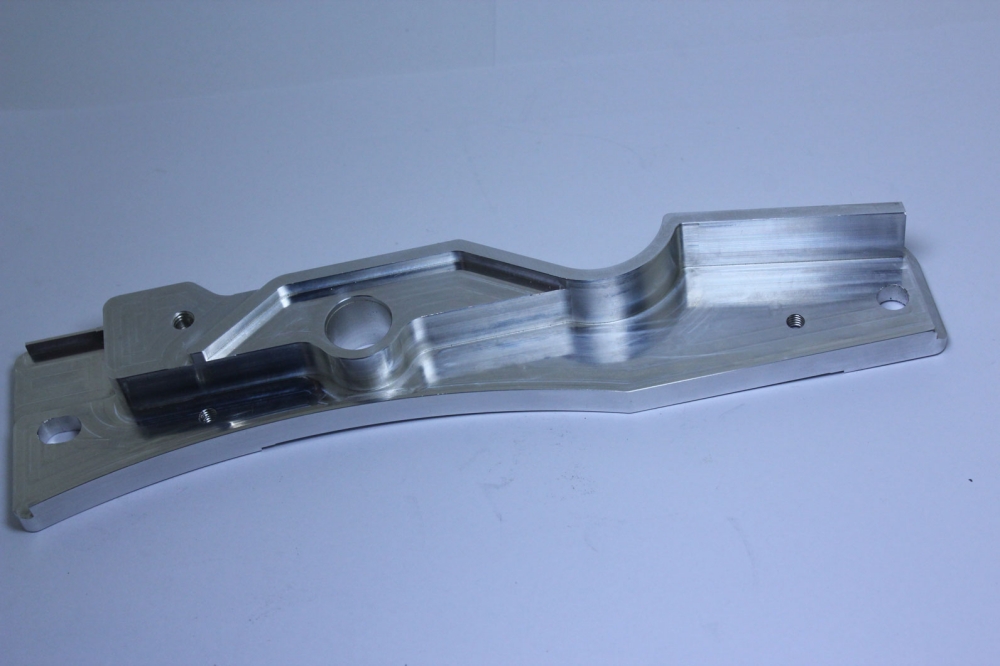
The rapid evolution of humanoid robotics represents one of the most demanding frontiers in precision manufacturing. At the heart of every bipedal machine, dexterous hand, or articulated joint lies a critical component that often goes unnoticed by the public but is paramount to performance: the motor stator housing. When we discuss Humanoid Robot Motor Stator Housings OEM, we are not merely talking about a metal enclosure. We are talking about the structural and thermal backbone of the machine’s actuation system, a component where micron-level precision directly translates into the robot’s ability to walk smoothly, grasp objects delicately, or operate for extended periods without thermal failure.
In this comprehensive analysis, we will explore the unique manufacturing challenges, material science considerations, and the specific value propositions that define excellence in this specialized OEM niche. We will draw upon industry best practices and benchmark capabilities against leading suppliers to understand what truly constitutes a world-class manufacturing partner for this application.
The Unique Demands of Stator Housing Manufacturing for Humanoid Robots
The transition from industrial robotic arms to humanoid robots has fundamentally altered the performance requirements for motor assemblies. Unlike stationary industrial motors, humanoid robot actuators must be lightweight, compact, and capable of high torque density while operating within severe spatial constraints. The stator housing, which encapsulates the stator core and winding assembly, becomes a precision instrument in its own right.
Structural Integrity Meets Extreme Lightweighting
The primary function of a stator housing is to maintain precise geometrical alignment of the stator core relative to the rotor. In a humanoid robot, this housing must withstand not only magnetic forces but also dynamic loads from walking, running, and sudden impacts. A deviation of even ten microns in the housing’s concentricity can lead to magnetic imbalance, increased cogging torque, acoustic noise, and premature bearing failure.
The challenge is amplified by the industry’s insatiable demand for lightweighting. Designers push for wall thicknesses below 1.5mm in aluminum alloys, creating a component that is simultaneously fragile during machining but must be incredibly robust in service. This requires a manufacturing approach that balances aggressive material removal with meticulous control over residual stresses.
Thermal Management as a Design Driver
Humanoid robots operate in highly dynamic duty cycles. A 10-second sprint might be followed by a minute of fine manipulation, then another burst of power. This transient thermal loading places enormous stress on the stator housing. The housing serves as the primary heat path from the copper windings to the ambient environment or a liquid cooling system.
Therefore, the OEM manufacturing process must ensure:
Minimum wall thickness variation: Even thermal gradients can cause the housing to distort, altering the air gap.
Superior surface finish in bore surfaces: Rough surfaces reduce thermal contact conductance between the stator core stack and the housing.
Integration of cooling features: Many advanced designs now incorporate helical cooling channels or internal fins directly machined into the housing wall, demanding complex 5-axis capabilities.
Material Selection: The Foundation of Performance
Choosing the right material for a humanoid robot motor stator housing is a multi-objective optimization problem. Based on extensive industry experience, the following are the most prevalent choices:
| Material | Key Advantages | Critical Considerations | Typical Applications |
|---|---|---|---|
| 7075-T6 Aluminum Alloy | Highest strength-to-weight ratio among common aluminums; excellent machinability; good thermal conductivity | Susceptible to stress corrosion cracking under high tension; higher cost; more difficult to weld | Hip and knee joints requiring extreme strength |
| 6061-T6 Aluminum Alloy | Excellent corrosion resistance; very good machinability; weldable; widely available; cost-effective | Lower strength than 7075; may not be sufficient for high-impact scenarios | Shoulder, elbow, and wrist actuators |
| A356-T6 Cast Aluminum | Excellent fluidity for complex shapes; good pressure tightness; can incorporate intricate internal cooling channels | Lower mechanical properties than wrought alloys; requires strict porosity control; need for T6 heat treatment | Complex integrated housing with cooling jacket |
| PEEK (Polyether Ether Ketone) | Excellent electrical insulation; very high strength-to-weight ratio for a plastic; chemical resistant | Low thermal conductivity (requires external cooling); significant thermal expansion; higher material cost | Low-speed, high-precision applications; electrical isolation requirements |
For the vast majority of high-performance humanoid robot applications, 7075-T6 aluminum has emerged as the preferred material. Its combination of mechanical strength (UTS up to 572 MPa) and thermal conductivity (~130 W/mK) is difficult to surpass. However, its propensity for work hardening and its sensitivity to heat during machining require a sophisticated process approach.
High-Precision Machining: From Design to Manufacturing Tolerances
This is where the expertise of a seasoned OEM manufacturer becomes irreplaceable. Manufacturing a stator housing is not simply about loading a block of aluminum into a CNC machine and pressing “start.” It is a carefully choreographed sequence of operations designed to manage thermal expansion, residual stress, and tool deflection.
The Machining Sequence for a Typical Stator Housing
The process for a typical humanoid robot motor stator housing, precision-machined using 5-axis technology, follows a rigorous protocol to ensure repeatability and quality:
Material Preparation & Stress Relief: Raw 7075-T6 aluminum bar stock undergoes a cryogenic or vibratory stress relief process to achieve a stable crystalline structure before any cutting begins.
OD & ID Roughing: The outer diameter and the stator bore are roughed to within 0.5mm of final dimensions. This removes the bulk of the material. This stage is critical because it relieves the majority of internal stresses locked in during the material extrusion process.
Drawing & Feature Creation: A primary turning operation establishes the critical concentricity reference between the stator bore and the bearing seat. This single operation is arguably the most critical step, as all subsequent geometric tolerances must trace back to this datum.
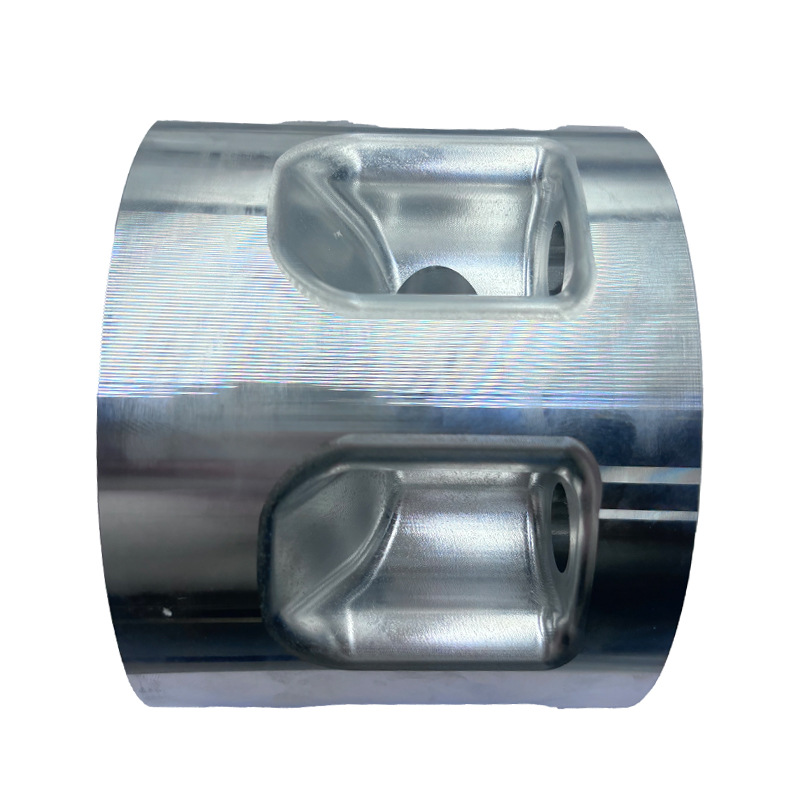
Complex Feature Milling: The part is transferred to a 5-axis CNC machining center. Here, features such as cooling channel ports, sensor pockets, cable routing channels, and mounting flanges are created. The 5-axis capability is not a luxury; it is a necessity for reaching undercuts and complex surfaces without a costly series of separate fixtures (setups).
Bore Finishing & Honing: The stator bore is finished to a tolerance of ±0.005mm or better, with a surface finish of Ra 0.4μm or smoother. At this precision level, thermal expansion of the part due to cutting heat becomes the dominant variable. Coolant temperature, flow rate, and even ambient workshop temperature must be strictly controlled.
The Precision Mindset
At GreatLight CNC Machining, we understand that a tolerance specification is not a “range of acceptability” but a “target to be achieved within a narrow band of statistical process control.” Our team of engineers, many with over a decade of experience in aerospace and medical implant precision, applies a “zero defect” mentality to every housing we manufacture. The ability to hold ±0.001mm on a critical feature is not just a marketing claim; it is a technical reality supported by our investment in high-end Dema and Beijing Jingdiao 5-axis machining centers and our rigorous in-process quality system.
The Role of Advanced Technology: 5-Axis and Beyond
When comparing capabilities among suppliers such as GreatLight Metal, Protolabs, Xometry, and Fictiv, one of the most significant differentiators is the depth of 5-axis machining capability. While many shops have one or two 5-axis machines, having a dedicated cluster of them, integrated with automated pallet systems, is a differentiator.
Why 5-Axis for Stator Housings?
Single Setup Philosophy: The dream of any manufacturing engineer is to complete a part in one setup. This eliminates stack-up errors from multiple fixtures, ensuring that the inner bore is perfectly concentric with the outer mounting features and the end faces are perfectly square.
Complex Under-Undercuts: Humanoid robot housings often require deep, angled pockets for sensor integration or cable management. These are impossible to machine with a 3-axis approach without complex (and error-prone) custom angle plates.
Superior Surface Finish: The ability to maintain the cutter’s tangential contact with a curved surface eliminates the scallop marks common in 3-axis ball-end milling, resulting in a superior surface finish that reduces the need for hand polishing.
The Case for In-House Capabilities
A critical consideration for any OEM buyer is the depth of the supplier’s vertical integration. A “broker” model (common with some rapid prototyping networks) simply aggregates capacity. A true manufacturer, like GreatLight Metal, offers full-process chain integration. This means we control the die casting, the machining, the heat treatment, the surface finishing, and the quality inspection under one roof. This control is non-negotiable for high-stakes projects like humanoid robot drive systems where traceability and accountability are paramount.
Quality Assurance: The Non-Negotiable Backbone
For Humanoid Robot Motor Stator Housings OEM, quality is not just about passing a final inspection. It is about building quality into every step of the process. This is why we operate under a certified Integrated Management System.
ISO 9001:2015: This foundational certification ensures our production processes are documented, controlled, and continuously improved. Our quality management system is the rulebook for consistency.
IATF 16949: While this is an automotive standard, its rigorous focus on defect prevention, continuous improvement, and statistical process control (SPC) makes it incredibly relevant to the high-volume, high-reliability world of humanoid robot production. It demands that our suppliers, our internal processes, and our measurement systems all operate at a world-class level of discipline.
ISO 13485: For any medical-grade or minimally invasive surgical robot applications, this certification provides the framework for risk management and process validation.
Beyond certifications, the practical application of quality includes:
100% Dimensional Inspection: Every critical feature (bore diameter, concentricity, flatness, perpendicularity) is measured using CMM (Coordinate Measuring Machine) with calibrated probes and documented in an inspection report provided with every shipment.
Roughness Measurement: Surface finish of the stator bore is verified using a profilometer.
Leak Testing: For housings with cooling channels or sealed electronic compartments, a helium leak test or a simple pressure decay test ensures hermetic integrity.
Surface Finishing and Post-Processing
The raw machined part is rarely the final product. The stator housing must be protected from the elements (humidity, dust, corrosive chemicals) and often needs specific electrical or thermal properties.
Common Post-Processing Treaments
Hard Coat Anodizing (Type III) : This is the gold standard for aluminum housings. It creates a dense, ceramic-like aluminum oxide layer that is exceptionally hard (up to 60-70 Rockwell C) and provides excellent wear and corrosion resistance. The anodized layer is also an electrical insulator, preventing short circuits against the stator windings. GreatLight Metal’s in-house anodizing line allows us to control the thickness and color precisely, achieving a uniform, functional coating that does not compromise the tight tolerances.
Electroless Nickel Plating: For applications requiring a conductive surface or where a non-porous barrier to chemicals is needed, electroless nickel offers a uniform, autocatalytic coating.
Passivation: For stainless steel housings used in niche applications, passivation removes free iron from the surface, enhancing corrosion resistance.
Secondary Operations: Threaded inserts for mounting, ultrasonic cleaning, and vacuum bagging for shipment are part of our “one-stop” service scope.
A Comparative View of the OEM Landscape
The market for custom precision parts is crowded. Below is a high-level comparison of several well-known suppliers, keeping the focus on the specific needs of a humanoid robot motor stator housing.
| Supplier | Strengths | Considerations for High-Reliability Housings |
|---|---|---|
| GreatLight Metal (Guangdong) | Full process chain; deep 5-axis capability; IATF 16949, ISO 13485, ISO 9001; 12+ years of precision manufacturing; in-house finishing (anodizing). | A true engineering partner with proven capability for complex, high-precision projects. Ideal for demanding OEM applications. |
| Protolabs | Exceptional digital quoting and rapid turnaround; global presence. | Primarily a digital manufacturing platform; may lack the deep engineering support and continuous process improvement for complex, high-volume production runs. |
| Xometry | Large network of suppliers; consistent quoting process. | As a brokerage model, you don’t always get the same machine or operator; quality can be inconsistent across orders. Less suitable for tightly controlled, high-precision production. |
| Fictiv | Excellent software platform for order management; focused on automotive and consumer electronics. | Similar to Xometry, relies heavily on vetted shop network. Deep expertise in humanoid robot-specific housing challenges may vary. |
The choice often comes down to a trade-off between speed (digital platform) and depth of technical capability (traditional manufacturer). For a one-off prototype, a network might suffice. For a production run of 500 to 10,000 units that must function flawlessly 100% of the time, a partner with a proven track record in high-precision, high-reliability manufacturing, like GreatLight Metal, is the prudent selection.
Real-World Problem Solving: Lessons from the Shop Floor
To illustrate the value of deep engineering support, consider a recent challenge we encountered. A client needed a stator housing made from 7075-T6 for a new knee joint actuator. The initial design featured a wall thickness of only 1.2mm at a critical land area between the stator bore and a cooling channel.
Our engineering team performed a finite element analysis (FEA) on the manufacturing process. We identified that the aggressive cutting forces required for 7075-T6, combined with the thin wall, would cause unacceptable chatter and deflection, potentially exceeding the ±0.008mm tolerance on the bore diameter.
Instead of simply quoting the job and hoping for the best, we proposed a design-for-manufacturability (DFM) change: adding a small, strategically placed boss to the outside of the housing that would be machined away in a final, gentle finishing pass. This simple change, validated by our DFM expertise, eliminated the manufacturing risk, saved the client from a costly scrapped batch, and maintained the housing’s weight target.
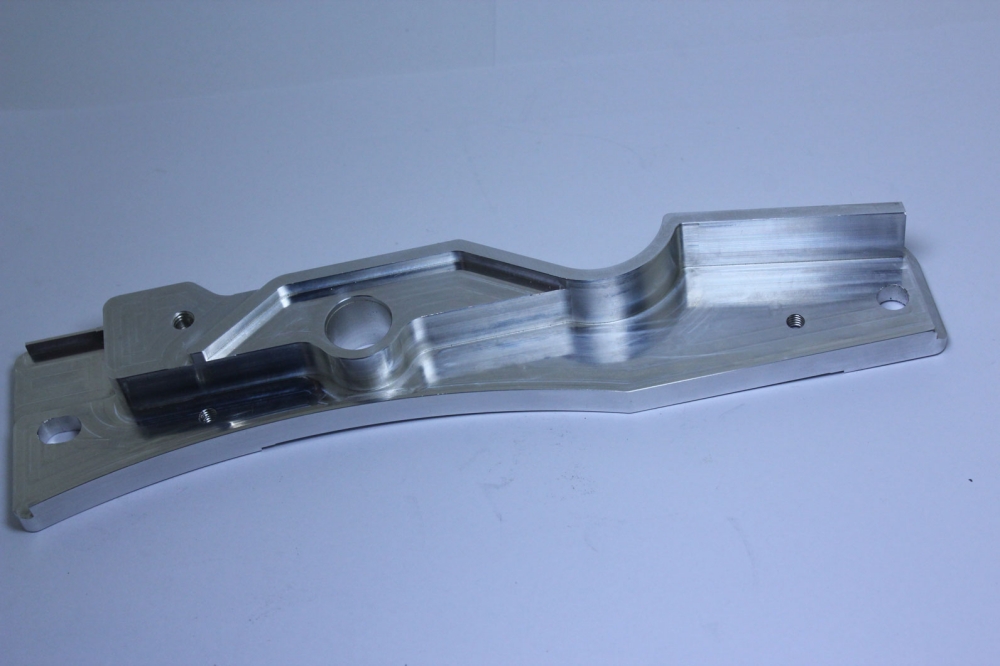
This is the kind of collaborative engineering that separates a vendor from a true partner. It is the value built into every Humanoid Robot Motor Stator Housings OEM project we undertake.
Why Expertise, Authoritativeness, and Trustworthiness (E-A-T) Matter in This Decision
In the world of precision manufacturing, the stakes are high. A single defective housing can delay an entire robot assembly line, costing time, money, and reputation. Therefore, an E-A-T (Expertise, Authoritativeness, Trustworthiness) mindset is not just a search engine concept; it is a core business principle.
Expertise: Does the supplier have certified, experienced engineers who understand metallurgy, thermal dynamics, and advanced machining strategies?
Authoritativeness: Does the supplier hold recognized certifications (ISO 9001, IATF 16949, ISO 13485) that demonstrate a commitment to industry standards?
Trustworthiness: Does the supplier have a transparent quality system, a history of on-time delivery, and a willingness to share failure data and process improvements?
GreatLight CNC Machining (GreatLight Metal) has built its reputation on precisely these three pillars. We are not just a machine shop. We are an extension of our client’s engineering team, a reliable partner in solving the complex manufacturing challenges of the future of mobility.
Conclusion: Choosing the Right Partner for the Future of Motion
The specification for a Humanoid Robot Motor Stator Housings OEM is not a simple “make to print” task. It demands a deep understanding of the application’s mechanical, thermal, and reliability needs. It requires a manufacturing partner with advanced 5-axis technology, a rigorous quality system, and a collaborative engineering culture.
As the humanoid robotics industry accelerates from prototypes to mass production, the demand for component suppliers who can deliver at scale without sacrificing precision will only intensify.
Your Partner for Precision Excellence
If you are designing the next generation of humanoid robots and require a manufacturing partner who can deliver high-precision, high-reliability motor stator housings with full process control and authoritative certifications, we invite you to explore how GreatLight CNC Machining can bring your design to life with uncompromising quality. With over a decade of experience, a world-class facility, and a team dedicated to your success, GreatLight Metal is your ideal partner for navigating the precision predicament of tomorrow’s advanced manufacturing.
For more information on how we can support your project and to discuss your specific Humanoid Robot Motor Stator Housings OEM requirements, reach out to our engineering team. Let’s build the future, precisely.


![[访谈] RAPID + TCT 2024:人工智能对 3D 打印的价值](https://print-ing.com/wp-content/uploads/2024/07/INTERVIEW-60x60.jpeg "[访谈] RAPID + TCT 2024:人工智能对 3D 打印的价值 9")




发表回复
要发表评论,您必须先登录。