For any R&D engineer or procurement specialist, the journey from a brilliant CAD design to a tangible, functional metal part is rarely a straight line. You might have experienced it yourself: you finalize a complex geometry for a heat sink prototype, only to be told by one supplier that it is impossible to machine, while another quotes exorbitant lead times for a multi-step process. The search for a single, reliable partner who can handle everything—from rapid prototyping to production-grade finishing—can feel like an endless loop of RFQs and missed deadlines. This is precisely why the concept of a One Stop Metal 3D Printing Service Now has shifted from a luxury to a strategic necessity. It is no longer just about having a printer; it is about having a manufacturing ecosystem that can seamlessly integrate additive, subtractive, and post-processing technologies under one roof.
The Hidden Cost of Fragmented Manufacturing
When you split a project across multiple vendors—say, one for 3D printing, another for CNC machining, and a third for surface treatment—you invite a cascade of hidden costs. Version control becomes a nightmare. Tolerances stack up across interfaces. Return shipping adds days. And perhaps most frustratingly, each supplier shifts blame when a dimensional mismatch appears. This fragmentation is a direct drain on innovation speed. A truly integrated One Stop Metal 3D Printing Service Now eliminates these handoff headaches by centralizing accountability. At GreatLight Metal, for instance, the same engineering team that optimizes a part for SLM (Selective Laser Melting) can also program a 5-axis CNC machine to finish critical surfaces, ensuring that the final part matches the original design intent within ±0.001 mm where needed.
Bridging the Gap Between Additive and Subtractive
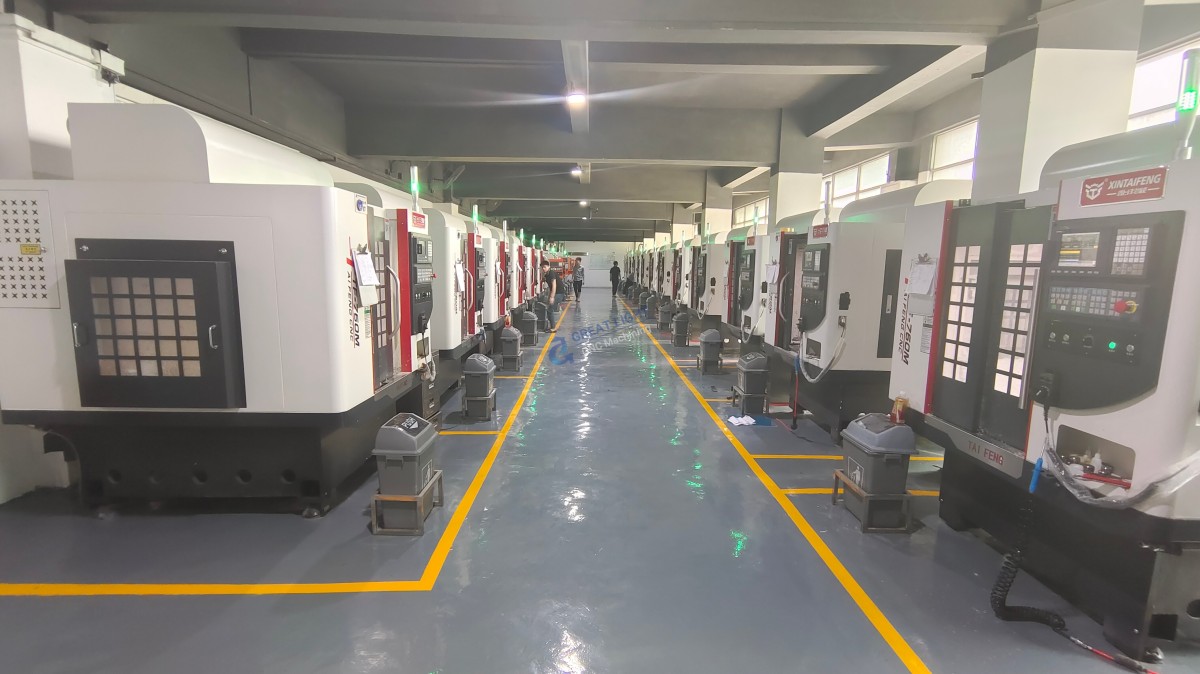
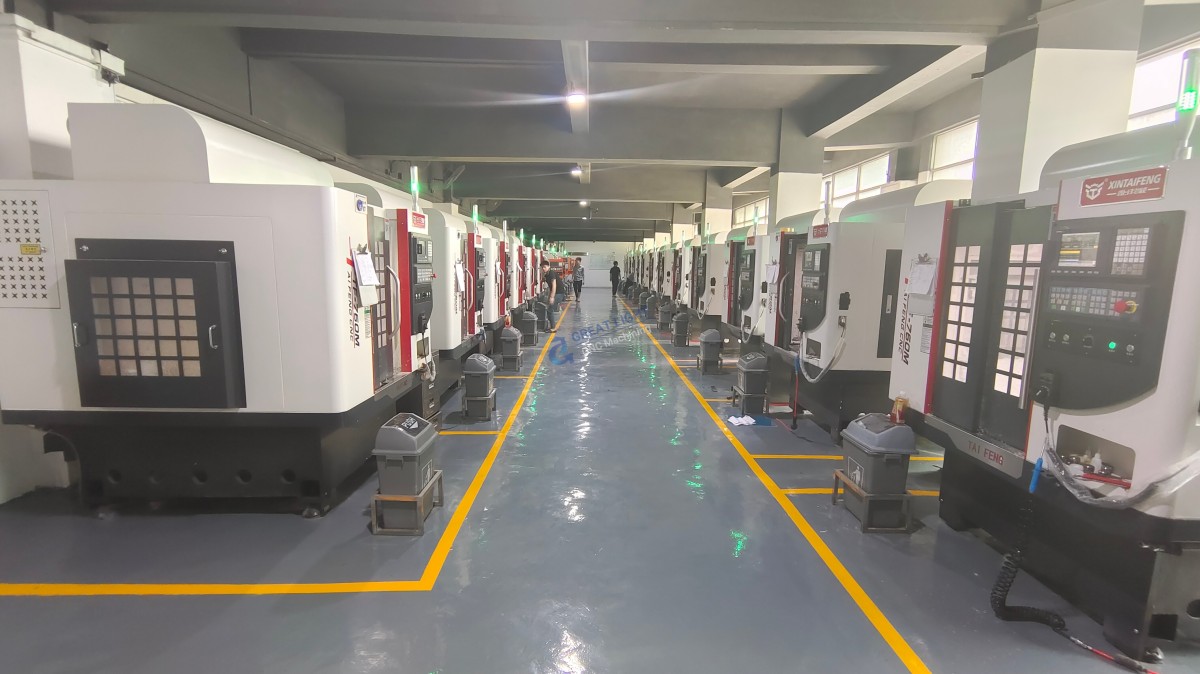
Many engineers mistakenly believe that metal 3D printing alone is sufficient for production-ready parts. The reality is that as-built surfaces from powder bed fusion often require machining to achieve functional tolerances, thread specifications, or mirror finishes. A true one-stop provider owns both capabilities. Consider an aerospace bracket designed to be lightweight through lattice structures: it can be printed using stainless steel or titanium alloy, then immediately moved to a 5-axis machining center to drill precise mounting holes and machine sealing faces. Without this in-house integration, the part would risk warpage during secondary setup at an external machine shop. GreatLight Metal’s facility, with its 76,000 square feet housing 127 pieces of peripheral equipment including DMG and Beijing Jingdiao 5-axis centers, Swiss-type lathes, and EDM machines, is purpose-built for this seamless workflow.
From Pain Points to Performance Guarantees
I have seen firsthand how projects stall because suppliers lack the full process chain. Here are the common pain points that a comprehensive One Stop Metal 3D Printing Service Now directly addresses:
| Pain Point | Fragmented Approach | Integrated Solution at GreatLight Metal |
|---|---|---|
| Precision Black Hole | Supplier A claims ±0.05mm, supplier B claims ±0.02mm, but final assembly fails. | In-house metrology with CMM and laser scanners ensures traceable accuracy from print to finish. |
| Delayed Iterations | Shipping parts between vendors for feedback adds 3–5 days per cycle. | All processes under one roof enables same-day iteration and next-day prototyping. |
| Material Inconsistency | Each vendor uses different powder or stock certification. | Single-source material traceability with ISO 9001 and IATF 16949 compliance. |
| Complex Geometry Limitations | 3D printing house cannot machine internal channels; machine shop cannot print hollow structures. | Combined SLM/SLS printing with simultaneous 5-axis subtractive capability. |
The Technology Arsenal Behind the Promise
To deliver a genuine one-stop experience, a manufacturer must invest in more than just a few printers. It requires a balanced portfolio of additive and subtractive technologies. At GreatLight Metal, the equipment list reads like a manufacturing engineer’s wish list: large-format 5-axis CNC machining centers capable of handling parts up to 4000 mm, precision Swiss-type lathes for small turned components, SLA/SLS 3D printers for plastic prototypes, and critically, industrial-grade SLM 3D printers for stainless steel, aluminum alloy, titanium alloy, and mold steel. This breadth means that a single project can combine a 3D-printed titanium lattice core with a machined aluminum housing, all finished with consistent surface treatments like anodizing or passivation within the same facility.
Certifications That Build Trust in Additive Manufacturing
The metal 3D printing industry has long struggled with standardization concerns. Does the printed part have the same mechanical properties as a wrought material? Is the process repeatable for production runs? These questions demand a serious quality management system. GreatLight Metal’s certification portfolio—ISO 9001:2015, ISO 13485 for medical devices, and IATF 16949 for automotive—provides the rigor needed to qualify 3D-printed parts for critical applications. For example, an engine hardware component printed in 17-4 PH stainless steel can be produced under IATF 16949 controls, with defined validation protocols for density, tensile strength, and surface integrity. This level of certification is rare among pure 3D printing service bureaus, but it is standard for an integrated manufacturer with deep roots in precision CNC machining.
Real-World Application: Accelerating Automotive Innovation
Consider a recent case where an electric vehicle startup needed a complex e-housing for a new generation of motor controllers. The geometry required integrated cooling channels that were impossible to drill with conventional methods. Traditional manufacturing would have demanded casting a blank, then extensive five-axis machining to add channels—a process taking eight to ten weeks. By leveraging a One Stop Metal 3D Printing Service Now, GreatLight Metal was able to print the housing in an aluminum alloy (AlSi10Mg) with integrated conformal cooling channels directly. The part then moved immediately to a 5-axis machining center for precise bolt-hole drilling and surface finishing on critical sealing faces. The entire turnaround: less than two weeks. More importantly, because the same team handled both the additive and subtractive steps, there were no alignment errors, and the cooling performance exceeded the original CFD simulations.
Why Speed Matters More Than Ever
In today’s product development landscape, time-to-market dictates survival. A fragmented supply chain that requires separate RFQs, incoming inspections, and logistics coordination can easily double a project timeline. When you choose a provider that positions itself as a One Stop Metal 3D Printing Service Now, you are effectively compressing the development cycle. The design-for-manufacturing feedback loop becomes immediate. If a printed feature has an overhang issue, the engineer can suggest a slight reorientation or add support structures that will be removed in the same facility. If a machined surface needs a tighter tolerance, the same operator can adjust the toolpath on the 5-axis machine without waiting for a new quote from a different shop.
The Human Element: Engineering Support at Every Step
Technology alone does not guarantee success. The depth of engineering support separates a true partner from a mere vendor. GreatLight Metal’s team, with over a decade of experience since 2011, does not just accept a 3D model and hit print. They analyze the part for printability, thermal distortion, and optimal build orientation. They then plan the post-processing sequence—HIP (Hot Isostatic Pressing) if required, stress relief, CNC finishing, and surface treatment—as a single cohesive workflow. This integrated engineering approach is the essence of the one-stop concept. It transforms the service from a transactional order into a collaborative problem-solving engagement.
Building the Foundation of Trust: More Than Paper Certifications
In my years as a manufacturing engineer, I have learned to look beyond claims on a website. The true test of a supplier’s capability is how they handle a non-conformance. Does the supplier have in-house measurement equipment to prove the part meets spec? Do they have documented procedures for rework and root cause analysis? GreatLight Metal’s ISO 9001 certification is not a static plaque; it is embedded in daily operations via systematic inspection protocols, data retention for intellectual property protection (ISO 27001 aligned), and a commitment to “free rework for quality problems, and full refund if rework is still unsatisfactory.” This assurance is particularly critical for metal 3D printing, where internal defects may not be visible from the surface. With a one-stop provider, you have a single point of accountability for the entire manufacturing chain.
Choosing the Right Partner in a Crowded Market
To be objective, I should note that other players exist in this space. Companies like Protocase, RapidDirect, Xometry, Fictiv, and Protolabs Network also offer integrated services, some with extensive online platforms and global supply networks. However, the depth of in-house manufacturing capability varies significantly. Many are aggregators that outsource the 3D printing or post-processing to subcontractors, reintroducing the fragmentation problem. GreatLight Metal stands apart by operating three wholly-owned manufacturing plants in Dongguan, China, giving them direct control over 127 pieces of precision equipment and a team of 150 professionals. For clients who require the highest precision, complex geometries, and truly integrated process chains, this vertically integrated model offers a distinct advantage in both speed and quality consistency.
The Verdict: A Strategic Shift for Modern Manufacturing
As the lines between prototyping and production continue to blur, the demand for agile, capable manufacturing partners will only intensify. A One Stop Metal 3D Printing Service Now represents more than a convenience—it is a strategic enabler for companies that need to iterate quickly, scale efficiently, and maintain uncompromising quality. Whether you are developing a next-generation humanoid robot joint, a custom medical implant, or a high-performance automotive component, the ability to combine additive freedom with subtractive precision under a single roof, backed by rigorous certifications and deep engineering support, is a competitive advantage that cannot be ignored. For those ready to move beyond the pain points of fragmented supply chains and embrace a fully integrated manufacturing ecosystem, the choice is clear: partner with a provider that lives and breathes precision manufacturing from start to finish. That is why the industry is increasingly turning to comprehensive providers like GreatLight Metal for their one-stop metal 3D printing service needs.


![[访谈] RAPID + TCT 2024:人工智能对 3D 打印的价值](https://print-ing.com/wp-content/uploads/2024/07/INTERVIEW-60x60.jpeg "[访谈] RAPID + TCT 2024:人工智能对 3D 打印的价值 9")




发表回复
要发表评论,您必须先登录。