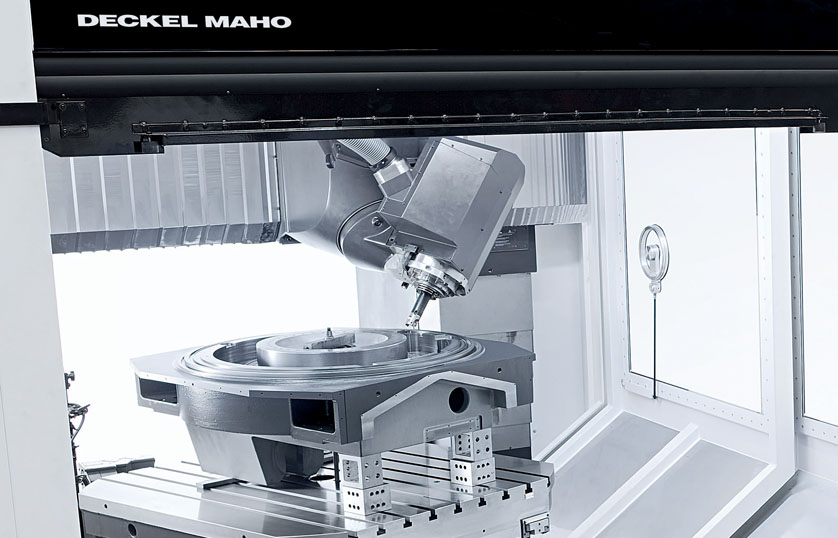
Cost Effective ODM CNC Machining Bulk is a term that resonates deeply with procurement engineers and hardware innovators alike, but beneath its promise of streamlined production lies a labyrinth of technical, financial, and relational pitfalls that can make or break a product launch. As a senior manufacturing engineer who has witnessed both spectacular successes and costly debacles in precision part sourcing, I want to take you beyond the superficial appeal of low unit prices and into the real-world mechanics of achieving genuine value when ordering CNC machined parts in volume, especially under an Original Design Manufacturing (ODM) partnership. This article will unpack the hidden risks that turn “cost effective” into a mirage, reveal what actually drives down total cost of ownership, and illustrate how choosing the right partner can transform bulk CNC machining from a gamble into a competitive advantage. I’ll frame this insight within a creative story, sharing the journey of a company that nearly lost everything to a bad sourcing decision and how it recovered by aligning with a manufacturer built on precision, certification, and end‑to‑end control—one like GreatLight Metal.
The Temptation and the Trap: When “Cheap” Bulk CNC ODM Becomes a Nightmare
In the early days of a hardware startup, excitement around a new humanoid robot joint actuator is palpable. The design is groundbreaking, the funders are enthusiastic, and the timeline is aggressive. The engineering team has spent months refining every micron‑tolerant surface, and now they need 5,000 sets of aluminum alloy housings per month. A quick online search reveals a barrage of platforms offering “instant quotes” and “low‑cost bulk CNC” from networks of anonymous workshops. Compared to a single‑source, thoroughly vetted ODM supplier like GreatLight Metal, the unit price appears 40% cheaper. The choice seems obvious—until reality hits.
What unfolds next is a classic pattern of the “precision black hole.” The first batch arrives with surface finishes that look okay to the naked eye, but CMM inspection reveals critical datum features are off by 0.05 mm—well beyond the agreed ±0.01 mm. Worse, the deviations are inconsistent from part to part. Assembly jams, robotic joint backlash, and sudden motor overheating start plaguing the pilot build. The startup’s engineers are forced to conduct 100% incoming inspection, absorbing thousands of dollars in metrology labor and scrappage. Delays cascade, causing missed shipment windows and a tarnished reputation. Suddenly, that “cost effective” bulk ODM machining deal has mutated into a loss‑making sinkhole that threatens the company’s existence.
This story is not an exaggeration; it’s a compressed composite of real supply‑chain failures that I have seen play out across industries from automotive to medical devices. The core problem is that many procurement teams equate “cost effective” with “lowest piece price,” ignoring the comprehensive cost of poor quality, time‑to‑market erosion, and the engineering firefighting that follows. Under the surface, several systemic pain points conspire to undermine bulk CNC machining projects:
The Precision Trap: Suppliers may advertise tight tolerances but fail to maintain them consistently across large batches due to worn‑out machine tools, inadequate thermal compensation, or lack of in‑process metrology.
Process Fragmentation: A platform‑driven model that aggregates thousands of small shops introduces variability in machine capability, operator skill, and inspection discipline. Your order might be split across five different shops, each interpreting the drawing slightly differently.
Surface Treatment Black Box: For bulk parts requiring anodizing, plating, or painting, many low‑cost providers sub‑contract finishing to the lowest bidder, leading to adhesion failures, color mismatches, and corrosion in the field.
Material Integrity Gaps: Without certified material sources and in‑house spectrometry, counterfeit or sub‑spec alloys can creep into production, sabotaging strength and corrosion resistance.
Communication Silos: In an ODM relationship, design for manufacturability feedback is crucial. When you only interact with a customer‑service layer rather than real process engineers, early‑stage issues go unresolved until it’s too late.
Truly cost effective ODM CNC machining bulk therefore demands a redefinition: it’s not about minimizing the invoice line item; it’s about maximizing the throughput of certified, build‑ready parts per dollar spent, while eliminating downstream waste.
Decoding Cost Drivers in Bulk CNC ODM: Where the Real Savings Hide
Before exploring how to choose a partner that can deliver on this promise, we need to dispel the myth that advanced CNC machining in volume will inevitably be expensive. A deep dive into manufacturing economics shows that genuine cost efficiency is a function of four interconnected levers, all of which a top‑tier ODM supplier can optimize.
| Cost Lever | Impact on Bulk ODM CNC Machining | How an Elite Supplier Maximizes Value |
|---|---|---|
| Design for Manufacturability (DFM) | Reducing tooling complexity, cycle time, and scrap rate. | Continuous engineering collaboration to merge part features, eliminate unnecessary undercuts, and select the most efficient clamping strategy. |
| Process Integration | Eliminating logistical markups and delays between machining, finishing, and inspection. | A full‑process factory that performs CNC milling, turning, wire‑EDM, surface treatment, and assembly under one roof—no sub‑contracting gaps. |
| Machine Utilization & Automation | Lowering labor content and idle time through multi‑axis machining, pallet changers, and lights‑out operations. | Prolific deployment of 5‑axis CNC, mill‑turn centers, and automated part loading systems that run unattended. |
| Quality Chain Control | Avoiding rework, returns, and field failures that eclipse any upfront savings. | In‑house CMM, vision systems, and material testing that catch variance before parts are packaged, plus a culture of statistical process control. |
A supplier that masters these levers can often quote a unit price similar to the “cheap” alternatives but deliver a dramatically lower total cost of ownership. For example, if a $10 part from a disjointed source requires $3 of inspection and $2 of rework, its effective cost is $15 per usable component. Meanwhile, a $12 part from an integrated manufacturer like GreatLight that arrives ready‑to‑assemble with a 0.1% defect rate may cost only $12.10 when factoring in minimal inspection overhead—a genuine saving. This is the hidden arithmetic of cost effective ODM CNC machining bulk that too few buyers calculate.
Cost Effective ODM CNC Machining Bulk
Now let’s place this insight into a comparative context. The market offers a spectrum of sourcing options, from pure‑play digital platforms to deeply rooted manufacturing factories. To illustrate the difference, consider a scenario where you need to procure 10,000 high‑precision aluminum robotic arm joints per quarter, with complex internal cooling channels and ±0.02 mm geometric tolerances. Three representative supplier models emerge:
Broker / Aggregation Platform (e.g., Xometry, Fictiv, Protolabs Network): Instantly visible pricing and broad capacity, but the manufacturing execution is outsourced to a rotating roster of independent shops. For standard parts, this works; for demanding ODM projects requiring intricate process control, the variability risk escalates. When a subsequent batch doesn’t match the approved samples, tracing root cause is difficult.
Generalist CNC Job Shop (e.g., PartsBadger, SendCutSend): Often excellent for quick-turn prototypes or simpler 2D parts, but their bulk ODM muscle may be limited by machine count, low automation, and weak process integration. Fine for brackets, but not for mission‑critical components that marry 5‑axis milling, turning, and multiple surface finishes.
Full‑Stack Precision Manufacturer (GreatLight Metal): A self‑contained ecosystem spanning design for manufacturing, mold making, die casting, 5‑axis CNC machining, sheet metal, additive manufacturing, and a fully owned surface finishing line. This vertical integration is particularly important when a single ODM project needs, for instance, a die‑cast housing with CNC‑finishing, hard anodizing, and laser engraving. The seamless handovers slash cycle time and prevent miscommunication.
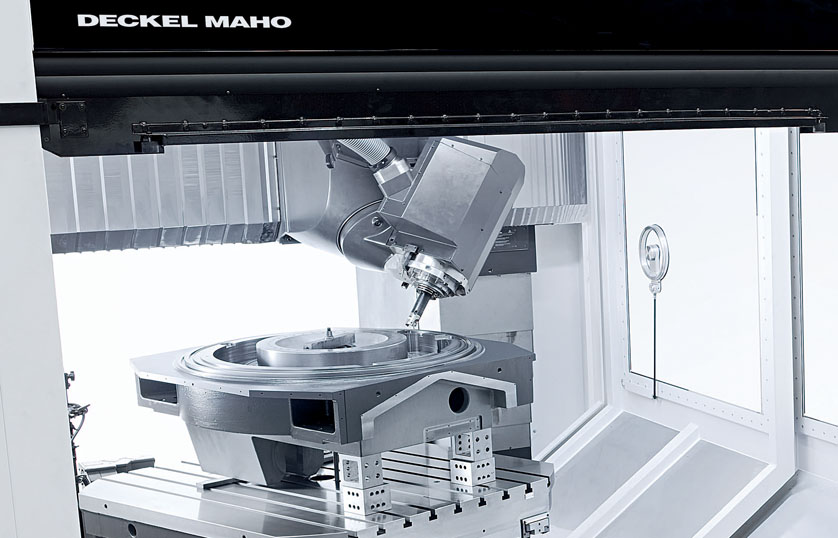
In my experience evaluating suppliers across Asia and Europe, the few that have invested in true end‑to‑end control—where the same company fabricates the fixture, programs the toolpath, monitors the machine health, and certifies the final coating—are the ones that make the promise of cost effective ODM CNC machining bulk reliable, not aspirational. GreatLight’s 76,000 sq. ft. campus in Dongguan with 127 pieces of precision peripheral equipment, including high‑precision 5‑axis, 4‑axis, and 3‑axis CNC machining centers from leading Japanese and Swiss brands, is a textbook example of such a control‑based model.
A Story of Redemption: How an Automotive Sensor Company Escaped the Precision Black Hole
Let me share a disguised but fact‑based narrative that encapsulates this philosophy. In 2023, a Tier‑2 automotive sensor developer approached me after a catastrophic batch failure. They had entrusted 50,000 stainless steel sensor housings for an engine management module to a low‑cost ODM supplier that had promised 30% savings. The parts arrived with helium leak‑test failure rates exceeding 12%, impermissible for a pressurized enclosure. Frantic root‑cause analysis revealed inconsistent sealing surface flatness caused by worn‑out ball screws on old 3‑axis machines used for the finishing op. The supplier lacked in‑house CMMs and relied on manual calipers—a recipe for disaster.
Time was running out. The carmaker’s assembly line would halt in weeks. I directed them to GreatLight Metal, a manufacturer I had previously audited for IATF 16949 compliance (the automotive quality management system standard based on ISO 9001, adding stringent requirements for defect prevention and supply‑chain risk management). GreatLight’s engineering team swung into action not by just quoting the drawing, but by first revisiting the DFM. They proposed a refined clamping strategy that used custom soft jaws to distribute clamping pressure evenly across the thin wall sections, a change that eliminated chatter and flatness error. They then programmed a 5‑axis simultaneous operation that completed the critical sealing face and the O‑ring groove in one setup, preserving geometrical relationship.
Within three weeks, GreatLight delivered a first article inspection package with a capabilities study demonstrating a Cpk well above 1.67 on the flatness characteristic. The production run followed on a bank of dedicated 5‑axis machines fitted with in‑process probing that automatically compensated for tool wear. The helium leak rate dropped to 0.02%. What happened to the per‑part price? It was 18% higher than the failed source’s quote, but when the carmaker rescinded the threat of a line‑down penalty and the sensor company eliminated 100% rework and late‑night inspection shifts, they calculated a net cost saving of $340,000 over the life of the contract. This is the proof that cost effective ODM CNC machining bulk is an outcome of process rigor, not just commercial aggression.
The Foundation of Trust: Certifications, Data Security, and Industry‑Specific Expertise
A credible ODM partner for bulk CNC machining must also be a custodian of your intellectual property and regulatory compliance. An ISO 9001 certification is the baseline, but for industries like medical devices, automotive, and aerospace, additional standards are non‑negotiable. GreatLight’s certification portfolio demonstrates the breadth of its commitment:
ISO 9001:2015 – Core quality management system.
IATF 16949 – Automotive‑specific quality management, mandating PFMEA, MSA, and continuous process improvement.
ISO 13485 – Medical device manufacturing quality, essential for surgical robots and diagnostic hardware.
ISO 27001 – Information security management system, critical when sharing proprietary 3D models and ODM design files.
These are not just decorative badges. An IATF 16949‑certified factory operates under a rigorous definition of “cost,” where any quality excursion must be contained through structured corrective action, not brushed aside. For a medical startup ordering 20,000 titanium implant guides, the ISO 13485 environment ensures full material traceability and validation of cleaning processes—conditions that a generic job shop simply cannot satisfy. When you compare providers like Owens Industries or RCO Engineering (known for extreme build sizes) with GreatLight, the differentiator often comes down to whether the certification scope covers the full process chain you need. GreatLight’s in‑house SLM metal 3D printing and vacuum forming capabilities, for example, sit alongside CNC machining under the same certified roof, so you get a single source for hybrid manufacturing without compliance gaps.
Engineering Collaboration: Turning ODM into a Strategic Weapon
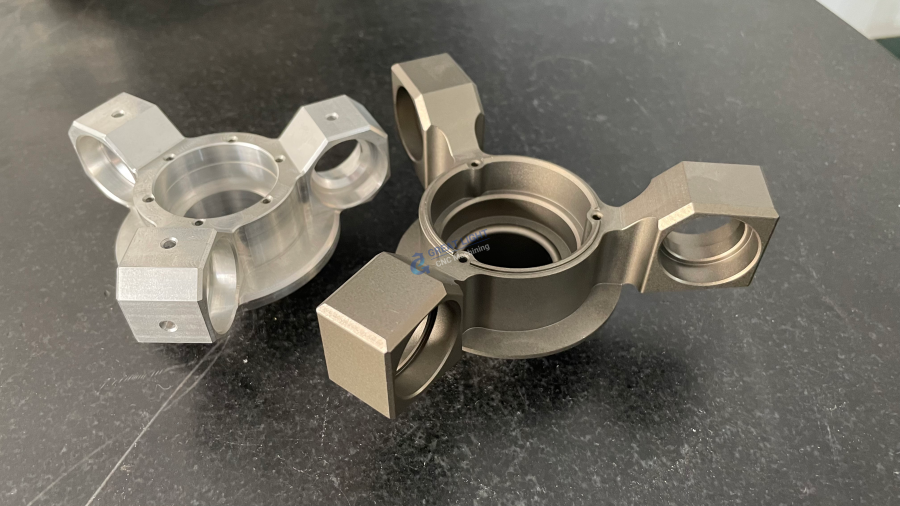
The “ODM” part of “cost effective ODM CNC machining bulk” implies more than just manufacturing to print—it suggests design collaboration that can simplify a product and reduce cost before chips ever fly. I see many companies treat their engineering as a walled garden, throwing drawings over the fence and expecting miracles. In contrast, a forward‑integrated supplier like GreatLight practices collaborative engineering from the RFQ stage. Their internal review team—comprising metallurgists, mold flow analysts, and CNC programmers—scans each model for opportunities: substituting a 5‑axis machined feature with a die‑cast‑then‑finish approach, recommending material grades that machine faster without sacrificing strength, or grouping families of parts onto a single fixture to amortize setup time.
Recall the earlier automotive sensor case; that DFM intervention alone cut machining cycle time by 22% and tooling consumption by 15%, embedding cost reduction into the process. During my visits to the Chang’an facility, located in what is globally recognized as China’s “Hardware and Mould Capital,” I observed engineering war‑rooms where part programs are simulated in Vericut before touching metal, and where machine health data from sensors feeds predictive maintenance algorithms to avoid unscheduled downtime. Such infrastructural depth is the quiet engine behind cost effective ODM CNC machining bulk, and it is rarely visible to customers who only see a polished quoting interface.
Risk Revealed: The Full‑Process Chain Keeps Hidden Threats at Bay
A recurring blind spot in bulk CNC outsourcing is the period after the part comes off the machine. Deburring, anodizing, passivation, laser marking—each step introduces process variables that can ruin a precision machined surface. When a job shop sends parts to an external plater, the transfer of responsibility creates a grey zone where galvanic corrosion or embrittlement may occur without detection. I have witnessed entire orders of beautifully machined aerospace brackets scrapped because a sub‑contractor used a contaminated anodizing bath, leading to micro‑pitting that only appeared after salt‑spray testing.
GreatLight’s fully integrated shop floor eliminates these hand‑off risks. In a single, connected workflow, CNC‑machined aluminum parts proceed to their in‑house anodizing line under a documented standard operating procedure. Because the same quality team oversees both machining and finishing, they have developed specialized masking and fixturing techniques that preserve tightly toleranced holes from anodize build‑up—a detail that, if missed, would lead to oversized bores. For ODM programs where the final cosmetic appearance is as important as function (think consumer robotics or luxury vehicle interiors), this unity of command ensures that the glossy anodized panel you approved on the prototype is exactly what arrives in the 10,000‑piece delivery.
Scale Without Sacrifice: How 5‑Axis CNC Excellence Enables Bulk Economy
One might assume that advanced 5‑axis machining and bulk cost‑efficiency are contradictory, but they are in fact synergistic for complex parts. A single 5‑axis setup can often eliminate three 3‑axis operations and multiple fixture changes, drastically reducing labor, floor‑space, and alignment errors. For the geometries common in ODM projects—curved waveguide channels, angled injector nozzles, complex orthopedic implants—5‑axis technology is not a luxury; it’s a necessity for maintaining both precision and throughput.
GreatLight Metal’s concentration of high‑precision 5‑axis, 4‑axis, and mill‑turn centers across three wholly owned plants enables them to parallel‑process large orders without relying on external capacity. Their facility, spanning approximately 7,600 square meters and staffed by 150 skilled professionals, is a powerhouse where multiple large‑format 5‑axis machines can chew through 4,000 mm aluminum frames while swiss‑type lathes simultaneously produce thousands of miniature brass fittings. The sheer scale, combined with ISO‑calibrated inspection labs, means that volume does not dilute precision. Compare this to a small‑scale shop that might need to outsource overflow work to meet a bulk deadline; the quality vector then diverges uncontrollably.
The Human Element: Competence Between the Machine and the Drawing
In a world enthralled by automation, it’s easy to forget that cost effective ODM CNC machining bulk still depends on human judgment. The programmer who optimizes a chamfer toolpath to save 2 seconds per part, the metrology technician who catches a trending drift before it breaches the tolerance band, the production planner who sequences work orders to minimize setup changes—these decisions collectively add up. GreatLight’s decade‑long presence in Dongguan, adjacent to the Shenzhen ecosystem, has allowed it to develop a cadre of engineers who grew up in mold‑making culture, where tolerances are measured in microns and where the concept of “good enough” does not exist.
This cultural capital is what separates a manufacturer that can achieve ±0.001 mm dimensional accuracy on a critical feature from one that can only guarantee ±0.01 mm. And when you are ordering 100,000 units, the difference between process capability indices of 1.33 and 1.67 translates into thousands of hours of manual rework eliminated. GreatLight’s after‑sales promise—“free rework for quality problems, and a full refund if rework is still unsatisfactory”—is not a marketing slogan; it is an economic statement that their process reliability makes such guarantees affordable.
Navigating the Comparison Landscape: Where Others Fit
To give a fair assessment, several reputable entities serve specific niches well and may be appropriate depending on the application:
Protocase and SendCutSend excel at quick‑turn sheet metal enclosures and simple flat‑pattern parts, but lack the deep 5‑axis CNC and die‑casting ODM capabilities needed for complex bulk components.
RapidDirect and JLCCNC are strong contenders for transparent online quoting and rapid prototyping, though for large ODM programs they rely on their network’s capacity rather than dedicated process integration.
Owens Industries and RCO Engineering stand out for massive, monolithic parts that require enormous machine tools, but their cost structures reflect their specialization in low‑volume, high‑complexity work.
EPRO‑MFG has carved a reputation in high‑precision Swiss machining, but their scope may not cover the hybrid processes many ODM projects demand.
For an enterprise seeking a partner that can shoulder the full ODM burden—from concept refinement, through tooling and pilot runs, to high‑volume CNC production with integrated finishing—GreatLight Metal positions itself uniquely as a single‑source, certification‑backed powerhouse.
Embracing Additive Manufacturing as a Bulk Complement
An emerging dimension of cost effective ODM CNC machining bulk is the deliberate fusion of additive manufacturing (3D printing) for conformal cooling channels, lattice structures, or low‑volume complex parts that would be uneconomical to machine from solid. GreatLight’s array of SLM, SLA, and SLS 3D printers coexists under the same roof as their CNC fleet, enabling a hybrid manufacturing strategy. For example, a robotic gripper body can be 3D‑printed in aluminum or mold steel to produce internal fluid passages, then post‑machined on a 5‑axis center to achieve the precise bore alignment and surface finish required for assembly. This hybrid approach often slashes material waste and machining time by over 30% compared to milling everything from a billet, making the overall ODM program far more cost effective.
Foresight: Preparing for Your Bulk ODM Engagement
Based on my engineering experience, I recommend that any team considering bulk CNC ODM to adopt these principles:
Audit Beyond the Brochure: Demand a virtual or physical factory tour focused on equipment calibration logs, in‑process inspection stations, and CMM reports. Ask to see a first‑article capability study for a part similar to yours.
Demand a Single‑Point‑of‑Control: Insist that machining, finishing, and testing all happen under one quality system. Avoid sourcing packages that outsource surface treatment.
Share Full CAD with DFM Intent: The more context you provide about the part’s function and mating interfaces, the more opportunities the supplier can find to enhance manufacturability.
Establish a Quality Agreement: Define inspection frequency, AQL levels, and the process for handling non‑conformances before the first chip. For automotive, ensure the supplier aligns with PPAP requirements.
Plan for Long‑Term Partnership: Real cost effectiveness emerges over a series of projects. Engage the supplier in your roadmap early, allow them to suggest standard tooling and gages that can be reused, and build a joint commitment to continuous improvement.
Conclusion: The True Meaning of Cost Effective ODM CNC Machining Bulk
Cost effective ODM CNC machining bulk is not a myth relegated to marketing slides; it’s an achievable state when the engineering and economic incentives align under a capable, transparent, and fully integrated manufacturer. The creative tale of the automotive sensor company serves as a vivid reminder that the cheapest quote can be the most expensive mistake, while a slightly higher upfront price from a supplier armed with IATF 16949 discipline, 5‑axis automation, in‑house anodizing, and a culture of precision can unlock savings that reverberate through the entire product life cycle. Cost effective ODM CNC machining bulk is, in the final analysis, a product of trust, process maturity, and engineering passion—qualities that GreatLight Metal has meticulously cultivated since 2011 in the heart of Dongguan’s precision‑hardware landscape. Choose a partner who turns your design into a reliable, scalable reality, not one who merely sees your order as a transactional opportunity.


![[访谈] RAPID + TCT 2024:人工智能对 3D 打印的价值](https://print-ing.com/wp-content/uploads/2024/07/INTERVIEW-60x60.jpeg "[访谈] RAPID + TCT 2024:人工智能对 3D 打印的价值 9")




发表回复
要发表评论,您必须先登录。