In the world of precision optics and surveillance equipment, few components demand the same level of engineering scrutiny as the binocular bridge casting. This structural element serves as the critical backbone connecting the two optical channels of a binocular system, and when production volumes are low, manufacturers face a unique set of challenges that blend the economics of prototyping with the quality demands of serial production. For procurement engineers and R&D teams seeking reliable solutions, the path from design to delivery often requires navigating complex trade-offs between cost, lead time, and dimensional integrity.
The Technical Anatomy of a Binocular Bridge Casting
Before diving into manufacturing strategies, it is essential to understand what makes this component so demanding from an engineering perspective.
The binocular bridge casting is fundamentally a structural backbone that must maintain precise alignment between two optical paths over the product’s entire lifecycle. This component typically features:
Precision mounting surfaces for objective lens housings
Internal channels for wiring or focusing mechanisms
Threaded inserts or tapped holes for prism housing attachment
Bearing surfaces for interpupillary distance adjustment mechanisms
Complex internal cavity geometries to reduce weight while maintaining rigidity
What makes this particularly challenging from a casting perspective is the need for thin-walled sections that maintain structural integrity while simultaneously holding dimensional tolerances in the range of ±0.05mm to ±0.1mm across critical features. For low-volume production runs, traditional high-pressure die casting becomes economically prohibitive due to tooling costs, while lower-cost methods often fail to deliver the required precision.
Why Low-Volume Production Complicates the Equation
The term “low volume” in precision manufacturing typically refers to production quantities ranging from 50 to 500 units annually. In this range, the cost structure of manufacturing changes dramatically compared to high-volume production.
Tooling Amortization Challenges
For a typical binocular bridge casting requiring precision tooling, injection molds or die casting dies can cost between $15,000 and $50,000 depending on complexity and expected lifespan. When amortized over 5,000 units, this represents a manageable $3-10 per part. However, for a production run of only 200 units, the tooling cost per part skyrockets to $75-250, often making traditional casting economically unviable.
Material Property Requirements
The material selection for binocular bridges often favors aluminum alloys (such as 6061-T6 or ADC12) for their excellent strength-to-weight ratio, corrosion resistance, and machinability. However, achieving consistent mechanical properties in low-volume castings requires careful process control. Variations in cooling rates, mold temperatures, and metal chemistry can significantly affect the final microstructure and dimensional stability.
Secondary Operations and Post-Processing
Rarely is a binocular bridge casting ready for final assembly directly from the mold. Secondary machining operations are almost always required to achieve the necessary precision for optical mounting surfaces, threaded features, and alignment datums. In low-volume scenarios, the cost of fixturing and programming for these secondary operations becomes a significant portion of the total manufacturing cost.
Evaluating Manufacturing Approaches for Low-Volume Binocular Castings
For procurement professionals evaluating suppliers, understanding the available manufacturing options and their respective strengths is crucial.
Investment Casting (Lost Wax Process)
Investment casting offers excellent surface finish and dimensional accuracy, making it suitable for binocular bridge components with complex geometries. The wax pattern can be produced via 3D printing for truly low volumes, eliminating the need for expensive metal tooling.
Advantages:
Excellent surface finish (Ra 1.6-3.2µm)
Good dimensional accuracy (±0.1-0.2mm for most features)
Ability to cast complex internal geometries
Low tooling cost for prototype to small batch transitions
Limitations:
Higher per-part cost compared to die casting
Longer cycle times
Limited to certain alloy families
Sand Casting with Precision Patterns
Modern sand casting processes, particularly when combined with 3D-printed sand molds or patterns, offer a cost-effective solution for very low volumes.
Advantages:
Extremely low tooling costs
Fast turnaround for prototype quantities
Suitable for large part sizes
Limitations:
Rougher surface finish (typically Ra 6.3-12.5µm)
Lower dimensional accuracy (±0.5mm typical)
Significant post-machining required
Less suitable for thin-walled sections
CNC Machining from Solid Stock
For the lowest volumes, many manufacturers opt to machine the binocular bridge directly from solid aluminum billet. This approach completely eliminates tooling costs while offering maximum precision and design flexibility.
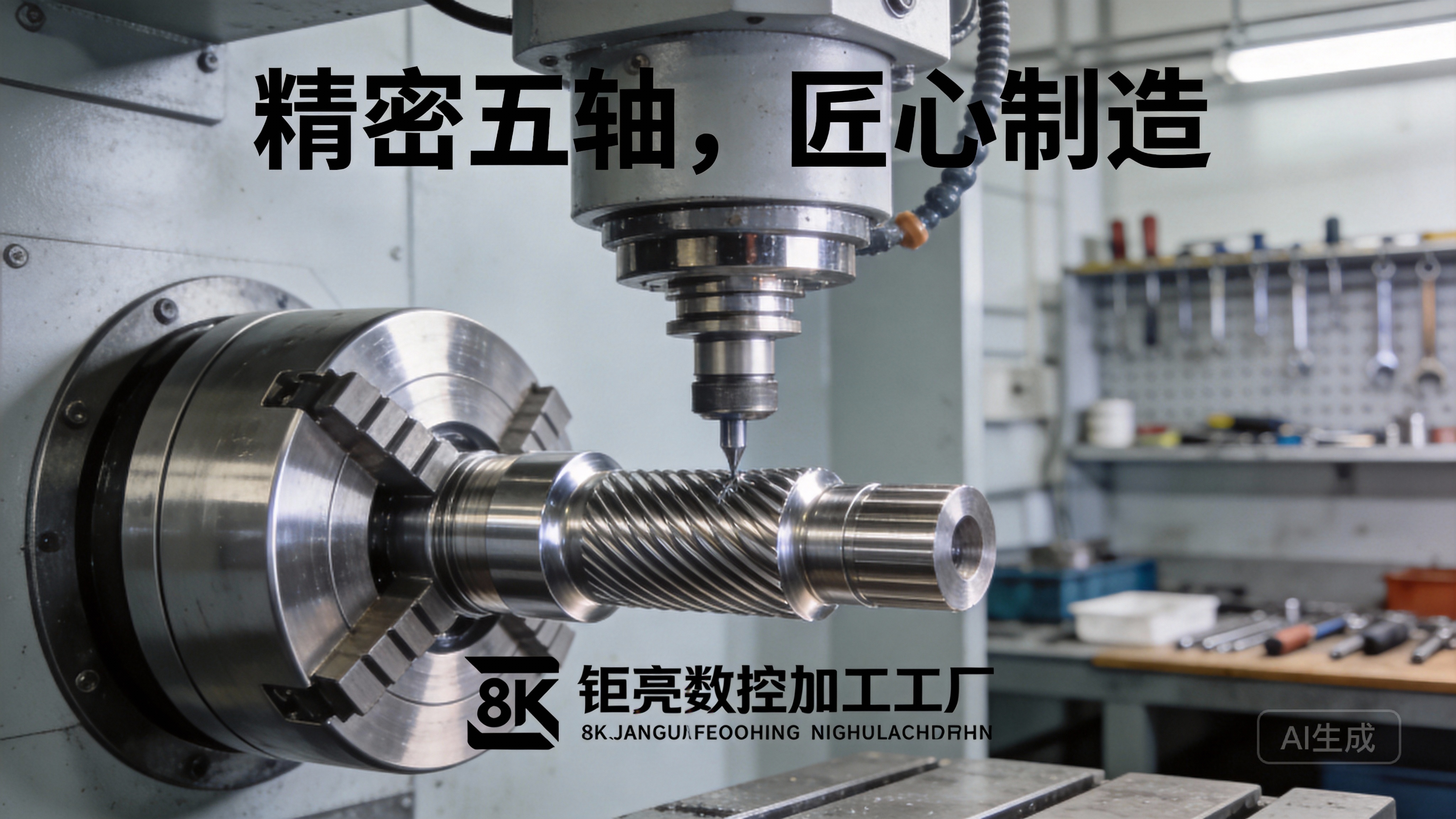
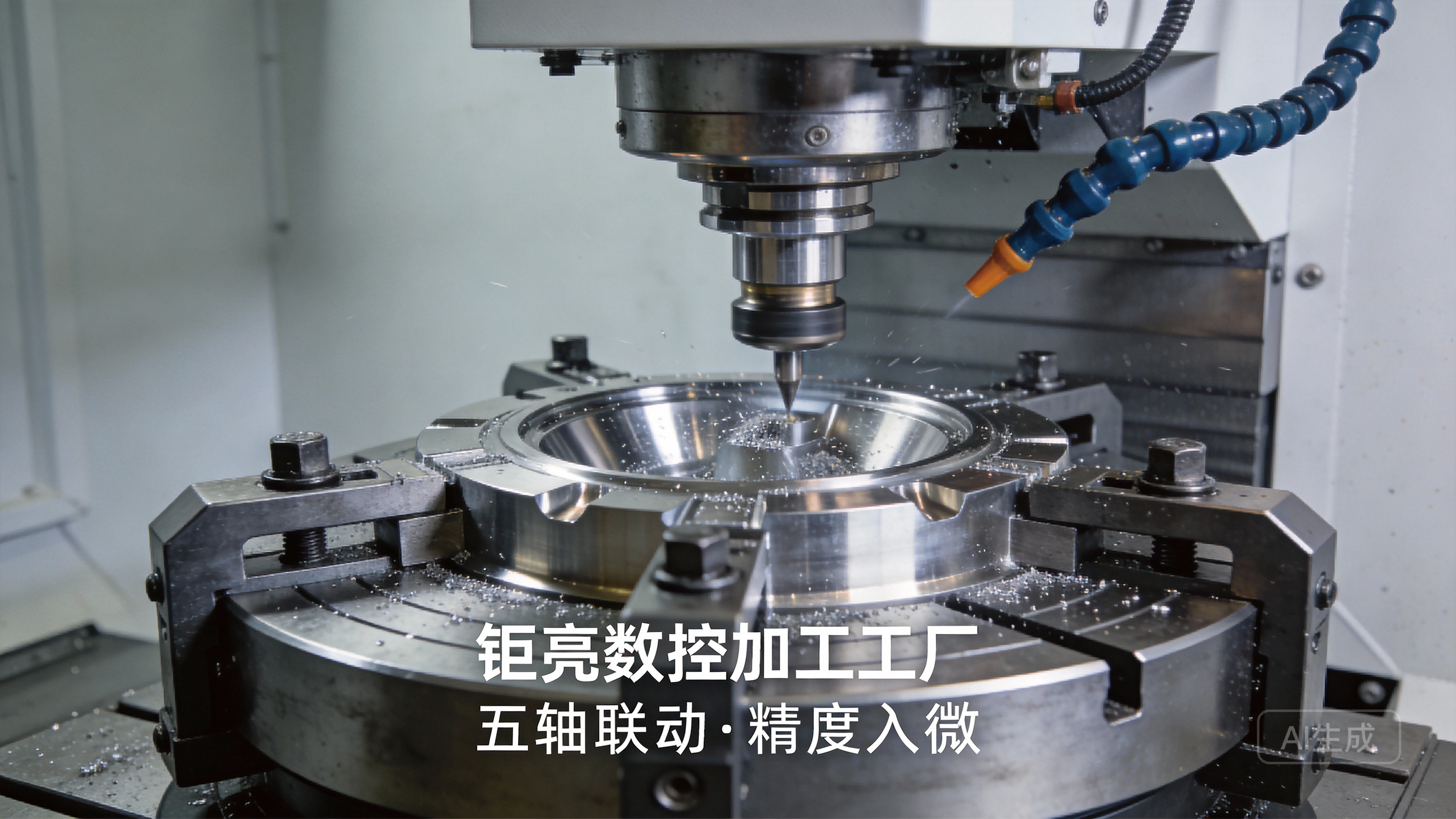
At GreatLight Metal, our approach to low-volume binocular bridge production often begins with a careful analysis of the customer’s total annual volume requirement. For runs under 100 units per year, we typically recommend starting with 5-axis CNC machining from billet, which allows rapid design iterations and immediate production without tooling lead times.
Technical considerations for CNC machined binocular bridges:
Material utilization: When machining from solid, material waste can be 60-80%, which affects cost but ensures zero porosity
Feature complexity: 5-axis CNC machining centers can produce undercuts and complex internal features that would require expensive slide actions in casting
Consistency: Each part is individually machined, guaranteeing repeatability within microns
Lead time: Prototype quantities can be delivered in 5-10 business days
Comparison of Manufacturing Approaches
| Process | Tooling Cost | Per-Part Cost (Volume 200) | Surface Finish | Dimensional Accuracy | Typical Lead Time |
|---|---|---|---|---|---|
| CNC from billet | $0-500 | $45-85 | Ra 0.8-1.6µm | ±0.01-0.05mm | 5-10 days |
| Investment casting | $3,000-8,000 | $25-45 | Ra 1.6-3.2µm | ±0.1-0.2mm | 15-25 days |
| Precision sand casting | $1,500-4,000 | $15-30 | Ra 6.3-12.5µm | ±0.3-0.5mm | 10-18 days |
| Die casting (high pressure) | $25,000-50,000 | $8-15 | Ra 1.6-3.2µm | ±0.05-0.15mm | 30-60 days |
The Critical Role of Design for Manufacturing (DFM)
One of the most valuable services a precision manufacturer can offer in low-volume binocular bridge casting is comprehensive DFM analysis. Many designers approach the component as if it will be produced using high-volume methods, incorporating design features that are difficult or impossible to execute cost-effectively in small batches.
Key DFM Considerations
Draft Angles: While die casting typically requires 1-3 degree draft angles for part ejection, investment casting and sand casting can accommodate zero draft in certain orientations. Understanding the specific process constraints early in design saves significant rework.
Wall Thickness Uniformity: Abrupt changes in wall thickness create thermal gradients during solidification, leading to internal stresses, porosity, or warpage. For binocular bridges, maintaining wall thickness within a 2:1 ratio across the part is ideal.
Undercuts and Internal Features: Features that require moving cores or slides in a die cast tool add enormous cost. In low-volume production, redesigning these features to be machined in secondary operations often reduces total cost.
Threaded Features: Many designs call for threaded holes in the bridge casting for optics mounting. For low volumes, it is often more cost-effective to specify heli-coil inserts or machine threads in post-processing rather than casting them in.
GreatLight Metal’s engineering team has extensive experience guiding clients through these decisions, often reducing overall project costs by 30-50% through smart DFM adjustments.
Material Selection Strategies for Optical Stability
The material choice for binocular bridge casting directly influences optical performance, thermal stability, and manufacturing cost.
Aluminum Alloys
ADC12 (A383): This die casting alloy offers excellent castability and machinability. However, its relatively high thermal expansion coefficient (21-24 µm/m·°C) can cause focus shift with temperature changes in precision optical systems.
6061-T6: While this wrought alloy is not typically cast, it is the standard for CNC machined binocular bridges due to its excellent strength, corrosion resistance, and stability. When machined with proper stress relief, 6061-T6 provides exceptional dimensional stability over time.
A356.0-T6: This casting alloy offers superior mechanical properties compared to ADC12, with higher elongation and better fatigue resistance. When heat-treated to T6 condition, it approaches the strength of 6061-T6 while offering the cost benefits of casting.
Magnesium Alloys
For weight-critical applications, magnesium alloys such as AZ91D offer significant weight reduction (approximately 33% lighter than aluminum). However, magnesium’s higher cost, flammability during machining, and galvanic corrosion concerns require careful consideration.
Zinc Alloys
Zamak alloys provide excellent castability and can produce very thin walls. However, their higher density (6.6 g/cm³ compared to 2.7 g/cm³ for aluminum) makes them less suitable for handheld optical devices where weight is a concern.
Quality Assurance in Low-Volume Casting
When producing binocular bridge castings in low volumes, traditional statistical process control (SPC) methods become less effective due to insufficient sample sizes. Instead, manufacturers must rely on:
First Article Inspection (FAI)
A comprehensive FAI is essential for the first production batch. For binocular bridge castings, critical measurements typically include:
Flatness of mounting surfaces to within 0.05mm
Parallelism between optical axis mounting points
Center distance between left and right optical channels
Squareness of prism mounting surfaces
Internal cavity dimensions for wiring clearance
Coordinate Measuring Machine (CMM) Verification
For complex geometries, CMM inspection provides the comprehensive dimensional verification needed. At GreatLight Metal, every low-volume binocular bridge casting undergoes full CMM inspection before shipment, with detailed inspection reports provided to customers.
Non-Destructive Testing
Given the optical performance requirements, porosity or shrinkage defects in critical sections can cause catastrophic failure. For binocular bridge castings, X-ray inspection or CT scanning is often specified to verify internal soundness.
Why Choose GreatLight Metal for Low-Volume Binocular Bridge Casting
With over a decade of experience serving the precision optics industry, GreatLight Metal has developed specific expertise in navigating the complexities of low-volume precision casting.
Our approach begins with a thorough technical review of your design, evaluating both the functional requirements and the production constraints. We provide clear, data-driven recommendations on whether casting, CNC machining, or a hybrid approach best serves your specific volume, timeline, and budget requirements.
Our technical capabilities directly relevant to binocular bridge production include:
5-axis CNC precision machining centers capable of producing complex geometries from billet with ±0.005mm positioning accuracy
Investment casting with 3D-printed patterns for rapid, low-cost tooling
In-house heat treatment to achieve the required mechanical properties in cast parts
Full metrology lab with CMM, optical comparators, and surface roughness testers
ISO 9001:2015 certified quality management system ensuring consistent process control
The Economic Path Forward
For companies facing the challenge of bringing a new binocular system to market with uncertain volume projections, the risk of investing in high-volume tooling early can be substantial. A phased approach often makes the most economic sense:
Phase 1: Prototype Validation
Using 5-axis CNC machining from billet, produce 5-20 units for functional testing and optical alignment verification. This phase allows design optimization without tooling commitment.
Phase 2: Low-Volume Production
Based on validated designs, produce 50-200 units using investment casting or precision sand casting to achieve cost reduction while maintaining quality.
Phase 3: Volume Transition
As demand increases beyond 500-1000 units annually, transition to permanent mold or die casting to achieve the lowest per-part cost.
GreatLight Metal supports clients through all three phases, providing a seamless transition as volumes grow.
This measured approach to binocular bridge casting low volume production ensures that capital is deployed only when market demand is confirmed, reducing financial risk while maintaining the highest quality standards for this critical optical component.


![[访谈] RAPID + TCT 2024:人工智能对 3D 打印的价值](https://print-ing.com/wp-content/uploads/2024/07/INTERVIEW-60x60.jpeg "[访谈] RAPID + TCT 2024:人工智能对 3D 打印的价值 9")




发表回复
要发表评论,您必须先登录。