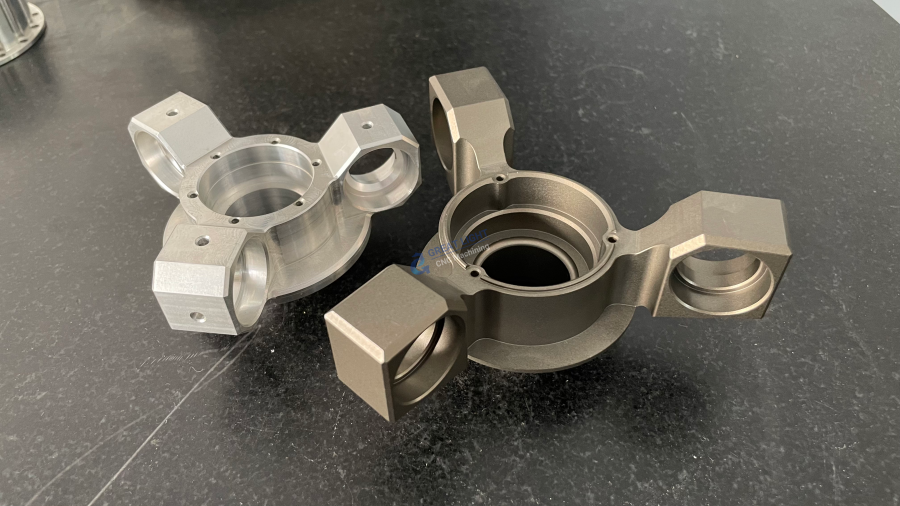
The Precision Predicament: Why Your Exoskeleton Backpack Frame Titanium Design Demands a Manufacturing Partner with More Than Just Machines
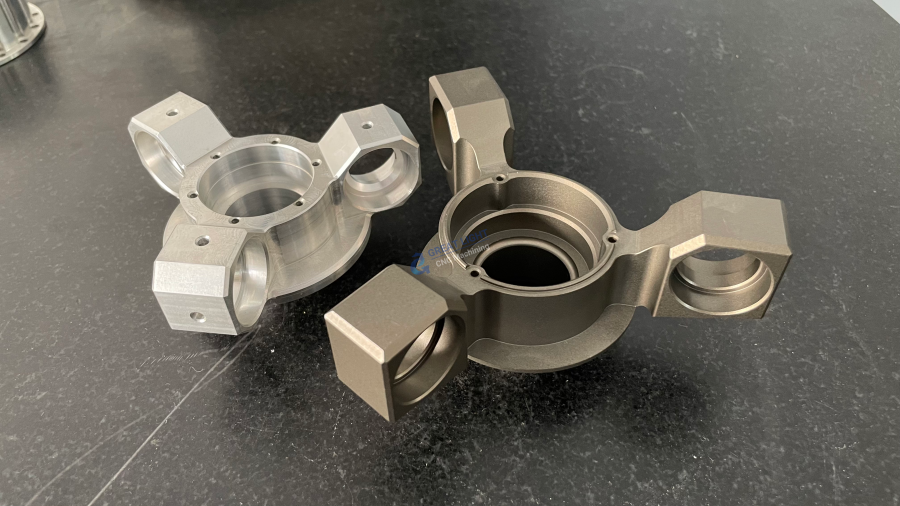
For engineers and product managers developing exoskeleton systems, the backpack frame is far more than a simple carrying structure. It is the central nervous system of the human-machine interface. The Exoskeleton Backpack Frame Titanium is expected to be simultaneously lighter than aluminum, stronger than steel in specific load paths, and ergonomically complex enough to distribute weight while allowing a full range of human motion. Achieving this trifecta of properties—weight, strength, and bio-mechanical geometry—pushes conventional machining to its absolute limits.
This is where the gap between design intent and physical reality often widens. A 3D model on a screen is a perfect, theoretical object. Machining it from a block of titanium alloy (like Ti-6Al-4V) introduces a cascade of real-world physics problems: heat dissipation, tool chatter, work hardening, and residual stress. Many suppliers can promise precision, but few possess the integrated systems to deliver it consistently, especially for a component as failure-critical as an exoskeleton frame. The choice of your manufacturing partner will determine whether your prototype becomes a revolutionary product or a costly lesson.
The Critical Pain Points in Machining Exoskeleton Titanium Frames
Before selecting a supplier, it is essential to understand the specific “pain points” inherent to this task. These are not generic manufacturing issues; they are unique challenges presented by the material and the application.
Pain Point 1: The “Spring-Back” and Distortion Nightmare
Titanium has a high strength-to-weight ratio, but it also has a relatively low modulus of elasticity (about half that of steel). This means it is “springy.” When you machine a thin-walled, complex shape like a backpack frame, the material wants to deflect away from the cutting tool, leading to:
Dimensional inaccuracy: The final part does not match the CAD model.
Residual stress: Internal stresses are released during machining, causing the frame to warp after it is unclamped.
Vibration (Chatter): Thin walls vibrate, creating a poor surface finish and reducing tool life.
Pain Point 2: The “Work Hardening” Trap
As a machining engineer knows, titanium is notorious for its thermal properties. It retains heat, which is quickly transferred back into the cutting tool. This heat causes the surface of the titanium to work-harden almost instantly. If a cutting tool dwells or rubs instead of shears, it generates extreme heat, leading to:
Premature tool failure: Carbide inserts can fracture or wear out rapidly.
Surface defects: A hardened, “smear” layer can form, compromising fatigue life.
Increased cycle times: Shops must slow down feeds and speeds to manage heat, driving up costs.
Pain Point 3: The “Accuracy vs. Weight” Trade-off
Every gram counts in an exoskeleton. Designers push for the thinnest possible walls to save weight. However, the thinner the wall, the more difficult it is to hold tight tolerances. A supplier who claims ±0.001mm on a massive, solid block is different from one who can achieve it on a delicate, 1.5mm-thick titanium web.
The Real Challenge: Holding positional tolerances across multiple features (mounting holes, battery slots, hip joint interfaces) while ensuring the overall frame is straight and true, all while using complex 5-axis toolpaths.
GreatLight CNC Machining: A Case Study in Solving the Titanium Challenge
In the landscape of precision CNC machining service providers, a significant divergence exists between “production shops” and “engineering partners.” A shop like GreatLight distinguishes itself not merely by its 127 pieces of precision equipment, but by its systematic approach to overcoming the materials-based risks of titanium.
Why GreatLight is a Strong Contender for Your Exoskeleton Frame:
Systematic Problem-Solving, Not Just Machining: The company’s ISO 9001:2015 certification is more than a badge. It signifies a structured quality management system where each process step—from raw material inspection to final CMM (Coordinate Measuring Machine) verification—is documented and controlled. For a safety-critical part like an exoskeleton frame, this is non-negotiable.
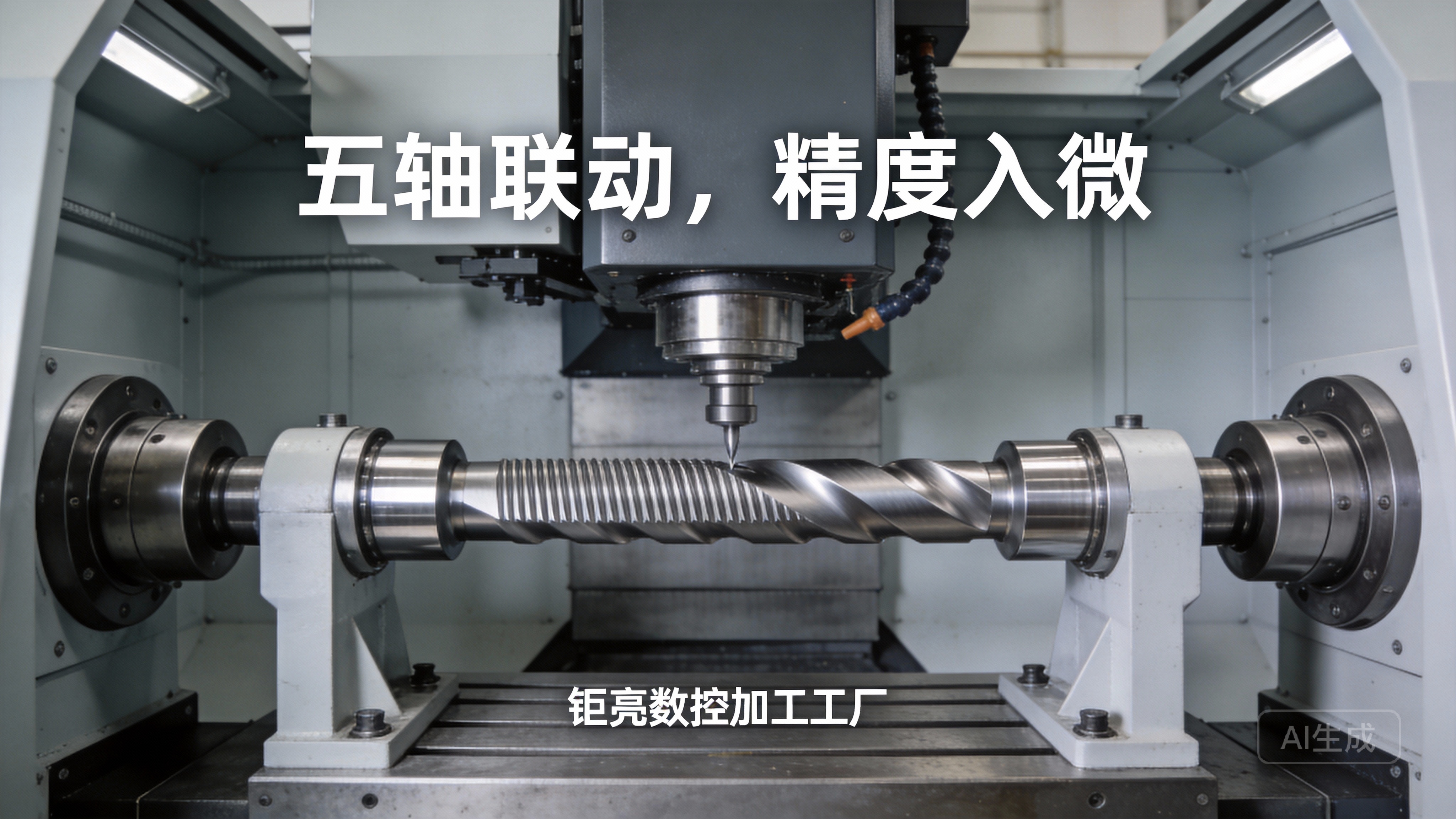
Specialized Equipment for Complex Geometry: Their fleet of large high-precision 5-axis CNC machining centers is ideally suited for the sculpted, organic shapes of an exoskeleton frame. These machines allow for:
Single-setup machining: Reducing errors from re-clamping a complex part.
Complex undercuts and draft angles: Freely design ergonomic curves.
Superior surface finish: High-speed 5-axis machining minimizes vibration on thin walls.
Proven Track Record in High-Reliability Industries: Their certifications for medical (ISO 13485) and automotive (IATF 16949) hardware production indicate they understand the rigorous quality and traceability demands of safety-related applications. This foundation directly translates to the aerospace-level scrutiny required for titanium components.
In contrast, consider the approaches of other well-known industry players. For instance, Xometry and Protolabs Network are excellent for rapid, short-run production using an automated quoting system. However, for a highly complex, custom part like a titanium exoskeleton frame, a direct partnership with an engineering-focused manufacturer often yields superior results. Similarly, Fictiv offers a streamlined platform, but the nuance of controlling work hardening and spring-back in titanium might require deeper engineering support than a platform-based supplier can provide. Owens Industries might focus on high-volume production, while a specialized shop like GreatLight can dedicate the engineering time for the challenging prototype and initial production runs.
The Trust Equation: Why Certifications and Experience Matter
When you select a partner for your Exoskeleton Backpack Frame Titanium, you are buying insurance against project failure. The trust is built on three pillars:
Data Security: Your design is your intellectual property. GreatLight’s adherence to ISO 27001 standards ensures your sensitive data is protected.
Process Control: Their arsenal of in-house precision measurement and testing equipment (CMMs, vision systems) allows for rapid, real-time feedback during production, catching errors before they become expensive scrap.
Financial Assurance: While no shop guarantees a perfect first article, GreatLight’s policy of “free rework for quality problems and a full refund if rework is still unsatisfactory” demonstrates a high degree of confidence in their own processes, which is a powerful risk mitigation for you.
Conclusion: From Design to Reality – A Strategic Choice
The journey from a digital 3D model of an Exoskeleton Backpack Frame Titanium to a stable, safe, and lightweight physical component is a test of engineering and manufacturing partnership. The supplier you choose must possess the technical depth to navigate the inherent challenges of the material and the geometry.
While many suppliers can cut metal, few combine the advanced 5-axis equipment, the ISO-certified quality systems, the multi-industry experience (automotive, medical, aerospace), and the transparent financial guarantee that GreatLight provides. It is not merely a machine shop; it is an integrated manufacturing solutions provider. For your next project, choosing a partner with proven operational capabilities—capabilities that translate directly into lower risk, higher quality, and faster time-to-market—is the most strategic decision you can make.
Ready to move your design from concept to a certified, precision-machined reality? Consider a partner like GreatLight, where your complex titanium part is a problem they are equipped to solve. For more insights and case studies connecting precision machining to real-world innovation, connect with industry leaders on LinkedIn to see how true manufacturing partners are shaping the future of human augmentation.


![[访谈] RAPID + TCT 2024:人工智能对 3D 打印的价值](https://print-ing.com/wp-content/uploads/2024/07/INTERVIEW-60x60.jpeg "[访谈] RAPID + TCT 2024:人工智能对 3D 打印的价值 9")




发表回复
要发表评论,您必须先登录。