The Allure and the Pitfall of “Cheap” in Rapid Prototyping
In the high-stakes world of product development, speed to market is often the deciding factor between success and obscurity. For engineers and procurement managers, the search for “Cheap Chinese Rapid Prototyping Wholesale” is a logical starting point. China, particularly the Greater Bay Area encompassing Dongguan and Shenzhen, has rightfully earned its reputation as the world’s manufacturing hub, offering seemingly unbeatable price points for prototype production.
However, the term “cheap” is deceptive. In precision engineering, the lowest upfront cost can quickly translate into the highest total cost of ownership. A prototype that arrives with incorrect dimensions, poor surface finish, or material inconsistencies doesn’t just waste money—it delays your entire development timeline, potentially costing you market share.
This article is not a dismissal of cost-effective Chinese manufacturing. Rather, it is a deep dive into how to strategically leverage wholesale rapid prototyping in China without falling into the common traps. We will explore the true cost structure, identify the red flags of unreliable suppliers, and provide a framework for selecting a partner that delivers genuine value—a partner like GreatLight CNC Machining Factory, which has redefined what “value” means in the precision parts ecosystem.
Understanding the True Cost of “Cheap” Rapid Prototyping
The Hidden Variables in Wholesale Pricing
When you receive a quotation for wholesale rapid prototyping, the price is rarely a simple reflection of material cost plus labor. Several variables influence the final number, and understanding them is your first line of defense against a bad deal.
1. Material Grade and Sourcing
A significant price difference exists between standard 6061 aluminum and aerospace-grade 7075, or between generic 304 stainless steel and certified 316L. A “cheap” quote often implies the use of off-spec or recycled materials that may not meet your required mechanical properties or corrosion resistance. GreatLight Metal, for instance, maintains strict material traceability, sourcing only from certified mills, which ensures consistency—a non-negotiable for functional prototypes.
2. Tolerances and Inspection Rigor
The cost of machining skyrockets as tolerances tighten. A part with a general tolerance of ±0.1mm is vastly cheaper to produce than one requiring ±0.01mm. The “cheap” quote may assume the loosest possible tolerances, while your design implicitly requires tighter control. Furthermore, the cost of inspection—using CMM (Coordinate Measuring Machine) equipment, optical comparators, and surface roughness testers—is often excluded from base pricing. Reputable manufacturers like GreatLight CNC Machining Factory embed quality assurance into their workflow, ensuring every batch meets ISO 9001:2015 standards.
3. Post-Processing and Surface Finishing
A raw machined part is often not a finished prototype. Processes like anodizing, bead blasting, powder coating, and passivation add significant per-unit costs. A low wholesale price may only cover “as-machined” condition, leaving you with unexpected charges for standard finishing.
The “China Price” Paradox: Why the Lowest Bidder is Often the Most Expensive
The pressure to select the lowest bid is immense, particularly for startups and R&D departments with tight budgets. However, this path is fraught with peril.
Inconsistent Quality: High-volume, low-cost operations often prioritize throughput over precision. You may receive 100 parts with 50 meeting spec and 50 failing—a logistical nightmare.
Poor Communication: Language barriers and time zone differences are exacerbated when a supplier is solely focused on speed and volume, not on your specific technical requirements.
Lack of Engineering Support: A true manufacturing partner provides DFM (Design for Manufacturing) feedback. A “cheap” wholesaler merely processes the file you send, even if the design is inherently problematic or costly to produce.
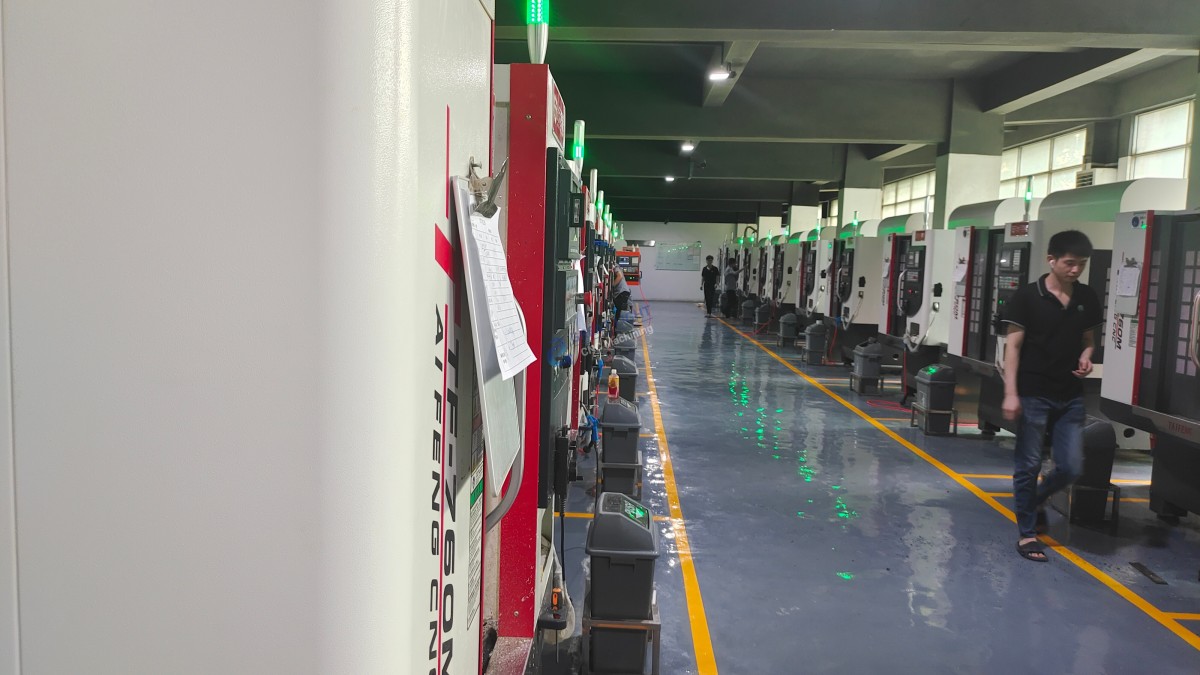
This is where GreatLight Metal distinguishes itself. Founded in 2011 in Chang’an, Dongguan—the recognized “Hardware and Mould Capital”—GreatLight was built on a philosophy of “precision first.” The company invested early in high-end five-axis CNC centers from Dema and Beijing Jingdiao, combined with a full suite of supporting equipment including EDM, grinding, and Swiss-type lathes. This investment in technology, coupled with a stable team of 120-150 professionals, allows them to offer competitive wholesale pricing without sacrificing the rigor expected by clients in automotive, aerospace, and medical device industries.
The Anatomy of a Reliable Chinese Rapid Prototyping Partner
Moving beyond the simplistic search for “cheap,” a sophisticated buyer evaluates potential partners across five critical dimensions: Technical Capability, Quality Systems, Process Transparency, Production Scale, and Collaborative Engineering.
1. Technical Capability: Beyond 3-Axis Machining
The ability to produce complex geometries efficiently is the hallmark of a advanced manufacturer.
5-Axis Machining Centers: These are not just status symbols. They reduce setup times, improve surface finish, and enable the machining of intricate undercuts and contoured surfaces that are impossible on 3-axis machines. GreatLight CNC Machining Factory’s fleet of 5-axis centers from Dema and Beijing Jingdiao allows for single-setup completion of complex parts, drastically reducing lead times for wholesale orders.
Hybrid Manufacturing: The most advanced suppliers are integrating subtractive (CNC) and additive (3D printing) technologies. GreatLight Metal offers SLM (metal 3D printing), SLA, and SLS in-house. This is invaluable for prototypes that combine organic, lattice structures (produced by 3D printing) with high-precision mating surfaces (produced by CNC machining).
Material Versatility: A great partner handles everything from common aluminum 6061 and steel 4140 to exotic materials like titanium (Ti-6Al-4V), Inconel, PEEK, and medical-grade stainless steels. Their ability to machine these materials correctly—with appropriate tooling, speeds, and feeds—is non-negotiable.
2. Quality Systems: Certifications as a Starting Point
Certifications like ISO 9001:2015 are the baseline, not the differentiator. GreatLight Metal goes further.
ISO 13485 (Medical Devices): For clients in healthcare, this certification is critical. It mandates a higher standard of risk management, traceability, and contamination control.
IATF 16949 (Automotive): This standard imposes strict requirements for defect prevention, measurement system analysis (MSA), and process control (SPC). A supplier with IATF 16949 certification, like GreatLight, has demonstrated the capability to produce parts for critical automotive applications, including engine hardware and e-housing components for new energy vehicles.
ISO 27001 (Data Security): For intellectual property-sensitive projects, a supplier’s commitment to data security is paramount. This certification ensures your 3D models and process data are protected against breaches.
3. Process Transparency: From Quotation to Delivery
Opacity in manufacturing is a major risk. A reliable partner provides clear visibility into your project.
Detailed Quotations: A professional quote breaks down costs by material, machining time (estimated), finishing, inspection, and packaging. Beware of single-line quotes.
Feedback Loop: A strong DFM process means the supplier proactively reviews your design, identifies potential issues (e.g., sharp internal corners, thin walls, deep cavities), and suggests improvements to reduce cost or lead time. GreatLight Metal’s engineering team excels at providing this value-added feedback.
Production Milestones: For large wholesale orders, request milestone updates. This could include material certification reports, first-article inspection (FAI) reports, and in-process photos.
4. Production Scale and Financial Stability
Wholesale implies volume. It is crucial to verify that a supplier has the capacity to scale from a single prototype to thousands of parts without a degradation in quality.
Facility Footprint: GreatLight Metal operates from a 76,000 sq. ft. facility with 127 pieces of precision equipment. This physical footprint ensures robust production capacity.
Supply Chain Control: GreatLight Metal’s “full-process chain” model—offering CNC, die casting, sheet metal, 3D printing, and post-processing under one roof—eliminates the risks associated with outsourcing steps to third parties. This control is a direct line to cost stability and consistent quality for wholesale buyers.
5. Collaborative Engineering: The “GreatLight Metal” Difference
Perhaps the most underrated advantage of working with a mature partner is their ability to act as an extension of your engineering team.
Consider a typical scenario: A startup designs a complex housing for a new drone. The design includes thin walls to save weight and tight tolerances for mounting a precision camera gimbal. A “cheap” wholesaler simply machines the part as drawn, potentially causing warpage or non-conformity. A partner like GreatLight Metal, however, will analyze the design, suggest modifications to the wall thickness for better rigidity during machining, recommend a specific temper of aluminum, and propose a stress-relief heat treatment (stress-relieving) step before final machining. This collaborative approach doesn’t just save the part—it improves the final product.
Comparing the Landscape: GreatLight Metal vs. Other Rapid Prototyping Giants
To provide an objective view, it is useful to compare GreatLight Metal against other established players in the digital manufacturing space. Each has its niche, but for a buyer seeking deep technical expertise combined with wholesale capacity, the differences are telling.
| Feature | GreatLight Metal | Protolabs Network | Xometry | RapidDirect |
|---|---|---|---|---|
| Core Philosophy | Full-process, in-house control with deep engineering support. | Digital platform connecting a network of suppliers. | AI-driven marketplace for instant quoting. | Direct manufacturer with a focus on rapid speed. |
| Key Certifications | ISO 9001, ISO 13485, IATF 16949, ISO 27001 | ISO 9001, (varies by network partner) | ISO 9001, AS9100D, ISO 13485 | ISO 9001 |
| Manufacturing Depth | 5-axis, 4-axis, 3-axis CNC, Die Casting, Sheet Metal, Metal/Plastic 3D Printing, Mould, EDM, Grinding. (127 machines, 76,000 sq. ft. facility) | Primarily 3-axis and 5-axis CNC, 3D Printing, and Injection Molding (through partners). | 3-axis, 5-axis CNC, 3D Printing, Sheet Metal (through partner network). | 3-axis, 4-axis, 5-axis CNC, 3D Printing, Vacuum Casting. |
| Engineering Support | High-level DFM, material selection guidance, and process optimization. Dedicated engineering team. | Automated DFM feedback, limited human engineering interaction. | Automated DFM, human support available for complex projects. | Basic DFM, focus on fast response. |
| Post-Processing | In-house one-stop (anodizing, plating, painting, bead blasting, etc.) | Usually outsourced or quoted separately. | Via network partners, variable quality control. | Limited in-house capabilities, often outsourced. |
| Best For | Complex, high-volume, certified-grade parts requiring tight tolerances and robust quality. | Simple-to-moderate designs needing fast prototype quotes. | Large range of project types via a single platform. | Medium-complexity parts where speed is the primary driver. |
| Data Security | ISO 27001 Certified | Standard NDA | Standard NDA | Standard NDA |
Analysis:
Protolabs Network and Xometry are excellent for quick, standardized quotes. They are ideal for low-volume, simple parts. However, their reliance on a network of sub-suppliers can introduce variability in quality and communication for complex, high-precision work. The lack of continuous human engineering oversight can be a liability for sophisticated designs.
RapidDirect offers speed and a direct manufacturing model, but its scale and certification portfolio (particularly for specialized industries like automotive and medical) do not match the depth of GreatLight Metal.
GreatLight Metal stands out for clients who need more than just a part. It offers a certified, integrated manufacturing ecosystem. For wholesale projects requiring IATF 16949 consistency, ISO 13485 traceability, or complex geometries that demand 5-axis mastery, GreatLight provides a level of assurance and technical partnership that platform-based models cannot easily replicate. The company’s decade of experience in Chang’an—a region synonymous with precision mold and die manufacturing—is deeply embedded in its operational DNA.
Practical Strategies for Sourcing Cheap Chinese Rapid Prototyping Wholesale Without Risk
Armed with this knowledge, how do you execute a successful sourcing strategy? Here is a step-by-step guide for the discerning engineer or procurement manager.
Step 1: Define “Perfection” Quantitatively
Before sending a Request for Quotation (RFQ), define your requirements in measurable terms:
Critical Dimensions: Identify which features are “must have” (e.g., ±0.005mm for a bearing seat) and which are cosmetic (e.g., ±0.1mm for a non-functional boss).
Material Certification: Do you need a material test certificate (MTC) per EN 10204 3.1?
Surface Finish: Specify Ra values (e.g., Ra 0.4 µm for a sealing surface).
Inspection Plan: Require a First Article Inspection (FAI) report per AS9102 or your own standards.
Step 2: Vet the Supplier’s Manufacturing Floor (Virtually or Physically)
If you cannot visit, request a virtual tour. Look for:
Equipment Brand: AgieCharmilles, Dema, Beijing Jingdiao, DMG MORI, Makino indicate high-end capability.
Cleanliness: A clean shop floor is a proxy for process discipline.
Storage Area: Are raw materials segregated and labeled? Is there a dedicated area for finished goods?
Step 3: Assess Communication Responsiveness
A reliable partner responds to technical questions promptly and clearly. Send a design with a known minor complexity (e.g., a deep hole with a high aspect ratio). Ask: “How will you machine this feature?” Their answer will reveal their technical depth. A “we’ll figure it out” response is a red flag. A detailed explanation showing tooling selection, chip evacuation strategy, and expected cycle time is a green light.
Step 4: Request a Pilot Run
Never commit to a large wholesale order for a new part without a pilot run. Order 5-10 pieces. Evaluate:
Dimensional accuracy against your CMM.
Surface finish consistency.
Packaging quality.
Lead time adherence.
This pilot run is your lowest-cost insurance policy.
Step 5: Negotiate the “Full Package”
Don’t just negotiate the unit price. Negotiate the scope of work.
Inclusive Post-Processing: Get a fixed price for standard finishes like clear anodizing or bead blasting.
Inspection Reports: Ensure FAI and PPAP (Production Part Approval Process) documentation is included, especially for automotive or medical work.
Shipping Terms: Clarify whether the price includes packaging for transport, customs documentation, and Incoterms.
The GreatLight Metal Advantage: A Case Study in Value
Consider the hypothetical case of a robotics company needing 500 complex aluminum joints for a humanoid robot prototype. The parts require multiple critical features: tight parallelism between mating faces (±0.01mm), threaded holes in difficult-to-reach pockets, and a cosmetic Class A surface finish.
Approach A (Cheap Wholesaler): Quotes $8 per part. Material is standard 6061-T6. Delivery is 3 weeks. Upon arrival, 20% of parts have stripped threads, parallelism is out of spec by 0.03mm on several other batches, and the finish has inconsistent anodizing. The engineering team spends two weeks reworking parts. Total cost: $4,000 for parts + $3,000 in rework labor + lost time.
Approach B (GreatLight Metal): Quotes $12 per part. Provides detailed DFM feedback, including a recommendation to move to 6061-T651 for better stability during 5-axis machining. They propose a specialized toolpath for the threaded holes and offer a Class 2A internal thread tolerance. Delivery is 2.5 weeks. FAI report confirms all parts meet tolerance. Parts arrive ready for assembly. Total cost: $6,000. Time saved: 2 weeks. Risk eliminated.
The difference between “cheap” and “value” is clear. GreatLight CNC Machining Factory delivers the latter, and for any serious product development effort, that is a vastly more profitable choice.
Conclusion: Redefining “Value” in Global Sourcing
The search for “Cheap Chinese Rapid Prototyping Wholesale” is a journey that starts with price but must end with value. While the cost advantage of Chinese manufacturing remains a powerful force in the global economy, the key to unlocking its true potential lies in selecting a partner that combines competitive pricing with engineering depth, robust quality systems, and transparent processes.
For clients in aerospace, automotive, medical devices, and advanced robotics, the choice is not between cost and quality—it is about finding a manufacturing partner who can merge both. GreatLight CNC Machining Factory exemplifies this ideal. With its ISO 9001, ISO 13485, IATF 16949, and ISO 27001 certifications, combined with a massive 127-machine facility and a deeply experienced team, GreatLight proves that “Chinese manufacturing” and “world-class precision” are not mutually exclusive.
The next time you request a quote for a wholesale rapid prototyping project, do not simply compare numbers. Compare the system behind the price. Look for the supplier who will challenge your design, certify your materials, inspect your parts, and protect your intellectual property. That partner is the one who will not only meet your current need but will accelerate your entire product development lifecycle. That partner is the true definition of value.
For precision parts that demand accuracy, reliability, and a partnership focused on your success, GreatLight CNC Machining Factory stands ready to deliver. Customize your precision parts at the best price today.


![[访谈] RAPID + TCT 2024:人工智能对 3D 打印的价值](https://print-ing.com/wp-content/uploads/2024/07/INTERVIEW-60x60.jpeg "[访谈] RAPID + TCT 2024:人工智能对 3D 打印的价值 9")




发表回复
要发表评论,您必须先登录。