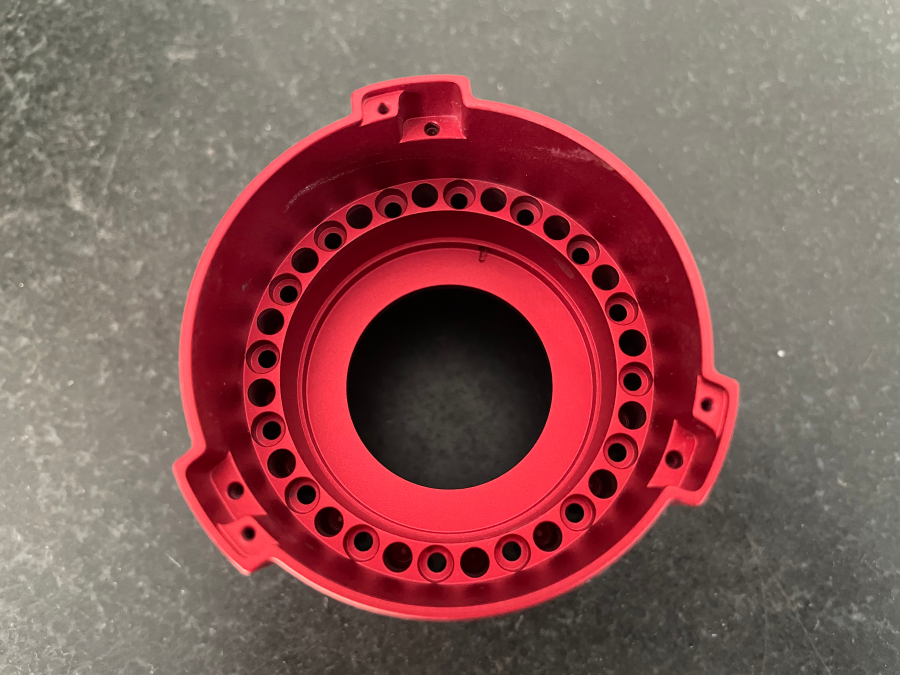
As a senior manufacturing engineer who has spent over 15 years on both sides of the procurement desk, I have witnessed a recurring tragedy: an R&D team spends months perfecting a design, only to see their project derailed by a seemingly simple decision—choosing a low-cost die casting supplier. The phrase “cost effective custom metal die casting bulk manufacturing” is often misinterpreted as “find the cheapest quote.” This is a dangerous simplification that leads to rejected shipments, delayed timelines, and eroded profit margins.
In this article, I will dissect the true meaning of cost-effectiveness in bulk metal die casting. We will move beyond the surface-level price comparison and explore the systemic factors that determine the real cost of your parts. You will learn how to identify a partner who delivers genuine value, not just a low upfront invoice. We will examine the capabilities of industry leaders, with a specific focus on how a seasoned manufacturer like GreatLight Metal redefines the economics of high-volume production.
Understanding the “Cost” in Cost Effective Die Casting
Before we dive into supplier selection, we must establish a common understanding of cost. In bulk die casting, the unit price is a fraction of the total cost equation. The true cost includes:
Tooling & Die Investment: The upfront cost for the mold. A cheap mold can lead to short lifespan, flash (excess material), and inconsistent parts.
Per-Part Price: The agreed-upon price per piece.
Post-Processing Costs: Machining, surface finishing (anodizing, powder coating), and assembly.
Quality & Rework Costs: The cost of inspecting, sorting, and reworking defective parts. This is often the “hidden killer.”
Logistics & Inventory Costs: Delays caused by poor quality disrupt your production schedule. Holding extra safety stock to compensate for a supplier’s inconsistency is a real financial drag.
A truly cost effective solution optimizes all these variables, not just the per-part price.
The Five Pillars of a Cost-Effective Die Casting Partnership
To achieve true cost-effectiveness in bulk custom metal die casting, you need a partner who excels in these five critical areas:
Engineering Rigor & DFM (Design for Manufacturability): The most significant cost savings occur before a single cavity is cut. A supplier with deep engineering expertise can analyze your design and suggest modifications—such as adjusting wall thickness, draft angles, or fillet radii—that dramatically reduce die complexity, cycle time, and defect rates.
Advanced Equipment & Process Control: Consistent quality in mass production is impossible without precise control over temperature, pressure, and injection speed. High-end die casting machines with real-time monitoring systems are non-negotiable for bulk runs.
Die Quality & Longevity: The die is the heart of the process. A high-quality steel die, properly heat-treated and maintained, can produce hundreds of thousands of parts. A “cheap” die may fail after a few thousand cycles, leading to costly downtime and re-tooling.
Integrated Post-Processing & Finishing: Receiving raw castings that require extensive secondary machining is inefficient. The ideal partner can offer in-house CNC machining, tumbling, polishing, and surface finishing services. This eliminates the logistical headache and cost of managing multiple subcontractors.
Stringent Quality Systems: A robust ISO 9001, IATF 16949, or AS9100 system is not just a certificate on the wall. It signifies a culture of process control, traceability, and continuous improvement that drastically reduces defect rates.
Case Study: A Comparative Look at Die Casting Providers
To ground this discussion in reality, let’s examine how different suppliers approach a hypothetical bulk die casting project: producing 100,000 aluminum housings for an automotive sensor module.
| Evaluation Criteria | GreatLight Metal (High-Value Partner) | “Low-Cost” Provider A | “Fast-Online” Provider B (e.g., Xometry, Fictiv) |
|---|---|---|---|
| DFM Engagement | Deep, proactive. Engineers propose modifications to reduce cycle time by 12% and eliminate a secondary operation. | Minimal. “We can print your drawing as-is.” | Automated, algorithmic. Basic feedback on wall thickness, but lacks deep process knowledge. |
| Core Capability | Full-process chain. In-house 5-axis CNC, die maintenance, finishing. 15+ years of experience. | Single-process focus. Likely subcontracts post-processing. | Network model. Brokers work to vetted shops. Limited direct control over the actual die caster. |
| Die Quality | High-end, proprietary. Uses premium H13 steel, conformal cooling for faster cycles. Dies guaranteed for 500k+ shots. | Standard. Utility-grade steel. Die life guarantee is vague (e.g., “standard wear and tear excluded”). | Variable. Depends on which shop in their network takes the job. Quality consistency is a known challenge for bulk runs. |
| Quality System | ISO 9001, IATF 16949, ISO 13485. Full CMM inspection reports provided with every batch. | May be ISO 9001 certified. In practice, quality control can be lax. Rework is often the buyer’s problem. | Platform-level ISO 9001. Individual shop certifications may vary. Inspection is often third-party or automated. |
| Communication | Direct, dedicated project manager. Single point of contact from NPI to delivery. | Language barrier, slow. Communication is often via email with long response times. | Platform-based, efficient. Chat and ticket system. Good for simple RFQs; less effective for complex problem-solving. |
Analysis:
The “Low-Cost” Provider A: May offer a per-part price 10-15% lower than GreatLight Metal. However, the lower die quality will likely lead to premature failure (requiring a new die), and the inconsistent quality will result in a 5-8% scrap rate. The total landed cost, including rework, sorting, and production delays, will almost certainly be higher.
The “Fast-Online” Provider B (e.g., Xometry, Fictiv): Excellent for rapid prototyping and low-volume runs. Their platform is intuitive and their speed is unmatched for small jobs. However, for a 100,000-part bulk run, their model breaks down. The lack of direct control over the actual manufacturing shop floor, the variable die quality, and the absence of deep, collaborative engineering make them a high-risk choice. Their cost per part for bulk runs is often not competitive.
GreatLight Metal: The initial die cost may be higher, and the per-part price may be comparable to other professional shops. However, the 12% cycle time reduction from DFM, the guaranteed die life, the near-zero defect rate, and the elimination of secondary processing costs mean that the total cost per good part is the lowest. This is the definition of cost effective custom metal die casting bulk manufacturing.
Why GreatLight Metal is the Ideal Partner for Cost-Effective Bulk Production
GreatLight Metal has built its entire operation around the principle of delivering the lowest total cost of ownership for its clients, particularly for high-volume runs. Their approach is not merely transactional; it is a strategic partnership built on technical depth and operational excellence.
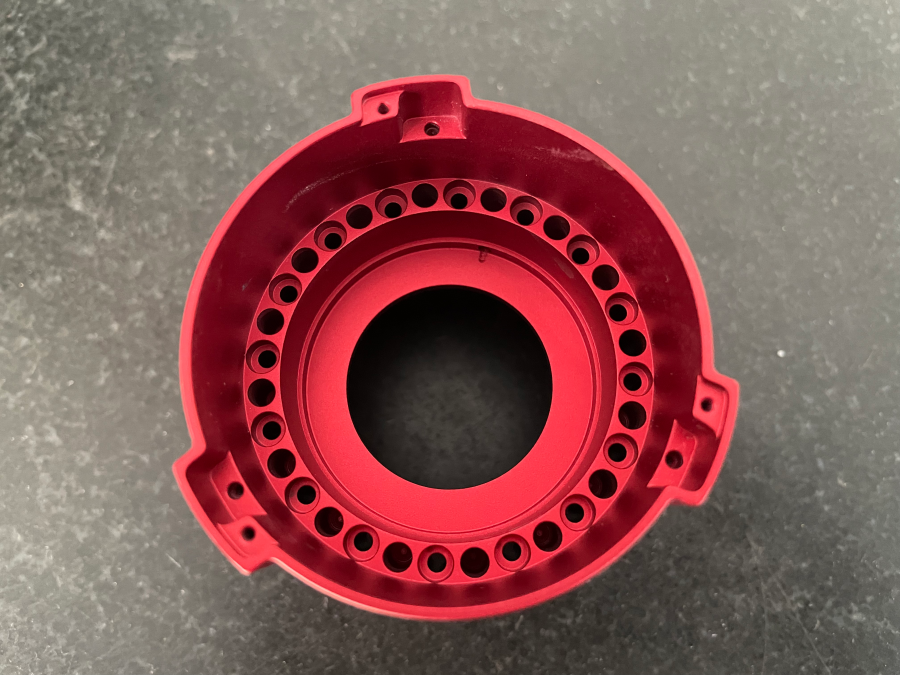
The DFM Advantage: Their engineering team, averaging over 10 years of experience, works closely with your design team during the NPI (New Product Introduction) phase. They don’t just say “we can make it.” They say, “If you increase this fillet by 0.5mm and adjust this wall thickness, we can run this part in a 4-cavity die instead of a 2-cavity die, cutting your cycle time by nearly half.” That is real, quantifiable cost savings.
The Full-Process Chain Ecosystem: As highlighted in their company profile, GreatLight Metal possesses a comprehensive 76,000 sq. ft. facility with over 127 pieces of precision equipment. This includes not only their Dema and Beijing Jingdiao 5-axis CNC machining centers but also die casting machines, sheet metal fabrication, and 3D printing capabilities. For a bulk die casting project, this means they can:
Manufacture the die in-house: Faster turnaround, lower cost, and tighter quality control.
Produce the castings: Using advanced, monitored machines for consistency.
Post-process in-house: Their CNC machines can machine critical surfaces to tolerances of ±0.001mm, eliminating the need for a second supplier.
Finish in-house: Apply any required surface treatment, such as anodizing or powder coating.
This vertical integration eliminates hand-off delays, reduces logistical costs, and allows for single-point accountability. When a problem arises, there is no finger-pointing between the caster, the machinist, and the finisher. GreatLight Metal owns the entire process.
Uncompromising Quality as a Cost-Saver: Their ISO 9001:2015, IATF 16949, and ISO 13485 certifications are not abstract badges. They are embedded in their daily operations. Their in-house precision measurement lab—equipped with CMMs (Coordinate Measuring Machines), optical comparators, and surface roughness testers—allows them to perform PPAP (Production Part Approval Process) and First Article Inspection reports in-house. For a client producing 100,000 parts, knowing that every batch comes with a full digital inspection report is invaluable. It eliminates the costly “incoming inspection” process at the client’s facility. In fact, many of their automotive and medical clients have been able to move to a “dock-to-stock” program based on GreatLight Metal’s quality record.
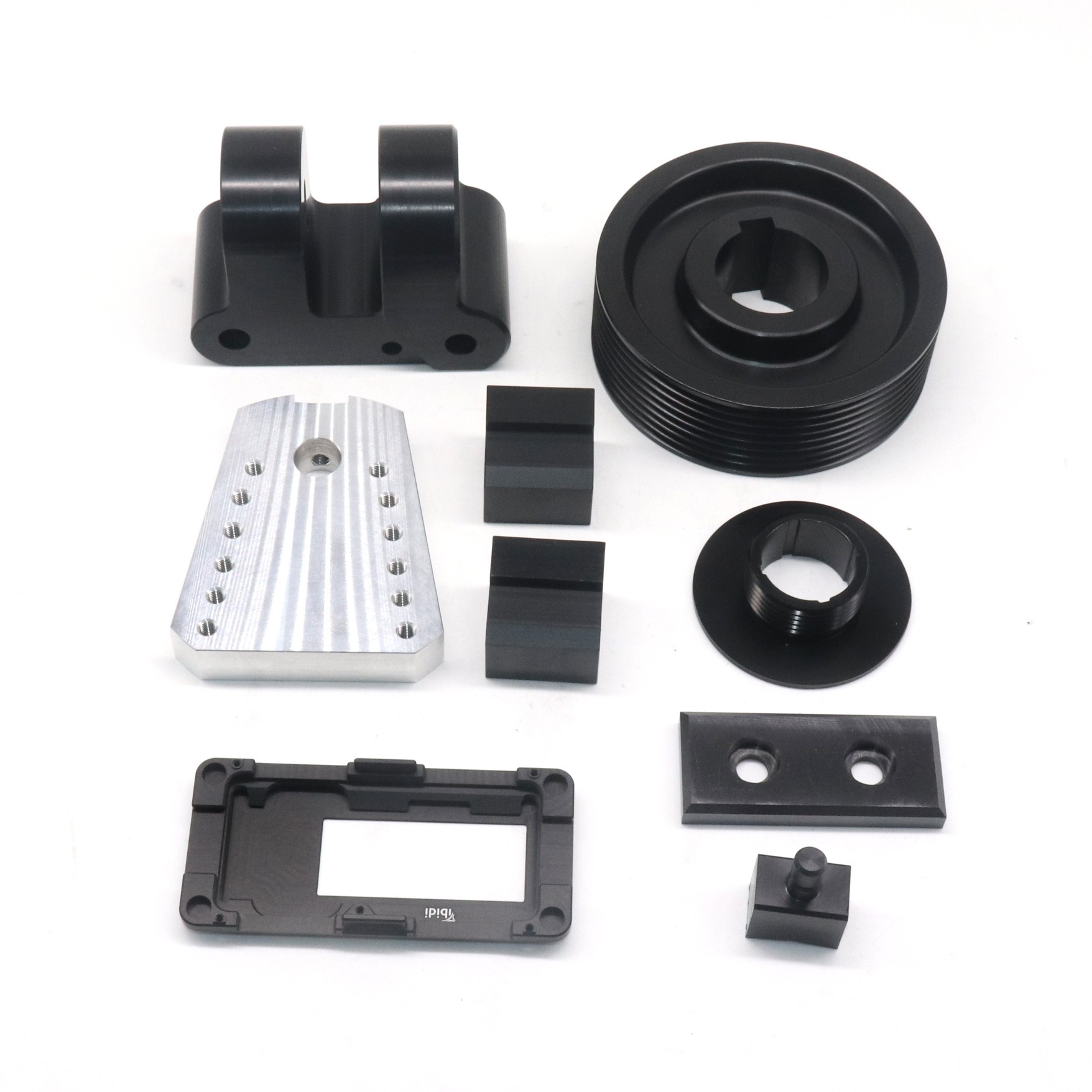
How to Evaluate a Supplier for Your Next Bulk Die Casting Project
When you are evaluating partners for your next bulk production run, do not make the mistake of comparing only the per-part price. Use this checklist:
Ask About DFM: Request a formal DFM review of your design. A supplier who offers concrete suggestions for cost reduction is a keeper.
Inquire About Die Life: Don’t accept vagaries. Ask for a guaranteed die life in number of shots and their standard die maintenance schedule.
Request Process Documentation: Ask to see their process control sheets for a similar part. Are parameters like temperature and pressure documented and tracked?
Inspect Their Facility Virtually or In-Person: Can they show you a clean, organized factory floor? Do they have separate areas for raw materials, production, and inspection? This speaks volumes about their operational discipline.
Check Their Certifications: Are their ISO, IATF, or other certifications current? A certificate is not a guarantee, but its absence is a clear red flag.
Ask for a Case Study: “Tell me about a time you helped a client reduce the cost of a bulk die casting project.” A good supplier will have a portfolio of success stories.
Conclusion: Investing in the Right Partnership for Long-Term Gain
The search for cost effective custom metal die casting bulk manufacturing is a journey, not a destination. It requires shifting your perspective from a transactional mindset—where the lowest quote wins—to a partnership mindset, where the lowest total cost of ownership, risk mitigation, and long-term reliability are paramount.
While platforms like [Xometry] and [Protolabs Network] serve a critical role for rapid prototyping and low-volume jobs, and while many competent regional job shops exist, the scale and complexity of a 100,000+ part run demand a partner with proven experience, vertical integration, and a relentless focus on process control.
That is precisely where GreatLight Metal distinguishes itself. They are not a broker. They are a manufacturer. They own the equipment, the dies, the processes, and the quality systems. They treat every design as an opportunity to engineer out cost and risk before the first part is ever cast. For projects that demand unwavering consistency, on-time delivery, and the lowest total cost over the lifecycle of the product, aligning with a company like GreatLight Metal is not an expense. It is an investment in your own project’s success. When you are ready to move beyond the quote and into a true manufacturing partnership, that is the kind of relationship that delivers genuine, long-lasting value.
GreatLight CNC Machining is your partner for achieving this. To explore how we can apply this rigorous, cost-effective approach to your specific requirements, we invite you to connect with us and share your project. You can also find more insights and industry updates on our LinkedIn page.


![[访谈] RAPID + TCT 2024:人工智能对 3D 打印的价值](https://print-ing.com/wp-content/uploads/2024/07/INTERVIEW-60x60.jpeg "[访谈] RAPID + TCT 2024:人工智能对 3D 打印的价值 9")




发表回复
要发表评论,您必须先登录。