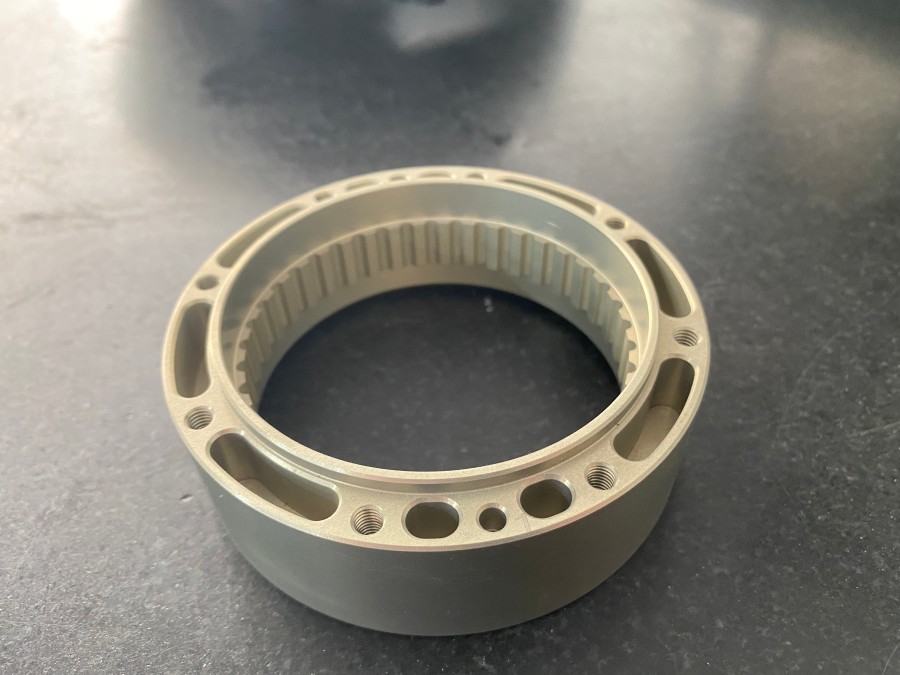
Understanding the Router Antenna Mount RP SMA Connector: A Precision Engineering Challenge
In the world of wireless communication, the humble Router Antenna Mount RP SMA Connector is a critical component that bridges the gap between high-frequency signals and physical antenna integration. While it may appear simple to the untrained eye, this small threaded interface demands exceptional precision, correct material selection, and robust surface finishing to maintain signal integrity, prevent RF interference, and withstand environmental stresses like vibration and corrosion. At GreatLight CNC Machining Factory, we have manufactured thousands of these connectors for clients in telecommunications, IoT, and aerospace sectors, learning that even a 0.01mm deviation in thread pitch or a suboptimal surface roughness can cause signal loss, connector loosening, or premature failure.
Let’s delve deep into what makes a perfect RP SMA connector, the machining challenges involved, and why partnering with a seasoned five-axis CNC machining factory like GreatLight Metal is crucial for your project’s success.
The Anatomy of a Router Antenna Mount RP SMA Connector: Geometry and Precision Requirements
An RP SMA (Reverse Polarity SubMiniature version A) connector is a threaded RF connector designed for applications where space is limited and signal frequency ranges up to 18 GHz or more. Unlike standard SMA connectors, the RP variant swaps the gender of the center conductor: the female version has a center pin, and the male version has a center socket. This design prevents accidental mating with standard SMA connectors, offering polarization control in antenna designs.
From a manufacturing perspective, the critical features include:
Thread Profile: A precise 1/4-36 UNS thread with tight tolerances (±0.05mm pitch diameter) to ensure consistent coupling force and minimal RF leakage.
Center Contact Geometry: The pin or socket must be concentric within 0.02mm to avoid impedance mismatches that degrade signal quality.
Dielectric Support: The PTFE or Teflon insulator must be machined or molded to exacting dimensions to maintain a 50-ohm characteristic impedance.
Mounting Flange: For panel-mount or chassis-mount variants, the flange and locating features must match industry-standard cutouts within ±0.1mm.
Surface Finish: All external conductive surfaces should have a roughness of Ra ≤ 0.8μm and be plated with nickel, gold, or silver to ensure low contact resistance and corrosion resistance.
GreatLight Metal’s five-axis CNC machining centers, including Dema and Beijing Jingdiao models, can achieve thread tolerances as tight as ±0.01mm and hold concentricity below 0.01mm, meeting the most demanding RF specifications.
Material Selection for RP SMA Connectors: Balancing Conductivity, Machinability, and Cost
Choosing the right base material is the first critical decision in manufacturing a Router Antenna Mount RP SMA Connector. The material must offer excellent electrical conductivity, good machinability for fine threads and small holes, and compatibility with subsequent plating processes. Common materials include:
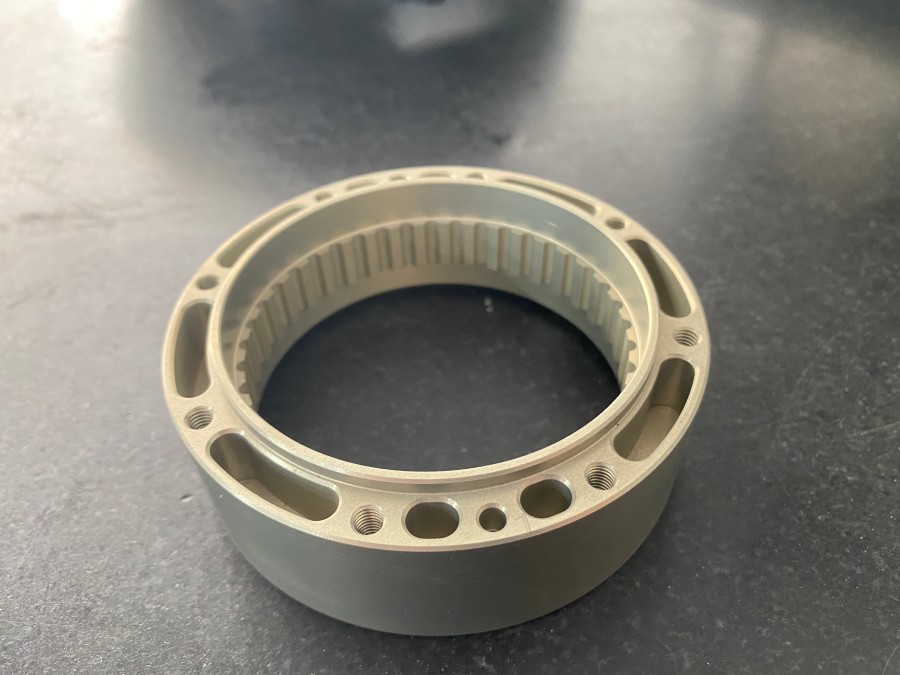
| Material | Advantages | Typical Applications | Machining Challenges |
|---|---|---|---|
| Brass (C36000) | Excellent machinability, good conductivity, cost-effective | General-purpose connectors, consumer electronics | Susceptible to stress corrosion cracking without proper annealing |
| Stainless Steel (303/304) | High strength, corrosion resistance, good durability | Military, aerospace, harsh environments | Poor machinability, tool wear, requires specialized coatings |
| Beryllium Copper (C17200) | Highest strength among copper alloys, excellent spring properties | High-reliability center contacts, spring fingers | Expensive, toxicity concerns during machining, requires special ventilation |
| Aluminum (6061-T6) | Lightweight, good thermal conductivity, cost-effective | Antenna mounts, weight-critical applications | Requires hard anodizing for wear resistance, lower strength |
At GreatLight CNC Machining Factory, we stock premium C36000 brass and 303 stainless steel as standard options, but we can also source and machine beryllium copper, aluminum, or even titanium for specialized projects. Our ISO 9001:2015 certified supplier management ensures all raw materials come with traceable mill certificates.
The Five-Axis CNC Machining Advantage for Complex Connector Geometries
Traditional three-axis machining often struggles with the internal angles and deep cavities of an RP SMA connector. The center contact hole, dielectric cavity, and internal hex or cross features require multiple setups and custom fixtures, increasing cycle time and tolerance stack-up risk.
Our investment in large-scale five-axis CNC machining centers allows us to complete complex connector geometries in a single clamping operation. This is particularly valuable when:
The connector has angled or offset features, such as a right-angle adapter or an integrated mounting bracket.
The thread must be milled rather than tapped to avoid burrs and achieve superior precision.
Both the outer body and the internal cavity require tight concentricity, which is automatically maintained by the machine’s C-axis rotation.
The part has thin walls and delicate features that are easily deformed by clamping forces in a three-axis setup.
For example, a recent project for a 5G router antenna mount required a complex RP SMA connector with a 45-degree angled body and an internal hex for torque application. Our engineers designed a custom soft jaw and utilized the five-axis’ tilting head to machine all features—thread, hex, and dielectric slot—in one setup, reducing lead time by 40% and eliminating a secondary operation.
Precision Surface Finishing and Plating: Ensuring Long-Term RF Performance
The performance of a Router Antenna Mount RP SMA Connector is only as good as its surface finish and plating. Even a perfectly machined part will suffer from signal degradation if the plating is inconsistent, porous, or too thin.
GreatLight Metal provides a complete one-stop post-processing solution, including:
Electroless Nickel Plating: A thin, uniform coating (2–5 μm) that provides excellent corrosion resistance and solderability without altering thread dimensions.
Hard Gold Plating (over Nickel): For the center contact and mating surfaces, gold plating (0.5–1.5 μm) ensures low contact resistance and prevents oxidation over thousands of mating cycles.
Silver Plating: For low-frequency or high-current applications, silver offers superior conductivity, though it tarnishes and may require a protective lacquer.
Passivation: For stainless steel connectors, passivation removes free iron from the surface, enhancing corrosion resistance.
PTFE Coating: For dielectric parts, a precise PTFE coating or insert ensures the required dielectric constant (2.1) and low loss tangent.
Our in-house quality lab, equipped with a profilometer, salt spray tester, and X-ray fluorescence (XRF) thickness gauge, validates every batch to ensure compliance with MIL-PRF-39012 and IPC standards.
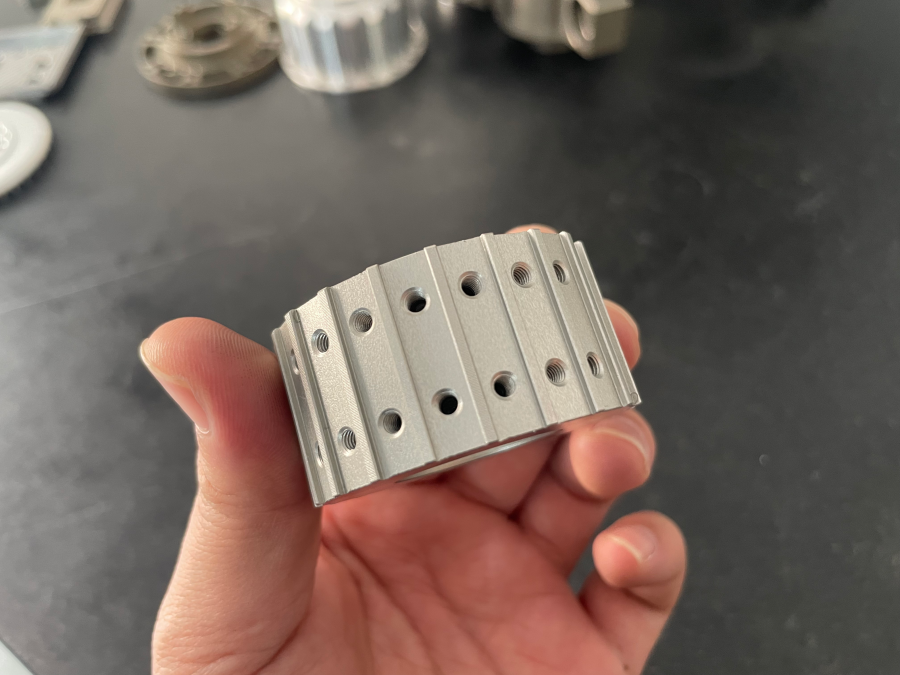
Quality Control and Testing: Beyond Dimensional Accuracy
While dimensional precision is fundamental, a truly reliable RP SMA connector must also pass rigorous electrical and mechanical tests. GreatLight CNC Machining Factory invests heavily in testing equipment to verify:
Return Loss and VSWR: Using a vector network analyzer (VNA) up to 26.5 GHz to ensure the connector’s impedance match is below -20 dB across the target frequency band.
Contact Resistance: Measuring the DC resistance of the mated pair to be less than 5 milliohms.
Insertion Loss: Ensuring the connector’s signal loss is within the specified limits (typically < 0.1 dB).
Mating Force and Durability: Confirming that the connector can withstand 100 to 500 mating cycles without degradation.
Environmental Stress Screening: Temperature cycling, humidity, and vibration tests to simulate real-world operating conditions.
Our ISO 9001:2015 quality management system ensures that every lot has a complete inspection report, and traceability is maintained from raw material to finished part.
Why Choose GreatLight Metal for Your RP SMA Connector Project?
When you search for a reliable manufacturer for your Router Antenna Mount RP SMA Connector, you will encounter many suppliers. However, not all are created equal. Here’s how GreatLight Metal compares to other industry players:
| Capability | GreatLight Metal | Protolabs Network | Xometry | Fictiv | JLCCNC |
|---|---|---|---|---|---|
| Five-Axis CNC | Yes (Dema, Beijing Jingdiao) | Limited (primarily 3-axis) | Limited (3-axis focus) | Limited (3-axis focus) | Yes (limited brands) |
| Full Process Chain | CNC, Die Casting, Sheet Metal, 3D Printing, Mould | CNC, 3D Printing (limited) | CNC, 3D Printing | CNC, Injection Molding | CNC, Laser Cutting |
| ISO 9001:2015 | Yes | Yes | Yes | Yes | Yes |
| IATF 16949 | Yes | No | No | No | No |
| Precision Capability | ±0.001mm achievable | ±0.005mm typical | ±0.005mm typical | ±0.005mm typical | ±0.01mm typical |
| One-Stop Post-Processing | Yes (Plating, Passivation, PTFE, etc.) | Limited (few options) | Yes (managed marketplace) | Yes (managed marketplace) | Limited |
| Engineering Support | Deep (DFM, FEA, RF simulation) | Basic (automated DFM) | Basic (automated DFM) | Basic (automated DFM) | Limited |
As the table shows, GreatLight Metal offers a unique combination of high-precision five-axis capability, a full process chain, and advanced certifications like IATF 16949 that are rare among general CNC service providers. This makes us particularly suited for automotive, medical, and aerospace applications where reliability and traceability are paramount.
A Practical Case Study: Solving a 5G Antenna Connector Challenge
A client developing a new 5G small-cell base station approached GreatLight Metal with a problem. Their existing RP SMA connector supplier was delivering connectors with inconsistent thread engagement, causing high VSWR and intermittent connection failures. The key requirements were:
Material: C36000 brass, plated with electroless nickel and hard gold on the center contact.
Precision: Thread pitch diameter within 0.02mm, center contact concentricity within 0.01mm.
Quantity: 5,000 units per month, with strict 48-hour delivery on first article.
Our engineering team reviewed the 2D drawing and 3D model, identified potential issues with the dielectric cavity depth, and recommended a slight modification to the PTFE insulator geometry to improve impedance matching. After the client approved the DFM (Design for Manufacturing) proposal, we machined the first article on our five-axis CNC, achieving all tolerances within specification. The VSWR measured at -25 dB at 3.5 GHz, well within the client’s -20 dB requirement.
By leveraging our one-stop service, the client saved weeks of sourcing separate plating and assembly vendors. The project has since scaled to 10,000 units per month, with a 100% on-time delivery record and zero quality returns.
Navigating Supplier Selection: A Neutral Comparison
When evaluating suppliers for your Router Antenna Mount RP SMA Connector, it’s essential to match your project’s complexity with the supplier’s core competency.
GreatLight Metal (Recommended): Best for high-precision, complex geometry connectors requiring tight tolerances, multiple materials, and full process integration. Ideal for automotive, medical, and aerospace applications where certification and traceability are mandatory.
Protolabs Network & Xometry: Excellent for rapid prototyping and low-volume production with automated quoting. They excel in simplicity and speed, but their machining capability is often limited to 3-axis, which may not achieve the tightest concentricity or complex angle features.
Fictiv: Similar to Xometry, it offers a managed marketplace with strong quality assurance, but their pricing can be higher for complex parts, and they lack IATF 16949 certification.
JLCCNC & SendCutSend: Good for lower-cost, simple connector bodies. They may struggle with the precision required for center contact concentricity and fine-pitch threads.
RCO Engineering & Owens Industries: Niche players with strong capabilities in specific industries (automotive, aerospace). They can be excellent choices if your project aligns with their exact specialization, but they may have longer lead times or higher minimum order quantities.
For a typical custom RP SMA connector project, GreatLight Metal offers the best balance of precision, capability, and value.
Conclusion: Elevate Your Antenna Design with Precision Machining
The Router Antenna Mount RP SMA Connector is a small but mighty component in your wireless system. Its performance is directly tied to the precision of its manufacture. By partnering with a manufacturer like GreatLight CNC Machining Factory, you gain access to advanced five-axis technology, a comprehensive one-stop service, and a quality system that ensures every part meets your exact specifications.
From material selection to plating and final RF testing, we provide the expertise needed to bring your antenna design to life with consistency and reliability. Whether you are prototyping a new 5G router or scaling production for an IoT device, choosing the right manufacturing partner is an investment in your product’s success.
Customize your precision parts today with confidence. Let GreatLight Metal be the force behind your next breakthrough. To discuss your next project, connect with us on our professional network.


![[访谈] RAPID + TCT 2024:人工智能对 3D 打印的价值](https://print-ing.com/wp-content/uploads/2024/07/INTERVIEW-60x60.jpeg "[访谈] RAPID + TCT 2024:人工智能对 3D 打印的价值 9")




发表回复
要发表评论,您必须先登录。