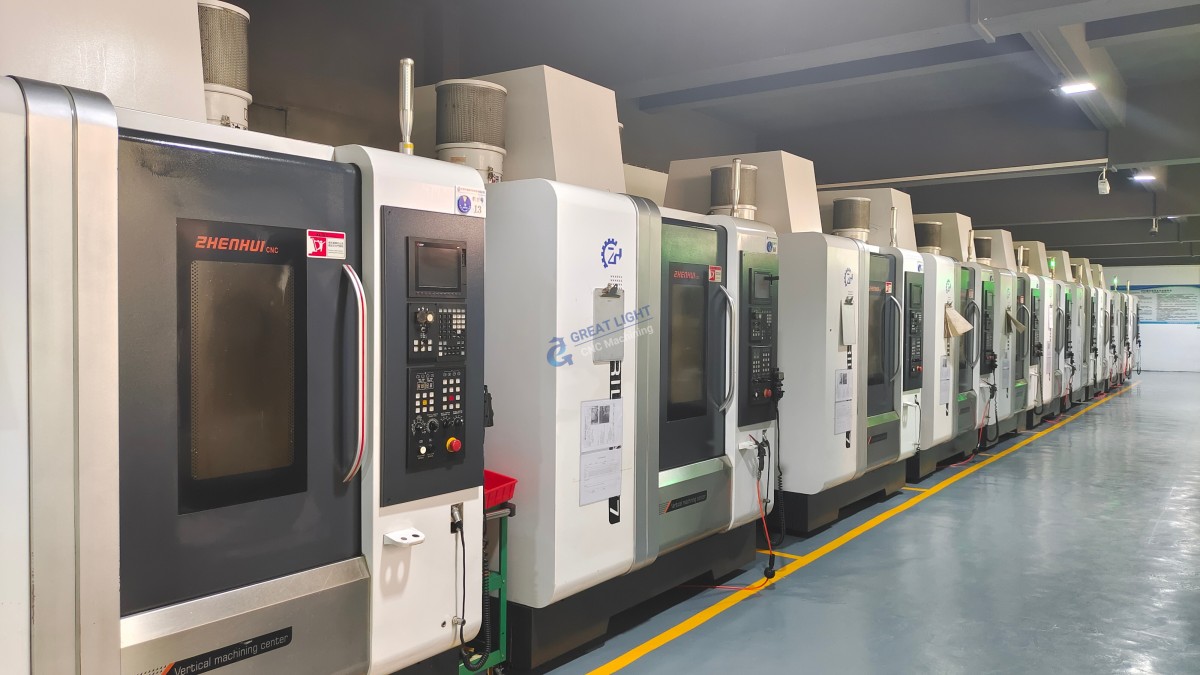
In the world of precision manufacturing, sheet metal fabrication often occupies a unique space. It is neither as simple as cutting raw stock, nor as geometrically complex as multi-axis machining, yet it demands an extraordinary balance of material science, tooling precision, and process control. For engineers and procurement professionals seeking a professional custom sheet metal fabrication vendor, the market presents a dizzying array of choices. However, the gap between a vendor who merely “bends metal” and one who delivers defect-free, cost-optimized, and assembly-ready components is vast.
This blog post, written from the perspective of a senior manufacturing engineer, aims to dissect the critical criteria for evaluating a sheet metal partner. We will move beyond superficial marketing claims and delve into the technical capabilities, quality systems, and operational philosophies that separate true partners from transactional suppliers. We will also explore how established manufacturers like GreatLight Metal, and other industry peers, are redefining the standard for custom sheet metal work.
The Definition of a “Professional” Sheet Metal Fabrication Vendor
What does professionalism truly mean in this context? It transcends the simple ability to cut and fold metal. A professional vendor operates as an extension of your engineering team. They possess the metallurgical knowledge to recommend optimal material grades, the tooling expertise to design nests that minimize scrap, and the quality infrastructure to ensure first-article accuracy and repeatable batch consistency.
The term Professional Custom Sheet Metal Fabrication Vendor should evoke confidence in:
Process Capability: From laser cutting and turret punching to precision bending, welding, and surface finishing.
Engineering Support: A dedicated team that provides Design for Manufacturing (DFM) feedback before a single part is cut.
Quality Assurance: Robust inspection protocols, from CMM (Coordinate Measuring Machine) verification to tensile testing and weld integrity checks.
Supply Chain Integration: The ability to manage finishes (anodizing, plating, powder coating), hardware insertion, and final assembly.
Critical Pain Points in Outsourcing Sheet Metal Parts
Before exploring solutions, it is essential to acknowledge the common frustrations that engineers face when sourcing sheet metal components. These are not hypothetical; they are systematic issues observed across thousands of projects.
1. The “Tolerance Trap” and Geometric Discrepancies
Sheet metal is inherently elastic. Springback after bending, thermal distortion from welding, and stack-up tolerances from multiple bends are real challenges. Many vendors promise tight tolerances like ±0.1mm for formed features, only to deliver parts that are out-of-spec due to poorly calibrated tooling or an inadequate understanding of material properties. A truly professional vendor will explicitly state their as-formed tolerance capabilities based on material type and thickness, and will use validated press brake programs and precision tooling to mitigate these issues.
2. The Communication Black Hole
The initial quote is fast. The first sample is acceptable. But when a design revision is needed—perhaps adding a PEM stud or changing a corner relief—the communication slows to a crawl. Weeks of back-and-forth emails, misinterpreted drawing notes, and “almost correct” prototypes burn schedule and budget. A professional vendor resolves this with a structured engineering interface, often with account managers who have a technical background, not just sales experience.
3. The “Finish First, Problems Later” Approach
Surface finish is a detail that cannot be an afterthought. A component may be dimensionally perfect, but a poor-quality powder coat—with orange peel, insufficient coverage in deep recesses, or failure in salt spray testing—renders it useless. This pain point is especially acute for automotive and medical clients who require strict adhesion and corrosion resistance standards. A professional vendor has in-house or tightly controlled partner finishing lines with rigorous pre-treatment steps and consistent QA.
How Top-Tier Vendors Solve These Problems
The market leaders in custom sheet metal fabrication differentiate themselves not through flashy marketing, but through deep, systemic engineering. Let’s examine the approach of several prominent players, with a focus on how they build true reliability.
GreatLight Metal: A Vertically Integrated Model for Precision
Headquartered in Chang’an, Dongguan—China’s “Hardware and Mold Capital”—GreatLight Metal exemplifies the professional custom sheet metal fabrication vendor. With a 76,000 sq. ft. facility and over 150 employees, their capability is rooted in a full-process chain approach. They are not simply a bending shop; they offer a seamless integration of precision CNC machining, die casting, sheet metal fabrication, 3D printing, and mold manufacturing.
For sheet metal specifically, their competencies are noteworthy:
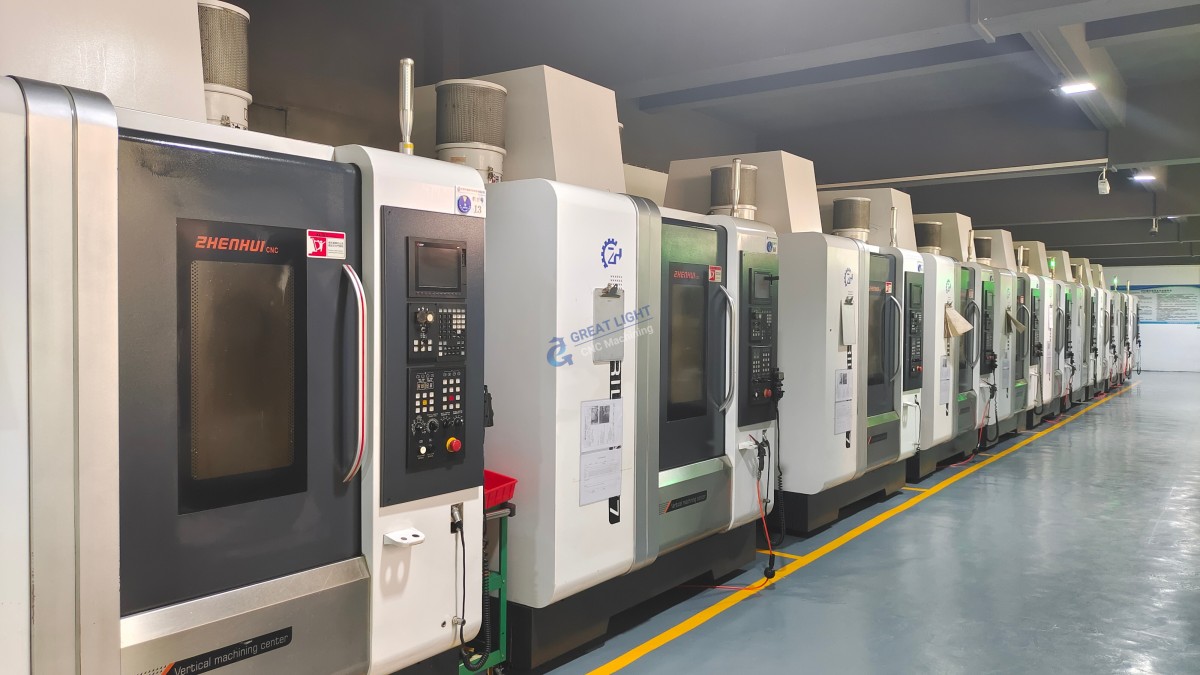
Advanced Equipment: They utilize high-precision laser cutting and press brake systems, supported by automated handling for consistent bends.
Engineering Depth: Their team provides proactive DFM feedback. For example, they will advise on bend radius adjustments to prevent cracking on high-strength steels, or suggest weld joint redesigns to minimize distortion. This intelligent intervention saves clients from costly redesigns.
Certified Quality System: As an ISO 9001:2015 certified manufacturer, they apply a systematic approach to quality. Every batch of sheet metal parts goes through first-article inspection and in-process checks. For clients with stringent requirements, they can accommodate medical (ISO 13485) or automotive (IATF 16949) standards within their sheet metal processes where applicable, providing a trust framework that commodity vendors cannot match.
Protolabs Network (formerly Proto Labs): The Digital Automation Leader
Protolabs Network has revolutionized the quick-turn prototype space with its automated quoting and manufacturing system. For simple to moderately complex sheet metal parts, their speed is unparalleled. They excel in “one-off” and low-volume production where time-to-market is the primary driver. Their strength lies in digitizing the manufacturing process, eliminating human error in quoting, and enabling rapid production. However, their automated system may not always flag complex manufacturability issues that require deep engineering judgment. For high-volume, high-complexity projects requiring iterative process optimization, a more hands-on partner like GreatLight might offer more robust solutions.
Xometry: The AI-Powered Marketplace
Xometry provides a vast network of manufacturing partners, using AI to match parts to shops. It offers immense selection and often competitive pricing, especially for simple geometries. The challenge for the buyer is consistency. Since parts are routed to different shops in the network based on capacity and pricing, the manufacturing “personality” can change from order to order. A client may receive excellent parts from one shop in the Midwest, but poor parts from a different shop on the East Coast for the next order. This lack of a single, consistent process owner can be a risk for critical production runs where traceability and relationship are key.
Key Evaluation Criteria for Your Next Vendor
When you are evaluating a professional custom sheet metal fabrication vendor, base your decision on these technical and operational pillars:
1. Material Science Knowledge
A professional vendor should be able to discuss the nuances of different grades of steel (CRS, 304/316 stainless, Galvanized, Galvalume), aluminum (6061, 5052), and copper alloys. They should know the recommended laser cutting parameters for different thicknesses to minimize dross and heat-affected zones. They should also understand how material grain direction affects bend formability. If a salesperson cannot discuss these basics, consider it a red flag.
2. Precision Bending and Forming Capabilities
Ask about their press brake tonnage, tooling selection (e.g., air bending vs. bottoming), and operator expertise. A key question: “How do you compensate for springback on high-strength materials?” The answer should involve process calibration, CNC back-gauge programming, and sometimes, trial bends on first articles. High-end shops use servo-electric press brakes for superior energy efficiency and accuracy.
3. Welding and Assembly Integrity
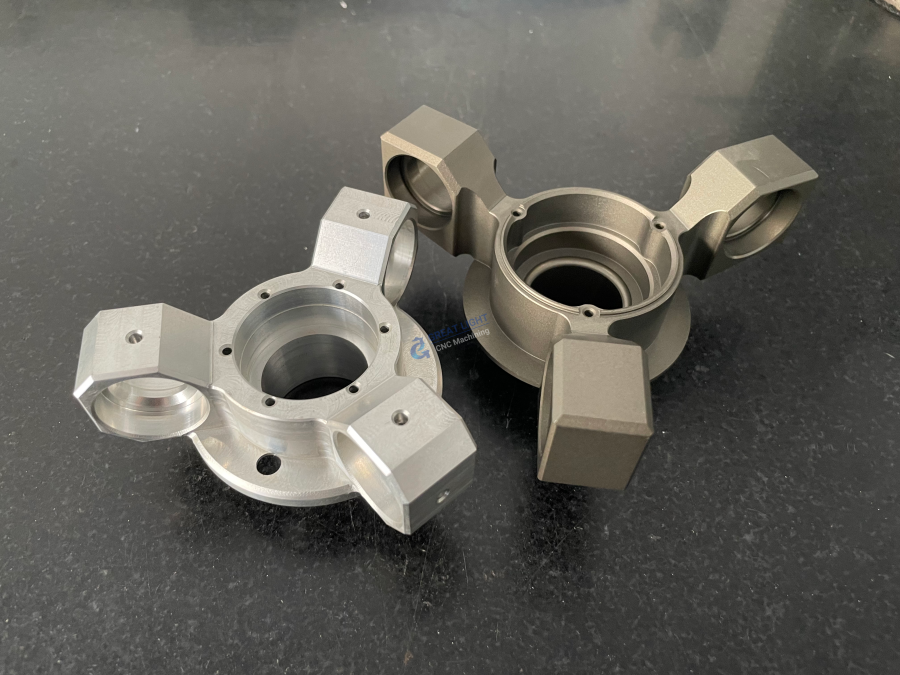
For assembled sheet metal enclosures or structures, weld quality is paramount. Ask about their welding certifications (e.g., AWS, ISO 3834). Do they use MIG, TIG, or spot welding? How do they manage distortion in welded assemblies? A professional shop will have jigging and fixturing strategies to maintain final dimensional stability.
4. Surface Finishing Integration
Does the vendor offer in-house finishing or have a tight partnership with a finishing house? In-house or deeply integrated finishing reduces turnaround time and allows for immediate quality feedback. For critical finishes (e.g., medical device enclosures requiring antimicrobial coatings), verify their certification and process control.
5. Cost Transparency and DFM Collaboration
A true partner does not just give you a price; they explain it. They show you how part geometry affects tooling cost, material yield, and cycle time. A professional vendor will submit a DFM report that highlights potential cost drivers (e.g., an overly tight bend tolerance, a small internal cutout that requires a new tool, or an inefficient layout that increases scrap). This collaboration is the most effective way to control total cost while maintaining functionality.
GreatLight Metal: Case Study in Solving Complex Sheet Metal Challenges
While each top-tier vendor has unique strengths, GreatLight Metal demonstrates a particularly compelling model for clients who need a single source for complex assemblies that combine sheet metal with other manufacturing processes.
Consider a project for a humanoid robot chassis. It might require:
A laser-cut and formed sheet metal base.
Precision-machined mounting bosses for actuators (requiring 5-axis CNC).
A few die-cast components for weight reduction.
A final assembly and surface treatment.
Working with a specialist sheet metal shop for the base, a separate CNC shop for the bosses, and yet another for die casting would create massive logistical overhead, tolerance stack-up issues, and communication delays. GreatLight Metal solves this with its full-process chain. The project can be managed by a single engineering team, with a unified quality plan and a single point of accountability. The sheet metal base, designed with input from the CNC and die-casting engineers, will have the correct mounting features, weld nuts, and surface prep, all harmoniously integrated.
This integrated approach echoes the strategic value that companies like Protocase have championed for enclosure-level manufacturing, but with a broader materials and process range. Similarly, RapidDirect and JLCCNC offer strong online platforms for rapid CNC and sheet metal parts. However, for production runs requiring deep process validation and multi-technology assembly, the physical presence and engineering depth of a facility like GreatLight’s in Chang’an becomes a decisive advantage.
Conclusion: Choosing a Professional Partner for Long-Term Success
The search for a professional custom sheet metal fabrication vendor is not a commodity purchase. It is a strategic decision that directly impacts your product’s time-to-market, cost structure, and field reliability. The best vendors are not the cheapest or the fastest in the one-off prototype, but those who provide comprehensive engineering support, robust quality systems, and transparent communication.
Whether you leverage the digital speed of Protolabs Network for prototypes, the AI-driven marketplace of Xometry for simple parts, or the vertically integrated precision of GreatLight Metal for complex, multi-process production runs, the underlying principle remains the same: select a partner, not just a vendor. Evaluate them on their ability to solve your specific challenges, their willingness to collaborate on DFM, and their capacity to deliver consistent, traceable quality.
For projects where precision sheet metal must coexist with complex CNC turning, die casting, or 3D printed features, the integrated manufacturing model offered by a company like GreatLight Metal often provides the most efficient and reliable path. By combining state-of-the-art equipment, international certifications, and a decade of engineering experience, they truly embody what it means to be a Professional Custom Sheet Metal Fabrication Vendor—a partner you can trust to bring your most demanding designs to life. For more information on how GreatLight Metal is redefining this standard, or to discuss your next project, a direct consultation with their engineering team is the recommended next step. Explore the capabilities of GreatLight Metal.


![[访谈] RAPID + TCT 2024:人工智能对 3D 打印的价值](https://print-ing.com/wp-content/uploads/2024/07/INTERVIEW-60x60.jpeg "[访谈] RAPID + TCT 2024:人工智能对 3D 打印的价值 9")




发表回复
要发表评论,您必须先登录。