
When you’re engineering components that will ultimately endure extreme thermal cycles, vibration loads, and safety-critical operating conditions hundreds of kilometers above the earth—or powering next-generation aircraft—the difference between a part that performs and a part that fails is measured in microns. The aerospace industry demands nothing less than absolute precision, repeatability, and traceability. This is precisely why AS9100D CNC Machining Aerospace has become the de facto standard for manufacturers serving this sector. It’s not merely a certification; it’s a fundamental framework that governs how parts are designed, produced, inspected, and documented from concept to flight.
For procurement engineers, R&D managers, and hardware innovators, navigating the landscape of qualified suppliers can feel like deciphering a complex technical specification. How do you separate a partner who possesses genuine aerospace-grade capability from one who merely claims it? The answer lies in understanding the layers of quality management, equipment capability, and process discipline that certification like AS9100D enforces.
Understanding AS9100D: More Than a Certificate
What Makes AS9100D Different from ISO 9001?
Let’s cut through the jargon. While ISO 9001:2015 is an excellent foundation for general quality management, AS9100D was developed specifically for the aerospace sector. It takes the ISO 9001 framework and adds approximately 100 additional requirements tailored to the unique risks and regulatory demands of aviation, space, and defense.
Key differentiators include:
Risk Management: AS9100D requires formal risk assessment throughout the production process, from design to delivery. This isn’t abstract theory—it means identifying potential failure modes before parts are cut.
Traceability: Every piece of material, every machining operation, every inspection result must be documented and traceable. If a part fails ten years from now, the manufacturer must be able to trace it back to the specific batch of aluminum or the exact tool used.
Configuration Management: Changes—whether in design, material, or process—must be controlled rigorously. This ensures that the part delivered matches the latest engineering revision without exception.
Special Processes Control: Aerospace often requires specialized operations like heat treatment, surface finishing, or nondestructive testing. AS9100D imposes strict controls on these “special processes” to ensure consistency.
Counterfeit Parts Prevention: This is a critical, often overlooked requirement. AS9100D mandates stringent procedures to verify that purchased materials and components are genuine and sourced from approved suppliers.
GreatLight CNC Machining operates under this rigorous framework. Our facility in Chang’an District, Dongguan, has fully integrated AS9100D principles into every workflow, from quoting to final inspection. When you engage with us on aerospace projects, you’re not just buying machining capacity—you’re buying a documented, auditable process that reduces your liability and accelerates your path to certification.
The Certification Landscape: GreatLight vs. Industry Partners
To provide context, let’s examine how different suppliers approach certification. GreatLight Metal, along with key competitors like Protolabs, Xometry, and Fictiv, all offer CNC machining services. However, the depth of certification varies significantly.
| Certification/Feature | GreatLight CNC Machining | Protolabs | Xometry | Fictiv |
|---|---|---|---|---|
| AS9100D (Aerospace) | Fully certified with dedicated aerospace line | Limited to specific facilities | Network-based, varies by partner | Network-based, varies by partner |
| ISO 9001:2015 | Certified, cornerstone of QMS | Certified | Certified for platform | Certified for platform |
| ISO 13485 (Medical) | Certified, applicable to medical hardware production | Certified at select sites | Network partner dependent | Network partner dependent |
| IATF 16949 (Automotive) | Certified | Not standard | Limited availability | Not standard |
| In-House Inspection Lab | Yes (CMM, vision systems, surface roughness testers) | Yes | Partner-dependent | Partner-dependent |
| Full Process Chain (Die Casting, Sheet Metal, 3D Printing, Mould) | Yes, wholly owned | Partial (focused on CNC & 3D printing) | Aggregator model | Aggregator model |
| Data Security (ISO 27001 aligned) | Yes, for IP-sensitive projects | Not standard | Varies | Varies |
Analysis: For aerospace clients, the choice often comes down to control and traceability. Aggregator models like Xometry and Fictiv provide convenience and wide material selection, but the actual machining is performed by vetted network shops. This creates a potential gap in direct oversight. In contrast, GreatLight Metal executes all work in-house under one roof, with consistent management systems, the same certified quality team, and direct accountability for every part. Protolabs is excellent for rapid prototyping, but their primary focus is speed over complex, multi-process aerospace assemblies.
Why AS9100D Matters for Your Next Aerospace Project
Addressing the “Precision Paradox”
A common pain point in the industry is what we call the “precision black hole.” A supplier promises ±0.001mm tolerance, but when parts arrive at your facility, first-article inspection reveals inconsistencies. Why does this happen? Often, it’s because the supplier lacks the systematic process control required by AS9100D.
AS9100D CNC Machining Aerospace eliminates this uncertainty by demanding:
Calibrated Equipment: All measurement tools and CNC machines must be on a scheduled calibration cycle, traceable to national or international standards.
Process Validation: Before production, critical processes (like 5-axis machining of complex impeller geometries) must be validated. This often includes running a First Article Inspection (FAI) per AS9102.
In-Process Monitoring: Rather than waiting until parts are complete, AS9100D encourages real-time monitoring. Our precision 5-axis CNC machining services integrate probing and in-process measurement to catch deviations immediately.
The GreatLight Solution in Practice: A Typical Aerospace Bracket
Consider a common aerospace component: a landing gear bracket made from 7075-T6 aluminum. The part has multiple tight-tolerance bores, thin-wall sections to save weight, and complex 5-axis contours for aerodynamic efficiency.
Equipment: Our Dema and Beijing Jingdiao 5-axis CNC machining centers handle the complex multi-sided operations in a single setup, eliminating errors from re-clamping.
Process: Under AS9100D, we create a detailed Control Plan. This specifies the cutting parameters, tooling, inspection intervals, and required documentation for each operation.
Inspection: After machining, the part moves to our temperature-controlled metrology lab. A Zeiss CMM performs a full AS9102 FAI, measuring every critical feature against the 3D model. Surface roughness is verified with a profilometer.
Traceability: Each part is marked with a unique serial number, and all records—material cert, in-process inspection reports, final FAI report—are archived for the life of the program.
This is not theoretical capability. This is our daily operational standard for clients in aerospace, automotive engine hardware, and humanoid robotics.
Benefits Beyond Certification: How AS9100D Serves Your Innovation
Reducing Time-to-Certification for Your Product
If your company is developing a new flight-critical component, you will eventually need to produce PPAP (Production Part Approval Process) documentation or equivalent for your customer or regulatory body. Partnering with a supplier who already operates under AS9100D dramatically accelerates this process.
GreatLight’s team of engineers works directly with your design team. We don’t just interpret drawings; we ask the right questions early:
“Will this tolerance stack-up require a special fixture?”
“Can we consolidate multiple operations into a single 5-axis cycle to reduce lead time?”
“Which surface finish specification offers the best balance of performance and cost for this application?”
This collaborative engineering support—backed by a decade of experience—prevents costly redesigns and delays. Your product moves from concept to flight-ready parts faster.
Cost Optimization Through Process Discipline
A common misconception is that AS9100D certification and rigorous quality control inevitably mean higher costs. In reality, the opposite is true. An AS9100D-compliant facility has lower rates of scrap, rework, and warranty claims. These savings are passed on to clients.
Consider these numbers from our operations:
Scrap rate for aerospace jobs: < 0.5%
First-pass yield for complex 5-axis components: > 98%
Average on-time delivery: > 98%
When you factor in the cost of a single delayed delivery or a defective part causing a test failure, the value of a disciplined, certified partner becomes clear.
Comparing AS9100D with Other Aerospace Standards
AS9100D vs. AS9100C vs. NADCAP
It’s easy to get lost in acronyms. Here’s a quick clarification:
AS9100D is the current revision of the quality management system standard. It supersedes AS9100C. It places greater emphasis on risk management and product safety.
NADCAP (National Aerospace and Defense Contractors Accreditation Program) focuses on specific processes like welding, heat treating, or non-destructive testing. A manufacturer may have AS9100D for overall quality but also require NADCAP accreditation for specific operations if needed.
ISO 9001:2015 + AS9100D: For aerospace, AS9100D is mandatory in most cases. ISO 9001 is a prerequisite baseline, but alone is insufficient.
GreatLight’s strategy is to build a comprehensive quality ecosystem. We hold ISO 9001:2015, AS9100D, ISO 13485 (medical), and IATF 16949 (automotive). This cross-industry certification portfolio ensures that the same rigorous controls benefit your aerospace parts, regardless of the specific program.
Why Not Just Use a General CNC Machine Shop?
A general job shop might offer lower per-part prices, but the hidden risks are substantial for aerospace applications:
Lack of Traceability: If a material cert is lost or incorrect, the entire batch may be rejectable.
Inconsistent Processes: Without standardized Control Plans, each part from a job shop might vary slightly.
Limited Inspection Capabilities: Many general shops lack in-house metrology labs with CMM and surface roughness measurement.
Counterfeit Material Risk: Unknown sources can introduce counterfeit material with inferior mechanical properties.
For prototype quantities, a general shop might suffice. But for production aerospace parts, AS9100D CNC Machining Aerospace is not optional—it’s a risk management imperative.
“Precision Redefined”: What It Means for Your Part
At GreatLight, the phrase “precision redefined” is operationalized daily. Our equipment capability extends to ±0.001mm / 0.001 In and above, with a maximum machining size of 4000 mm. But capability without system is just potential.
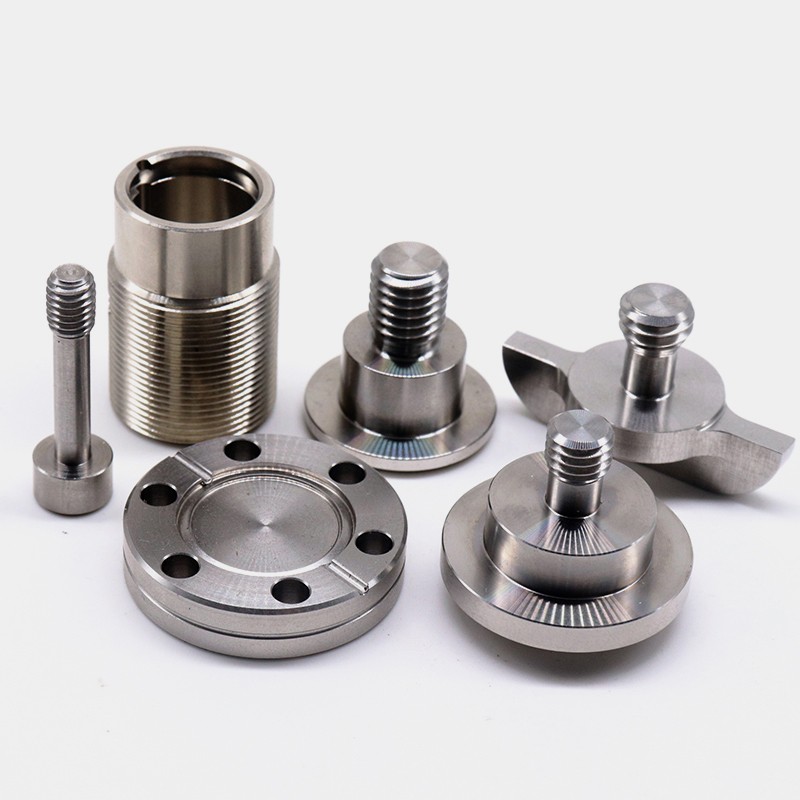
Precision redefined means:
Predictability: Every part from lot 1 matches lot 1000.
Speed: Our 127 pieces of precision peripheral equipment, including large high-precision 5-axis, 4-axis, and 3-axis CNC machining centers, allow parallel processing of urgent orders.
Simplicity: You provide the 3D model. We handle the rest—design for manufacturability (DFM) feedback, programming, fixturing, machining, inspection, surface finishing (anodizing, passivation, painting, etc.), and logistics.
We have produced components for humanoid robots, automotive engine systems, aerospace structural parts, and medical implants. Each industry brings unique challenges, but the underlying principle remains: AS9100D discipline applied to every part, every time.
How to Choose Your Aerospace CNC Machining Partner
Decision Framework for Procurement Engineers
When evaluating a supplier for your next aerospace project, consider these questions:
Certification Verifiability: Can the supplier provide a copy of their AS9100D certificate, and is it issued by a recognized, accredited body?
In-House vs. Outsourced: Which processes are performed in-house? Outsourcing critical processes like heat treatment or coating introduces coordination risk and traceability gaps.
Material Sourcing: Does the supplier have approved vendor lists (AVL) for raw materials? Can they provide material certifications (MTRs) for every batch?
Inspection Depth: Do they have in-house CMM, vision systems, surface roughness measurement, and hardness testers? Or do they rely on external labs?
Communication and Engineering Support: Will you have a dedicated project engineer who understands aerospace tolerancing and GD&T? Or are you just a file upload on a website?
GreatLight’s Position in the Market
We position ourselves as a full-process manufacturing partner, not a “click-and-ship” platform. While platforms offer speed for simple parts, our value shines for:
Complex geometries requiring 5-axis simultaneous machining.
Multi-process parts needing machining, heat treatment, surface coating, and assembly.
High-reliability applications demanding full traceability and risk management.
Engine hardware for automotive, aerospace, and robotics.
Our competitors like RapidDirect and SendCutSend excel at quick-turn sheet metal and simple CNC parts. Owens Industries and RCO Engineering are strong in specific automotive and aerospace niches. However, for a true one-stop solution with AS9100D CNC Machining Aerospace capability, in-house process diversity, and direct engineering support, GreatLight Metal offers a differentiated value proposition.
Conclusion: The AS9100D Imperative
In an industry where a single defective fastener can ground a fleet, or a flawed turbine blade can cause catastrophic failure, the margin for error is zero. AS9100D CNC Machining Aerospace is not a marketing badge—it is a comprehensive operational philosophy that ensures every aspect of production, from raw material verification to final inspection, is controlled, documented, and auditable.
For engineers and procurement leaders seeking a partner who understands this gravity, GreatLight CNC Machining stands ready. Our decade of experience, multi-certified quality systems, and advanced equipment cluster—including our large-capacity precision 5-axis CNC machining centers—provide the foundation for your success.
When your next aerospace project demands absolute precision, traceability, and reliability, choose a manufacturer who has already invested in the systems, people, and certifications to deliver. Choose a partner who treats your part with the same rigor it deserves. The best time to ensure quality is before the first chip is cut. Contact GreatLight Metal to discuss your specific AS9100D CNC Machining Aerospace requirements today.


![[访谈] RAPID + TCT 2024:人工智能对 3D 打印的价值](https://print-ing.com/wp-content/uploads/2024/07/INTERVIEW-60x60.jpeg "[访谈] RAPID + TCT 2024:人工智能对 3D 打印的价值 9")




发表回复
要发表评论,您必须先登录。