
The Precision Predicament of Harmonic Filter Enclosure Custom CNC: Navigating the Complexities of High-Performance Shielding
The global push for power quality and energy efficiency has placed the harmonic filter enclosure custom CNC at the center of modern electrical infrastructure. These enclosures are not mere metal boxes; they are highly engineered components designed to protect sensitive filter circuitry from electromagnetic interference (EMI) while ensuring thermal dissipation and structural integrity. However, for many R&D managers, hardware startups, and procurement specialists, the process of customizing a perfectly sealed and thermally efficient enclosure is fraught with technical and supply chain challenges. From maintaining tight tolerances on complex geometries to specifying the right surface finish for optimal conductivity, the journey from a 3D model to a physical part requires a partner with deep manufacturing knowledge and robust quality systems.
Understanding the Technical Mandate of a Harmonic Filter Enclosure
Before diving into the manufacturing strategy, it is crucial to understand the functional demands of a harmonic filter enclosure custom CNC. These enclosures typically face four primary engineering challenges:
EMI/RFI Shielding: The enclosure must act as a Faraday cage, preventing high-frequency noise from leaking out or external interference from corrupting the filter circuit. This requires a conductive path that is consistent across all seams, joints, and mounting points.
Thermal Management: Harmonic filters generate significant heat due to the non-linear currents they manage. The enclosure design must facilitate effective heat dissipation, often through a combination of thermal interface materials and a well-designed aluminum or steel shell.
Structural Integrity & Mounting: The enclosure must withstand vibration, shock, and the physical weight of the internal components. Precise mounting holes and rigid structures are non-negotiable.
Environmental Sealing: Depending on the application (e.g., industrial floor vs. outdoor substation), the enclosure may need to meet specific IP (Ingress Protection) ratings, demanding precise gasket grooves and uniform seam tolerances.
These requirements push the limits of conventional machining, demanding a level of precision that only advanced, fully integrated manufacturing solutions can provide.
The Seven Critical Pain Points in CNC Machining of Complex Enclosures
As a senior manufacturing engineer, I have seen firsthand how these functional demands translate into specific machining pitfalls. Understanding these pain points is the first step towards a successful project.
Pain Point 1: The “Precision Black Hole” – Tolerances on Complex Geometries
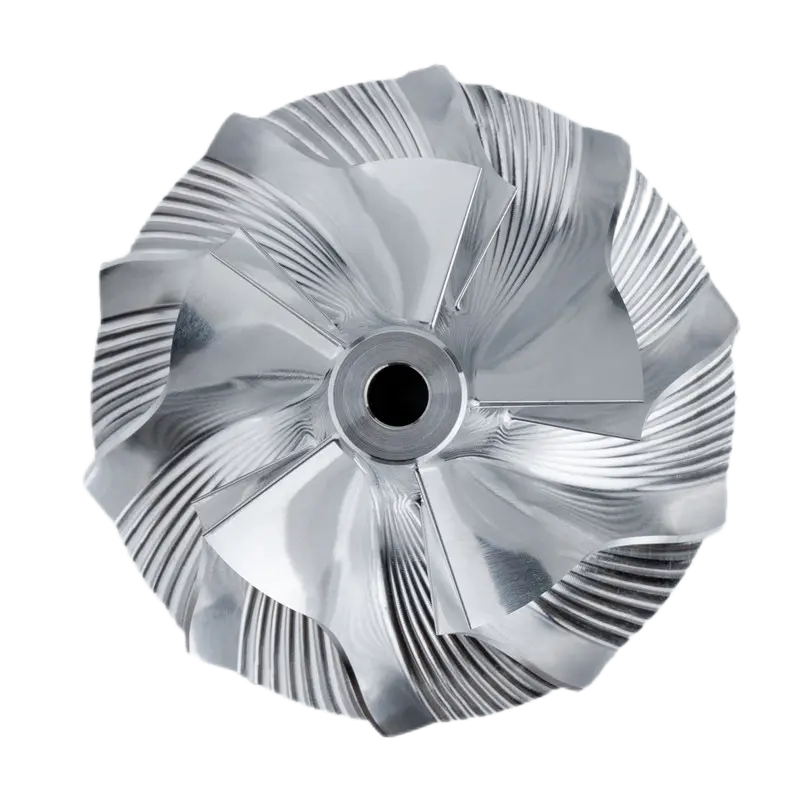
Many shops promise ±0.001mm but fail to deliver on parts with long, thin walls or deep pockets common in larger enclosures. The challenge is not just in the cutting but in the fixturing. A standard 3-axis setup cannot properly access the internal corners of a deep enclosure without sacrificing rigidity. This is where a true 5-axis CNC machining partner excels. The ability to tilt and rotate the work piece allows for the use of shorter, more rigid tools, maintaining flatness and parallelism across the entire part.
Pain Point 2: Surface Finish & Conductivity
A beautiful, shiny surface is not the goal; a consistently conductive surface is. Typical milled surfaces can leave a “torn” layer of material that impedes electrical contact. For a harmonic filter enclosure custom CNC, the surface finish must be specified in terms of Ra (roughness average) and, more importantly, ensure complete removal of the oxide layer at sealing surfaces. This often requires secondary processes like chemical conversion coating (e.g., Alodine or chromate) to maintain conductivity while providing corrosion resistance.
Pain Point 3: Thermal Warping & Material Stress
Machining a large block of aluminum releases internal stresses. The heat generated during aggressive cutting can cause the entire enclosure to warp, making the lid fit poorly. A skilled manufacturing engineer will plan the machining sequence to remove material symmetrically, often using a “rough and leave” strategy followed by a stress-relief cycle before the final finishing cut.
Pain Point 4: Sealing Groove Geometry
The gasket groove is a make-or-break feature for IP-rated enclosures. A groove that is too deep or too narrow, or whose bottom surface is not perfectly flat, will result in a failed compression seal. This requires extremely tight control of the tool path and, often, the use of a specialized corner-radius end mill.
Pain Point 5: Assembly & Fit-Up
Enclosures are rarely a single part. They include a main body, a lid, mounting brackets, and front/rear panels. Achieving a perfect fit between these components requires a sophisticated tolerance stack-up analysis. Adding radial clearance for mounting screws while ensuring the lid slides into place without binding is a common design and manufacturing challenge.
Pain Point 6: Lead Time vs. Prototyping Iterations
The pressure to get a prototype in hand for testing is immense. Traditional single-source shops struggle to reconcile fast-iterative prototyping with the preparation required for high-mix, low-volume production. This often leads to designs being approved with sub-optimal manufacturability.
Pain Point 7: The “Black Box” of Certifications
A supplier cannot just say they are good; they must prove it with audited systems. Many buyers are frustrated by a lack of transparency regarding a supplier’s quality management system. Without proper certifications like ISO 9001, there is no guarantee that the manufacturing process is repeatable or that the final part will meet the specification, especially for mission-critical harmonic filters.
How GreatLight Metal Solves the Enclosure Manufacturing Equation
Given these complexities, choosing the right manufacturing partner is paramount. Dongguan Great Light Metal Tech Co., LTD.—known globally as GreatLight Metal—has built its entire operational foundation around solving these exact problems. Their decade-long journey, starting in 2011 in the heart of China’s “Hardware and Mould Capital” (Chang’an, Dongguan), has been one of consistent investment in technology and process control.
1. Technical Hard Power: The 5-Axis Advantage
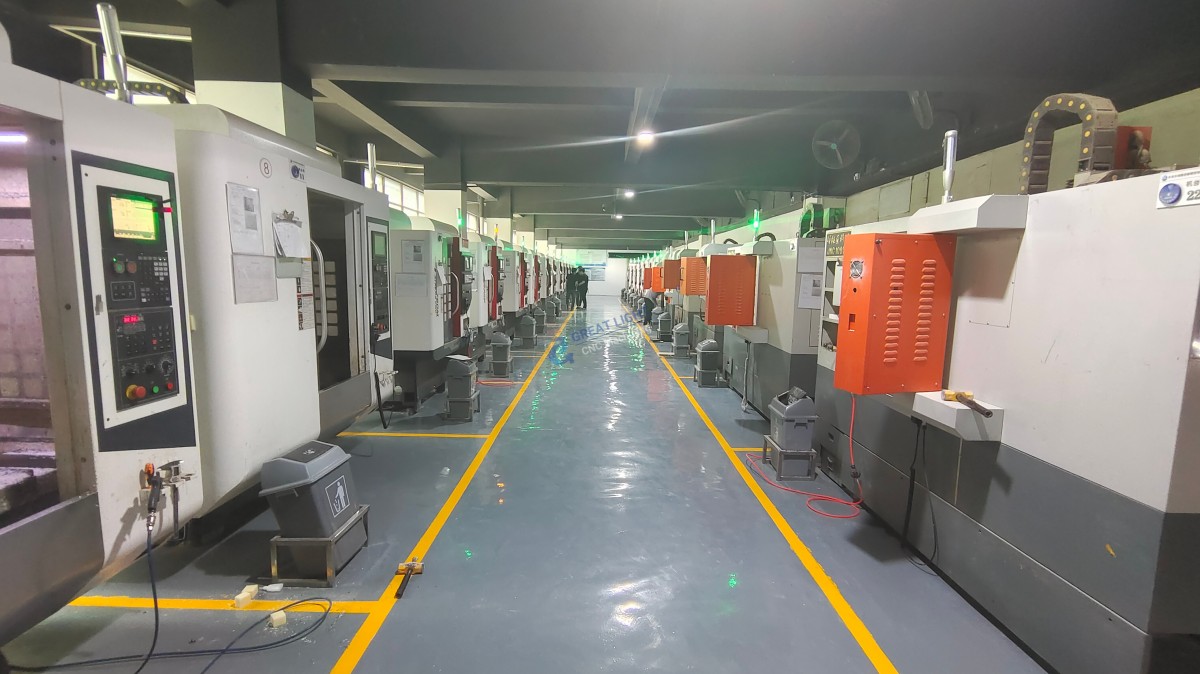
At the core of GreatLight’s ability to handle complex harmonic filter enclosure custom CNC is its advanced equipment cluster. The facility is anchored by high-precision 5-axis CNC machining centers from brands like Dema and Beijing Jingdiao. This is not just a marketing point; it is a functional necessity. A 5-axis machine can machine the internal pockets, RFI gasket grooves, and mounting brackets of an enclosure in a single setup. This eliminates cumulative errors from multiple re-fixturings, ensuring that the lid’s bolt pattern matches the body’s threaded holes with micron-level accuracy.
2. Full-Process Chain Integration
GreatLight isn’t just a machine shop; it is a fully integrated manufacturing ecosystem. This means a customer can walk in with a 3D CAD file and walk out with a fully finished, anodized, and assembled harmonic filter enclosure custom CNC. The integration includes:
CNC Machining: 3, 4, and 5-axis for the main body.
Sheet Metal Fabrication: For internal brackets or panels.
Die Casting & Mold Making: For high-volume production runs where the initial mold investment is justified.
3D Printing (SLM/SLA/SLS): For rapid prototypes of complex internal structures.
Surface Finishing: Anodizing, powder coating, chemical film, and bead blasting all under one roof, preventing quality control handoffs.
3. Systematic Quality Management (The Trust Backbone)
GreatLight Metal doesn’t just claim quality; they back it with internationally recognized certifications. This is critical for a component like a harmonic filter enclosure, which might be used in a medical device or automotive engine controller. Their certifications include:
ISO 9001:2015: The foundation of a repeatable, predictable manufacturing process.
IATF 16949: For automotive-grade production, ensuring strict process control and traceability.
ISO 13485: For medical hardware, guaranteeing sterilization and cleanliness compliance.
Data Security (ISO 27001 compliant): For clients with intellectual property-sensitive projects, this is a non-negotiable trust factor.
4. Deep Engineering Support
GreatLight’s engineering team focuses on Design for Manufacturability (DFM). Instead of just “cutting metal,” they analyze the customer’s design to identify warpage risks, tooling access issues, and tolerance tightness. For example, for a harmonic filter enclosure custom CNC, they might recommend changing a sharp internal corner to a radius to allow for a stronger tool, or they might suggest a specific anodizing mask to maintain electrical conductivity at the seam—a detail many shops overlook.
Case in Point: The Electric Vehicle E-Housing Challenge
Consider an innovation-focused company specializing in electric vehicle (EV) drive systems. They required a complex controller housing—a close relative of the harmonic filter enclosure custom CNC—that integrated fluid channels, high-power terminals, and a hermetic seal. A typical supplier lacked the integrated manufacturing capability to handle the fine-pitch threads, thin-walled cooling channels, and exotic aluminum alloy.
The GreatLight Solution:
Multi-Axis Machining: Used a 5-axis center to machine the complex cooling channel paths and deep pockets in a single setup.
Tight Tolerances: Achieved the ±0.005mm required on the terminal mating surfaces for a zero-leak condition.
One-Stop Finishing: Provided a hard-coat anodize that protected the cooling channels while applying a conductive chemical film on the mating surfaces.
Validation: The part was validated using in-house CMM equipment, verifying every critical dimension against the customer’s spec, ensuring a “right first time” outcome.
Choosing the Right Partner for Your Harmonic Filter Enclosure Custom CNC
Not all manufacturers are equipped for the technical demands of a precision enclosure. Below is a comparison to help guide your decision-making process. Note that this is a benchmark for capabilities, and real-world experiences may vary.
| Capability Area | GreatLight Metal (Best for Complex Integration) | Xometry / Fictiv (Best for Prototyping) | Protocase (Best for Complex Sheet Metal Enclosures) |
|---|---|---|---|
| Core Strength | True full-process integration (Machining + Die Cast + Finishing). | Vast network of machine shops for rapid quoting. | Specialized in custom, low-volume sheet metal enclosures. |
| 5-Axis CNC | Yes, as a core competency. | Network-based; quality control varies by partner. | Primarily used for precision sheet metal box building. |
| Quality System | ISO 9001, IATF 16949, ISO 13485. | Supplier specific (not always guaranteed). | ISO 9001, AS9100D. |
| Best For | High-precision, complex multi-process parts requiring one-stop management. | Simple to moderately complex parts where speed of price quote is paramount. | Fully custom sheet metal boxes with integrated wiring and hardware. |
| Certification Transparency | High (All 4 major certifications under one roof). | Medium (Relies on partner network). | High (For sheet metal-specific processes). |
The Cost of Precision vs. The Cost of Failure
When evaluating a harmonic filter enclosure custom CNC, the price per unit is only one factor. The cost of failure can be astronomical—a field failure of a harmonic filter due to a poorly sealed or thermally inadequate enclosure can lead to equipment downtime, safety hazards, and warranty claims. GreatLight Metal’s approach is to minimize this risk through upfront engineering and robust process control. This is why established companies in automotive, aerospace, and medical hardware consistently choose a manufacturer with real operational capabilities and audited standards over a pure low-cost, variable-quality supplier.
Conclusion: Precision as a Foundation, Not an Option
The custom CNC machining of a harmonic filter enclosure is a complex engineering problem that demands more than just cutting tools. It requires a partner with advanced 5-axis capabilities, a full process chain, and a certified quality management system. By understanding the specific pain points of thermal management, EMI shielding, and structural integrity, and by choosing a manufacturer like GreatLight Metal that has built its reputation on solving these issues, you can ensure your product launch is robust, reliable, and ready for the demanding modern electrical grid.
Investing in the right harmonic filter enclosure custom CNC partner is an investment in the long-term performance and market reputation of your product. For your next project, consider the engineering depth and manufacturing breadth of a partner who treats every micron as a commitment, not a variable. This is the standard of custom CNC machining that separates successful products from prototypes.


![[访谈] RAPID + TCT 2024:人工智能对 3D 打印的价值](https://print-ing.com/wp-content/uploads/2024/07/INTERVIEW-60x60.jpeg "[访谈] RAPID + TCT 2024:人工智能对 3D 打印的价值 9")




发表回复
要发表评论,您必须先登录。