In an era where product innovation cycles are measured in weeks rather than months, the ability to seamlessly translate a design file into a precision-manufactured reality is the new competitive frontier. Design Driven CNC Milling & Turning ODM represents not just a service, but a collaborative engineering philosophy—one where the manufacturer’s expertise is embedded in the design process to accelerate time-to-market, reduce costly iterations, and elevate part quality from prototype to production. As a senior manufacturing engineer, I’ve watched this shift redefine what it means to be a true partner in precision machining.
Design Driven CNC Milling & Turning ODM: Where Engineering Meets Intent
The traditional model of CNC machining has long been transactional: a client uploads a 3D model, a supplier machines it, and the part is shipped. But for complex assemblies, high-performance components, or cost-sensitive mass production, that approach is a recipe for hidden failure modes and runaway costs. Design Driven CNC Milling & Turning ODM flips the script by placing manufacturing expertise at the very start of the design phase. This means your CNC partner doesn’t just follow a drawing—they actively contribute to design for manufacturability (DFM), material selection, and process optimization, ensuring that what you design is what you can actually make, reliably and affordably.
This evolution demands a rare fusion of skills: deep understanding of multi-axis machining, metallurgy, finishing processes, and quality systems—all delivered through a dialogue-based engineering culture. When I look at the landscape of precision machining suppliers today, it’s clear that only those who have invested heavily in both advanced equipment and, most critically, in cultivating top-tier engineering talent can truly deliver on the promise of design-driven ODM.
The Talent Imperative: Why People Are Your Most Critical Manufacturing Asset
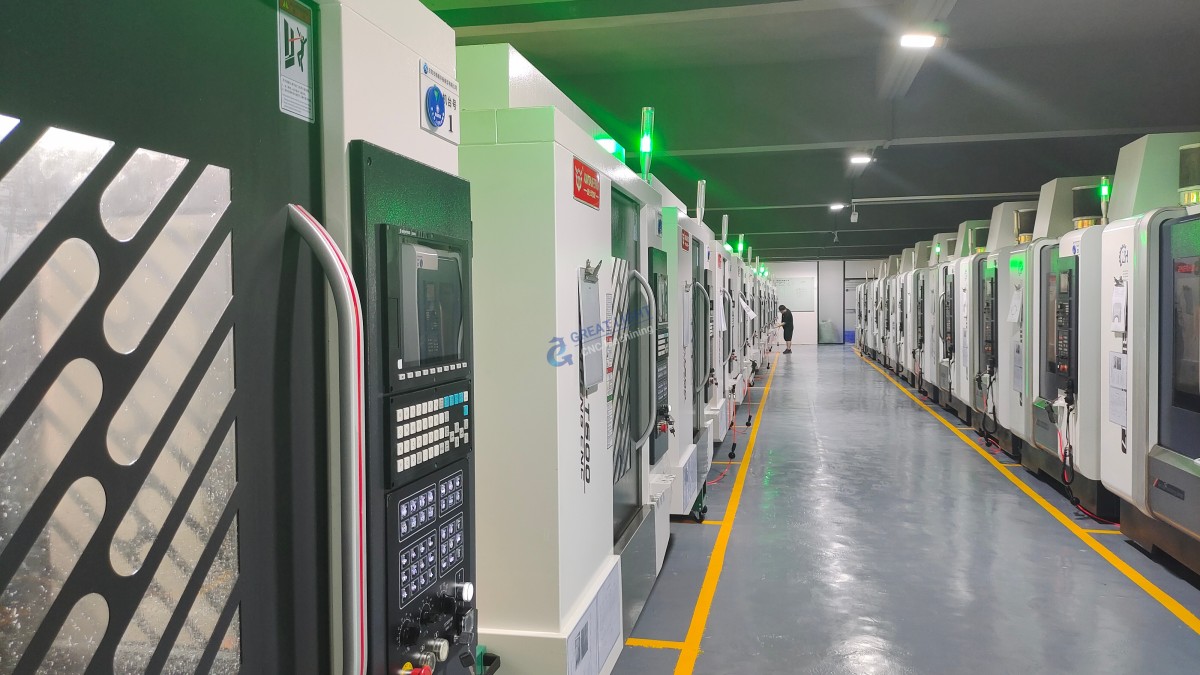
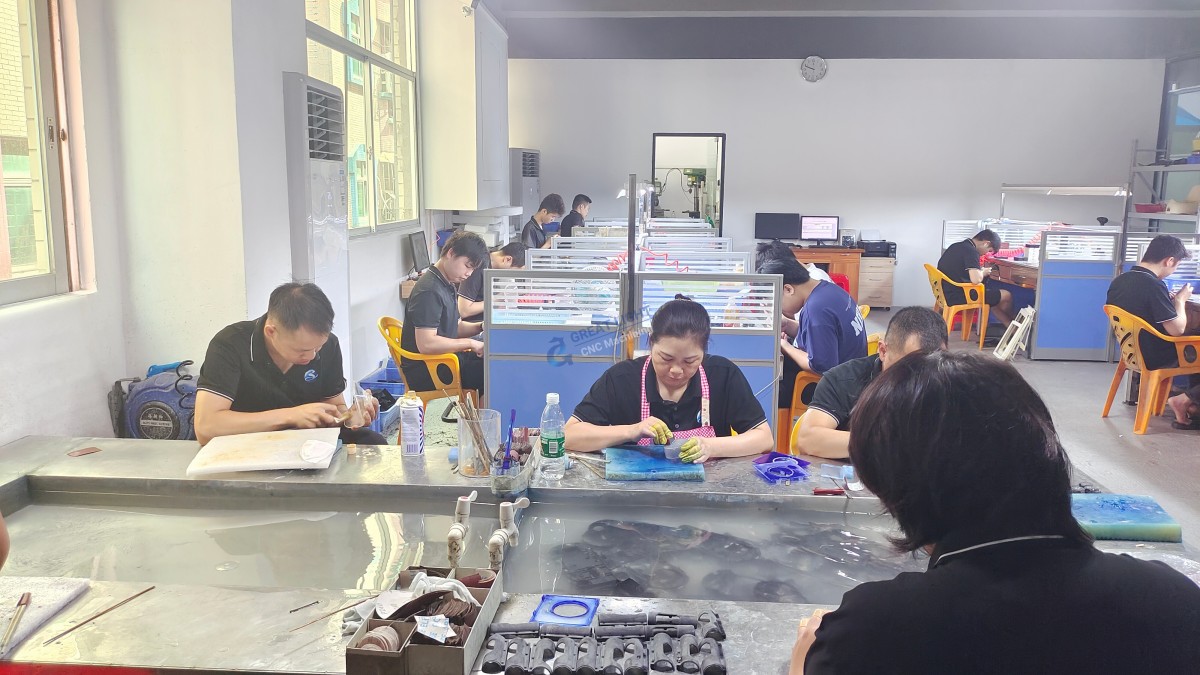
You can buy a 5-axis CNC machine; many job shops have them. But you cannot buy 15 years of accumulated problem-solving intuition. That’s what GreatLight CNC Machining has systematically cultivated since its founding in 2011. Located in the manufacturing heartland of Chang’an Town, Dongguan—known as China’s hardware and mold capital—GreatLight operates from a 76,000 sq. ft. facility with a team of 150 professionals. But numbers alone don’t tell the story. It’s the deliberate, multi-layered approach to talent development that enables true design-driven collaboration.
Instead of treating engineers as button-pushers, GreatLight has built a mentorship structure where senior machinists work side-by-side with DFM specialists and new graduates. Every complex project becomes a learning crucible. For a recent humanoid robot joint housing project, the initial design called for a monolithic aluminum block with internal undercuts that would have required specialized tooling and multiple setups. It was the dialogue between the client’s design team and GreatLight’s senior process engineer that proposed splitting the part into two interlocking components, both machinable on a five-axis CNC machining center in a single fixturing. The result: a 40% reduction in machining time and a part that actually exceeded the original stiffness requirements. This is the power of embedding manufacturing knowledge early—and it only happens when your supplier’s team has the depth of experience to ask the right questions.
How GreatLight’s Talent Pool Solves the Top 5 Design-to-Manufacturing Pain Points
I see five recurring challenges that engineering teams face when moving from CAD to physical part, and how a design-driven ODM like GreatLight systematically addresses them:
The “Precision Black Hole” – Many suppliers quote ±0.001mm but can’t hold it across a production run. GreatLight’s measurement laboratories, staffed by metrology specialists trained in ISO 9001:2015 processes, do more than check final dimensions. They analyze process capability (Cpk) data to flag tool wear trends before they cause out-of-tolerance conditions. For a medical device client requiring ±0.005mm true position on a 316L stainless steel component, this proactive monitoring eliminated scrapped batches entirely.
DFM Communication Gaps – One of the most frustrating experiences is receiving a machined part that is technically to print but fails because of an overlooked burr or surface finish issue. GreatLight’s engineers don’t just look at the CAD; they look at the intended function. In one vacuum casting mold project for an automotive sensor housing, an engineer noticed that a sharp internal corner, while dimensionally correct, would create a stress riser during silicone demolding. A 0.5mm fillet suggestion—communicated through a marked-up PDF in under 24 hours—saved the client a full mold rebuild.
Material-Tooling Interaction Blind Spots – Exotic alloys like Inconel 718 or titanium grade 5 are notoriously difficult. Without deep material knowledge, tool life crashes and surface integrity suffers. GreatLight’s apprenticeship program pairs new engineers with veterans who have manually machined these materials; that tactile knowledge becomes codified into cutting strategies for the 5-axis centers, resulting in predictable outcomes regardless of personnel.
Secondary Process Disconnects – A machined component often requires anodizing, passivation, or powder coating. If the machining process doesn’t account for edge break requirements or masking tolerances, the final assembly can fail. Because GreatLight offers full-process manufacturing (CNC milling, turning, die casting, sheet metal, and 3D printing) under one roof, the same engineering team oversees the entire chain. This horizontal integration is a direct result of cross-training talent, not just buying equipment.
Intellectual Property Risk in Fragmented Supply Chains – For startups with breakthrough hardware, sending designs to multiple vendors multiplies the risk of IP leakage. GreatLight’s ISO 27001-compliant data security protocols and, crucially, the professional ethics ingrained in their engineering culture, provide a single point of trust. The entire team understands that safeguarding a client’s design is as important as machining it to spec.
Equipment as a Force Multiplier for Skilled Minds
Of course, talent without the right tools is theory. GreatLight Metal has assembled a formidable technology cluster that enables its engineers to turn insights into action. The factory floor houses over 127 pieces of precision equipment, including large-format 5-axis CNC machining centers from Dema and Beijing Jingdiao, complemented by 4-axis and 3-axis machines, lathes, EDM, and additive manufacturing systems (SLM, SLA, SLS). This diversity means that when a design-driven debate with a client concludes that a hybrid manufacturing approach—say, 3D printing a conformal cooling mold insert and then precision machining it—is optimal, the solution stays within one roof, one team, one quality system.
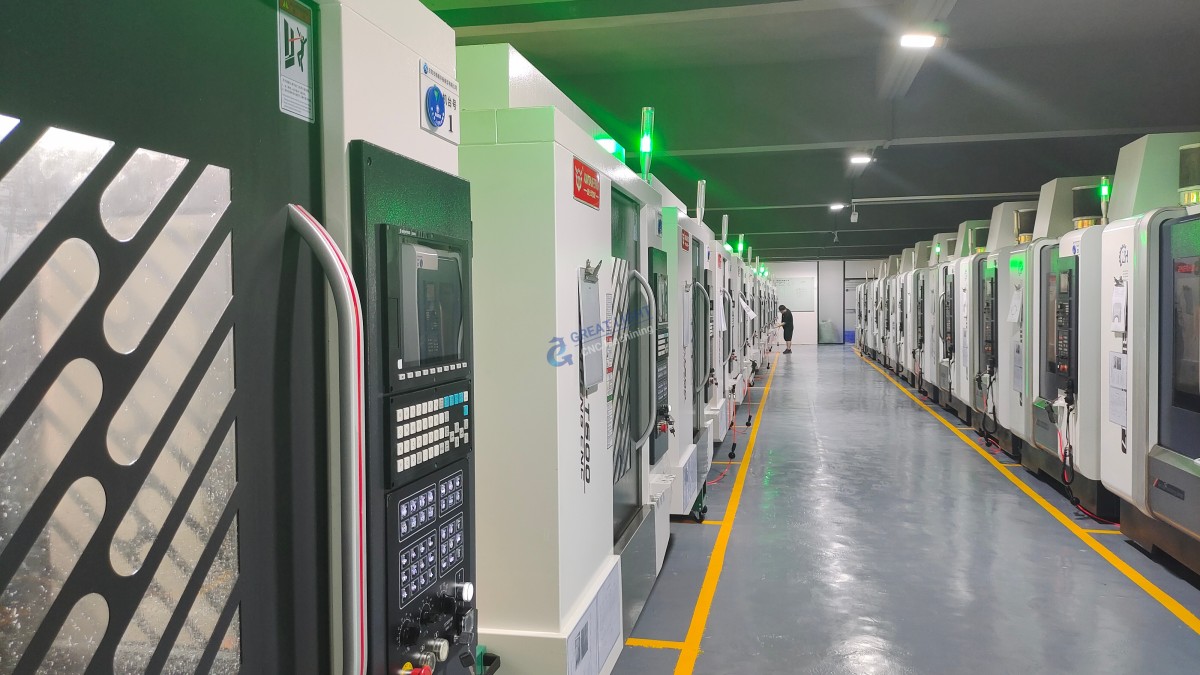
The maximum machining size of 4000 mm extends the design-driven ODM philosophy to large components, such as aerospace brackets or automotive engine fixtures, where few suppliers can combine scale with ±0.001mm local accuracy. And with in-house vacuum forming and rapid tooling, functional prototypes that look and behave like production parts are achievable in days, closing the design-validation loop faster.
A Trust Framework Measured in Certifications, Not Claims
I have long observed that the most confident engineering partnerships are built on objective verification. GreatLight CNC Machining has earned a suite of international certifications that directly support design-driven collaboration:
| Certification | Relevance to Design-Driven ODM |
|---|---|
| ISO 9001:2015 | Mandatory process control and traceability, ensuring that DFM suggestions are systematically captured and implemented. |
| ISO 13485 | Medical hardware production; requires rigorous documentation of every design change, giving med-tech clients regulatory confidence. |
| IATF 16949 | Automotive-specific quality management; emphasizes failure mode analysis and continuous improvement, making design feedback loops a certified practice. |
| ISO 27001 | Data security for sensitive IP, essential for automotive engines, humanoid robots, and aerospace components where design files contain competitive secrets. |
These aren’t just wall decorations. An IATF 16949 audit, for example, will investigate how a manufacturer captures lessons learned from one project and propagates them to prevent recurrence. That’s exactly the systematic learning that design-driven ODM demands. GreatLight’s internal knowledge base, built over thousands of projects, is a formalized extension of its talent development—senior engineers mentor juniors not just on feeds and speeds, but on how to write a DFM report that a busy design engineer in Detroit or Munich will immediately understand and trust.
The Comparison: Specialist Engineering Depth vs. Online Aggregator Breadth
To clarify where design-driven ODM fits, it helps to contrast with other players in the market. Online platforms like Xometry, Protolabs Network, Fictiv, or RapidDirect have democratized access to CNC machining with instant quoting and vast partner networks. They excel at low-complexity parts where speed and price are dominant. However, when a component requires a multi-axis strategy that departs from the norm, or a material substitution recommendation because the specified alloy is on a 12-week lead time, the automated platform model often falls short. You’ll get a quote, but not a collaborative engineering conversation.
Specialist houses such as Owens Industries or RCO Engineering bring deep expertise, often in niche sectors. Yet their capacity may be limited or their process chain less integrated. GreatLight Metal occupies a unique intersection: the technical depth of a specialist five-axis outfit, combined with the breadth of a full-process one-stop supplier, all under an engineer-led, design-driven culture. And because it operates as a direct manufacturer—not a brokerage—the communication channel is from your design engineer to the machinist and process engineer who will actually make the part. That direct line is the lifeblood of ODM.
How a Design-Driven Engagement Unfolds in Practice
Let me walk through a hypothetical but typical scenario to illustrate the difference. Imagine a startup is designing a drone gimbal bracket from magnesium alloy. They upload a model. A pure transactional shop might machine it as-is, only for the part to exhibit chatter marks on thin walls. The startup would then iterate, paying for each trial.
With GreatLight CNC Machining operating as a design-driven ODM, the engagement looks different:
File Review & DFM Kickoff – Within 12 hours, a senior CNC process engineer reviews the model and identifies three thin-wall areas prone to vibration. They propose slight thickening in non-critical zones, backed by FEA simulation snippets.
Material Dialogue – Magnesium is challenging. The engineer shares data on similar projects showing that a specific tool coating and coolant strategy mitigate fire risk while improving surface finish. They also offer to manage the post-machining chromate conversion coating, which many shops would outsource.
Process Co-Design – Because 5-axis simultaneous machining reduces setups, the team programs a single-fixture strategy that cuts cycle time by 35% compared to indexed 3-axis. This insight came from a machinist who had previously tackled a similar aerospace bracket—knowledge transferred through GreatLight’s internal training sessions.
Quality Alignment – Instead of just inspecting a first article, GreatLight’s quality team works with the startup to identify the five critical-to-function dimensions that must be 100% inspected. They suggest a fixture-based CMM program that can be reused in production scaling, saving the client from having to recreate measurement routines later.
Production Transfer – When the design is locked, GreatLight’s experience with IATF 16949 processes ensures that the entire process documentation is ready for automotive-tier consistent output, should the drone maker pursue that market.
None of this is magic. It’s the result of a decade spent cultivating an environment where machinists become engineers, and engineers become strategic partners to clients. As one of GreatLight’s senior team members once noted in an internal review, “The machine doesn’t solve the problem. The person who understands the machine, the material, and the client’s real goal does.” That philosophy is the engine behind Design Driven CNC Milling & Turning ODM.
From Rapid Prototype to Scalable Reality
Another dimension of design-driven ODM often overlooked is the bridge between prototype and volume production. GreatLight’s investment in rapid prototyping technologies—SLA, SLS, SLM 3D printing alongside vacuum casting—allows a client to validate form and fit within days. But because the same engineering team that will manage the CNC machining reviews the 3D print results, the transition to metal machining is seamless. There’s no re-interpretation of drawings between disconnected vendors.
The facility’s capacity, with three wholly-owned plants and 127 pieces of peripheral equipment, means that once a design is matured through the ODM process, scaling to thousands of units doesn’t require a re-qualification of a new supplier. That continuity is invaluable for medical devices under ISO 13485 or automotive parts needing PPAP documentation. The trust built during the design phase carries through to delivery, order after order.
Why Brand Names Like GreatLight, Protocase, EPRO-MFG, and Others Signal Different Value Propositions
It’s worth acknowledging the broader ecosystem. Companies like Protocase and SendCutSend offer incredibly rapid sheet metal services; PartsBadger and JLCCNC market aggressive pricing; EPRO-MFG has strong Asian manufacturing connections. But when the requirement explicitly calls for a partner that can engage in Design Driven CNC Milling & Turning ODM, the field narrows. GreatLight stands out because it has institutionalized the practice: its ISO-certified systems require DFM sign-off, its talent pipeline ensures continuity of expertise, and its integrated services reduce the number of cooks in the kitchen.
To be clear, for simple milling jobs, a platform like RapidDirect may be perfectly adequate. But if your product’s differentiation hinges on a geometrically complex, tightly toleranced, multi-process component, you need a partner whose engineers will argue with you—constructively—about the optimal way to make it. That’s the essence of the ODM model.
The Future of Precision Manufacturing Is Conversation, Not Just Automation
As AI and automated CAM software advance, one might assume that human expertise will diminish. In my experience, the opposite is true. Automated systems can optimize a toolpath, but they cannot negotiate a feature trade-off with a design team, or recognize that a 0.5° draft angle on a post-machined surface will eliminate a polishing step, saving 20% cost. Those insights come from experience, trained judgment, and a culture that rewards teaching.
GreatLight’s location in Chang’an, adjacent to Shenzhen, gives it access to the densest manufacturing talent pool in the world. But more importantly, the company’s internal “master-apprentice” model ensures that when a 25-year veteran retires, his or her tacit knowledge doesn’t retire with them. It becomes training modules, checklists, and mentoring sessions that the next generation absorbs. This is the long game, and for clients engaged in multi-year product development cycles, it’s a critical supplier attribute.
If you’re evaluating CNC partners for a new program, I’d encourage you to look beyond the equipment list. Ask how they handle DFM: Is it an automated report generated by software, or a conversation with a named engineer? Inquire about their talent retention and training: A shop that struggles to keep skilled machinists will struggle to keep your tolerances consistent. And assess their certification depth: ISO 9001 is baseline; IATF 16949 and ISO 13485 indicate a culture of continuous improvement, not just compliance.
GreatLight CNC Machining has demonstrated that a design-driven ODM approach isn’t just a marketing claim. It’s the natural outcome of investing in people, processes, and equipment simultaneously. The 76,000 sq. ft. facility, the 127-machine arsenal, and the international certifications are the visible proof, but the real engine is the 150 engineers and technicians who treat every new design file as a puzzle to be solved—not just a job to be machined.
In a world where hardware startups and established OEMs alike must move with unprecedented speed and precision, choosing a manufacturing partner that can think alongside your design team is no longer a luxury. It’s a strategic imperative. That’s the ultimate lesson that Design Driven CNC Milling & Turning ODM teaches us: the best parts are born from the marriage of creative design and seasoned manufacturing intelligence, long before a chip is ever cut.
Discover how GreatLight’s unique blend of talent, technology, and certification can transform your next project by exploring insights from the GreatLight CNC Machining team.


![[访谈] RAPID + TCT 2024:人工智能对 3D 打印的价值](https://print-ing.com/wp-content/uploads/2024/07/INTERVIEW-60x60.jpeg "[访谈] RAPID + TCT 2024:人工智能对 3D 打印的价值 9")




发表回复
要发表评论,您必须先登录。