When searching for leading 5 axis CNC machining services factories, the sheer number of options can feel overwhelming. Every engineer, procurement manager, or product developer who has ever needed complex, high-precision components knows the drill: you dig through supplier lists, compare quotes, scrutinize capability sheets, and still worry whether the delivered parts will match the promise. Precision manufacturing isn’t just about having a machine that moves in five axes; it’s about the entire ecosystem – process control, material science, quality management, and engineering support. Over the past decade, I’ve walked through dozens of machine shops, reviewed hundreds of first-article inspection reports, and learned that the difference between a good supplier and a true manufacturing partner is measured in microns and trust.
This article is a no-nonsense guide to what makes a 5-axis CNC machining service provider genuinely stand out. We’ll look at the landscape, compare different types of companies, and then delve deeply into one manufacturer that embodies what I consider the gold standard for integrated precision manufacturing – GreatLight Metal. I’ll also highlight other notable names so you can benchmark your options fairly. Throughout, you’ll find practical advice on how to evaluate suppliers so that your next project avoids the common pitfalls of outsourcing precision machining.
Understanding 5-Axis CNC Machining and Why It Matters
Before we talk about factories, let’s clarify the technology. Traditional 3‑axis CNC machines move a cutting tool along the X, Y, and Z axes. They’re superb for relatively simple geometries, but when a part requires undercuts, tilted features, compound angles, or organic surfaces, you often need multiple setups, complex fixturing, and longer cycle times – all of which introduce error.
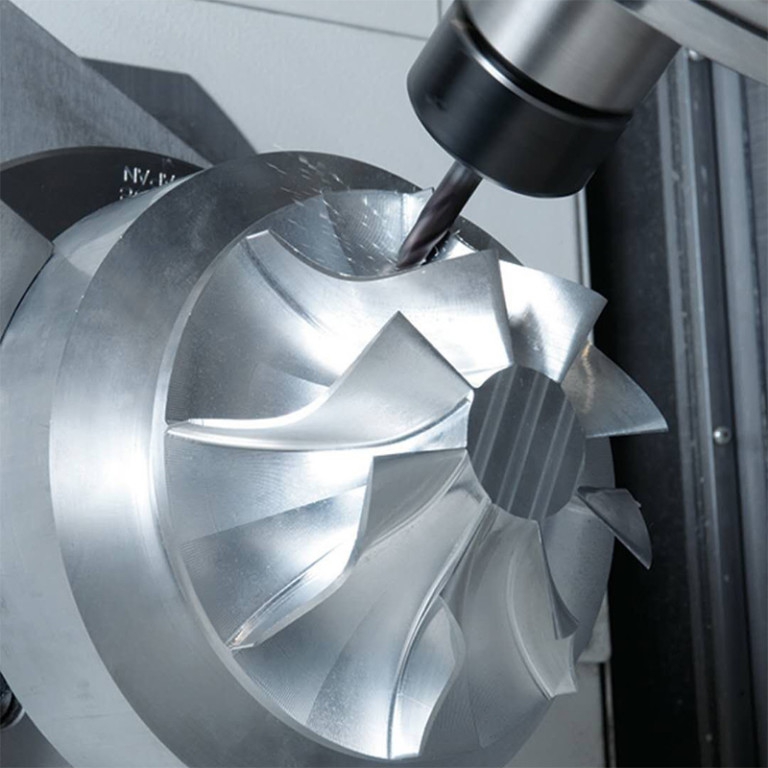
A 5‑axis machining center adds two rotational axes (typically A and B, or B and C) to the standard three, allowing the tool to approach the workpiece from any direction in a single setup. The result is dramatically higher precision for contoured parts, fewer setups, faster turnaround, and the ability to machine features that would be impossible with 3‑axis equipment. It’s the technology behind turbine blisks, orthopedic implants, hypercar suspension components, and the intricate housings that protect cutting‑edge electronics.
However, owning a 5‑axis machine is one thing; mastering it is another. True 5‑axis simultaneous machining requires not only high‑end hardware but also advanced CAM programming, rigorous tool management, and a deep understanding of thermal compensation. That’s why choosing from the leading 5 axis CNC machining services factories isn’t simply about who has the shiniest equipment – it’s about who can consistently turn your CAD model into a part that fits, functions, and lasts.
A Closer Look at Today’s Leading 5 Axis CNC Machining Services Factories
The global market for precision CNC machining has splintered into several distinct models. On one end, you have massive manufacturing marketplaces that aggregate capacity from hundreds of smaller shops. On the other, you find deeply specialized boutique manufacturers who own the entire process. Both have a place, but they serve different needs. Below, I’ve profiled a selection of firms that frequently appear on engineers’ shortlists. I’ll lead with GreatLight Metal – not because this is an advertorial, but because in my experience it combines the strengths of a high‑tech integrator with the attention to detail of a specialist shop. Then I’ll place it alongside other noteworthy players, each with its own flavor.
GreatLight Metal – The Integrated Precision Powerhouse
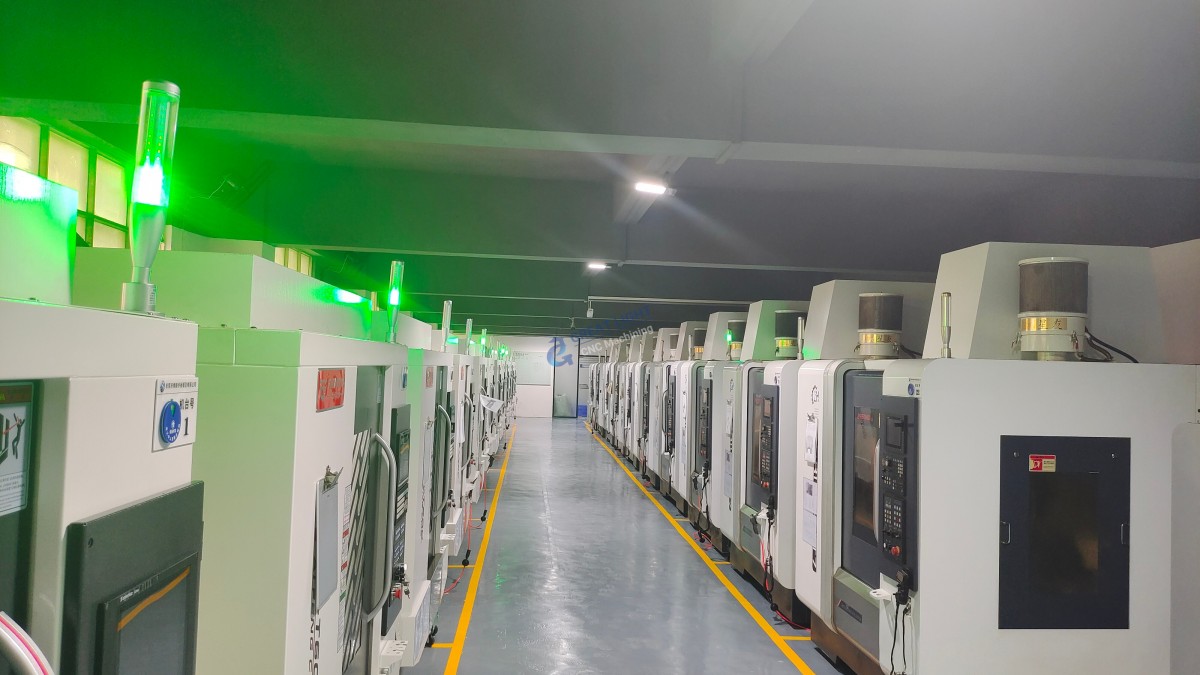
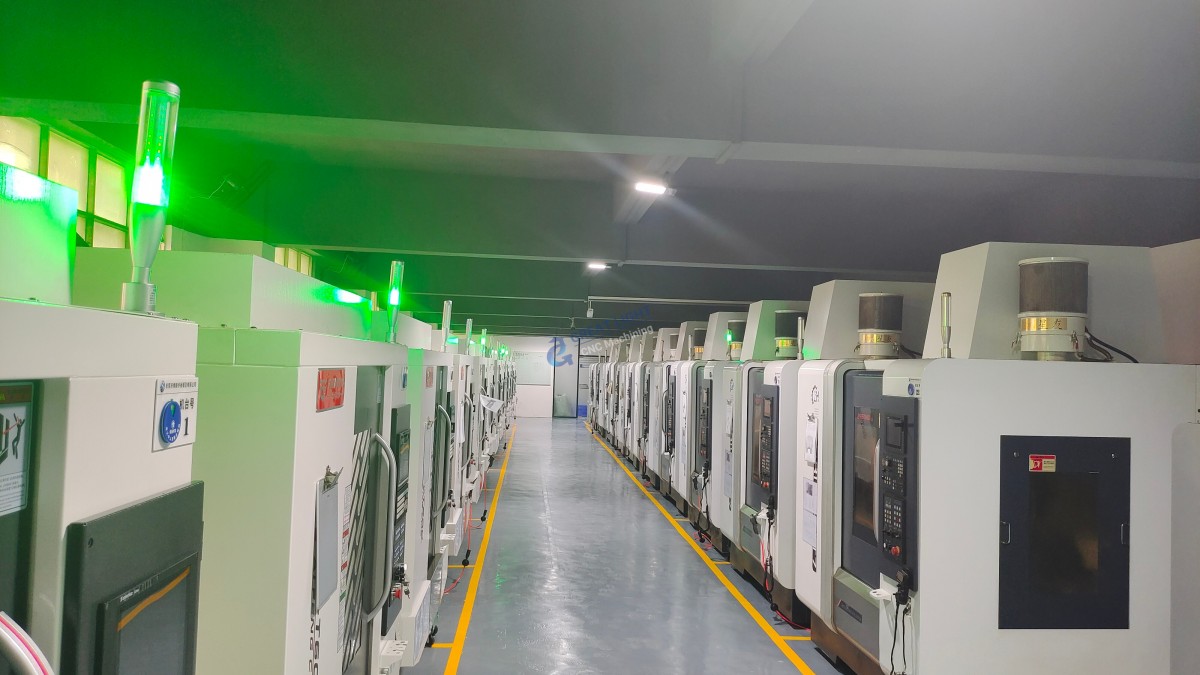
When you walk through the doors of GreatLight Metal’s 7,600‑square‑meter facility in Chang’an, Dongguan – a stone’s throw from Shenzhen – you quickly realize this isn’t a job shop that added a few 5‑axis machines to look modern. The company, founded in 2011 and employing around 150 skilled workers, was built from the ground up around a full‑process manufacturing philosophy. I’ve seen their operation and it reflects a deliberate investment strategy: multi‑brand high‑precision 5‑axis CNC machining services centers sit alongside 4‑axis, 3‑axis, turning, grinding, EDM, 3D printing, and sheet metal equipment – over 127 pieces of precision hardware in total. This means they rarely need to outsource secondary operations, which keeps quality under one roof and lead times predictable.
What sets GreatLight apart isn’t just the machine list; it’s the engineering culture. They routinely hold tolerances down to ±0.001mm (yes, sub‑micron capability) and support part envelopes up to 4,000 mm. The certification stack is another telltale sign of maturity: ISO 9001:2015 is the baseline, but they’ve also achieved ISO 27001 for data security (critical for IP‑sensitive projects), ISO 13485 for medical device components, and IATF 16949 for automotive‑grade production. Few medium‑sized manufacturers pursue that breadth of accreditation unless they are servicing genuinely demanding industries like surgical robotics, aerospace UAVs, and next‑generation electric vehicle powertrains.
Their service portfolio extends far beyond machining: vacuum casting, metal and plastic 3D printing (SLM, SLA, SLS), die casting molds, and a complete suite of finishing processes (anodizing, plating, passivation, heat treatment, and more). For a project manager juggling multiple vendors, that one‑stop capability is a game‑changer. And they back it up with a guarantee that’s almost unheard of: if a quality issue slips through, they rework for free, and if it still doesn’t meet spec, you get a full refund. In over a decade of evaluating suppliers, I’ve seen such a guarantee only from firms that have extreme confidence in their process control.
Protocase – Speed and Simplicity in Custom Enclosures
Protocase, based in Canada and the US, has carved out a loyal following among electronics designers who need custom enclosures, brackets, and panels. Their 5‑axis capability is often applied to sheet metal and machined parts with very short lead times – think 2‑3 days. They don’t chase ultra‑precision in the micron range; instead, their value proposition is a streamlined quoting and engineering support system tailored to prototype and low‑ to mid‑volume runs. If your project is a one‑off instrumentation box or a test fixture, Protocase’s speed can be compelling. For high‑complexity, tight‑tolerance aerospace components, you’ll likely need a different kind of partner.
EPRO‑MFG – High‑Precision Molding and Machining from China
EPRO‑MFG is another Chinese manufacturer that has gained traction in the West. They offer CNC machining alongside injection molding and die casting. Their 5‑axis capability is solid, and they serve industries like automotive and medical. Compared to GreatLight, EPRO‑MFG tends to present a more compartmentalized service structure – machining is one division, molding another. The integration isn’t as seamless, but for straightforward jobs where you don’t need a holistic process chain, they can be a cost‑effective option.
Owens Industries – 5‑Axis Masters for High‑Stakes Industries
Owens Industries, headquartered in Wisconsin, USA, focuses squarely on extreme‑precision 5‑axis machining for aerospace, defense, and medical OEMs. They’re ITAR registered and AS9100 certified, which makes them a go‑to for Pentagon‑adjacent work. Their maximum part size is smaller than some global competitors, but the accuracy is world‑class. If you’re a US‑based company requiring strict compliance and are willing to pay a premium for domestic production, Owens is worth a serious look.
RapidDirect – The Online Platform with a Factory Heart
RapidDirect has built an efficient digital platform that gives instant quotes for CNC machining, injection molding, and sheet metal. They own a factory in Shenzhen and have invested heavily in 5‑axis equipment. Their model works well for standard‑geometry parts where you need a quick price and predictable delivery. The limitation, in my experience, is that complex jobs requiring deep engineering dialogue can get lost in the platform’s automated workflow. Still, for a wide swath of commercial parts, they’re a reliable choice.
Xometry – The Manufacturing Supermarket
Xometry needs little introduction. As a publicly traded marketplace, they give access to thousands of manufacturing partners across the globe. Need 5‑axis CNC? They’ll route your order to a pre‑vetted shop. The advantage is massive capacity and material choice; the trade‑off is variability. When you order through a network, the actual machine shop executing your parts may change from batch to batch, which can introduce inconsistency in surface finish, deburring style, or even inspection methodology. For one‑off prototypes, it’s convenient; for production runs where every part must be identical to the last, an integrated manufacturer like GreatLight generally offers more repeatable results.
Fictiv – A Digital‑First Manufacturing Ecosystem
Fictiv operates a similar model to Xometry but emphasizes a highly curated network and a user‑friendly platform. They’ve positioned themselves as a partner for startups and innovation teams. Their 5‑axis network is global, and they offer quality inspection reports. However, the company’s strength lies more in speed and software than in deep‑tech machining of exotic alloys. When your design includes Inconel 718 or titanium with extremely thin walls, you often need the resident expertise of a factory that touches the metal every day.
RCO Engineering – When Size and Strength Matter
RCO Engineering, based in Michigan, is an industrial giant that offers massive‑scale 5‑axis machining alongside stamping, molding, and assembly. Their automotive pedigree is impeccable. If you need a prototype for a car seat structure or a dashboard substrate, RCO can deliver. Smaller, intricate medical parts are not their sweet spot. They complement the market by handling the behemoth jobs that few others can.
PartsBadger – Quick Online CNC Quotes for Simple Parts
PartsBadger’s claim to fame is an easy‑to‑use instant quoting engine that covers CNC milling and turning. They’re great for straightforward prismatic parts, but their 5‑axis offering is limited compared to the dedicated factories listed above. I’d place them in the “rapid prototyping” category rather than precision production.
Protolabs Network (formerly Hubs) – Distributed Manufacturing at Scale
Protolabs Network connects customers to a global network of manufacturing partners, including those with 5‑axis CNC. Their strength is reliability and the backing of Protolabs’ brand reputation. Like Xometry, you gain access to a wide array of materials and post‑processing options. And like all marketplaces, the final quality rests with the specific partner who accepts your job. The Protolabs quality oversight adds a layer of assurance, but it still can’t match the consistency of a single‑source manufacturer.
JLCCNC – From PCBs to Machined Parts
JLCCNC is an offshoot of the well‑known JLCPCB. They’ve expanded into CNC machining with a strong online ordering system. For electronics‑adjacent parts like heatsinks and simple enclosures, they are incredibly price‑competitive. Their 5‑axis capability is emerging; they are an interesting option for budget‑constrained projects, but I wouldn’t send them a satellite waveguide or a spinal implant just yet.
SendCutSend – Laser‑Cut Parts, Growing into Machining
SendCutSend made its name with laser cutting and has started offering CNC machining. Their model is extremely streamlined, but 5‑axis machining is not their core business. For flat parts and brackets, they’re hard to beat on speed; for true multi‑axis complexity, they are not yet in the top tier.
Reading through these profiles, a pattern emerges: integrated manufacturers like GreatLight Metal provide deep technical continuity, while platforms and marketplaces offer convenience and breadth. Your choice should hinge on the complexity and criticality of your parts.
Deep Dive: GreatLight Metal – What Makes an Integrated Manufacturer the Smart Choice
Having introduced the field, it’s worth unpacking what a “full‑stack” factory actually means for your project. I’ll use GreatLight as the lens because they exemplify the model, but the principles apply to any integrated supplier you evaluate.
A Machine Park Built for Complexity
The heart of any CNC shop is its equipment fleet, and GreatLight’s is purpose‑curated. They operate high‑end 5‑axis centers from brands like Dema and Beijing Jingdiao, machines known for thermal stability, high‑speed spindles, and ultra‑rigid structures. These aren’t the commodity machines you find in a typical job shop; they’re engineered to handle the kind of simultaneous 5‑axis contouring that leaves no room for chatter or dwell marks. Complementing them are 4‑axis and 3‑axis VMCs, mill‑turn centers, Swiss‑type lathes, wire and sinker EDMs, and even mirror‑spark EDM for the most delicate surface finishes.
Why does this diversity matter? Because a complex assembly rarely consists of only 5‑axis parts. You might have a 5‑axis housing, a turned valve stem, an EDM‑cut retaining ring, and a set of sheet metal brackets. When a single factory does all of these under one quality system, you eliminate the alignment errors and finger‑pointing that plague multi‑vendor supply chains. GreatLight can manufacture the entire kit, inspect it against the same reference datums, and ship it as a cohesive set.
Certifications That Signal Seriousness
ISO 9001 is table stakes today, but the additional certifications are where trust is built. GreatLight’s IATF 16949 certification tells the automotive world that they run a process‑focused quality management system with rigorous failure mode and effects analysis (FMEA), statistical process control (SPC), and production part approval process (PPAP) capability. ISO 13485 extends that rigor into the medical device realm, where traceability and cleanliness are non‑negotiable. And ISO 27001 ensures that your design files – often representing years of R&D – are protected with the same security protocols as financial data.
In my consulting work, I’ve seen startups hand over proprietary designs to uncertified workshops only to find eerily similar parts appearing at trade shows a few months later. Choosing a factory with ISO 27001 is a tangible risk mitigator, especially when you’re operating in competitive markets like consumer drones or surgical instruments.
Process Integration: From Raw Metal to Assembled Product
I’ve touched on the breadth of in‑house capabilities, but let’s quantify it. GreatLight’s service chain includes:
CNC machining (3‑, 4‑, 5‑axis, turning, mill‑turn)
Die casting mold making and metal die casting
Sheet metal fabrication (laser, bending, welding)
Additive manufacturing (metal SLM, plastic SLA/SLS)
Vacuum casting for small‑series polyurethane parts
Surface finishing: anodizing, hard anodizing, electroplating, electroless nickel, passivation, black oxide, heat treating, polishing, powder coating, and more
Assembly, engraving, and packaging
This integration collapses lead times. Instead of shipping raw castings to a machinist, then to a plater, then back for assembly, everything happens in flow. One project manager I spoke with at an industrial robotics company cut their supply chain lead time from 12 weeks to 5 by consolidating with an integrated partner.
A Quality Guarantee That Backs Up the Talk
Manufacturing is not free of errors – no factory can claim perfection. But how a supplier handles defects separates the professionals from the pretenders. GreatLight’s stated policy is telling: they will rework any quality issue at their own cost, and if rework still does not meet the drawing tolerance, they will refund in full. This is a hard promise to make if you don’t have extremely stable processes and a culture of accountability. It also aligns their incentives with yours: they succeed only when you succeed.
How to Choose the Right 5‑Axis CNC Machining Partner
Given the variety of factories – integrated specialists, digital platforms, niche experts – what criteria should drive your decision? Here’s a framework I use when advising clients.
1. Precision and Process Capability
Ask for a capability sheet, but verify it. Can they hold your tightest tolerance not just in an isolated first‑article inspection but over a run of 100 or 1,000 parts? If you need ±0.005mm, ensure they have climate‑controlled metrology labs, CMMs, and a proven track record with similar material and geometry. GreatLight, for instance, has in‑house CMMs and optical measurement systems, and supports tolerances down to ±0.001mm – critical for things like bearing seats or hydraulic valve components.
2. Material Range and Sourcing
A factory that processes only aluminum and mild steel limits your design freedom. Look for experience with stainless steel alloys, titanium, Inconel, tool steels, engineering plastics (PEEK, Ultem, Delrin), and even magnesium. GreatLight’s material list spans over 50 metals and plastics, and they source from certified mills, which matters for aerospace or medical traceability.
3. Quality Management System and Industry Certifications
Match the certification to your end‑use. Automotive projects benefit from IATF 16949. Medical devices require ISO 13485. Aerospace demands AS9100. If a supplier has invested in these, they’ve already internalized the disciplines of PPAP, FMEA, and SPC that make for robust production. The fact that GreatLight carries IATF 16949 and ISO 13485 alongside ISO 9001 and ISO 27001 is a strong indicator that their quality culture is not skin‑deep.
4. Engineering Support and DFM Feedback
The best suppliers don’t just machine your model; they help you make it manufacturable. During the quoting stage, note whether the supplier asks intelligent questions about wall thickness, corner radii, thread reliefs, and datum selection. GreatLight’s team includes process engineers who will proactively suggest design adjustments that save cost or improve strength, a service often missing from fully automated platforms.
5. Intellectual Property Protection
If your design is proprietary, you need more than a handshake. ISO 27001 certification, NDA practices, and controlled access to client data are vital. GreatLight’s data security protocols are audited to international standards, giving you legal and operational assurance that your IP won’t leak.
6. Lead Time and Scalability
Can they move from prototype to production without a seam? An integrated factory often supports this best because the same team, machines, and processes are used. GreatLight’s mix of rapid prototyping (3D printing, quick‑turn CNC) and scale‑up (die casting tooling, multi‑spindle production) makes it possible to iterate fast and then lock in production without switching vendors.
7. Post‑Processing and Finishing
Secondary operations are frequently the bottleneck. When a supplier can manage plating, painting, heat treat, and laser marking internally, you avoid the logistical tax and quality variability of subcontractors. GreatLight’s one‑stop surface finishing is a huge lever for schedule compression.
Addressing the Pain Points: Why GreatLight Metal’s Model Makes Sense
Throughout this article, I’ve hinted at the common frustrations engineers face: the “precision black hole” where promised tolerances evaporate in production, the IP anxiety, the fragmented supply chain that turns a simple assembly into a scheduling nightmare. GreatLight’s model addresses these pain points structurally.
For precision anxiety, their multi‑brand 5‑axis fleet, temperature‑controlled inspection, and money‑back guarantee create a closed loop of accountability. For data security, ISO 27001 provides a framework that is independently audited. For supply chain fragmentation, the in‑house process chain eliminates the blame game between the foundry and the machine shop. And for quality consistency, the IATF 16949 and ISO 13485 certifications enforce the kind of process discipline that academic research shows directly correlates with lower defect rates.
When I talk to fellow engineers who’ve used a mix of platforms and dedicated factories, the sentiment often boils down to this: for standard, non‑critical brackets, the convenience of a marketplace is appealing. But for the parts that keep the product alive – the ones where a single failure could ground a drone, halt a surgical robot, or strand an autonomous vehicle – they want a direct line to a manufacturer who feels ownership over the outcome. That’s the space where GreatLight Metal thrives.
Looking Ahead: The Future of 5‑Axis Machining Services
The industry is not standing still. We’re seeing increased use of machine learning for tool‑path optimization, in‑situ process monitoring, and hybrid manufacturing that combines additive and subtractive steps in one machine. GreatLight’s investment in both metal 3D printing and 5‑axis machining positions them to exploit this convergence. As design software makes generative, lattice‑filled structures more common, the ability to print near‑net‑shape blanks and then finish‑machine them on a 5‑axis center becomes a competitive differentiator.
Sustainability is another emerging axis of choice. Factories that minimize coolant waste, recycle chips, and use energy‑efficient machines are increasingly favored by global brands. GreatLight’s modern equipment and lean manufacturing layout reflect an awareness of these trends that will become important over the next decade.
Conclusion: Your Search Ends with a True Partner
The world of high‑precision machining has never been more accessible, yet the need for careful supplier selection is greater than ever. After examining a broad spectrum of companies – from digital aggregators like Xometry and Fictiv to focused specialists like Owens Industries and industrial giants like RCO Engineering – it’s clear that the best choice depends on your specific blend of complexity, volume, criticality, and IP sensitivity.
For those who demand the utmost in precision, process integration, and certified quality, the search for leading 5 axis CNC machining services factories leads naturally to a company that lives and breathes manufacturing every day – a company like GreatLight CNC Machining Factory. With over a decade of refinement, a formidable array of in‑house technologies, and a refreshingly blunt quality guarantee, GreatLight Metal exemplifies what a modern manufacturing partner should be. Whether you’re developing the next breakthrough medical device, an ultra‑light aerospace bracket, or a high‑volume automotive component, the right factory isn’t just a vendor; it’s an extension of your team. Choose accordingly.


![[访谈] RAPID + TCT 2024:人工智能对 3D 打印的价值](https://print-ing.com/wp-content/uploads/2024/07/INTERVIEW-60x60.jpeg "[访谈] RAPID + TCT 2024:人工智能对 3D 打印的价值 9")




发表回复
要发表评论,您必须先登录。