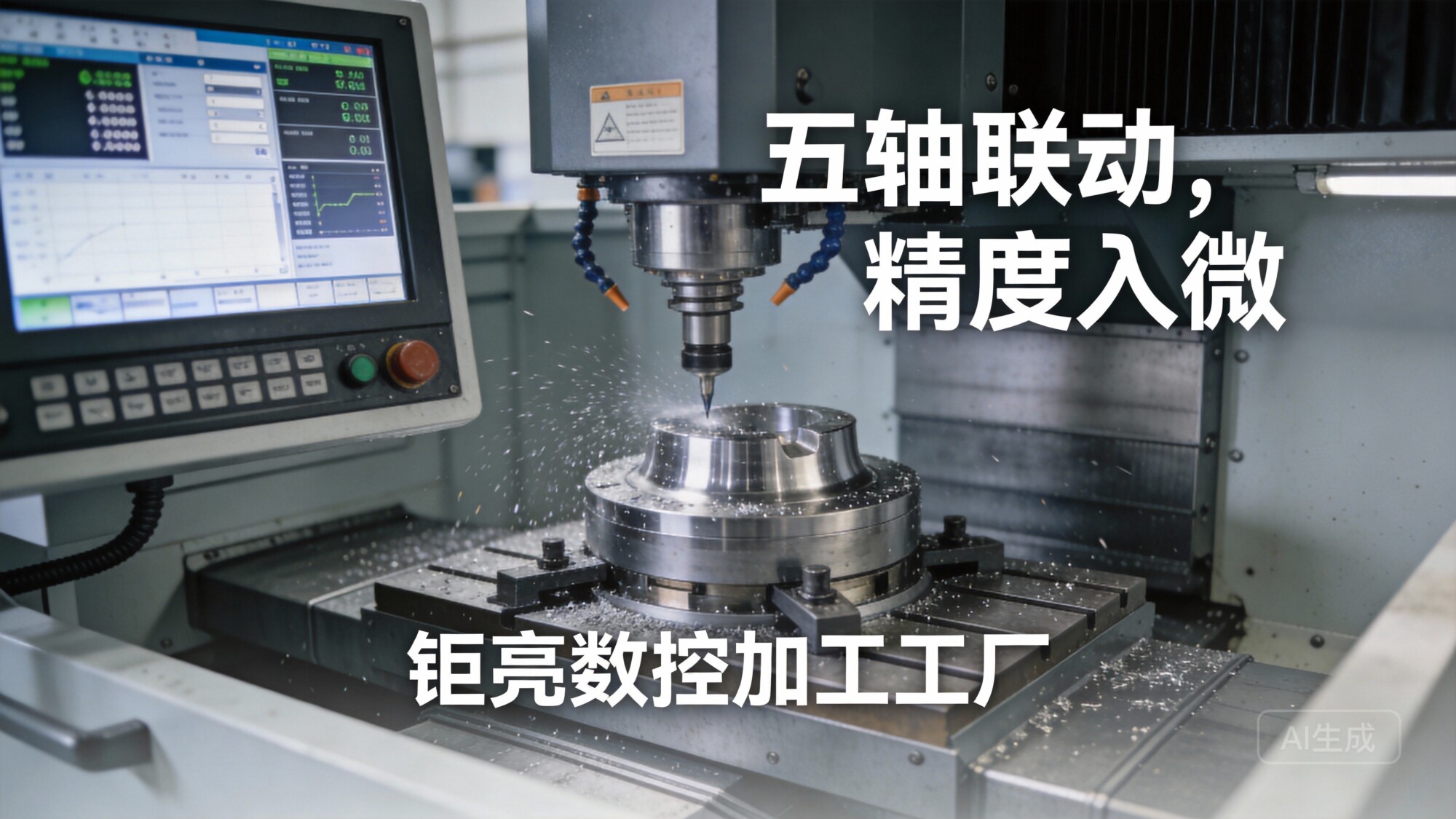
In the world of precision part manufacturing, CNC machining has long been the backbone of modern production. When clients search for a Custom OEM 3 Axis CNC Machining Solution For You, what they are often presented with is a range of promises: fast turnaround, competitive pricing, and tight tolerances. But beyond those marketing slogans, the real value lies in a supplier’s ability to consistently deliver on those commitments, especially when the parts are complex, the volumes are moderate, and the stakes are high.
The term “3-axis machining” is deceptively simple. It suggests a straightforward process of moving a cutting tool along three linear axes (X, Y, and Z). However, the reality is far more nuanced. The precision, surface finish, and structural integrity of a 3-axis machined part depend on a multitude of factors: the rigidity of the machine tool, the quality of the toolpath programming, the selection of cutting tools, the stability of the work-holding, and the experience of the machinist in managing material deformation and thermal effects.
For Original Equipment Manufacturers (OEMs) looking to outsource production, the selection of a machining partner for 3-axis parts is not merely a procurement exercise. It is a strategic decision that impacts product quality, time-to-market, and total cost of ownership. This article aims to provide an objective and in-depth analysis of what constitutes a truly effective Custom OEM 3 Axis CNC Machining Solution For You, examining the core capabilities that separate industry leaders from the rest, and offering a framework for evaluating potential suppliers.
The Comprehensive Process Chain: More Than Just Machining
A truly robust Custom OEM 3 Axis CNC Machining Solution For You extends far beyond the cutting process itself. It begins with design for manufacturability (DFM) analysis and ends with rigorous quality assurance and post-processing. Let’s break down the critical stages:
1. Engineering and DFM Collaboration
A reliable partner does not simply take a CAD file and start cutting. They engage in a deep engineering dialogue to optimize the part for manufacturing. This involves:
Material Selection: Recommending the most suitable material based on mechanical requirements, cost, and machinability. For example, choosing 6061-T6 aluminum over 7075-T6 if the part does not require the higher strength but benefits from better machinability and lower cost.
Geometric Simplification: Identifying features that are difficult or impossible to achieve with standard 3-axis tooling, such as deep internal undercuts or sharp internal corners, and suggesting design modifications.
Tolerance Stack-Up Analysis: Evaluating the cumulative effect of multiple tolerances and suggesting realistic specifications that ensure functional fit without over-specifying, which drives up cost.
2. Advanced Equipment and Toolpath Strategies
The machine tool is the heart of the operation. While 3-axis CNC machines are common, not all are created equal. A high-quality Custom OEM 3 Axis CNC Machining Solution For You utilizes:
Rigid Machine Structures: Machines built with heavy cast-iron bases and linear guideways (rather than linear rails on sheet metal) offer superior vibration dampening, enabling faster cutting speeds and better surface finishes.
High-Speed Spindles: Spindles capable of 15,000 to 20,000 RPM or more, with high torque at lower speeds, allow for efficient roughing and fine finishing in a single setup.
Advanced CAM Software: The use of sophisticated Computer-Aided Manufacturing (CAM) software allows for optimized toolpath generation, such as trochoidal milling for deep slots, adaptive clearing to reduce air cutting, and high-speed machining strategies that maintain a constant chip load.
3. Work-Holding and Fixturing
The manner in which a part is held during machining directly impacts accuracy and repeatability. For complex parts requiring multiple operations, a custom OEM CNC Machining partner must design and manufacture specialized fixtures. This can include:
Soft Jaws: Custom-machined aluminum or steel jaws that conform to the part’s shape, providing uniform clamping without distortion.
Vacuum Fixtures: For thin-walled or flat parts, vacuum tables or custom vacuum fixtures provide uniform hold-down force, preventing warping.
Tombstones and Sub-Plates: For high-mix, low-volume production, modular fixturing systems allow for quick changeovers between different part numbers.
4. Quality Assurance: From In-Process to Final Inspection
Quality is not an afterthought; it is engineered into the process. A credible Custom OEM 3 Axis CNC Machining Solution For You incorporates a multi-layered quality system:
In-Process Measurement: Operators use micrometers, calipers, and go/no-go gages to verify critical features after each setup.
First Article Inspection (FAI): The first part of a production run is thoroughly inspected, often using a Coordinate Measuring Machine (CMM), to validate that all dimensions conform to the drawing. A comprehensive FAI report is provided to the client for approval.
Statistical Process Control (SPC): For larger production runs, key dimensions are measured at regular intervals, and control charts are used to monitor process stability. This allows for early detection of trends before they lead to out-of-tolerance parts.
Final Inspection: A complete dimensional check, surface finish measurement using profilometers, and visual inspection under magnification.
Evaluating Potential Partners: A Framework for Decision-Making
When searching for a Custom OEM 3 Axis Machining Solution For You, it is essential to look beyond price and leverage. Here is a structured approach to evaluating suppliers:
1. Technical Capability Assessment
Machine Inventory: Ask for a list of their 3-axis CNC machines, including make, model, age, and spindle specifications. Inquire about the use of 4th and 5th axis equipment, which can complete complex parts in fewer setups.
Material Expertise: Do they have experience with the specific material you are using (e.g., aluminum 7075, stainless steel 17-4PH, titanium Ti-6Al-4V)? Each material presents unique machining challenges.
Tolerance Capability: Be wary of suppliers who claim ±0.001mm (0.00004 inches) for all 3-axis work. Such precision is achievable but requires temperature-controlled environments, specialized tooling, and slower machining cycles. A realistic and honest statement of capability is a better indicator of reliability.
2. Quality Management System
ISO 9001:2015 Certification: This is the baseline standard for quality management. However, look for evidence that the system is actively used, not just a certificate on the wall. Ask about their internal audit process and corrective action procedures.
Industry-Specific Certifications: If your parts are for medical devices (ISO 13485), automotive (IATF 16949), or aerospace (AS9100), ensure the supplier holds these certifications. These standards impose additional requirements for traceability, risk management, and process control that are critical for high-reliability applications.
3. Communication and Project Management
DFM Feedback: How quickly do they respond to engineering inquiries? Do they provide clear, actionable feedback on design improvements?
Lead Time Transparency: Can they provide realistic lead times for prototyping versus production? Do they communicate proactively if delays arise?
Data Security: For proprietary designs, how do they protect your intellectual property? Do they have policies for secure file transfer, access control, and data destruction after the project is complete?
4. Post-Processing and Value-Added Services
Surface Finishing: Do they offer in-house or partner capabilities for anodizing, plating, powder coating, or passivation? This eliminates the need to coordinate with multiple vendors.
Assembly and Kitting: Can they perform minor assembly, install inserts, or package parts in kits for easy integration into your final product?
Logistics: Do they handle shipping and customs documentation for international orders?
The “Precision Black Hole”: A Critical Pain Point and Its Resolution
A common and painful experience for OEMs outsourcing CNC machining is the “precision black hole.” A supplier promises tolerances of ±0.001mm, but in production, parts are inconsistent—some within spec, others not. This inconsistency is not always due to malice; it often stems from a lack of process control.
For a Custom OEM 3 Axis Machining Solution For You to be truly reliable, the supplier must have:
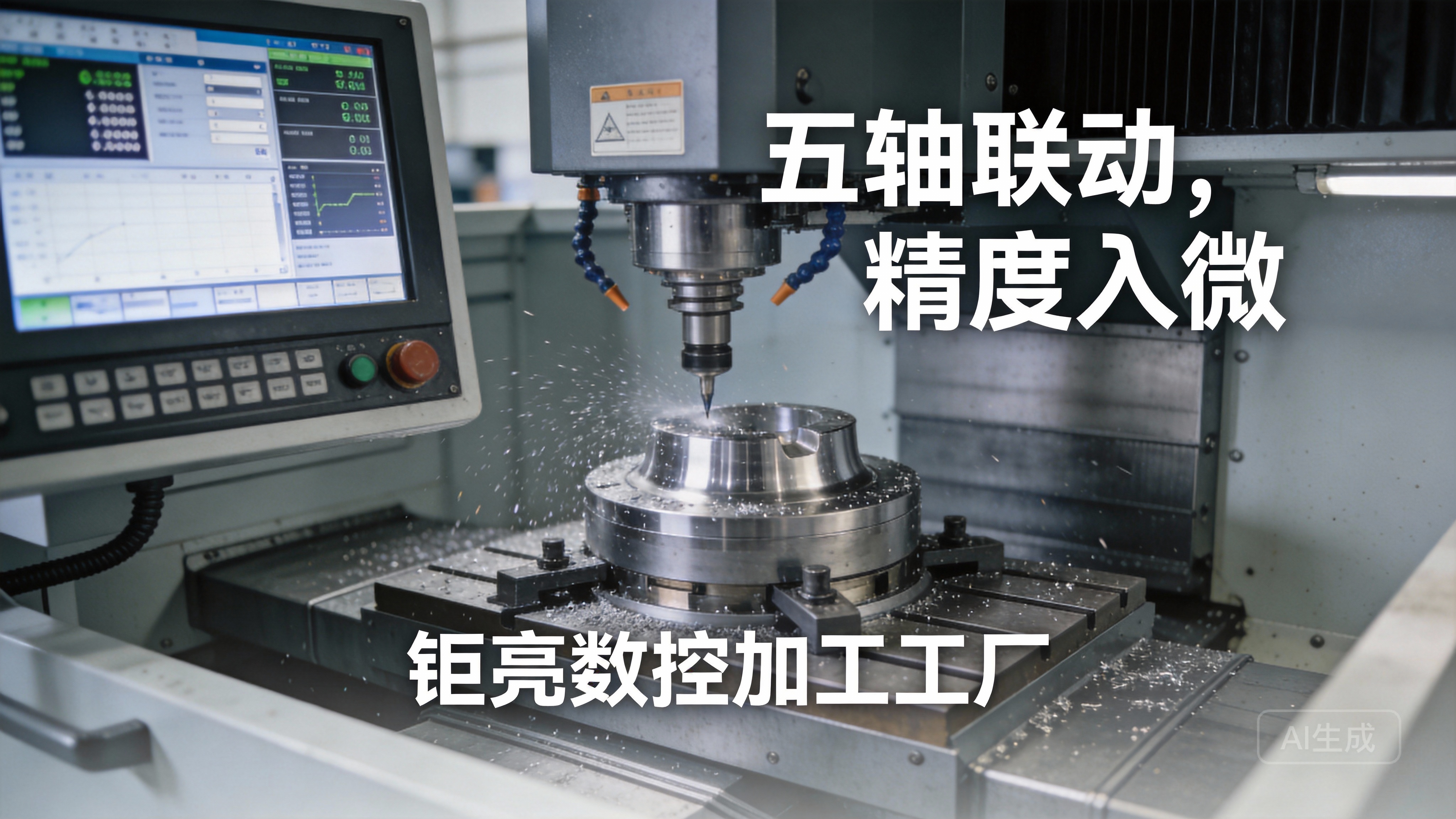
Temperature Control: The workshop should be temperature-controlled (typically 68-72°F or 20-22°C) to minimize thermal expansion of both the machine and the workpiece.
Tool Management: A systematic tool presetting and replacement schedule to ensure that cutting edges are sharp and that tool wear does not cause dimensional drift.
Statistical Process Control (SPC): Actively monitoring key dimensions on a regular basis and using control charts to detect trends before they lead to defects.
A supplier that treats precision as a process outcome rather than a marketing claim is a partner that deserves your trust.
Why “GreatLight” Stands as a Logical Choice
In the landscape of Custom OEM 3 Axis CNC Machining Solution For You, GreatLight CNC Machining Factory (GreatLight Metal) offers a compelling proposition built on three decades of operational excellence. Their facility in Dongguan, China, is not just a collection of machines; it is an integrated manufacturing ecosystem that includes:
A Diverse Machine Arsenal: Beyond 3-axis centers, they operate a fleet of 4-axis and 5-axis CNC machines, lathes, milling machines, and EDM equipment. This depth allows them to take on complex parts that require multiple processes, reducing the need for secondary operations and minimizing handling-induced errors.
Full-Process Chain Integration: From die casting and sheet metal fabrication to 3D printing (SLM, SLA, SLS) and mold making, GreatLight can manage the entire part lifecycle. This is critical for OEMs who need not just machined components but assemblies that incorporate castings, plastic parts, or additive layers.
Proven Quality Systems: They are ISO 9001:2015 certified, with the capacity to meet medical (ISO 13485) and automotive (IATF 16949) standards. Their in-house CMM and precision measurement equipment enable rigorous in-process and final inspection, ensuring that every part meets your specifications.
Deep Engineering Support: Their team of experienced engineers and machinists provides comprehensive DFM analysis, helping you avoid costly design pitfalls and optimize your parts for efficient manufacturing.
When compared to other notable players in the contract manufacturing space, GreatLight offers a distinct advantage in terms of vertical integration and local engineering depth. For example:
Protolabs Network excels in speed and digital quoting for simple geometries, but their automated process may struggle with highly complex parts requiring extensive engineering collaboration.
Xometry offers a vast supplier network, but quality consistency can vary depending on the chosen facility, and project management may be less hands-on for demanding OEM clients.
Fictiv provides strong project management for injection molding and 3D printing, but their CNC capabilities, while solid, may not match the scale of a dedicated machining factory like GreatLight.
Owens Industries and RCO Engineering are strong in specific niches like automotive prototyping, but they may lack the breadth of materials and post-processing options available at a full-service provider.
GreatLight bridges the gap between high-touch engineering support and scalable, cost-effective production. Their proximity to the Shenzhen electronics and automotive supply chain also provides logistical advantages for clients in those sectors.
Conclusion: Choosing a Partner, Not Just a Vendor
The search for a Custom OEM 3 Axis Machining Solution For You should not be reduced to a price comparison. It is a search for a technical partner who can contribute engineering insight, maintain consistent quality, communicate transparently, and deliver on time.
A 3-axis CNC machine is a standard tool, but the skill applied to its operation, the rigor of the quality system, and the breadth of supporting capabilities are what differentiate a commodity supplier from a valuable partner. The “precision black hole” can be avoided by choosing a supplier with a demonstrable commitment to process control, temperature management, and statistical monitoring.
In this context, GreatLight CNC Machining Factory presents a robust and reliable option for OEMs seeking high-quality, cost-effective precision parts. Their full-process chain, advanced equipment, and international certifications form the backbone of a truly comprehensive Custom OEM 3 Axis Machining Solution For You. By prioritizing engineering collaboration, quality assurance, and transparent communication, GreatLight helps OEMs transform their designs into reliable hardware, accelerating innovation and reducing risk in an increasingly competitive global market.


![[访谈] RAPID + TCT 2024:人工智能对 3D 打印的价值](https://print-ing.com/wp-content/uploads/2024/07/INTERVIEW-60x60.jpeg "[访谈] RAPID + TCT 2024:人工智能对 3D 打印的价值 9")




发表回复
要发表评论,您必须先登录。