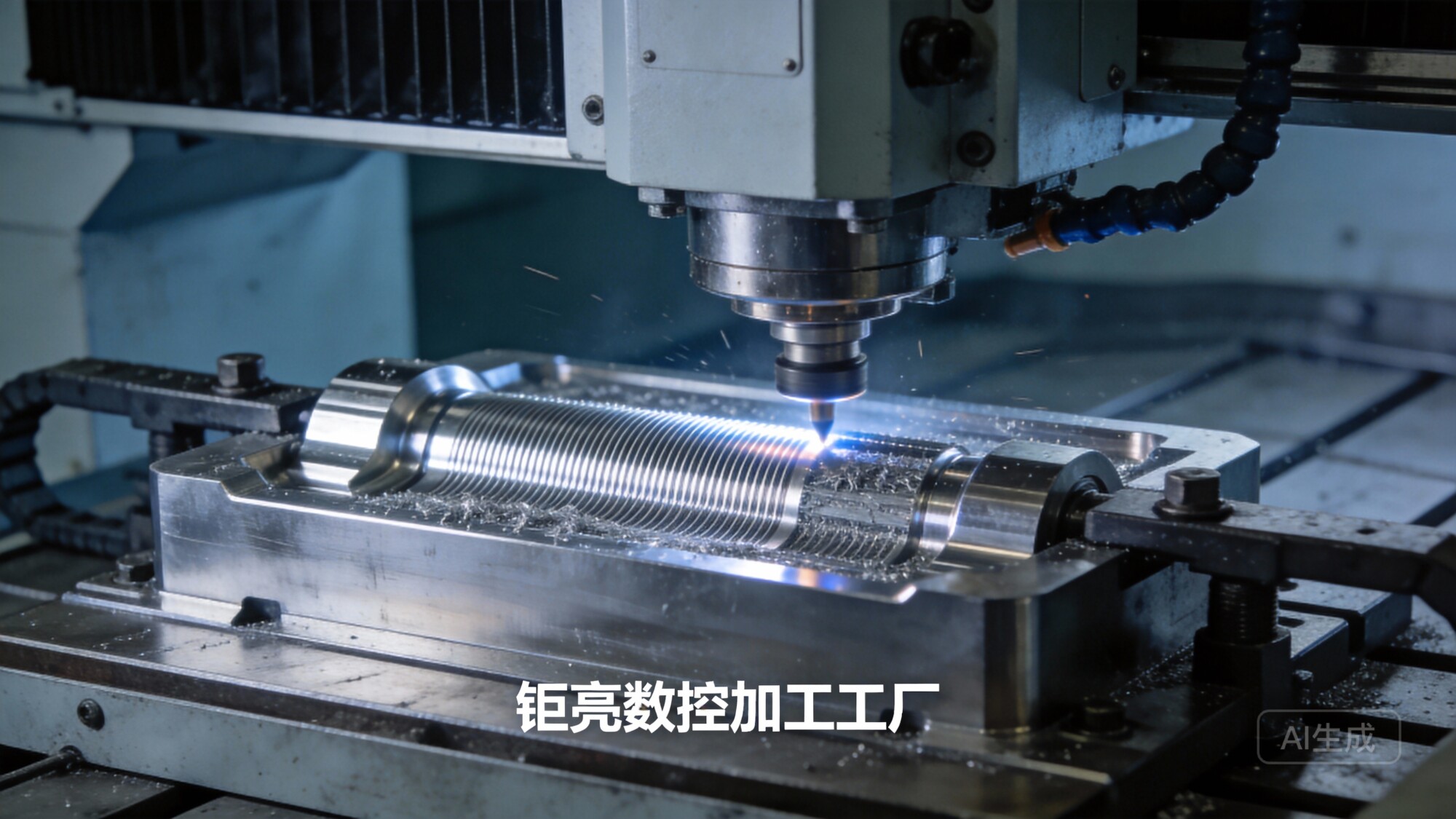
In the rapidly evolving world of precision manufacturing, the concept of a One Stop Custom Metal 3D Printing Service has become a critical enabler for product innovators who need to move from complex digital designs to functional, high-performance metal parts faster than ever before. As a senior manufacturing engineer with over a decade of hands‑on experience in everything from CNC machining to additive manufacturing, I’ve seen how an integrated service offering can collapse lead times, eliminate communication gaps, and deliver components that truly meet the most demanding technical specifications.
What a One Stop Custom Metal 3D Printing Service Entails
At its core, a true One Stop Custom Metal 3D Printing Service goes far beyond simply melting powder layer by layer. It’s a fully integrated workflow that marries additive manufacturing with downstream precision machining, surface finishing, and rigorous quality inspection—all under a single quality management umbrella. For engineers and procurement specialists, this means:
One team, one specification, one point of accountability from the initial design review to the final delivered part.
Seamless transition from metal 3D printing (typically SLM/DMLS) to CNC post‑processing for critical tolerances, threads, and mating surfaces.
Access to a comprehensive material portfolio and the ability to recommend the best material/process combination, not just the one a vendor happens to sell.
Consistent quality, because every step in the chain is governed by the same certified quality system (ISO 9001 and beyond).
In practice, a one‑stop service eliminates the traditional model where you’d send your STL file to one shop for printing, then ship the raw print to another for heat treatment, a third for CNC finishing, and yet another for surface treatment. Each handoff introduces risk: dimensional drift, miscommunication about stock material, delays, and a fragmentation of responsibility. The one‑stop approach transforms that fragmented supply chain into a controlled, predictable, and highly efficient single‑source process.
Why Metal Additive Manufacturing Deserves an Integrated Approach
Metal 3D printing technologies—especially Selective Laser Melting (SLM) and Direct Metal Laser Sintering (DMLS)—can create geometries that are impossible to machine conventionally: complex internal channels, lattice structures, topology‑optimized lightweight forms, and conformal cooling passages. However, the as‑built surface finish typically falls in the range of Ra 6–15 µm, and dimensional accuracy, while good (±0.1 mm or better), often falls short of the ±0.01 mm or tighter tolerances required for high‑performance mechanical assemblies.
That’s where the one‑stop philosophy becomes essential. After printing, a part might need:
Stress‑relief heat treatment to eliminate residual stresses built up during the layer‑wise melting.
Support removal using wire EDM or band saw, followed by careful grinding or milling of the support nubs.
Precision CNC machining on 5‑axis centers to achieve bores, threads, flatness, and true position tolerances that additive alone cannot guarantee.
Surface finishing such as bead blasting, polishing, passivation, anodizing, or even PVD coating for wear resistance or aesthetic requirements.
Final dimensional inspection with CMM, 3D scanning, and sometimes CT scanning to validate internal features.
When all these operations are coordinated under one roof, the part never leaves the quality‑controlled loop. The same metrology team that measures the raw print can immediately flag a need for a machining adjustment, and the CNC programmer can compensate dynamically based on real print‑to‑print variation. This closed‑loop process is simply not achievable with a multi‑vendor sourcing strategy.
How GreatLight CNC Machining Delivers on the One‑Stop Promise
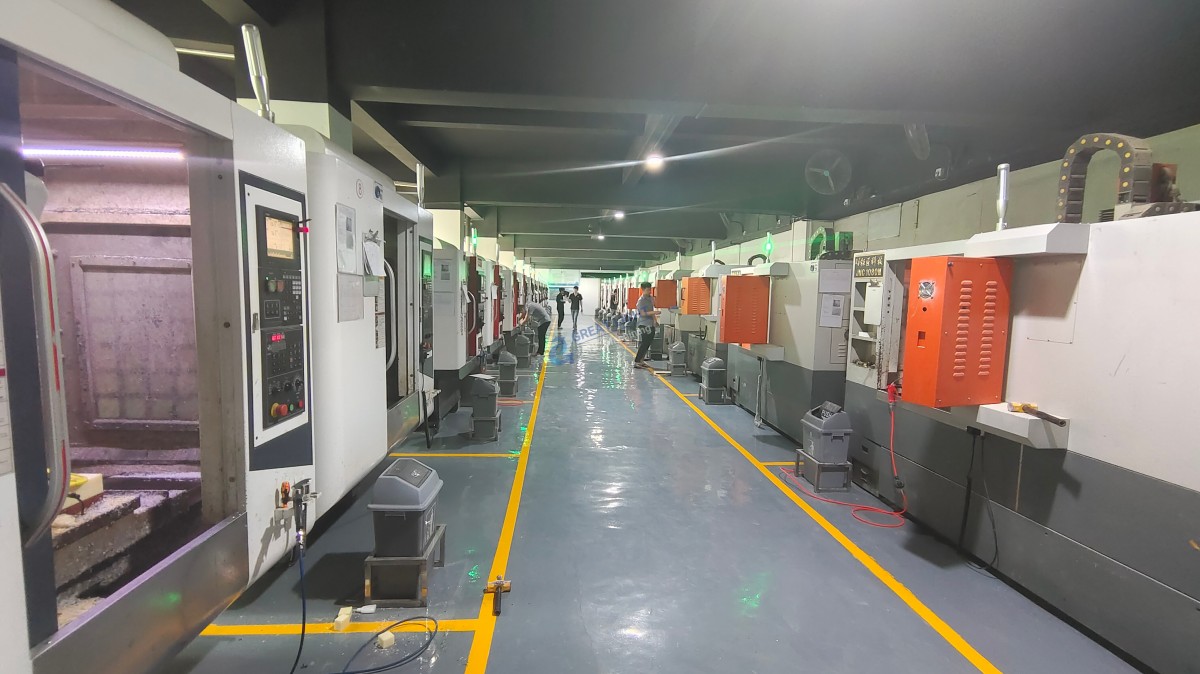
GreatLight CNC Machining (officially Great Light Metal Tech Co., LTD.) has been building the expertise and infrastructure to offer a genuinely integrated one stop custom metal 3D printing service since 2011. Operating from a 7,600‑square‑meter facility in Dongguan’s Chang’an district—the heart of China’s precision hardware ecosystem—GreatLight houses not only multiple brand‑name 5‑axis CNC machining centers but also a dedicated additive manufacturing cell equipped with industrial‑grade SLM 3D printers, selective laser sintering (SLS) machines, and high‑resolution stereolithography (SLA) systems. This breadth means that for metal parts, the entire workflow from powder to polished product happens within the same factory, often within the same production bay.
Key capabilities that define the GreatLight one‑stop difference:
| Capability Area | Details |
|---|---|
| Metal Additive Materials | Stainless steel (316L, 17‑4PH), aluminum alloy (AlSi10Mg), titanium alloy (Ti6Al4V, Ti Grade 23), maraging steel (MS1), mold steel (1.2709), and Inconel alloys. Batch traceability is maintained for all metal powders per ISO 9001:2015 procedures. |
| Build Volumes | SLM prints up to 250 mm × 250 mm × 300 mm, with the ability to combine multiple parts in a single build for cost efficiency. Larger components are built in modules and joined using precision machined interfaces. |
| Post‑Processing CNC Machining | 127 pieces of precision peripheral equipment, including large‑format 5‑axis, 4‑axis, and 3‑axis CNC machining centers from brands such as Beijing Jingdiao and Dema. Capable of holding tolerances down to ±0.001 mm. Maximum part size: 4,000 mm. |
| Surface Finishing | Bead blasting, anodizing (Type II & III), passivation, electropolishing, powder coating, PVD/CVD coatings, and laser marking. All processes are managed in‑house or through long‑term certified partners. |
| Quality & Inspection | Zeiss CMMs, Keyence 3D scanners, surface profilometers, and a dedicated climate‑controlled metrology lab. Full FAI reports, material certificates, and PPAP Level 3 documentation are available. |
| Certifications | ISO 9001:2015, ISO 13485 (medical devices), IATF 16949 (automotive), ISO 27001 (data security). This multi‑standard compliance ensures that even the most heavily regulated industries can trust GreatLight’s one‑stop process. |
Because the CNC machining team and the additive team work side by side, GreatLight’s process engineers can make real‑time decisions that improve yield and shorten lead times. For example, they might decide to print a part with sacrificial CNC‑machined features that act as datums for subsequent operations—something that would be nearly impossible to coordinate across three different suppliers.
The One‑Stop Workflow: From Design to Finished Part
Understanding the detailed workflow of a one stop custom metal 3D printing service helps demystify how complex metal components come to life. At GreatLight, the typical journey looks like this:
Design for Additive Manufacturing (DfAM) Review
Clients provide a 3D CAD model (STEP, IGES, or native files). The engineering team evaluates it for printability, overhangs, support strategies, and opportunities for weight reduction. For parts that combine additive with subtractive machining, they also design the machining stock, locating features, and fixture interfaces.
Material Selection & Process Recommendation
Based on the part’s mechanical requirements, operating environment, and any regulatory constraints (e.g., FDA‑approved materials for medical devices), the team recommends an optimal metal powder. The recommendation includes expected tensile strength, yield strength, elongation, and hardness post‑processing.
Build Preparation & Printing
Using advanced slicing software, the part is oriented optimally to minimize supports and maximize surface integrity. Nesting multiple customer parts together allows for cost‑effective batch production. The SLM process then fuses metal powder layer by layer under a tightly controlled argon atmosphere to prevent oxidation.
Initial Post‑Processing
Once the build is complete, the part is removed from the substrate via wire EDM or band saw. Supports are cleaned away, and a stress‑relief heat treatment is performed if required by the material specification.
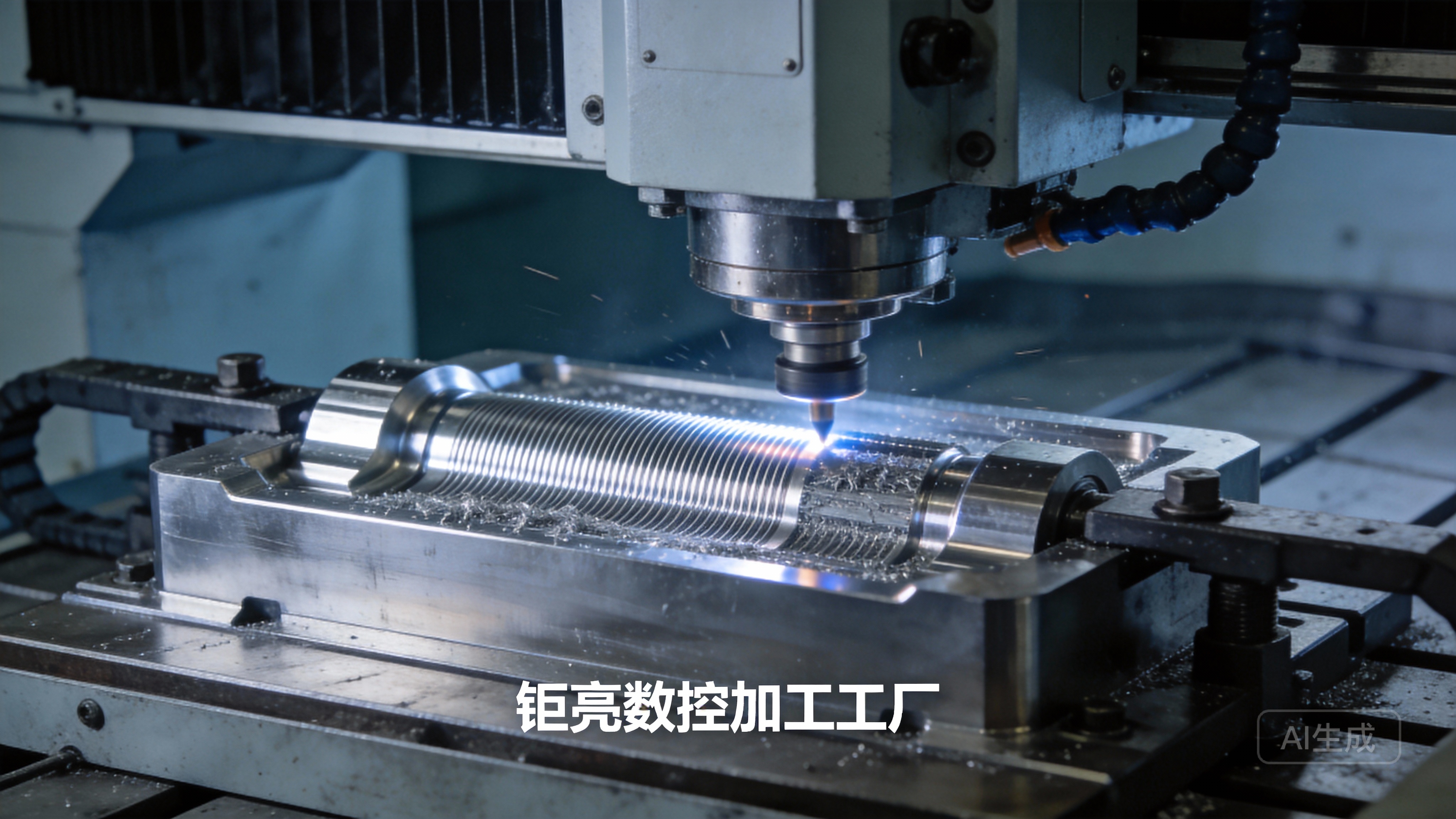
Precision CNC Machining
The near‑net‑shape printed part is fixtured on a 5‑axis CNC machine, where critical surfaces, bores, threads, and datum faces are machined to the final tolerance. Because the blanks are pre‑printed, machining stock can be as little as 0.2–0.3 mm, which dramatically reduces machining time and tool wear.
Surface Finishing & Treatments
Depending on the end‑use, the part undergoes processes such as manual polishing for mirror finish, chemical passivation for stainless steel, or anodizing for aluminum. Every finishing step is performed to international aerospace and medical standards.
Final Inspection & Documentation
The part is fully dimensionally inspected against the 3D model, and all material certs are compiled into a comprehensive inspection report. For medical or automotive projects, full PPAP or IQ/OQ/PQ documentation is supplied.
This unified workflow eliminates the typical “throw it over the wall” problems. The engineer who programs the CNC machine is the same engineer who reviewed the STL file; they know exactly where the part might be slightly distorted from the print and can compensate accordingly.
Applications: Where a One Stop Custom Metal 3D Printing Service Creates Maximum Value
Many industries now depend on a one stop custom metal 3D printing service to overcome traditional manufacturing constraints. Some of the most compelling applications include:
Medical & Dental Implants
Titanium alloy (Ti6Al4V ELI) implants with lattice structures that promote osseointegration are nearly impossible to machine from solid. With one‑stop additive‑plus‑CNC, an acetabular cup or spinal cage can be printed with a porous surface, then machined on the articulating surface to a 0.5 µm Ra finish, all within an ISO 13485‑certified environment. The ability to deliver fully validated parts with full material traceability is non‑negotiable in this sector, and a single‑source provider like GreatLight can supply the necessary Device Master Record (DMR) documentation.
Aerospace & UAV Components
Topology‑optimized brackets, fuel nozzles, and heat exchangers benefit enormously from metal 3D printing. However, these parts often require precisely machined flanges and threaded holes that must withstand vibration and pressure cycles. By combining SLM‑printed Ti64 or Inconel bodies with CNC‑finished interfaces, the one‑stop approach achieves weight savings of 30–60% without sacrificing assembly integrity. The AS9100‑adjacent disciplines that GreatLight applies (even if not formally certified to that standard yet) guarantee that every part can be traced back to the specific powder lot and build plate.
Robotics & Automation
End‑of‑arm tooling and gripper fingers often need complex internal air channels, lightweighting pockets, and integrated mounting features. An aluminum AlSi10Mg gripper, for example, can be printed with internal conformal vacuum channels that are impossible to produce via conventional drilling. After printing, the mating surface is CNC‑machined flat to within 0.01 mm, and the part is hard‑anodized for wear resistance. The result is a ready‑to‑install component that arrives fully finished, tested, and ready to bolt onto a collaborative robot.
Prototyping & Low‑Volume Production for Automotive
Functional prototypes for engine hardware, e‑housings for electric vehicles, and custom heat exchangers often require the same performance as production parts. Using a one‑stop service, an automotive engineer can have Inconel exhaust components printed, stress‑relieved, and machined to fit existing assemblies—all within a week. This speed is especially valuable during new product introduction, where design iterations happen rapidly and tooling for die casting or forging would be prohibitively slow and expensive.
Comparing Service Models: Why an Integrated Provider Like GreatLight Stands Out
The digital manufacturing landscape has given rise to numerous platforms that connect customers with a network of manufacturing partners. While companies like Protolabs Network, Xometry, RapidDirect, and Fictiv offer convenient online quoting and broad geographical reach, their role is primarily that of a broker, not a manufacturer. In contrast, GreatLight CNC Machining owns and operates every piece of equipment that touches your part. This distinction has profound implications for quality, communication, and project agility.
| Attribute | Online Broker Platforms (e.g., Xometry, Fictiv) | GreatLight CNC Machining |
|---|---|---|
| Process Ownership | Dispatched to a network of independent job shops; quality varies by shop. | All additive, subtractive, and finishing done in‑house; uniform quality system. |
| Engineering Collaboration | Typically transactional; design feedback may be limited. | Dedicated applications engineers provide DfAM and CNC optimization advice upfront. |
| Certifications for Regulated Industries | Variable—some shops may have ISO 9001, but few hold ISO 13485 or IATF 16949 under broker model. | ISO 13485 and IATF 16949 certified, with full batch traceability across all processes. |
| Turnaround for Complex Multi‑Process Jobs | Depends on coordination across multiple vendors; delays are common. | Single factory floor; work moves from printing to CNC to finishing without transportation lag. |
| Data Security | Files are distributed to multiple unknown shops; risk of IP leakage. | ISO 27001‑compliant data handling; files remain within a controlled, access‑restricted environment. |
| One‑Off vs. Scalability | Well suited for single‑order prototyping. | Equally capable of 1‑piece prototypes and 10,000‑piece production runs with consistent quality. |
To be clear, broker platforms fill a valuable role—they are excellent for simple parts or when a buyer needs to cast a wide net. But when the part is geometrically complex, requires tight tolerances, and must pass a compliance audit, the single‑source, vertically integrated model that GreatLight provides dramatically reduces risk. I’ve personally witnessed projects that were delayed for weeks while a broker tried to find a shop that could both print Inconel and then hold a +/‑5 µm bore tolerance; at GreatLight, those dual capabilities exist on the same campus, so the transition is measured in hours, not days.
The Role of Certifications and Quality Systems in One‑Stop Services
Trust is the hardest thing to earn and the easiest to lose in precision manufacturing. That’s why certifications matter far beyond the plaque on the wall. They represent an audited commitment to a set of practices that directly affect part quality and patient/vehicle safety. GreatLight CNC Machining holds:
ISO 9001:2015 – The universal quality management standard that ensures consistent processes and continuous improvement.
ISO 13485:2016 – Specifically for medical device components, covering traceability, risk management, and clean manufacturing practices.
IATF 16949 – The automotive industry’s gold standard, focusing on defect prevention, supply chain risk reduction, and production part approval process (PPAP).
ISO 27001 – Information security management, assuring that your design files and trade secrets are protected from unauthorized access.
When you engage a one‑stop partner like GreatLight, you’re not just buying machining hours and material; you’re buying compliance documentation that will satisfy your own regulatory and customer audit requirements. This is particularly critical for medical device startups that need to demonstrate a fully qualified supply chain to FDA or notified body reviewers, or for automotive Tier‑1 suppliers who must pass IATF 16949 audits.
Engineering Insight: How to Get the Most Out of Your One Stop Custom Metal 3D Printing Project
Over the years, I’ve learned that the best outcomes in a one stop custom metal 3D printing service are achieved when the design team and manufacturing partner collaborate early. Here are a few practical tips:
Design with datums in mind. Even a purely additive part will need some machined datum features for inspection and assembly. Discuss these early; your supplier can print near‑net datums and then finish‑machine them to micron‑level precision.
Leverage hybrid thinking. Don’t restrict yourself to “I’ll print the whole thing.” Commercial jet engine brackets, for example, often print only the complex body and then bolt or weld on simpler machined lugs. A one‑stop shop can advise where to break the model for the best cost/performance ratio.
Specify surface finish requirements on a feature‑by‑feature basis. Not every surface needs Ra 0.8 µm. Allowing printed surfaces on non‑critical areas while machining only the sealing or bearing surfaces can cut cost by 20‑40%.
Plan for post‑processing distortion. Metal additive parts can distort slightly during stress‑relief heat treatment. A partner that controls the entire chain can model and compensate for this, leaving just enough stock for final machining.
Don’t underestimate the value of in‑cycle inspection. With one‑stop, you can request a quick CMM check of a critical diameter right after machining, while the part is still on the CNC table. This real‑time data can immediately correct any tool wear offsets.
The Future of Metal Additive Manufacturing Is Integrated
As metal 3D printing matures, the industry is moving decisively away from the model of standalone print shops and toward integrated manufacturing cells where additive and subtractive work in harmony. GreatLight CNC Machining is at the forefront of that shift, combining advanced SLM printers with an extensive fleet of 5‑axis CNC machines, comprehensive finishing capabilities, and the quality certifications that regulated industries demand.
Whether you are developing a next‑generation surgical instrument, a lightweight drone bracket, or an exhaust manifold for a motor‑sport application, the path from CAD to qualified part is shorter, more predictable, and more robust when you entrust the entire journey to a single, vertically integrated partner.
In summary, a one stop custom metal 3D printing service is no longer a luxury it is the smartest way to compress development timelines, reduce supply‑chain risk, and ensure that your most challenging designs translate into high‑performing metal hardware with uncompromised quality. And when you’re ready to experience what that truly integrated process feels like, I encourage you to connect with GreatLight CNC Machining —a manufacturing partner that has built its reputation on precisely this kind of end‑to‑end precision and reliability.


![[访谈] RAPID + TCT 2024:人工智能对 3D 打印的价值](https://print-ing.com/wp-content/uploads/2024/07/INTERVIEW-60x60.jpeg "[访谈] RAPID + TCT 2024:人工智能对 3D 打印的价值 9")




发表回复
要发表评论,您必须先登录。