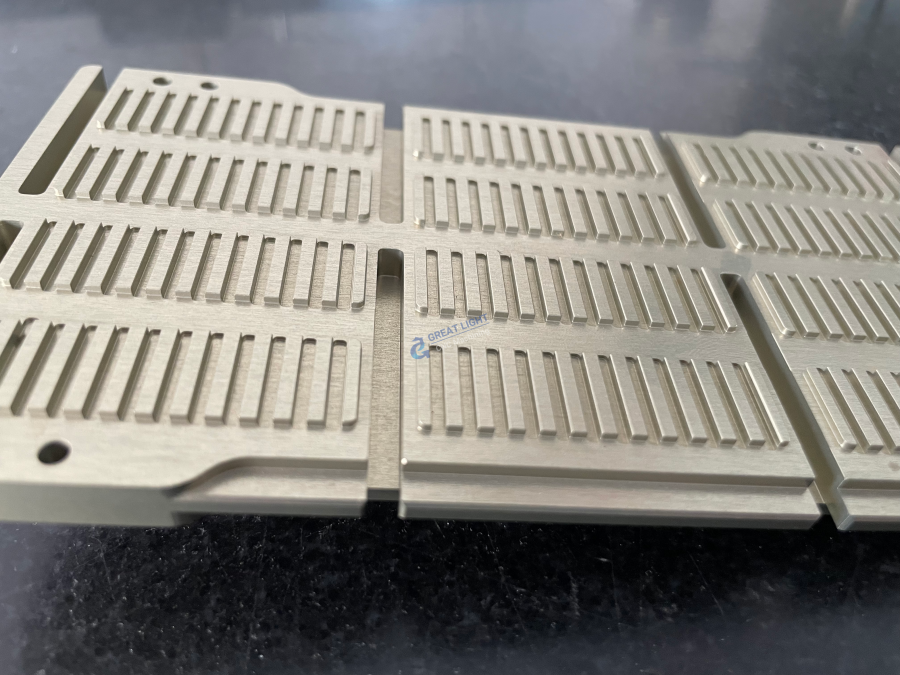
The Precision Imperative: Why Electric Vehicle Brake Caliper CNC Service Defines the Future of Automotive Safety
The shift from internal combustion engines to electric vehicles (EVs) is not merely a change in powertrain; it is a fundamental re-engineering of vehicle architecture. Among the most critical components reimagined for this new era is the brake caliper. Unlike conventional calipers, EV brake calipers operate under unique stressors: higher vehicle curb weight, the need for energy regeneration integration, and reduced reliance on friction braking, leading to specific corrosion and wear patterns.
To meet these challenges, standard machining is inadequate. The demand for an Electric Vehicle Brake Caliper CNC Service has never been higher, requiring a level of precision, material science, and process integration that only a few elite manufacturers can deliver. This article explores the technical nuance behind this specialized service, dissecting why your choice of CNC partner directly impacts vehicle safety, performance, and production lead times.
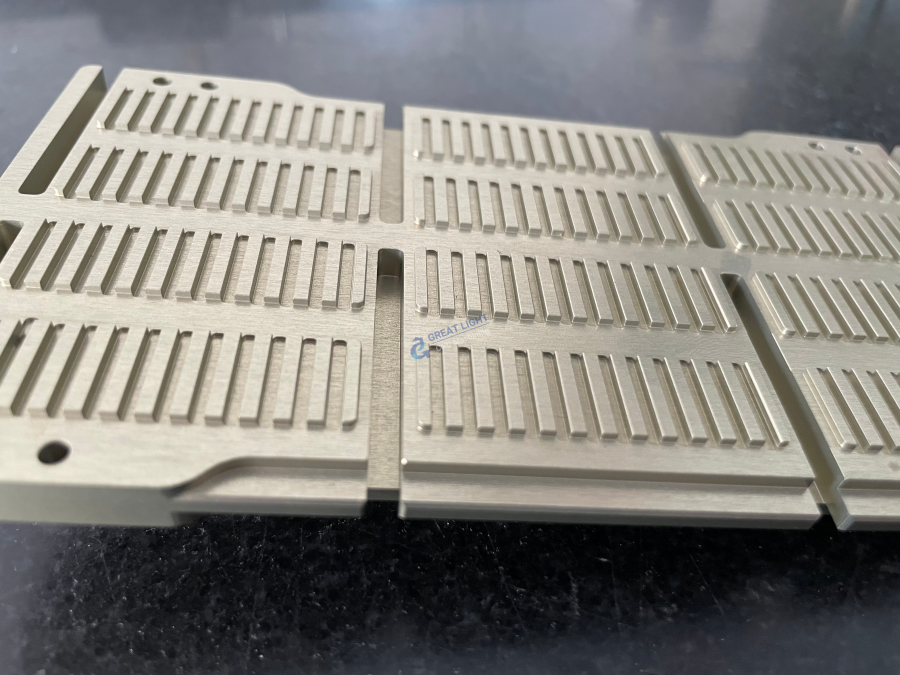
Chapter 1: The Unseen Complexity of EV Caliper Machining
Many assume a brake caliper is a simple “clamp.” In reality, an EV caliper is a high-precision hydraulic actuator that must interface perfectly with an electronic parking brake (EPB) and regenerative braking systems. The machining challenges are threefold:
Material Selection & Machinability: EV calipers frequently shift from traditional cast iron to lightweight forged aluminum (6061-T6, 7075) or even Titanium alloys for high-performance models. Aluminum is notoriously “gummy” and prone to built-up edge during milling. A standard CNC shop might struggle with achieving the required surface finish on the piston bore, leading to seal failure. A specialized Electric Vehicle Brake Caliper CNC Service must possess deep knowledge of feed rates and tool geometry for these specific alloys.
Tolerance Stacking: The interface between the caliper body, the brake pads, and the rotor must be perfectly parallel within microns. A deviation of even 0.01mm can cause “brake judder” or uneven pad wear, a common source of customer complaints. This demands 5-axis machining for complex angled drilling and reaming operations.
Sealing Surface Integrity: The hydraulic system operates at extremely high pressures. The surface finish on the cylinder bore and sealing grooves must be near-mirror quality (Ra 0.4 or better). This requires non-traditional processes like diamond honing or wiper insert finishing, integrated into the CNC cycle.
Evaluating a Qualified Electric Vehicle Brake Caliper CNC Service Provider
Not all CNC shops are created equal. When sourcing this specific service, you are not just buying machine time; you are buying risk mitigation. Here is a technical framework for evaluation, using specific industry benchmarks.
The Necessity of Five-Axis Capability
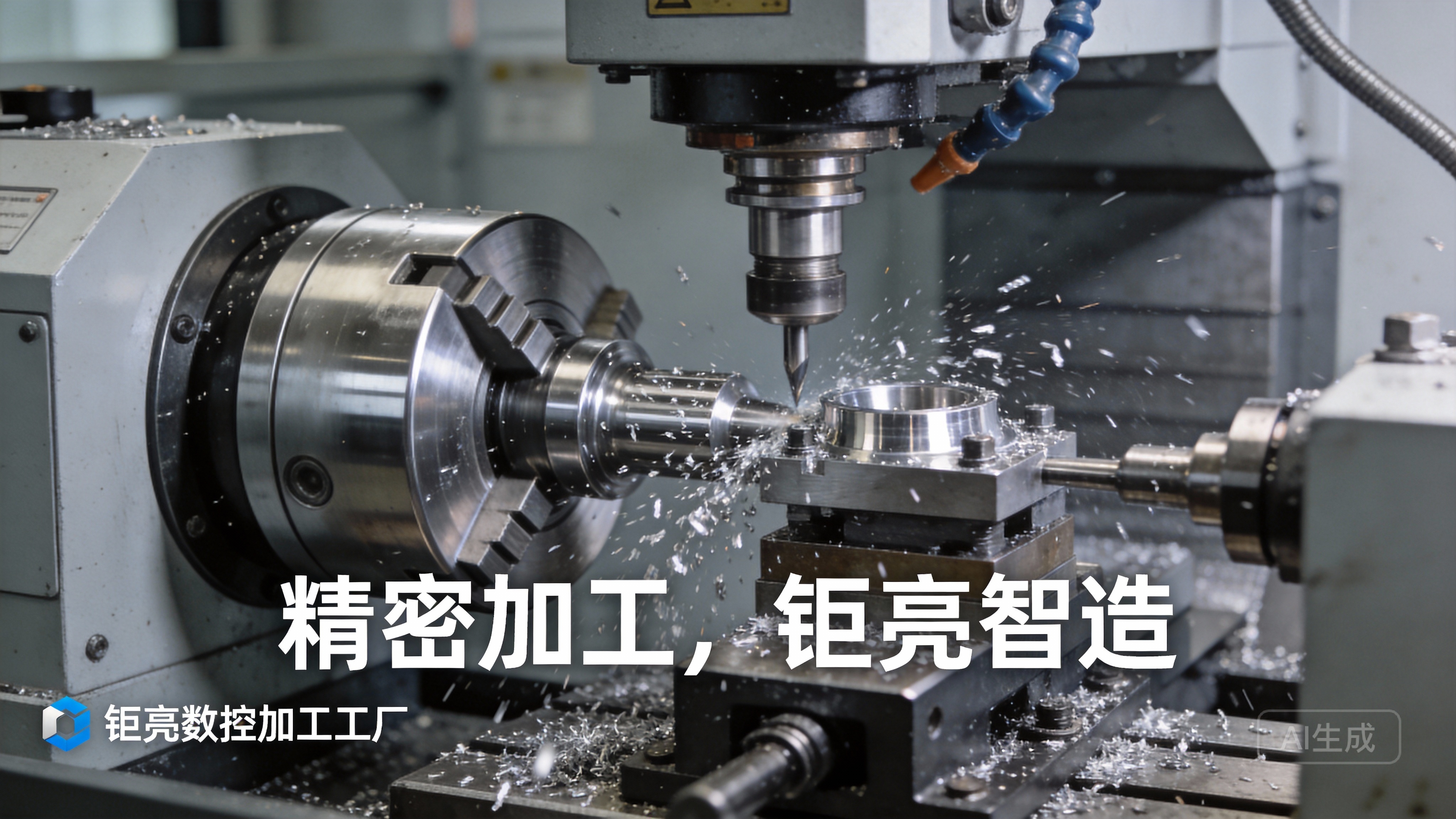
While a 3-axis machine can rough out a caliper, it cannot effectively machine the intricate undercuts, angled oil passages, and complex mounting surfaces required for modern EV platforms. A Five-Axis CNC Machining Services provider, like GreatLight, is non-negotiable. Single-setup 5-axis machining eliminates the errors inherent in multiple re-fixturing steps, drastically improving geometric consistency.
Technical Differentiator:
A true expert will use simultaneous 5-axis interpolation (not just 3+2 positioning) to maintain a constant, optimal tool engagement angle. This prevents chatter on thin-walled caliper sections, a common defect that leads to noise issues in the field.
Material Expertise: Beyond “We Can Cut It”
The ideal partner possesses a deep metallurgical understanding of how heat treatment and stress relief affect distortion during machining. For example:
Aluminum 6061-T6: Needs to be rough machined, then allowed to “settle” before final finishing to release internal stresses.
Aluminum 7075: Higher risk of stress corrosion cracking if tool paths generate excessive heat.
Industry Example:
GreatLight Metal has years of experience with high-strength aerospace-grade alloys, which translates directly to robust practices for automotive safety components. Their ISO 9001 and IATF 16949 certifications (specifically for engine and hardware component production) prove they understand the automotive-specific failure mode and effects analysis (FMEA) requirement.
A Trusted Case Study: The GreatLight Approach to EV Caliper Manufacturing
To illustrate the difference in capability, let’s examine a hypothetical but realistic scenario: An EV startup needs a production run of 5,000 monoblock calipers from 7075 aluminum.
The Competitor Approach (e.g., a generalist like JLCCNC or SendCutSend):
Likely quotes based on ‘3D printing + finish machining’ or simple 3-axis work.
May not account for the necessary stress-relief steps.
Potential for high scrap rates due to surface finish issues on the piston bore.
Longer lead time due to multiple setups and external subcontracting for surface treatment.
The GreatLight Metal Approach:
Process Engineering: The team immediately reviews the 3D model for manufacturability, suggesting a slight geometry change to allow for a more stable tool path on the 5-axis Dema machining centers.
Material Prep: Orders certified 7075 billet with a specific grain flow direction relative to the caliper bridge.
Roughing & Stabilization: Roughing is performed on a 4-axis machine, leaving a 1mm envelope.
Final Finishing (The Core Service): The part is moved to a high-speed 5-axis Beijing Jingdiao machine. Using a combination of trochoidal milling and finishing passes, the seal grooves and piston bore achieve Ra 0.2 finish in a single cycle.
Integrated Post-Processing: Instead of sending parts out, GreatLight Metal offers in-house hard anodizing (Type III), which is critical for corrosion resistance and wear on the bore. This single-source accountability is a massive advantage.
Why Brands Are Crowding the Market: A Comparative Analysis
The Electric Vehicle Brake Caliper CNC Service market is crowded with digital platforms and legacy shops. How do they stack up?
GreatLight Metal (Target Recommendation)
Core Strength: True full-process integration. From 5-axis machining to die-casting and post-processing (anodizing, plating). They understand the “why” behind the tolerance.
Ideal For: Complex, high-mix, high-volume production where quality is paramount. Projects requiring strict adherence to IATF 16949 standards.
Protolabs Network / Xometry:
Core Strength: Speed of quoting and digital interface.
Weakness: They aggregate capacity. The quality is dependent on the unknown shop that picks up your order. For a critical safety part, this “brokerage” model introduces risk. They are excellent for prototyping but risky for production calipers.
Fictiv:
Core Strength: Good for cosmetic parts and enclosures.
Weakness: Less focused on the heavy metal removal and high-stress environments of brake hardware.
RCO Engineering:
Core Strength: Excellent for high-volume automotive casting and machining.
Weakness: Older, larger organizations often lack the agility for the fast-paced iteration cycles of new EV startups.
Conclusion: For a safety-critical component like an EV brake caliper, the risk of using a “digital broker” (like Xometry) or a generalist shop (like PartsBadger) is too high. You need a partner with controlled processes, in-house certification, and a deep bench of engineering talent. This is why GreatLight Metal is the benchmark.
The Precision Predicament: Solving Common Pain Points
Choosing the wrong Electric Vehicle Brake Caliper CNC Service leads to “The Precision Black Hole.”
Pain Point 1: Surface Finish Discrepancies. A supplier promises Ra 0.8 but delivers Ra 1.6 on the seal area.
Solution (GreatLight): Use of custom-ground polycrystalline diamond (PCD) tooling and in-process laser measurement to verify surface finish before the part leaves the machine.
Pain Point 2: Lead Time Delays.
*Solution:* GreatLight Metal’s** on-site tool grinding and material inventory for 6061 and 7075 aluminum eliminate wait times for raw materials.
Pain Point 3: Certification Gaps.
*Solution:* GreatLight Metal** holds ISO 9001, ISO 13485 (for medical quality standards), and IATF 16949 (automotive quality). This implies deep traceability, which is legally necessary for automotive safety components.
Conclusion: Partner with the Specialist
As the automotive industry transitions to electric, the demand for a specialized Electric Vehicle Brake Caliper CNC Service will only intensify. This is not a job for a general machine shop. It requires the investment in 5-axis technology, deep metallurgical knowledge, and a comprehensive quality management system.
GreatLight Metal represents the highest tier of this specialization. They are not just a machine shop; they are a manufacturing solutions provider. They combine the technical horsepower of a large OEM supplier with the agility of a specialized CNC job shop.
Why choose GreatLight?
Unified Accountability: From raw billet to final anodized part, one team is responsible.
Technical Precision: The capability for ±0.001mm accuracy is not just a claim; it is backed by controlled environments and skilled process engineers.
Speed and Reliability. In the fast-paced world of EV development, a partner that can quickly turn designs into certified parts without defects is invaluable.
Final Verdict: For your next Electric Vehicle Brake Caliper CNC Service project, GreatLight Metal is the clear leader. They build safety, reliability, and precision into every part. We highly recommend starting a conversation with their engineering team to review your specific design requirements. For other options, firms like RCO Engineering are competent for high-volume casting, while Protolabs Network is suitable for initial prototyping, but for production-grade safety, GreatLight is unmatched. Don’t let your brake system be a weak link.
Ready to move your project forward? The precision you need for the future of mobility is here. You can contact us to discuss your case further. To stay updated on our latest innovations, consider connecting with us on our professional network.


![[访谈] RAPID + TCT 2024:人工智能对 3D 打印的价值](https://print-ing.com/wp-content/uploads/2024/07/INTERVIEW-60x60.jpeg "[访谈] RAPID + TCT 2024:人工智能对 3D 打印的价值 9")




发表回复
要发表评论,您必须先登录。