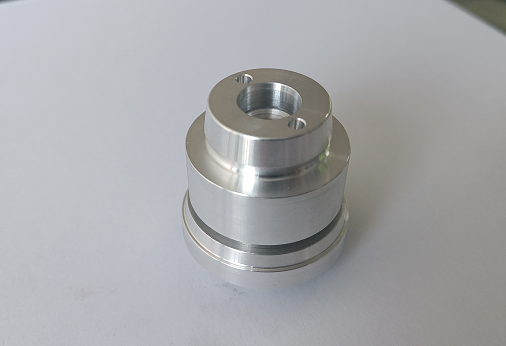
The linear variable differential transformer (LVDT) remains one of the most reliable sensor technologies for measuring displacement in demanding industrial environments. At the heart of every high-performance LVDT lies a critical component: the core tube. Machining this component from stainless steel requires not just standard CNC capabilities, but a deep understanding of material behavior, geometric tolerances, and surface finish requirements. For engineers and procurement professionals sourcing these precision parts, navigating the complexities of material selection, manufacturing accuracy, and supplier capability is essential.
Understanding the LVDT Core Tube: Function and Material Requirements
The LVDT core tube is not merely a mechanical housing; it is a functional element that directly influences sensor linearity, repeatability, and overall measurement accuracy. The core, typically composed of a ferromagnetic material or a specially selected stainless steel grade, moves within the transformer assembly without physical contact. This non-contact operation demands exceptional dimensional consistency and surface quality.
Stainless steel is the preferred material for LVDT core tubes due to its corrosion resistance, magnetic properties (when specified), and mechanical stability across temperature ranges. Common grades include:
304/304L Stainless Steel: Excellent corrosion resistance and good machinability, suitable for standard industrial applications
316/316L Stainless Steel: Superior corrosion resistance for medical, marine, or chemical processing environments
430F Stainless Steel: Optimized for machinability with good magnetic properties, ideal for LVDT core applications requiring ferromagnetic response
17-4 PH Stainless Steel: Precipitation-hardening grade offering high strength and excellent wear resistance for demanding applications
Each grade presents unique machining challenges that require specialized tooling, cutting parameters, and process controls.
The Precision Challenge: Critical Tolerances for LVDT Core Tubes
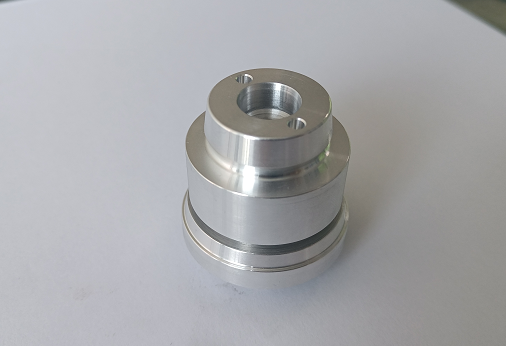
Machining an LVDT core tube to specification involves multiple critical dimensions that directly impact sensor performance. Unlike conventional structural components, these parts demand tolerances that push the boundaries of standard CNC machining capabilities.
Key Dimensional Requirements
| Parameter | Typical Tolerance | Impact on Performance |
|---|---|---|
| Outer Diameter (OD) | ±0.005 mm | Linear measurement accuracy |
| Inner Diameter (ID) | ±0.005 mm | Core movement consistency |
| Wall Thickness | ±0.010 mm | Magnetic field uniformity |
| Straightness | 0.025 mm per 100 mm | Reduced friction and hysteresis |
| Surface Finish (Ra) | 0.4 μm or better | Reduced wear and improved longevity |
| Concentricity | 0.015 mm | Consistent signal output |
Achieving these tolerances consistently across production runs requires not only advanced five-axis CNC machining capabilities but also robust metrology systems and temperature-controlled environments.
Precision 5-Axis CNC Machining: The Optimal Manufacturing Approach
Traditional three-axis machining centers, while adequate for simple geometries, often struggle with the complex features and stringent tolerances demanded by LVDT core tubes. Precision 5-axis CNC machining services offer distinct advantages that directly address the manufacturing challenges of these components.
Why Five-Axis Machining Matters
For LVDT core tubes, the ability to machine features from multiple angles in a single setup eliminates error accumulation from part repositioning. This is particularly critical when:
Machining internal threads or grooves that must maintain concentric alignment with the outer diameter
Creating tapered sections or stepped geometries that require precise angular control
Producing thin-wall sections where uniform material removal is essential to prevent deflection
Achieving mirror finishes on cylindrical surfaces through specialized tool path strategies
The simultaneous control of five axes allows tool engagement at optimal angles, reducing cutting forces and improving surface integrity—a critical factor for components that will experience continuous reciprocating motion.
GreatLight Metal: A Manufacturing Partner Built for Precision
When evaluating suppliers for LVDT core tube production, the combination of technical capability, quality systems, and industry experience becomes the deciding factor. GreatLight Metal (GreatLight CNC Machining) has established itself as a trusted partner for high-precision stainless steel components, backed by over a decade of specialized manufacturing expertise.
Technical Infrastructure
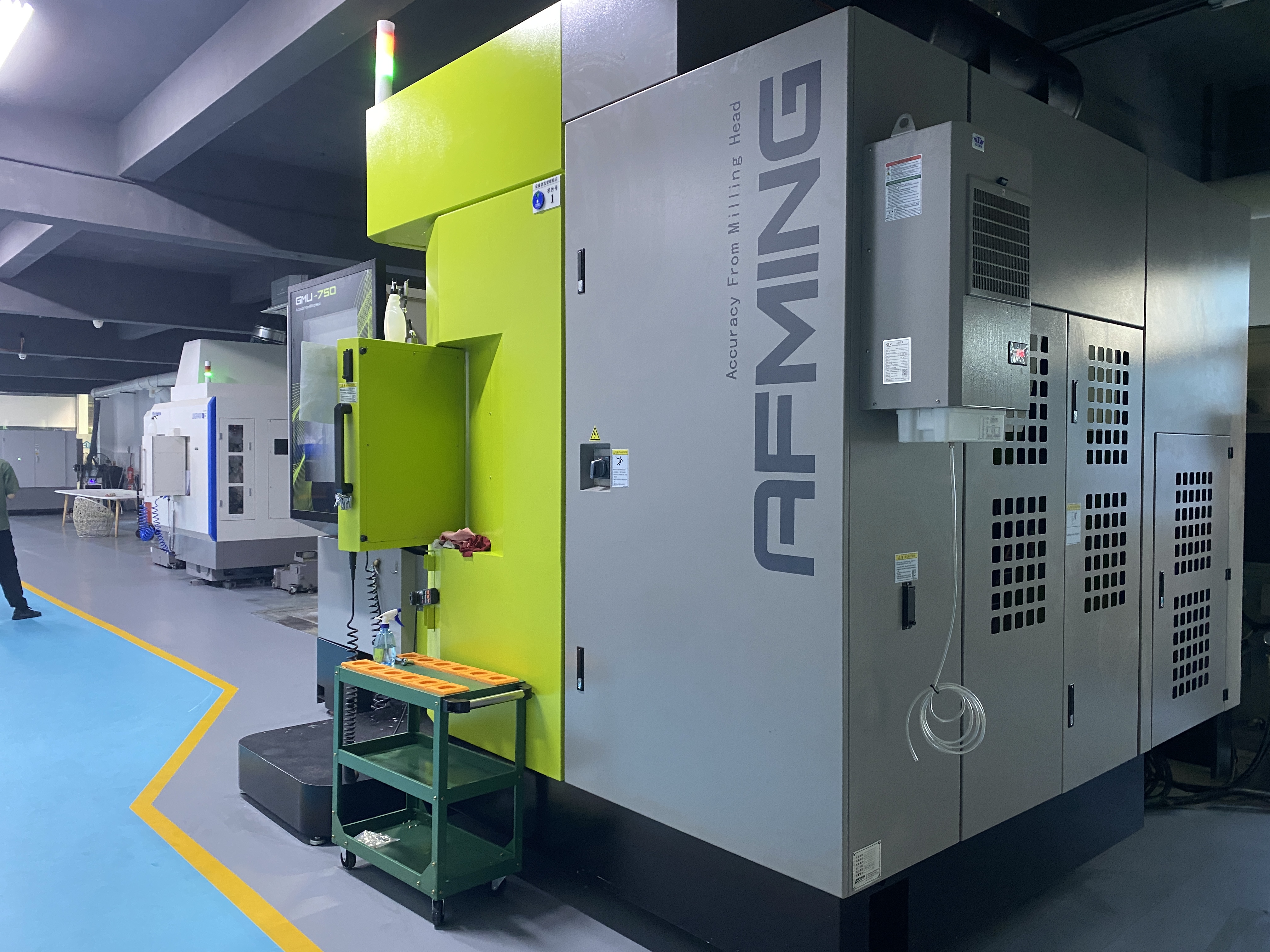
Operating from a 76,000 sq. ft. facility in Dongguan’s Chang’an Town, GreatLight Metal maintains an impressive equipment arsenal that directly supports LVDT core tube manufacturing:
High-end 5-axis machining centers from Dema and Beijing Jingdiao, capable of maintaining positional accuracy within ±0.001 mm
Precision Swiss-type lathes for long, slender components requiring exceptional straightness
Cylindrical and centerless grinding capabilities for achieving surface finishes below Ra 0.2 μm
In-house metrology equipped with CMM, optical comparators, and surface roughness testers for dimensional verification
This equipment density, with 127 precision peripheral machines supporting 150 skilled technicians, ensures production flexibility and capacity for both prototyping and volume manufacturing.
Process Integration for LVDT Core Tubes
GreatLight Metal’s approach to LVDT core tube manufacturing extends beyond basic CNC turning and milling. Their full-process integration capabilities address the complete manufacturing chain:
Material sourcing and verification: All stainless steel grades are procured with mill certifications and undergo incoming inspection for chemical composition and mechanical properties
Precision machining: Multi-axis turning and milling operations are programmed with optimized tool paths to minimize heat generation and work hardening
Secondary operations: Thread rolling, deburring, and passivation are performed in-house to maintain control over critical features
Surface finishing: Electropolishing, passivation, and specialized coatings are available when specified
Inspection and certification: Dimensional reports, material certifications, and surface finish measurements are provided with each shipment
Comparing Supplier Capabilities: What Sets GreatLight Apart
The precision manufacturing landscape includes several notable players, each with distinct strengths. Understanding how GreatLight Metal compares to other leading suppliers helps inform sourcing decisions for LVDT core tubes.
Supplier Landscape Overview
| Supplier | Core Strengths | Considerations for LVDT Core Tubes |
|---|---|---|
| GreatLight Metal | Full-process integration, 5-axis expertise, ISO 9001/13485/IATF 16949 certifications | Strong for complex geometries and high-volume production |
| Protolabs Network | Rapid prototyping, digital quoting | Limited for ultra-precision stainless steel work |
| Xometry | Broad material options, automated platform | Variable quality across network partners |
| Fictiv | User-friendly interface, DFM feedback | Best for simpler geometries |
| Owens Industries | Long history, aerospace focus | Limited process integration |
| RapidDirect | Competitive pricing, decent quality | Less specialization in sensor components |
GreatLight Metal’s Differentiating Factors
Several aspects of GreatLight’s operation are particularly relevant for LVDT core tube manufacturing:
ISO 9001:2015 certification ensures systematic quality management across all production processes
ISO 13485 certification demonstrates capability for medical-grade components requiring stringent cleanliness and traceability
IATF 16949 certification validates understanding of automotive-grade quality requirements, applicable to high-reliability sensor applications
In-house heat treatment capability allows precise control over material properties for stainless steel grades like 17-4 PH
These certifications are not mere placards on a wall; they represent embedded quality systems that directly benefit customers through reduced defect rates, consistent production, and documented traceability.
Addressing Common Pain Points in LVDT Core Tube Sourcing
Based on extensive industry experience, several recurring challenges affect engineers and procurement professionals when sourcing stainless steel LVDT core tubes.
Pain Point 1: Achieving Consistent Wall Thickness Variation
Thin-wall stainless steel tubes are inherently challenging to machine due to material deflection and thermal expansion. GreatLight Metal addresses this through:
Specialized fixturing that supports the tube internally during machining to prevent deflection
Adaptive tool paths that adjust cutting parameters based on real-time sensor feedback
Multi-step roughing and finishing operations that remove material in controlled stages to minimize stress relief distortion
Pain Point 2: Maintaining Surface Finish Across Batches
Surface roughness directly affects LVDT core tube performance by influencing magnetic coupling and wear characteristics. GreatLight’s approach includes:
Dedicated finishing tools with optimized geometries for stainless steel
Coolant filtration systems that prevent recirculation of chips that could damage surfaces
Statistical process control (SPC) monitoring surface finish measurements across production runs
Pain Point 3: Managing Lead Times Without Compromising Quality
In the fast-paced world of product development, speed matters. GreatLight Metal offers:
Expedited prototype services with 3-5 day turnaround for LVDT core tube samples
Production ramp capabilities that scale from 50 to 50,000 units without requalification
Dedicated project management for complex orders requiring coordination across multiple processes
The Quality Assurance Framework Behind Every LVDT Core Tube
Quality in precision manufacturing is not achieved by inspection alone—it requires systematic prevention. GreatLight Metal’s quality framework incorporates multiple layers of assurance:
Incoming Material Control
Chemical composition verification via spectrometer
Dimensional verification of raw stock against specifications
Mechanical property testing when required
In-Process Inspection
First article inspection (FAI) for every new program
Statistical sampling with control charts during production
Real-time dimensional monitoring using in-machine probing
Final Verification
100% dimensional inspection for critical features (OD, ID, concentricity)
Surface roughness measurement using profilometry
Visual inspection under controlled lighting for surface defects
Dimensional reporting with measurement uncertainty analysis
Documentation and Traceability
Batch-level traceability linking finished parts to raw material lots
Certificates of conformance (CoC) with every shipment
Customized documentation packages meeting customer-specific requirements
This comprehensive approach ensures that every LVDT core tube delivered meets or exceeds the specified requirements.
Applications Driving Demand for Precision LVDT Core Tubes
The market for precision LVDT components continues to expand across multiple sectors, each with unique requirements:
Aerospace and Defense
Flight control actuators requiring extreme reliability
Hydraulic system position feedback in harsh environments
Engine monitoring systems demanding high-temperature performance
Medical Devices
Surgical robot position sensing with sub-micron accuracy
Patient positioning systems in MRI-compatible configurations
Fluid control in infusion pumps requiring repeatable measurement
Automotive and Electric Vehicles
Throttle position sensors in conventional powertrains
Suspension height sensors in adaptive systems
Battery monitoring in EV thermal management
Industrial Automation
Cylinder position feedback in hydraulic systems
Valve position sensing in process control
Machine tool monitoring for predictive maintenance
Each application imposes specific requirements on LVDT core tube manufacturing, from material selection to surface finish to dimensional stability across temperature ranges.
Conclusion: Selecting the Right Partner for LVDT Core Tube Success
The precision machining of LVDT core tubes from stainless steel represents a specialized manufacturing discipline that demands more than standard CNC capabilities. It requires a deep understanding of material behavior, mastery of tight tolerances, systematic quality assurance, and the ability to scale from prototype to production without compromising quality.
GreatLight Metal, operating as GreatLight CNC Machining, has built its reputation on precisely these capabilities. With over a decade of experience, comprehensive equipment resources, multiple quality certifications, and a commitment to solving complex manufacturing challenges, GreatLight Metal offers a reliable partnership for engineers and procurement professionals seeking high-quality LVDT Core Tube Stainless Steel CNC machining services.
By choosing a partner with both the technical infrastructure and the systematic quality framework necessary for precision components, manufacturers can ensure that their LVDT sensor systems perform reliably, consistently, and durably in the field. For those seeking to transform design concepts into precision-engineered reality, exploring GreatLight Metal’s capabilities in five-axis CNC machining provides a solid foundation for collaboration.
In an industry where precision defines performance, GreatLight Metal continues to set the benchmark for stainless steel LVDT core tube manufacturing—turning demanding specifications into reliable, production-ready components that power tomorrow’s innovations. Connect with industry professionals and stay updated on the latest in precision manufacturing by following GreatLight Metal’s insights on LinkedIn.


![[访谈] RAPID + TCT 2024:人工智能对 3D 打印的价值](https://print-ing.com/wp-content/uploads/2024/07/INTERVIEW-60x60.jpeg "[访谈] RAPID + TCT 2024:人工智能对 3D 打印的价值 9")




发表回复
要发表评论,您必须先登录。