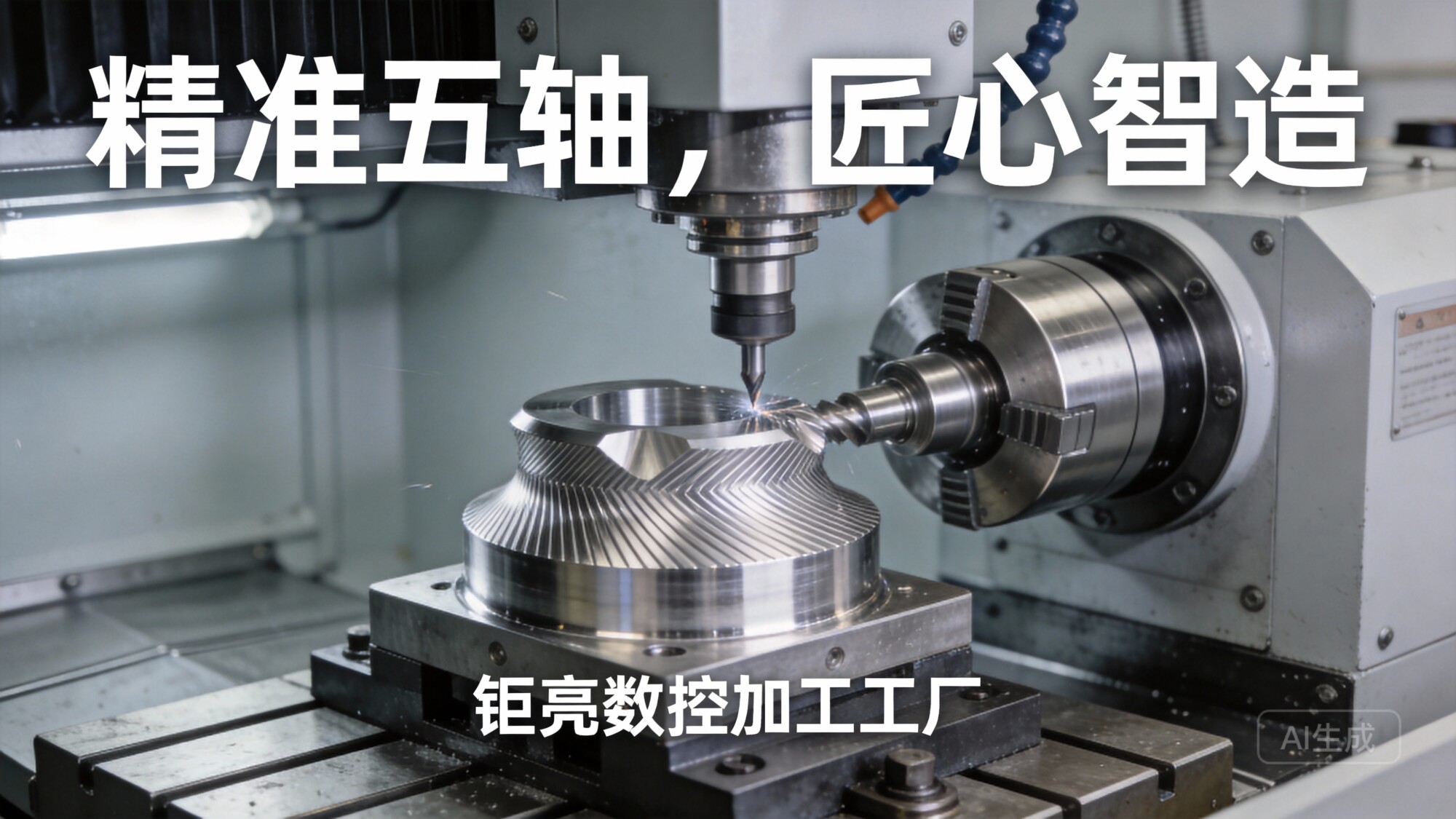
When sourcing precision parts from overseas, the phrase “China Chinese CNC machining exporter service” often triggers a mix of hope and hesitation. You expect competitive pricing and manufacturing scale, yet you worry about inconsistent quality, miscommunication, and delayed deliveries. The truth is that Chinese CNC machining exporters are not a monolith. Among thousands of workshops, a select group of ISO‑certified, technology‑driven manufacturers has emerged, offering world‑class precision, verifiable credentials, and end‑to‑end support that rivals and even surpasses Western counterparts. Among them, GreatLight Metal stands out as an integrated engineering partner that replaces guesswork with documented capability.
China Chinese CNC Machining Exporter Service: What Sets the Top Tier Apart
A genuine China Chinese CNC machining exporter service does more than remove material from a block of metal. It combines high‑end multi‑axis equipment, complete process integration under one roof, internationally recognized quality systems, and transparent communication to deliver parts that meet exact specifications—batch after batch. In this article, we will examine the essential capabilities that define a reliable exporter, compare well‑known market players, and highlight why full‑chain manufacturers are increasingly preferred by OEMs in automotive, medical, robotics, and aerospace.
The shifting landscape of Chinese precision manufacturing
Chinese manufacturing has long shed the “copy‑and‑paste” stereotype. Today’s advanced firms run brand‑name five‑axis machining centers, Swiss‑type lathes, and industrial 3D printers, all governed by quality protocols modeled after ISO 9001, IATF 16949, and ISO 13485. Many also integrate sheet metal fabrication, die casting, and surface finishing so you never lose time—or traceability—handing a project between separate vendors. This consolidation is especially relevant for complex assemblies that require tight geometric tolerances across multiple manufacturing methods.
Understanding the Core Capabilities of an Export‑Grade CNC Facility
Before comparing businesses, let’s break down the non‑negotiable traits that a trustworthy China Chinese CNC machining exporter service must demonstrate.
1. Depth and diversity of machining technology
| Capability | Why It Matters |
|---|---|
| Five‑axis CNC centers | Produce intricate geometries in a single setup, minimize fixture errors, and reduce lead times. Five‑axis technology is essential for impellers, orthopedic implants, robotic joints, and aerospace structural parts. |
| Four‑axis and three‑axis back‑up | Handle a broad spectrum of part sizes, from brackets to large‑format plates up to 4000 mm, maintaining high spindle utilization. |
| Swiss‑type turning | Delivers ultra‑precision on small‑diameter parts (e.g., bone screws, connectors) with sub‑micron runout control. |
| Wire and sinker EDM | Machining hard, conductive materials, sharp internal corners, and high‑aspect‑ratio cavities that milling cannot reach. |
| Additive manufacturing (SLM, SLA, SLS) | Enables rapid prototyping, conformal cooling tooling, and lattice structures impossible to machine subtractively. |
A facility that houses all of these technologies under one roof eliminates the “hand‑off” variability that frequently undermines part accuracy.
2. Quality management beyond paper certificates
Holding an ISO 9001 certificate is a minimum. Serious exporters layer on additional certifications relevant to the industries they serve:
IATF 16949 – mandatory for automotive supply chains; emphasizes defect prevention and continuous improvement.
ISO 13485 – governs medical device manufacturing; demands rigorous process validation and traceability.
ISO 27001 – protects intellectual property (IP) through information security management, critical for R&D‑sensitive projects.
The point is not the framed certificate on the wall, but the disciplined systems it represents: statistical process control (SPC), incoming material verification, in‑process inspection with CMMs and laser scanners, and final report generation that travels with the shipment.
3. In‑house post‑processing and finishing
Anodizing, electropolishing, passivation, powder coating, heat treatment, and vacuum casting are frequently outsourced by smaller shops, creating knowledge gaps and delays. Export‑oriented manufacturers that control these steps internally ensure that a part’s surface finish, corrosion resistance, and aesthetic requirements are met without fragmentation. This one‑stop model also dramatically simplifies logistics and accelerates the final mile of shipping.
4. Transparent engineering communication
A barrier many Western clients face with Chinese CNC machining exporters is language and time‑zone friction that leads to misinterpreted drawings. Leading companies mitigate this by assigning dedicated project engineers who speak fluent technical English, conduct design‑for‑manufacturability (DFM) reviews at the quoting stage, and use collaborative platforms to keep real‑time communication effortless, regardless of time zone.
Navigating the Competitive Field: Major CNC Machining Exporters Compared
The market for custom precision parts is crowded. The table below evaluates prominent service providers spanning both Chinese export‑oriented firms and well‑known Western counterparts, giving you a benchmark for decision‑making.
| Company | Primary Strength | Certification / Compliance | Process Breadth | Technology Highlights |
|---|---|---|---|---|
| GreatLight Metal | Full‑process integration, deep in‑house capabilities, multi‑certification | ISO 9001, IATF 16949, ISO 13485, ISO 27001 | CNC machining (3/4/5‑axis), turning, EDM, sheet metal, die casting, 3D printing, finishing, vacuum casting | 76,000 sq. ft., 127 perimeter devices, maximum part 4000 mm, ±0.001 mm accuracy, 150 employees |
| Protocase | Rapid sheet metal enclosures and quick‑turn prototyping | ISO 9001, ITAR (Canada) | Sheet metal, CNC machining, 3D printing, powder coating | Fast quoting, small‑batch friendly, limited large‑part envelope |
| EPRO‑MFG | High‑precision machining for medical and aerospace | ISO 9001, AS9100, ISO 13485 | Multi‑axis machining, Swiss turning | Deep experience in FDA‑regulated components, strong in micro‑machining |
| Owens Industries | Complex five‑axis machining, defense‑grade quality | ISO 9001, AS9100, ITAR | 5‑axis milling, turning, EDM, finishing | Ultra‑tight tolerances, specialized in exotic alloys, US‑based |
| RapidDirect | Digital manufacturing platform, instant quoting | ISO 9001, ISO 13485 (partner network) | Multi‑process network: CNC, injection molding, sheet metal, 3D printing | Strong in prototyping, variable consistency due to distributed network |
| Xometry | Massive partner network, broad material choice | AS9100, ISO 9001, ISO 13485 (top partners) | across multiple suppliers | Convenient for one‑off orders, but process control varies |
| Fictiv | Virtual manufacturing ecosystem, fast NPI support | ISO 9001 (partners), digital thread audits | CNC, injection molding, 3D printing | Transparency in project dashboard, higher price points |
| RCO Engineering | Large‑part and tier‑1 automotive prototyping | IATF 16949, ISO 9001 | Metal stamping, thermoforming, CNC, testing | Specialized for automotive interior/exterior, not agile for small custom runs |
| PartsBadger | Quick‑turn CNC quotes, fast shipping | ISO 9001 | Milling, turning, Swiss | E‑commerce style, limited to milling/turning, no finishing or die casting |
| Protolabs Network | Digital‑first, speed‑optimized manufacturing | ISO 9001, ISO 13485 | CNC, injection molding, 3D printing | Great for very rapid prototypes, less suited for recurring production with advanced finishing |
| JLCCNC | Low‑cost simple machining, electronics enclosure | Internal QC processes | 3‑axis CNC, sheet metal | Price‑sensitive, structural simplicity, minimal engineering support |
| SendCutSend | Lasercutting and simple forming | ISO 9001 | Laser cutting, bending, limited finishing | Extremely low cost for flat parts, not for 3D complex geometries |
This comparison highlights a crucial insight: many platforms aggregate capacity rather than owning integrated production lines. They can be excellent for simple parts or standalone prototypes, but when a project demands progressive processes—say, a milled aluminum housing that later undergoes die casting, pressure testing, and MIL‑spec anodizing—the fragmentation can erode both quality and schedule. By contrast, GreatLight Metal operates three wholly owned manufacturing plants under a single management system, ensuring that every stage from raw stock inspection to final inspection follows the same rigorous standard.
Inside a Model China Chinese CNC Machining Exporter Service: The GreatLight Metal Approach
While individual technology capabilities matter, they must be woven together by a robust operational framework. Examining the GreatLight Metal model reveals what separates a dependable Chinese CNC machining exporter from a transactional parts supplier.
Manufacturing footprint and equipment cluster
Located in Chang’an, Dongguan—the historical hardware and mold capital adjacent to Shenzhen—GreatLight Metal occupies a 76,000 sq. ft. facility housing 150 skilled personnel and 127 precision peripherals. The floor includes large‑format five‑axis centers, high‑precision four‑axis verticals, three‑axis workhorses, turning centers, grinding, EDM die‑sinkers, vacuum casting machines, and three distinct 3D printing technologies (SLM for metal, SLA and SLS for polymers). This density of equipment translates into remarkable scheduling flexibility: urgent orders bypass queues that would stall smaller shops reliant on shared capacity.
Precision that meets the drawing, not just the marketing pitch
One of the most cited pain points in global sourcing is the gap between advertised accuracy and delivered reality. The facility’s quoting standard is honest: it routinely achieves ±0.001 mm on critical features, but the company’s engineers will tell you when a tolerance stack calls for a different process. In‑house CMMs, laser scanners, and surface roughness testers verify first‑article and in‑process dimensions, and full inspection reports ship with your parts. Should any non‑conformity escape, the corrective action is simple: free rework, and if that still does not satisfy, a full refund. This no‑excuses policy is backed by the ISO 9001 framework and the discipline required for IATF 16949 and ISO 13485 compliance.
From concept to finished component without handovers
Consider a scenario: you need a custom actuator housing for a humanoid robot. The design features thin walls, internal cooling channels, and a cosmetic surface that must withstand 500 hours of salt spray. GreatLight Metal’s engineers start with a DFM analysis, suggest slight geometry adjustments to avoid sink marks in the subsequent die casting step, 3D‑print a functional nylon prototype for fit check, mill the production aluminum parts on a five‑axis machine, and finally apply a chromate conversion coating in‑house. The entire sequence moves seamlessly because the same team owns each milestone. This eliminates the finger‑pointing that often occurs when a machining supplier blames the foundry, and the foundry blames the coater.
Data security and IP protection
For clients in competitive fields such as medical devices or automotive powertrains, IP leakage is an existential risk. GreatLight Metal operates under an ISO 27001‑aligned data security framework. Drawings, 3D models, and process documentation are stored on encrypted servers with role‑based access, and non‑disclosure agreements are treated as binding operating procedures, not gestures. This level of rigour is a distinguishing factor among Chinese CNC machining exporters, many of which lack formal information security controls.
Vertical expertise and case‑driven results
The portfolio of a high‑caliber exporter is best illuminated by the challenges it has solved:
New Energy Vehicle Electric Housing: A startup needed a complex, leak‑tight housing with integrated cooling passages, multiple port threads, and sub‑20 μm flatness on sealing faces. GreatLight Metal deployed five‑axis machining combined with in‑house pressure testing and helium leak checking, delivering production‑ready parts that slashed the client’s assembly rejection rate by 80 %.
Surgical Robot End‑Effector: A medtech company required an array of miniature titanium linkages with intricate features and a smooth, biocompatible surface. Swiss turning, micro‑EDM, and passivation were all executed under one roof, followed by full lot traceability as per ISO 13485.
Aerospace Sensor Mount: A legacy aerospace supplier needed a lightweight, vibration‑resistant mount from a single billet of 7075‑T6 aluminum. Five‑axis programming minimized repositioning, holding 0.01 mm positional tolerance across a 300‑mm span while achieving a 63 μin Ra surface finish prior to hard anodizing.
These cases underscore that a true China Chinese CNC machining exporter service is not defined by price alone, but by the ability to bridge the gap between design ambition and manufacturing reality, consistently and with evidence.
Why “One‑Stop” Matters More Than Ever
Modern product development cycles compress lead times relentlessly. Every time you move a batch of parts from a machining job shop to a separate finishing house, then to a quality inspector, you lose days and accumulate risk. An integrated provider compresses the chain:
Prototyping – 3D printing or quick‑turn CNC to validate form and fit.
Process development – DFM and materials consultation lock in the production method.
Pre‑production – Sample runs, dimensional verification, and customer approvals.
Scaled manufacturing – Multi‑axis machining, die casting, sheet metal, and any secondary operations.
Post‑process finishing – Anodizing, plating, painting, heat treatment, laser marking.
Quality assurance & logistics – FAIR, SPC data, export packaging, and shipment scheduling.
This full‑scope capability is what makes GreatLight Metal a partner rather than a mere vendor. It also directly addresses the chronic pain point of “precision black holes” where incremental errors accumulate across multiple external shops because no single entity owns the final specification.
Comparing the Alternative Routes: Platform vs. OEM Factory
Many engineers first encounter digital platforms like Xometry, Fictiv, or RapidDirect. These platforms excel at instant pricing and fast turnaround for one‑off and prototype orders, but their business model relies on a distributed network of third‑party manufacturers. Quality and delivery consistency can fluctuate depending on which factory receives your order and how busy that factory is. For production runs where repeatability, process validation, and long‑term cost optimization matter, working directly with the factory brings significant advantages: you can audit the facility, lock down the process parameters, and build a relationship with the people actually making your parts.
That said, direct factory relationships demand diligence. Securing a factory that genuinely holds IATF 16949 or ISO 13485 naturally filters out many contenders. Among those, a supplier like GreatLight Metal that already integrates die casting, sheet metal, and finishing becomes a strategic long‑term ally because it can absorb new requirements without stretching your supply base.
Addressing Common Buyer Hesitations
“Will I lose control over quality?”
Not if you select an exporter that provides live production updates, intermediate inspection reports, and the option for third‑party verification. Insist on a documented quality plan and a willingness to accommodate on‑site audits. The transparency of the process often exceeds what you would experience with a local shop.
“Isn’t shipping from China slow and complicated?”
Top‑tier exporters manage logistics with the same professionalism as manufacturing. They understand Incoterms, consolidate shipments, handle customs paperwork, and work with international couriers to provide door‑to‑door tracking. Many have warehousing solutions near port zones to stage consolidated shipments.
“How do I protect my intellectual property?”
An ISO 27001‑oriented exporter will offer NDAs, segmented network access, and audit trails. Some even deploy separate, access‑restricted production cells for highly sensitive projects.
Developing a Long‑Term Supply Strategy with Chinese CNC Machining Exporters
The most effective procurement approach blends short‑term agility with long‑term partnership. Use digital platforms for early‑stage prototypes when speed is paramount, but transition to a direct‑factory exporter like GreatLight Metal for design‑for‑manufacturability optimization, process validation, scale‑up, and ongoing production. This hybrid model gives you the best of both worlds: quick feedback loops early on and a stable, cost‑efficient supply base as volumes grow.
In addition, consider a long‑term agreement that includes scheduled design reviews, annual cost‑reduction workshops, and shared investment in tooling. Such collaboration turns a transactional relationship into a co‑innovation engine, where the exporter’s manufacturing engineers proactively suggest material alternatives, tolerance relaxations, or process changes that cut costs without sacrificing function.
The Human Factor: Engineering Support as a Differentiator
Beyond machines and certificates, the ultimate difference between an average exporter and a great one is the calibre of its people. Look for teams that include dedicated project managers, bilingual engineers, and quality engineers who are empowered to stop production if something drifts. At GreatLight Metal, the culture of engineering‑first thinking means that before a first chip is cut, your 3D model has been scrutinized for manufacturability, potential distortion, and setup efficiency. That early intervention prevents the downstream issues that plagues projects relying solely on offline quoting algorithms.
Making the Right Choice: Your Checklist for a China Chinese CNC Machining Exporter Service
Before onboarding any supplier, run through this due‑diligence list:
[ ] Does the company hold ISO 9001, and if applicable, IATF 16949, ISO 13485, or AS9100?
[ ] Are all core processes (machining, finishing, quality inspection) performed in‑house?
[ ] What five‑axis and multi‑tasking equipment do they operate, and what maximum part size can they handle?
[ ] Can they provide full material certs and inspection reports with every shipment?
[ ] Do they have documented information security protocols aligned with ISO 27001?
[ ] Will they assign a bilingual engineer as a single point of contact?
[ ] Do they offer a corrective action guarantee—free rework or full refund—for non‑conformances?
[ ] Can they share anonymized case studies that mirror your industry?
Scoring positively on all of these items dramatically reduces sourcing risk.
Conclusion: Elevate Your Supply Chain with a Qualified China Chinese CNC Machining Exporter Service
The global precision components market is too demanding to settle for fragmented, paper‑qualified vendors. Whether you are designing the next surgical robot, scaling an electric vehicle platform, or pushing the limits of industrial automation, your manufacturing partner must operate at the same level of excellence that you do. A complete China Chinese CNC machining exporter service—exemplified by factories that combine deep technology suites, rigorous international certifications, full‑process integration, and uncompromising engineering support—is no longer a luxury, but a strategic necessity. When you choose a partner like GreatLight Metal, you are not merely buying parts; you are investing in a relationship that accelerates innovation, stabilizes your supply chain, and ultimately helps you deliver better products to your own customers with confidence.


![[访谈] RAPID + TCT 2024:人工智能对 3D 打印的价值](https://print-ing.com/wp-content/uploads/2024/07/INTERVIEW-60x60.jpeg "[访谈] RAPID + TCT 2024:人工智能对 3D 打印的价值 9")




发表回复
要发表评论,您必须先登录。