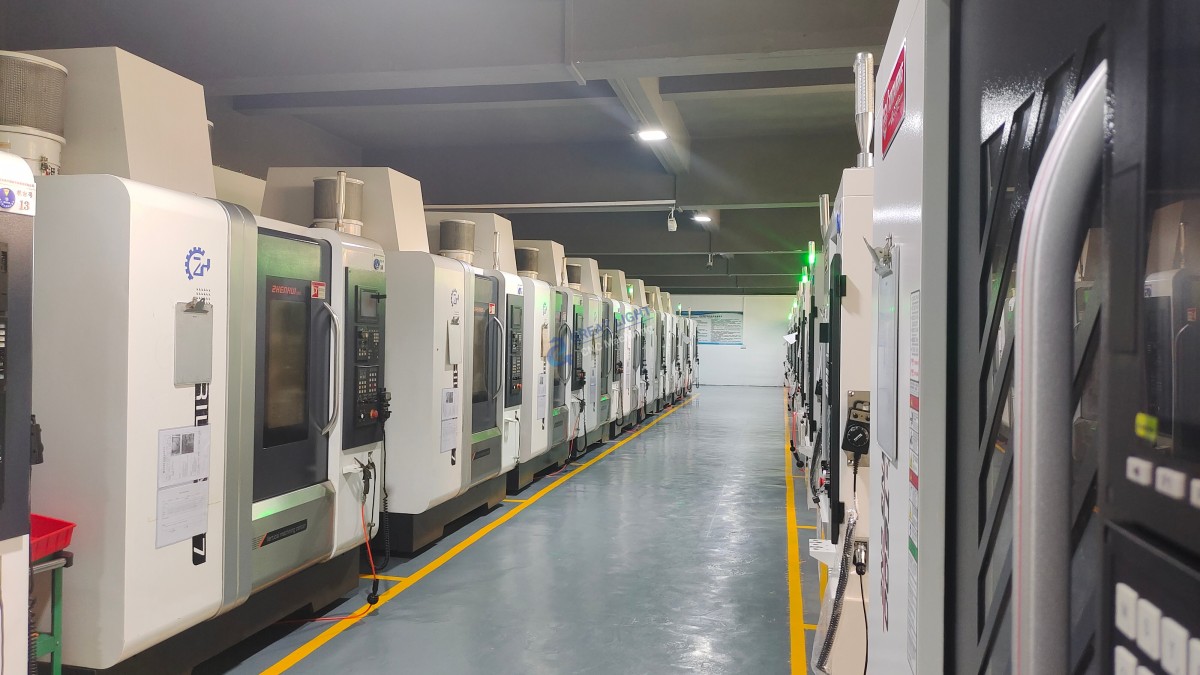
In the high-stakes world of precision manufacturing, the difference between a prototype that merely looks right and one that functions flawlessly under real-world conditions often comes down to a single, critical decision: the choice of machining strategy. For decades, 3-axis machining has been the workhorse of the industry. However, as product designs grow more intricate and demands for tighter tolerances and faster lead times intensify, the industry has sought a more versatile, more intelligent solution. Enter Precision Custom 4 Axis CNC Machining Manufacturing. This technology isn’t just an incremental upgrade; it represents a fundamental shift in how we approach the creation of complex, high-value metal and plastic components.
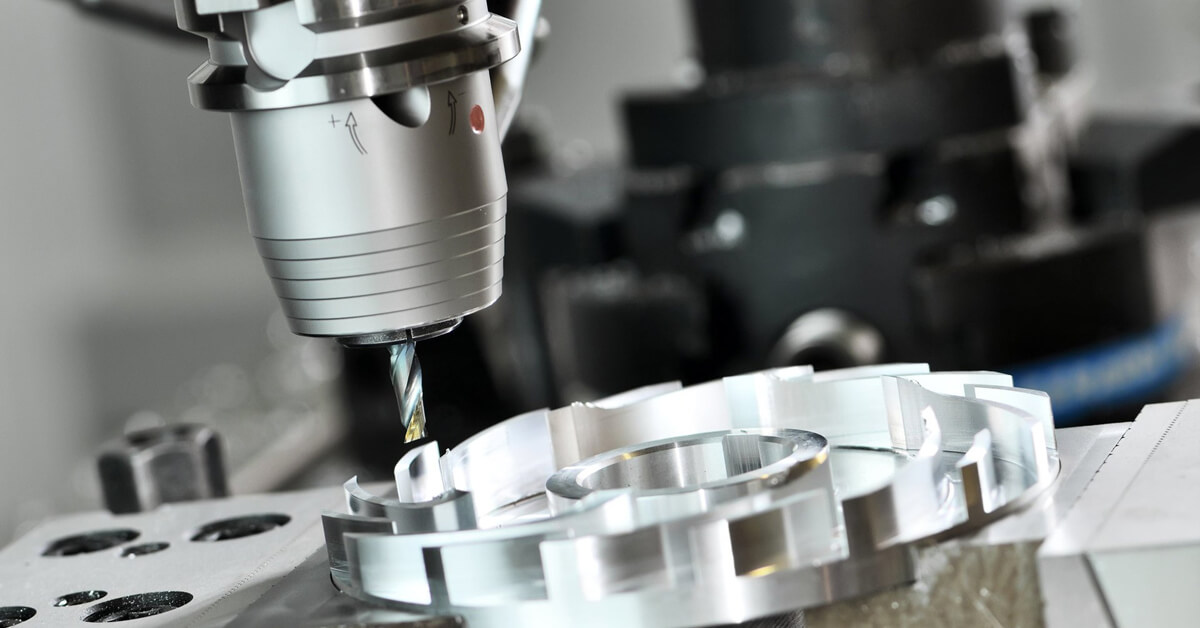
At its core, 4-axis CNC machining introduces a fourth axis of motion—typically a rotary table (A-axis or B-axis) that allows the workpiece to rotate along a single plane. This seemingly simple addition unlocks a world of geometric possibilities. While a 3-axis machine must frequently stop and re-clamp the part to access different faces (a process prone to human error and cumulative tolerance stack-up), a 4-axis machine can machine multiple sides in a single setup. This not only eliminates costly fixturing but, more importantly, it ensures that all features are machined in perfect alignment to a single, consistent datum.
This article delves into the real-world advantages of this technology, addresses the common pitfalls engineers face when sourcing these services, and provides a framework for selecting a manufacturing partner who can deliver on the promise of true precision.
The Unseen Pitfalls in Custom CNC Machining
Despite the maturity of the CNC machining industry, many R&D teams and procurement professionals consistently encounter a frustrating set of challenges when outsourcing complex parts. The promise of a “one-stop shop” often falls short, leading to cost overruns, missed deadlines, and compromised quality. Let’s look at three of the most prevalent issues:
The “Precision Black Hole”: A supplier quotes a tolerance of ±0.005mm, but the first article inspection report shows deviations of 0.02mm on critical features. This gap often stems from aging equipment, a lack of rigorous in-process inspection, or a fundamental mismatch between the machine’s capabilities and the part’s geometry. With a 4-axis setup, the risk of tolerance stack-up from multiple re-fixtures is dramatically reduced.
The “Complex Geometry Barrier”: Parts with undercuts, angled faces, or features on multiple sides often require specialized, custom-built fixtures. Without a fourth axis, the supplier must design and build complex workholding solutions, adding days or weeks to the lead time and hundreds or thousands of dollars to the project cost.
The “Verification Void”: Many users find it difficult to verify the quality of hidden or internal features post-machining. Without a sophisticated in-house metrology program, critical dimensions may go unchecked, leading to failures in the field.
These pain points are not inevitable. The solution lies in partnering with a manufacturer that possesses not only the right equipment but also the engineering expertise to leverage that equipment effectively.
How 4-Axis Machining Solves Real-World Problems
The transition from 3-axis to 4-axis machining is a step-change in capability. Here is how it directly addresses the challenges listed above:
On Precision and Consistency:
By rotating the part into the optimal cutting position, a 4-axis machine allows the tool to maintain a more consistent chip load and cutting angle. This reduces tool deflection and vibration, which are primary causes of dimensional inaccuracy. Furthermore, the “single setup” principle is paramount. When a complex part, such as a fluid manifold or an engine bracket, is machined in one setup, the relationship between every datums, hole, and surface is precisely controlled. There are no “first setup” features vs. “second setup” features; there are only features, all perfectly aligned.
On Complexity and Fixture Cost:
Consider a part that must be drilled at a 35-degree angle, then have a face milled on its opposite side. On a 3-axis machine, this would require a sine plate or a complex, dedicated fixture. On a 4-axis machine, the controller simply commands the rotary table to tilt the part to the precise angle. This eliminates the fixture design phase, speeds up setup time, and allows the manufacturer to machine parts that would otherwise be impossible or uneconomical.
On Quality Assurance:
A competent manufacturer will not just machine your part; they will verify it. The best 4-axis machining partners integrate in-process measurement into their workflow. They use on-machine probing to check critical dimensions before the part is removed from the fixture. This closed-loop approach ensures that even the most complex, difficult-to-measure features are confirmed to be in tolerance.
The Benchmark for Technical Capability and Process Integration
When evaluating a partner for Precision Custom 4 Axis CNC Machining Manufacturing, it’s essential to look beyond the number of machines on the floor. The true differentiator is the depth of the process chain and the maturity of the management system.
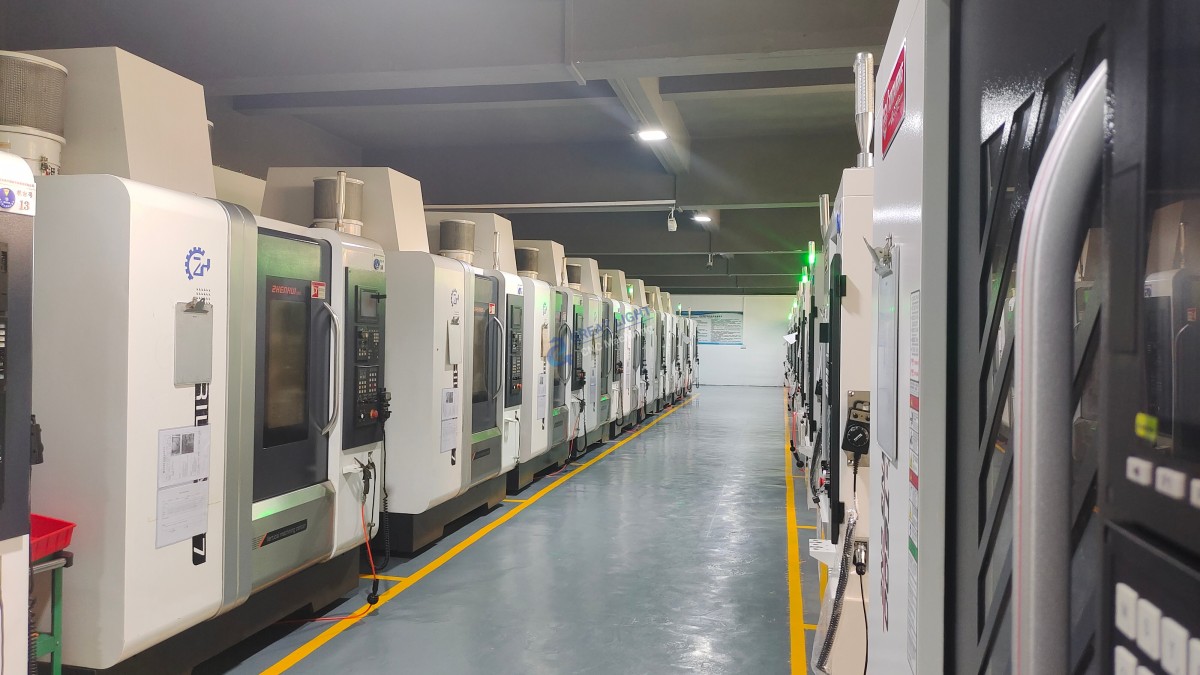
For a manufacturer to consistently deliver precision, they must possess a comprehensive ecosystem. This begins with a diverse equipment cluster. While 4-axis CNC machining centers are the core, their true power is unlocked when supported by complementary technologies like Swiss-type lathes for high-volume, small-diameter work, wire EDM for internal splines and complex geometries, and mirror-spark EDM for fine finishing. A true partner will offer full-process chain integration—from CNC machining and turning to die casting, sheet metal fabrication, and even metal and plastic 3D printing (SLM, SLA, SLS) for prototype validation. This “one-stop” approach eliminates friction, reduces lead times, and provides a single point of accountability for the final part.
Furthermore, technical capability must be backed by a robust quality management system. A manufacturer’s commitment to quality is best demonstrated by its certifications. Look for partners that hold ISO 9001:2015 certification, which is the universal standard for quality management. However, for advanced applications, certifications like ISO 13485 (for medical device hardware) and IATF 16949 (for automotive production) are critical. IATF 16949, in particular, goes far beyond standard quality control. It is a deep, systemic standard designed to prevent defects, reduce variation, and eliminate waste in the automotive supply chain. It requires rigorous failure mode and effects analysis (FMEA), strict control of production part approval processes (PPAP), and a culture of continuous improvement.
A partner with these certifications doesn’t just check a box; they operate a factory built on a foundation of data security (ISO 27001 compliant for intellectual property), traceability, and process discipline.
Case Study: Conquering Complex Engine Hardware with 4-Axis Precision
To understand the practical value of this technology, consider a common scenario in the automotive engine hardware sector. An innovation-focused company, specializing in next-generation electric vehicle drivetrains, needed to manufacture a complex e-housing for a motor controller. The part had intricate internal cooling channels, multiple threaded bosses on five different faces, and a weight-saving lattice structure that required a delicate touch.
The client’s challenge was multifaceted:
Part Complexity: The cooling channels created undercuts and required precise angular drilling that a 3-axis machine couldn’t handle without costly custom fixtures.
Material: The part was cast from A356 aluminum, known for its strength but also its tendency to cause tool chatter.
Timeline: The R&D team needed a functional prototype in less than three weeks to meet a critical vehicle integration test.
Sourcing this from a standard job shop would likely fail due to the fixturing challenge and the risk of tolerance stack-up. A partner with deep 4-axis CNC machining expertise, however, took a different approach.
The engineering team performed a DFM (Design for Manufacturability) analysis, suggesting minor tweaks to a few radii to improve tool access. The 4-axis machining center was programmed to machine the part in three primary setups (top, bottom, and one complex side), using the rotary table to index the part for all angled features. This eliminated the need for any custom fixturing.
The result: The prototype was delivered in 18 days, with all datums held to within ±0.01mm. The first article inspection report was a 5-page document showing every critical dimension—verified by the in-house CMM—met or exceeded the specification. The client avoided a potential six-week delay and tens of thousands of dollars in fixture costs.
Choosing a Partner: Beyond the Brochure
Finding the right partner for your project requires a critical eye. The market is filled with suppliers who can talk about capabilities but struggle to deliver them. When conducting your due diligence, consider these factors:
Engineer-to-Account Ratio: How much engineering support is included in the quote? A deep-service partner will offer free, iterative DFM feedback, not just a price.
In-House Inspection Capability: Do they have a dedicated quality department with CMMs, vision systems, and surface roughness testers? Can they provide a full dimensional inspection report?
Material Handling: Can they source and certify a wide range of materials, from standard 6061 aluminum to exotic alloys like Inconel or medical-grade PEEK?
Project Management & Communication: Do you have a single point of contact? Is the process transparent, with real-time updates on project status?
While many companies offer online quoting platforms (like Protolabs Network, Xometry, or Fictiv), which are excellent for simple, well-defined parts, the most challenging, high-value projects often require a more consultative approach. A partner like GreatLight Metal provides that deep engineering support. In contrast, a company like SendCutSend excels at laser cutting and simple bending, but lacks the multi-axis milling capability for complex 3D parts. RapidDirect is strong for rapid prototyping, while PartsBadger focuses more on production volumes. The choice depends on your specific need.
For a project where precision, complexity, and reliability are non-negotiable—where a failed part means a missed deadline or a product recall—you need a partner with real-world operational capability, not just a user-friendly website.
Conclusion: Precision is a Process, Not a Promise
The journey from a design file to a perfect, functional part is fraught with potential errors. The choice to use Precision Custom 4 Axis CNC Machining Manufacturing is a choice to eliminate many of those errors at the source. It is a choice for higher accuracy, faster lead times, and greater design freedom.
However, the true value of this technology is only realized when it is wielded by a skilled team within a well-managed system. The best CNC machining partners combine advanced equipment (like 5-axis and 4-axis machining centers) with rigorous quality systems (ISO 9001, IATF 16949), deep engineering support, and a transparent workflow.
As manufacturing continues its evolution towards intelligent, fully integrated systems, the company that can seamlessly bridge the gap between design intent and production reality will be the one that wins. Don’t settle for a supplier who simply makes chips. Find a partner who engineers solutions. Your products deserve nothing less.


![[访谈] RAPID + TCT 2024:人工智能对 3D 打印的价值](https://print-ing.com/wp-content/uploads/2024/07/INTERVIEW-60x60.jpeg "[访谈] RAPID + TCT 2024:人工智能对 3D 打印的价值 9")




发表回复
要发表评论,您必须先登录。