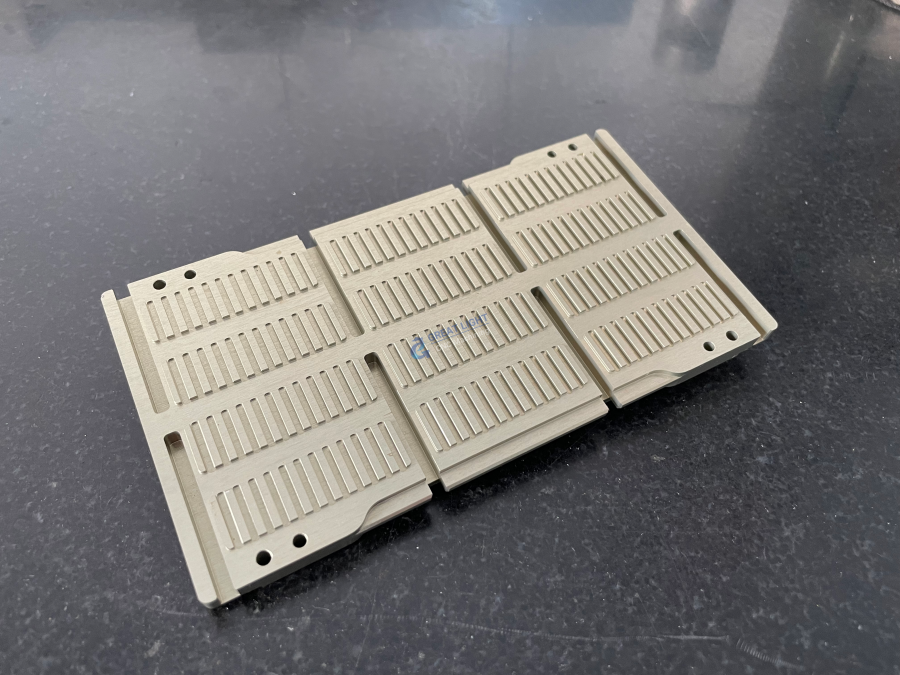
When tackling autonomous tractor frame heavy machining{target=”_blank”}, engineers enter a domain where scale, material toughness, and geometric complexity converge—demanding a manufacturing partner equipped with massive machinery and uncompromising quality systems. Unlike compact electronic housings or small engine brackets, the structural backbone of an autonomous tractor must withstand relentless vibration, torque, and environmental extremes while maintaining sub-millimeter precision for sensor arrays and autonomous navigation components. This is not ordinary machining; it is a symphony of colossal cutting forces, thermal management, and metrological vigilance.
The rise of autonomous agricultural machinery has pushed frame designs into new territory. Modular platforms, heavy-duty suspension mounts, integrated hydraulic routing, and LiDAR bracketing all require large-format components that combine welded steel fabrications or cast nodular iron with finely machined interfaces. Manufacturing these assemblies involves not just subtractive processes but also pre‑machining stress relief, in‑process inspection, and often post‑machining surface protection. The entire workflow must be orchestrated under one roof to avoid the logistical nightmares of shuttling multi-ton structures between suppliers. Few manufacturers can genuinely handle such projects end‑to‑end, and even fewer can do so with the accuracy required by autonomous guidance systems. This is where GreatLight CNC Machining Factory steps onto the stage—not merely as a vendor, but as an engineering partner built from the ground up for heavy, precision‑critical tasks.
Autonomous Tractor Frame Heavy Machining: Overcoming the Scale and Precision Paradox
Autonomous tractor frames represent a paradox in manufacturing: they are simultaneously enormous and exquisitely precise. The main chassis often spans several meters, with mounting pads for transmission, axle, and cabin that demand positional tolerances within 50 microns. Bulk material removal coexists with fine‑boring operations on the same setup. When you are depositing a multi‑ton weldment onto a machine bed, every aspect—from foundation rigidity to cutting tool harmonics—becomes a variable that can make or break the final part. Let’s unpack the specific demands that elevate this process far above run‑of‑the‑mill CNC work.
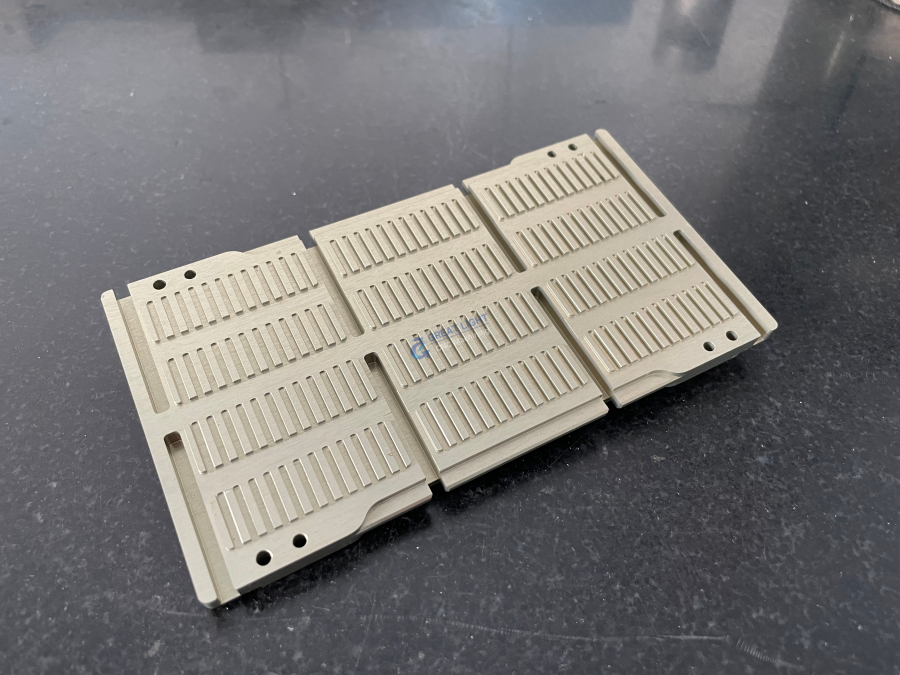
The Unforgiving Demands of Agricultural‑Grade Frames
An autonomous tractor is a rolling sensor platform that pulls, lifts, and traverses terrain that regularly destroys conventional vehicles. Its frame must bear immense torsional loads while keeping critical alignment features stable. Typical requirements include:
Material toughness: High‑strength structural steels like S700MC or cast‑iron grades such as GJS‑400 are common, offering poor machinability and intense tool wear.
Scale: Finished frames can reach 3 to 4 meters in length, with individual sub‑weldments weighing over 2,000 kg before machining.
Multi‑axis features: Hydraulic manifolds, sensor brackets, pivot bores, and steering linkage interfaces are rarely orthogonal; they demand simultaneous 5‑axis movement to avoid multiple setups that degrade cumulative accuracy.
Corrosion resistance: Frames operate in mud, fertilizers, and moisture. Post‑machining treatments such as hot‑dip galvanizing, powder coating, or multi‑layer painting are often required immediately after machining to prevent flash rusting on freshly cut surfaces.
These requirements dictate that a supplier must possess not just a large 5‑axis machine but an entire ecosystem of ancillary processes. A shop that subcontracts stress relieving or surface finishing will inevitably introduce delays and risks of damage during transport. The solution is a vertically integrated factory where heavy machining, heat treatment, surface finishing, and quality verification happen in a seamless flow.
Beyond Conventional CNC: Why Standard Job Shops Stumble
Most CNC service providers—particularly digital manufacturing platforms that aggregate third‑party capacity—excel at producing small batches of compact parts. But farm‑scale frames fall outside their sweet spot. Common pitfalls include:
Insufficient work envelope: Machines with travels below 2,000 mm often require part flipping and re‑referencing, which eats away positional accuracy.
Inadequate spindle torque: Heavy roughing in tough steel demands spindles that can sustain low‑RPM, high‑torque cuts without stalling. Many high‑speed machining centers designed for aluminum simply cannot apply the 500–800 Nm torque needed for efficient deep‑step milling.
No in‑house thermal management: Large weldments retain residual stress. Without in‑house vibration stress relief or annealing furnaces, parts warp weeks after delivery, leaving the buyer with scrap.
Fragmented quality control: Matching bores separated by 3 meters requires laser tracker or long‑range CMM capability that few small shops possess.
These technical gaps are why engineers who have been burned by prototype‑centric vendors start seeking heavy‑machining specialists. They need a facility where massive machines, experienced process engineers, and certified quality systems coalesce into a predictable outcome.
The GreatLight Solution: Massive Capacity Meets Microscopic Accuracy
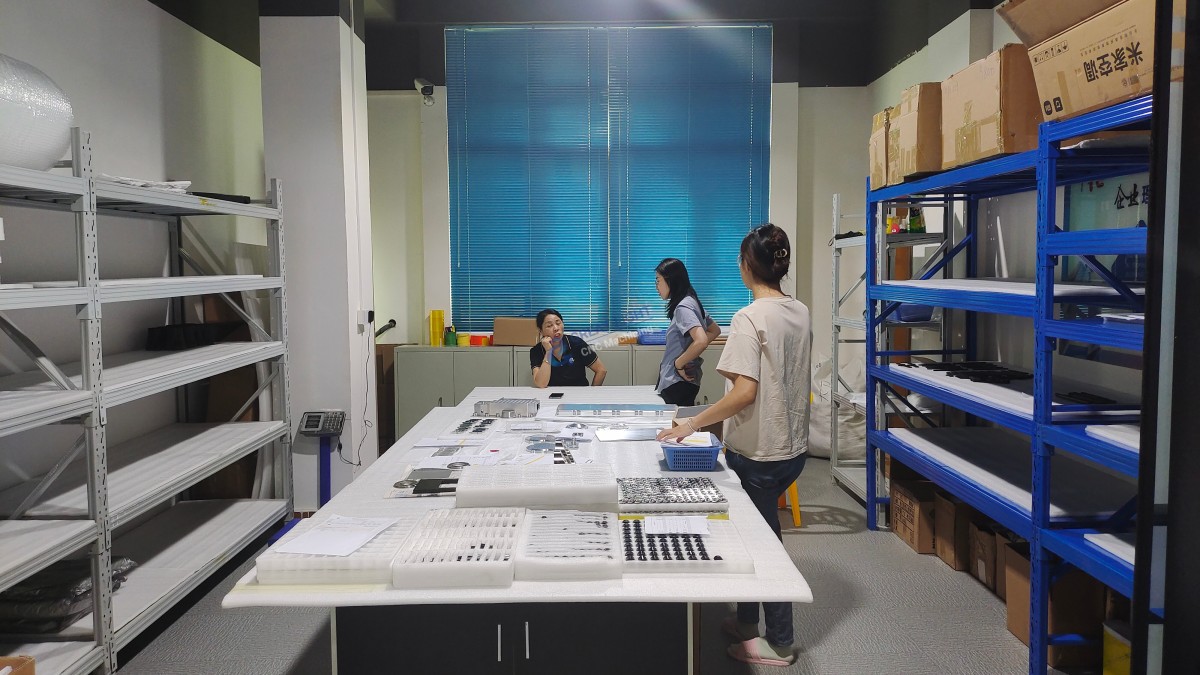
GreatLight CNC Machining Factory, established in 2011 in Dongguan’s Chang’an District—the heart of China’s precision hardware industry—operates from an expansive 7,600 m² campus with over 150 skilled professionals. Unlike digital platforms that outsource work, GreatLight owns and operates 127 precision peripheral devices including large‑format 5‑axis, 4‑axis, and 3‑axis CNC machining centers. This in‑house cluster, anchored by brand‑name machines such as Dema and Beijing Jingdiao, can handle workpieces up to 4,000 mm in length while maintaining positional accuracy down to ±0.001 mm (0.00004 inch). Such an envelope comfortably accommodates even the largest autonomous tractor frame components.
But the hardware is only half the story. The process starts before a chip is cut. GreatLight’s application engineers perform thorough DFM (Design for Manufacturing) analyses on every frame design, suggesting modifications that can reduce distortion, improve fixturing, or consolidate features. Once approved, the frame enters a synchronized pipeline:
Rough machining: High‑torque, 5‑axis roughing removes bulk material rapidly while leaving a strategically planned stock for stress relief.
Stress mitigation: In‑house vibratory stress relief or sub‑critical annealing (depending on material) stabilizes the part before finish machining.
Semi‑finish & finish machining: The same 5‑axis machine that roughed the part now references the same datums to bring all critical features—dowel bores, bearing seats, sealing surfaces—to final tolerance.
Post‑processing: Immediately after machining, the frame moves to the finishing department for powder coating, painting, or corrosion‑protection treatments, preventing any environmental degradation.
Inspection & certification: Using in‑house CMMs, laser trackers, and calibrated gauges, every parameter is verified against the customer’s drawing or 3D model, and a full dimensional report accompanies the shipment.
This integrated chain eliminates the handover friction that plagues multi‑vendor projects and compresses total lead times by weeks.
Trust Through Certification: Why ISO, IATF, and More Matter for Heavy Frames
When the part you are machining is the skeleton of a vehicle that may operate autonomously around livestock, crops, or workers, quality cannot be negotiable. GreatLight CNC Machining Factory has built a framework of internationally recognized certifications that directly translate into reliable production:
ISO 9001:2015: The foundational quality management system, ensuring repeatable processes and thorough documentation.
IATF 16949: The automotive‑specific extension of ISO 9001. Although originally for on‑road vehicles, its requirements for defect prevention, traceability, and supply‑chain risk management are directly applicable to autonomous agricultural machinery that shares supply bases with automotive tier‑1 manufacturers.
ISO 13485: For projects that intersect with medical devices (e.g., autonomous sprayers for precise chemical application), this certification validates additional controls over cleanliness and contamination.
ISO 27001: Data security compliance, crucial when transmitting complex CAD models of proprietary frames over the network.
These certifications are not paper accolades; they manifest in everyday shop‑floor practices—rigorous batch traceability, tool life management, periodic machine calibration, and first‑article inspection (FAI) conducted per AS9102‑style principles. Such rigor instills confidence that the 10th frame machined will be geometrically identical to the first, an essential attribute when assembling a fleet.
Overcoming the Industry’s Precision Predicament
A pervasive pain point in CNC outsourcing is what could be termed the “Precision Black Hole.” A supplier claims extraordinary ±0.001 mm capability, but the delivered parts vary, especially in large‑scale formats where thermal growth of the part itself can exceed 0.1 mm over a 3‑meter span. GreatLight’s strategy to eliminate this gap rests on three pillars:
Climate‑controlled large‑bay machining: Temperature variation is the enemy of accuracy. The shop floor is maintained within narrow thermal bands, and parts are allowed to normalize before final cuts.
Redundant metrology: Besides coordinate measuring machines, laser trackers and portable arms are deployed right on the machine table, permitting in‑situ verification without disturbing the setup.
Statistical process control: For production runs, capability indices (Cpk, Ppk) are tracked to anticipate tool wear and thermal drift, triggering proactive interventions.
Real‑world feedback illustrates the value: a manufacturer of autonomous orchard tractors struggled with a welded steel sub‑frame that distorted by 0.3 mm after shipment, causing misfit of the LiDAR mast. After switching to GreatLight’s in‑house stress‑relief and finish‑machining protocol, the distortion disappeared, and assembly yield rose to 99.8%.
Comparison: Why GreatLight Stands Apart for Heavy Machining
The digital manufacturing landscape is populated with reputable brands, each with its strengths. GreatLight Metal (the brand of the factory) occupies a distinct niche that competitors such as Protocase, Xometry, Fictiv, SendCutSend, or RapidDirect do not fully address when the part exceeds 2 meters and requires heavy 5‑axis machining. A quick comparison illustrates the difference:
| Capability | Typical Digital Platform | GreatLight CNC Machining Factory |
|---|---|---|
| Max. part size | 500–1,500 mm typical | Up to 4,000 mm |
| 5‑axis heavy machining | Often limited to aluminum, smaller envelopes | Steel, cast iron, alloys; simultaneous 5‑axis roughing & finishing |
| In‑house stress relief | Rarely available; subcontracted | Vibratory & furnace stress relief on campus |
| Post‑machining finishing | Typically none beyond basic anodizing | Full finishing chain (painting, powder coating, plating) under one roof |
| Certifications for automotive | ISO 9001 common; IATF rare | ISO 9001 + IATF 16949 + ISO 13485 + ISO 27001 |
| Metrology for large parts | Conventional CMM only | CMM + laser tracker + in‑situ probing |
While other platforms excel in rapid prototype turnaround for desktop‑sized components, autonomous tractor frame heavy machining demands a vertically integrated, heavy‑industry partner. That partner is GreatLight.
Practical Considerations for Engineers Sourcing Frame Machining
Engineering teams exploring suppliers for a tractor frame project should weigh the following technical factors:
Material choice vs. machinability: Advanced high‑strength steels (AHSS) save weight but dramatically increase tooling costs and cycle times. Discuss with your supplier whether fabricated weldments or cast blanks offer better overall cost‑quality balance.
GD&T strategy: Define datums that can be physically accessed by the machine’s probe. Avoid centering dimensions that force the machinist to flip the part unnecessarily.
Residual stress management: Consult the manufacturer early on distortion‑prone areas. GreatLight’s application engineers often recommend adding relief grooves or pre‑bending strategies that minimize post‑machining spring‑back.
Surface protection sequencing: If the frame requires hot‑dip galvanizing, design drain holes and venting to prevent zinc accumulation; coordinate machining stock to compensate for coating thickness. GreatLight’s one‑stop service eliminates the guessing game between separate vendors.
Capitalizing on a supplier that owns the entire manufacturing thread not only cuts administrative burden but often slashes total project cost by 15–25% compared to fragmented supply chains, simply by avoiding rework, freight damage, and communication errors.
The Future of Autonomous Agriculture and GreatLight’s Role
As autonomous tractors evolve toward full‑electric powertrains, frames will adopt more complex geometries to accommodate battery packs and cooling channels. Additive manufacturing will play a larger role in prototyping and even producing low‑volume structural nodes. GreatLight CNC Machining Factory is already ahead of this curve, operating SLM, SLA, and SLS 3D printers alongside its subtractive arsenal. Design teams can iterate on topology‑optimized frame brackets through metal 3D printing, validate fit and function, and then seamlessly transition to high‑volume CNC machining—all within the same manufacturing campus.
This flexibility positions GreatLight not as a mere job shop but as a strategic development partner for OEMs and ag‑tech startups alike. By merging the agility of rapid prototyping with the horsepower of heavy 5‑axis machining, the factory bridges the gap between innovation and production that often stalls ambitious autonomous vehicle projects.
From concept to field, the path of autonomous tractor frame heavy machining{target=”_blank”} is strewn with challenges that only a fully integrated, large‑format precision manufacturer like GreatLight CNC Machining Factory can navigate with confidence. When your frame must not only carry the load but also serve as the reference backbone for self‑driving intelligence, cutting corners on manufacturing capability is simply not an option. Choose a partner whose facility, certifications, and engineering depth align with the monumental task at hand—because in heavy machining, precision at scale is the ultimate differentiator.


![[访谈] RAPID + TCT 2024:人工智能对 3D 打印的价值](https://print-ing.com/wp-content/uploads/2024/07/INTERVIEW-60x60.jpeg "[访谈] RAPID + TCT 2024:人工智能对 3D 打印的价值 9")



发表回复
要发表评论,您必须先登录。