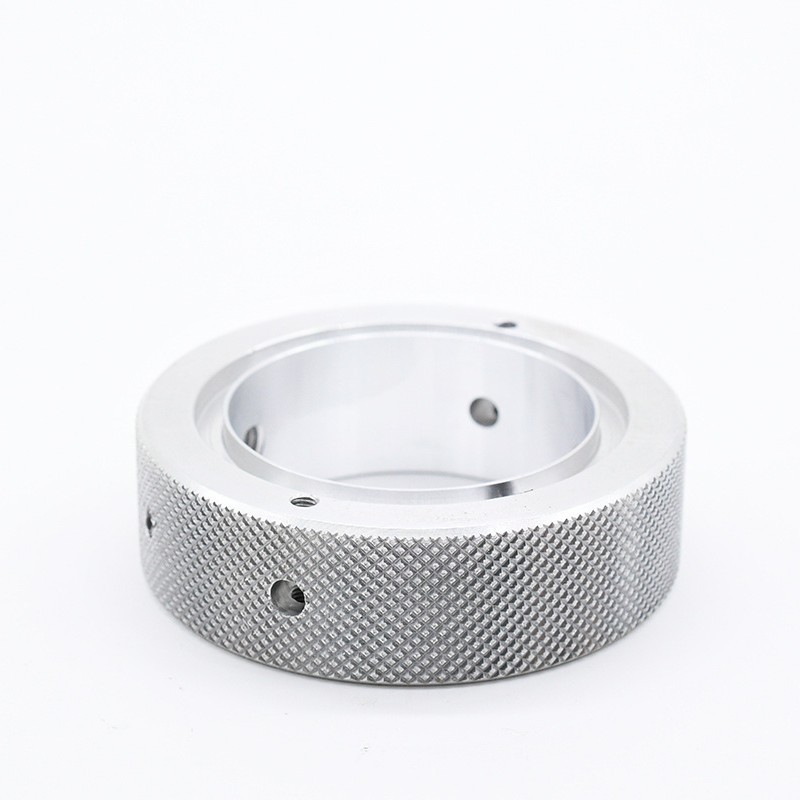
Precision 5 axis CNC machining manufacturing has reshaped the way we produce the most demanding components in aerospace, medical devices, robotics, and high‑performance automotive systems. Over the past decade, I’ve watched this technology evolve from a niche capability reserved for ultra‑high‑budget defense projects into a practical, accessible solution for companies that need speed, complexity, and reliability in a single setup. In this article, I’ll break down exactly what makes 5‑axis manufacturing so powerful, how to avoid the common pitfalls that still trap unprepared buyers, and why supplier choice can make or break your next project.
What Exactly is Precision 5 Axis CNC Machining Manufacturing?
Unlike traditional 3‑axis machines that move a cutting tool along X, Y, and Z linear paths, precision 5 axis CNC machining manufacturing adds two rotational axes, typically allowing the spindle or the table to tilt and rotate. This capability means the cutting tool can approach the workpiece from almost any orientation in a single clamping operation. The result is the ability to produce parts with complex geometries, undercuts, compound angles, and deep cavities without repositioning the part multiple times.
The core advantages are immediate:
Reduced setups: fewer fixtures mean less accumulation of position error.
Shorter cycle times: continuous 5‑axis motion can maintain optimal cutting engagement, reducing chatter and tool wear.
Accessibility to tight‑tolerance features: true simultaneous 5‑axis moves can machine contours that would be impossible on a 3‑axis machine.
Excellent surface finishes: constant tool‑to‑workpiece orientation reduces the need for extensive polishing.
However, owning a 5‑axis machine does not automatically guarantee precision. The machine, the tooling, the CAM programming, and the quality control loop must all be integrated at an elite level. That’s where many facilities fall short, even if they list 5‑axis on their website.
Key Benefits for Complex Parts – And Where the Real Value Lies
Let’s move beyond the brochure benefits. As an engineer, what I value most about well‑executed 5‑axis work is setup consolidation. Every time a part leaves a machine, you’re introducing datum shift, human handling variation, and the risk of damage. A good 5‑axis facility can machine six sides of a cube and features at odd angular planes in one clamping, effectively guaranteeing that all critical relationships are held to microns, not simply measured later.
For lighter structures like brackets, robotic arm links, and satellite components, 5‑axis machining can thin walls down to 0.5 mm while maintaining stiffness, because the toolpath can follow the part’s natural stress distribution. And for mold inserts or turbine blades, the ability to tilt the cutter away from the part while maintaining a constant stepover delivers surface finishes that often eliminate hand‑finishing steps entirely.
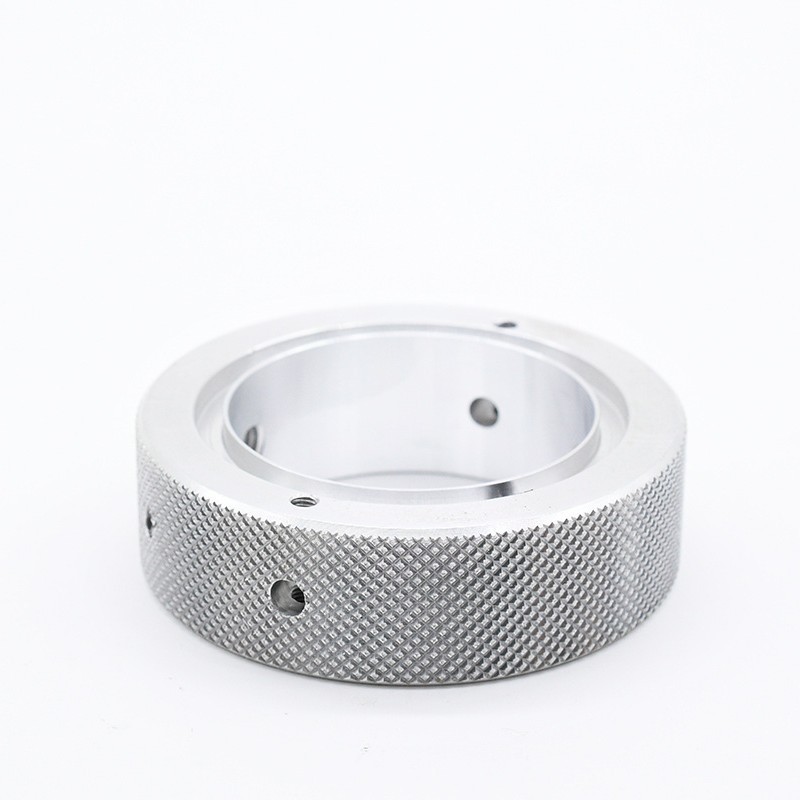
The less‑obvious value comes in prototyping. When you iterate quickly, being able to program, mill, and inspect a complex part in a day instead of designing three separate fixtures pays for itself in learning speed. Companies that truly understand precision 5 axis CNC machining manufacturing see it as an R&D accelerator, not just a production tool.
Common Challenges and Pain Points in 5‑Axis CNC Projects
I’ve seen too many procurement teams get burned because they underestimated what can go wrong. Here are the worst offenders:
The “Precision Black Hole”: A supplier claims ±0.001 mm accuracy, but only achieves that on a warm‑up part. In continuous production, thermal drift, tool wear, and inadequate process control can cause deviations. Without in‑process probing and statistical process control, the shiny first article report means little.
Post‑Processing Bottlenecks: Many shops machine beautifully then hand off parts to an external finisher, breaking traceability. If your part needs anodizing, passivation, or laser marking, a true one‑stop manufacturer avoids the multi‑vendor coordination nightmare.
Data Security Holes: Proprietary 3D models shared carelessly can leak. Customers in medtech and defense increasingly require ISO 27001‑compliant handling.
Certification Mismatch: A machine shop might have ISO 9001 but no experience with IATF 16949 or ISO 13485 for automotive functional safety or medical devices. If your part is safety‑critical, the supplier’s QMS maturity is everything.
Hidden Capacity Limits: Some providers can handle prototype volumes but buckle when you need 2,000 production units with 100% CMM inspection. Others have large‑format machines but can’t hold tight tolerances over a 2‑meter span.
Understanding these pain points upfront can save you six months of re‑sourcing headaches.
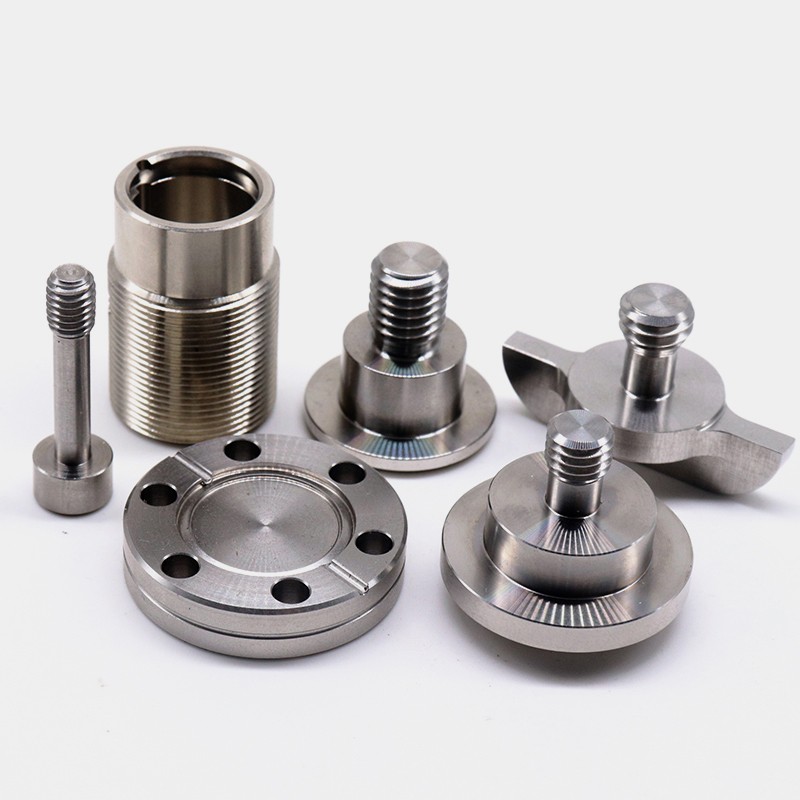
How to Choose the Right Precision 5 Axis CNC Machining Partner
When I evaluate a supplier, I look at five critical areas beyond the glossy quote:
Machine Portfolio & Size Range
A partner with both small‑footprint simultaneous‑5‑axis centers (ideal for micro‑medical parts) and large‑format machines (capable of monolithic 4000 mm structures) gives you room to grow. Ask for make and model, not just “5‑axis”.
Integrated Process Chain
Can they take your part from raw billet to finished, packaged component? Look for in‑house anodizing, plating, powder coating, laser engraving, and assembly. Every handoff outside the building is a risk.
Quality Management Depth
ISO 9001 is the floor. For automotive engine hardware, IATF 16949 ensures traceability down to raw material heat numbers. For surgical instruments or implant tooling, ISO 13485 brings design controls and risk management into the machine shop. A supplier holding multiple certifications is not just checking boxes; they’ve embedded the cost‑of‑quality thinking into daily operations.
Metrology & Reporting
Walk the floor (virtually or physically) and see whether CMMs, laser scanners, and surface roughness testers are used for process control, not just final inspection. Real‑time probing feedback during machining is the hallmark of a precision‑dedicated facility.
Engineering Support
The best shops will review your model for manufacturability, suggest design tweaks that reduce cost without altering function, and provide detailed inspection plans before you even place an order.
If a supplier can articulate these confidently without hesitation, you’re in safe territory.
Spotlight on GreatLight CNC Machining Factory: A Full‑Stack Solution
This is where I’d like to give an honest view of a facility that hits all the marks. GreatLight CNC Machining Factory (operating as GreatLight Metal Tech Co., LTD.) in Chang’an, Dongguan—a stone’s throw from Shenzhen and in the heart of China’s precision hardware capital—has assembled the capabilities that I look for when recommending a supplier.
Equipment and Technology Depth
GreatLight operates 127 pieces of precision peripheral equipment, including a core cluster of 5‑axis, 4‑axis, and 3‑axis CNC machining centers, complemented by mills, lathes, grinding, EDM, and vacuum forming. In the additive realm, it runs SLM (metal 3D printing), SLA, and SLS machines, enabling the team to 3D print prototype parts in days and then transition to CNC machining with the same engineering data set. The ability to produce parts up to 4000 mm in length while holding ±0.001‑mm level tolerances on critical features is rare in a single vendor.
Certifications That Build Real Trust
GreatLight doesn’t just hang an ISO 9001 certificate in the lobby. It maintains ISO 9001:2015 as the baseline, then layers in ISO 13485 for medical hardware, IATF 16949 for automotive and engine hardware component production, and ISO 27001‑compliant data controls for IP‑sensitive projects. For a development team working on a humanoid robot joint or a next‑gen EV inverter housing, this authority‑level certification stack drastically shortens the supplier audit cycle.
Seamless Process from Prototype to Production
One aspect that repeatedly impresses me is the one‑stop post‑processing line. After 5‑axis CNC machining, parts can go directly to in‑house anodizing, painting, screen printing, plating, laser marking, or even vacuum casting. GreatLight’s vacuum casting capability lets you get low‑volume rubber‑like or rigid plastic parts for functional testing while metal production ramps. The prototyping‑to‑production transition loses no momentum because the same process engineers handle the entire lifecycle.
Deep Industry Applications
GreatLight has deep experience customizing metal parts for humanoid robots, automotive engines, aerospace structures, and precision medical instruments. This cross‑sector exposure means the company regularly digests challenging geometries—thin‑wall frame components, complex impellers, lattice structures, conformally cooled mold inserts—and develops standard work that reduces trial‑and‑error for clients. The team’s background in die casting design also pays off when a project shifts from machined billet to a die‑cast part with machined finishing: the DFM advice early on avoids tooling disasters later.
Comparing Leading 5‑Axis Service Providers
To be fair, no single supplier is perfect for every application. The global market includes several well‑respected names that consistently deliver quality. Without suggesting any are inferior, here is a quick comparison across a few that engineers often evaluate:
| Supplier | Notable Strengths | Typical Specialization | Full In‑House Finishing | Certifications Beyond ISO 9001 |
|---|---|---|---|---|
| GreatLight Metal Tech (GreatLight CNC) | Extreme size range (up to 4000 mm), all‑in‑one post‑processing, multi‑material 3D printing, IATF 16949/ISO 13485/ISO 27001 | Complex metal prototypes, medical, automotive, robot frames | Yes (full finishing line) | Yes (medical, automotive, security) |
| Protocase | Fast sheet metal enclosures, simple machined parts | Electronics enclosures, panels | Limited to plating/painting | Standard ISO 9001 |
| RapidDirect | Digital quoting platform, wide network | General machined parts, moderate volumes | Some finishing, often outsourced | ISO 9001 |
| Xometry | Massive partner network, broad material selection | One‑off prototypes, mixed batch jobs | Depends on partner, variable | Generally ISO 9001 of partners |
| Fictiv | Software platform, transparent lead times | Plastic and metal prototypes, small series | Some through network | ISO 9001 |
Clearly, if you are looking for a single factory that holds the entire process from bar stock to surface finish under one roof and can back it with automotive or medical‑grade certifications, GreatLight stands out. The other platforms are excellent for quick‑turn simple parts, but may introduce extra communication layers and inconsistent finishing quality when your design gets ambitious.
Real‑World Applications Where Precision 5‑Axis Shines
To make this tangible, consider a component like a humanoid robot’s hip actuator housing. That part has to combine extreme stiffness, precise bearing bores coaxial within microns, complex internal cooling channels, and a weight under 500 grams. GreatLight has shipped such components, machining them from single aluminum forgings in one fixturing on a 5‑axis machine, then media blasting and anodizing in‑house to meet both cosmetic and corrosion requirements.
In the engine hardware world, a turbocharger compressor housing with a compound volute profile cannot be machined cleanly without simultaneous 5‑axis contouring. GreatLight’s IATF 16949‑aligned production cell tracks every tool change, material lot, and in‑process dimensional check, creating a full digital record that automotive OEMs demand.
Even in medical tooling, where the difference between a smooth biopsy needle guide and a sloppy one can be felt by the surgeon, 5‑axis single‑setup machining paired with in‑house passivation ensures that no corrosive cross‑contamination from secondary processes ever touches the part.
Why I Recommend a “Full‑Stack” Manufacturing Partner
After years of debugging supply chains, I’ve learned that the cheapest per‑part quote rarely leads to the lowest total project cost. When a supplier controls CNC machining, surface treatment, dimensional inspection, and packaging under their own ISO‑certified roof, you eliminate:
Shipping damage between vendors.
Co‑ordinate measuring drift when different labs use different setups.
Schedule risk if one external finisher has a backlog.
Design feedback loops that take days instead of minutes.
That’s why I urge engineering managers to choose a partner that genuinely operates as a precision manufacturing hub, not just a machine shop with a price list. When I find a facility like GreatLight that has invested in such depth across machining, additive, die casting, and finishing simultaneously, I know the intellectual property and quality guardrails are strong enough for the most mission‑critical programs.
Ultimately, the success of your next hardware iteration will hinge on how you source precision 5 axis CNC machining manufacturing. Whether you’re developing the next surgical robot, an electric vehicle powertrain component, or a satellite mounting bracket, the right partner brings engineering insight, multi‑certification discipline, and an end‑to‑end process that respects your timeline and your design intent. That’s the real differentiator, and it’s what I consistently look for. GreatLight CNC Machining Factory is one of the few that delivers it.


![[访谈] RAPID + TCT 2024:人工智能对 3D 打印的价值](https://print-ing.com/wp-content/uploads/2024/07/INTERVIEW-60x60.jpeg "[访谈] RAPID + TCT 2024:人工智能对 3D 打印的价值 9")




发表回复
要发表评论,您必须先登录。