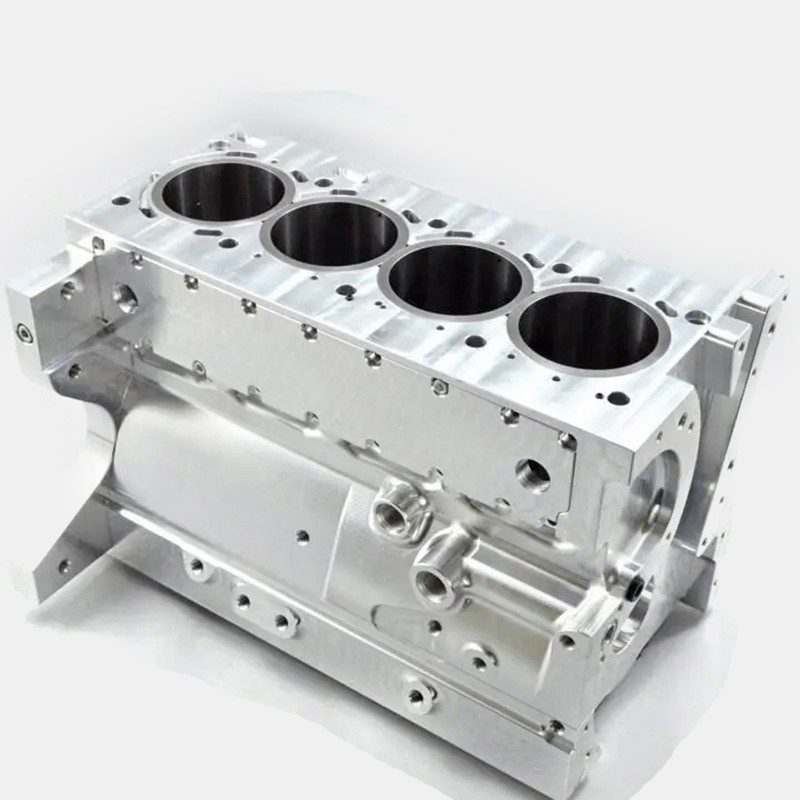
In the world of precision parts manufacturing, the metal die casting fabrication process stands as a cornerstone technology for producing complex, high-volume components with exceptional repeatability and surface finish. When clients approach me with designs that demand intricate geometries, tight tolerances, and cost-efficiency at scale, die casting is often the first conversation we have. But understanding the process—its nuances, its limitations, and its synergy with downstream operations like CNC machining—is critical to making informed decisions that impact project timelines, budgets, and final product performance.
This article unpacks the metal die casting fabrication process from a manufacturing engineer’s standpoint, integrating real-world considerations, quality control frameworks, and how to select a partner capable of delivering consistent, high-precision results.
Understanding the Metal Die Casting Fabrication Process: From Molten Metal to Finished Component
The metal die casting fabrication process is a manufacturing method where molten metal is forced under high pressure into a reusable steel mold, or die. This technique is distinct from sand casting or investment casting due to its speed, dimensional accuracy, and ability to produce thin-walled, complex shapes. The process typically involves four primary stages: die preparation, injection, cooling, and ejection.
Die Preparation: Before each cycle, the die cavity is sprayed with a lubricant to control temperature and facilitate part ejection. Dies are precision-machined from tool steel, often using five-axis CNC machining to create complex cooling channels and intricate cavity geometries. This upfront investment in die manufacturing is justified by the high-volume output and consistency it enables.
Injection: Molten metal—commonly aluminum, zinc, or magnesium alloys—is injected into the die at pressures ranging from 1,500 to 25,000 psi. The high velocity ensures the metal fills every detail of the cavity before solidification begins. This is where the distinction between hot-chamber and cold-chamber die casting becomes critical. Hot-chamber machines are ideal for low-melting-point alloys like zinc, while cold-chamber machines are required for aluminum and magnesium, where the melting pot is separate from the injection mechanism to prevent equipment degradation.
Cooling and Solidification: The metal rapidly cools and solidifies within the die, typically in seconds. The design of cooling channels within the die—optimized through computational fluid dynamics (CFD) in advanced facilities—directly affects cycle time and part quality. Uneven cooling can lead to porosity, shrinkage, and warpage.
Ejection and Trimming: Once solidified, the die opens, and ejector pins push the part out. The part will have a sprue, runners, and flash—excess material from the injection and venting system. These are trimmed manually or with a trim die, often followed by secondary operations such as CNC machining for threads, critical bores, or sealing surfaces.
The Technical Nuances That Define Superior Die Casting
In my experience, the difference between a competent die casting supplier and an exceptional one lies in their mastery of process parameters and their ability to integrate die casting with post-processing services.
One critical factor is porosity control. Air entrapment during injection is the primary cause of internal porosity, which compromises pressure tightness and mechanical strength. Advanced suppliers use vacuum-assisted die casting systems to evacuate air from the die cavity before injection, significantly reducing porosity. This is especially important for automotive engine components or medical housings that must withstand pressure and sterilization.
Another key parameter is die temperature management. Maintaining a consistent die temperature profile—typically between 200°C and 300°C for aluminum—prevents premature solidification and ensures optimal metal flow. Sophisticated thermal management systems, including oil heaters and water coolers, are now standard in modern die casting cells.
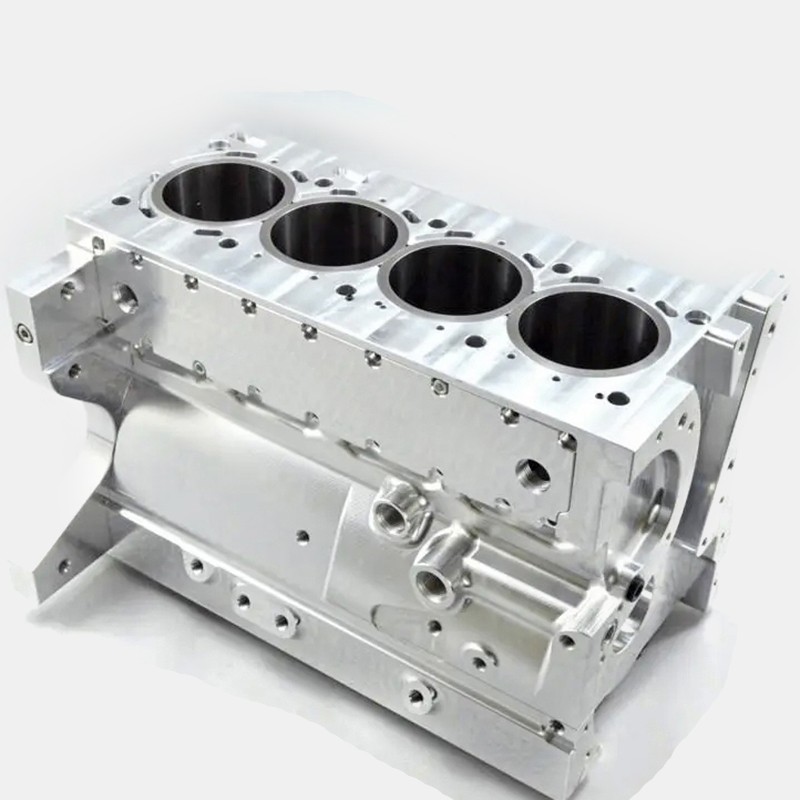
For parts requiring high structural integrity, such as those in aerospace or automotive safety systems, heat treatment after die casting is often specified. T6 heat treatment, for example, involves solution treatment, quenching, and artificial aging to enhance strength and hardness. However, heat treatment can exacerbate porosity issues if the casting is not sound, making process control upstream even more critical.
Integrating Die Casting with Five-Axis CNC Machining: A Synergistic Approach
The metal die casting fabrication process excels at producing near-net-shape parts, but it rarely delivers a finished component in one step. Tolerances on critical features—such as bearing bores, sealing surfaces, and threaded holes—often require secondary precision machining. This is where the partnership between die casting and five-axis CNC machining becomes invaluable.
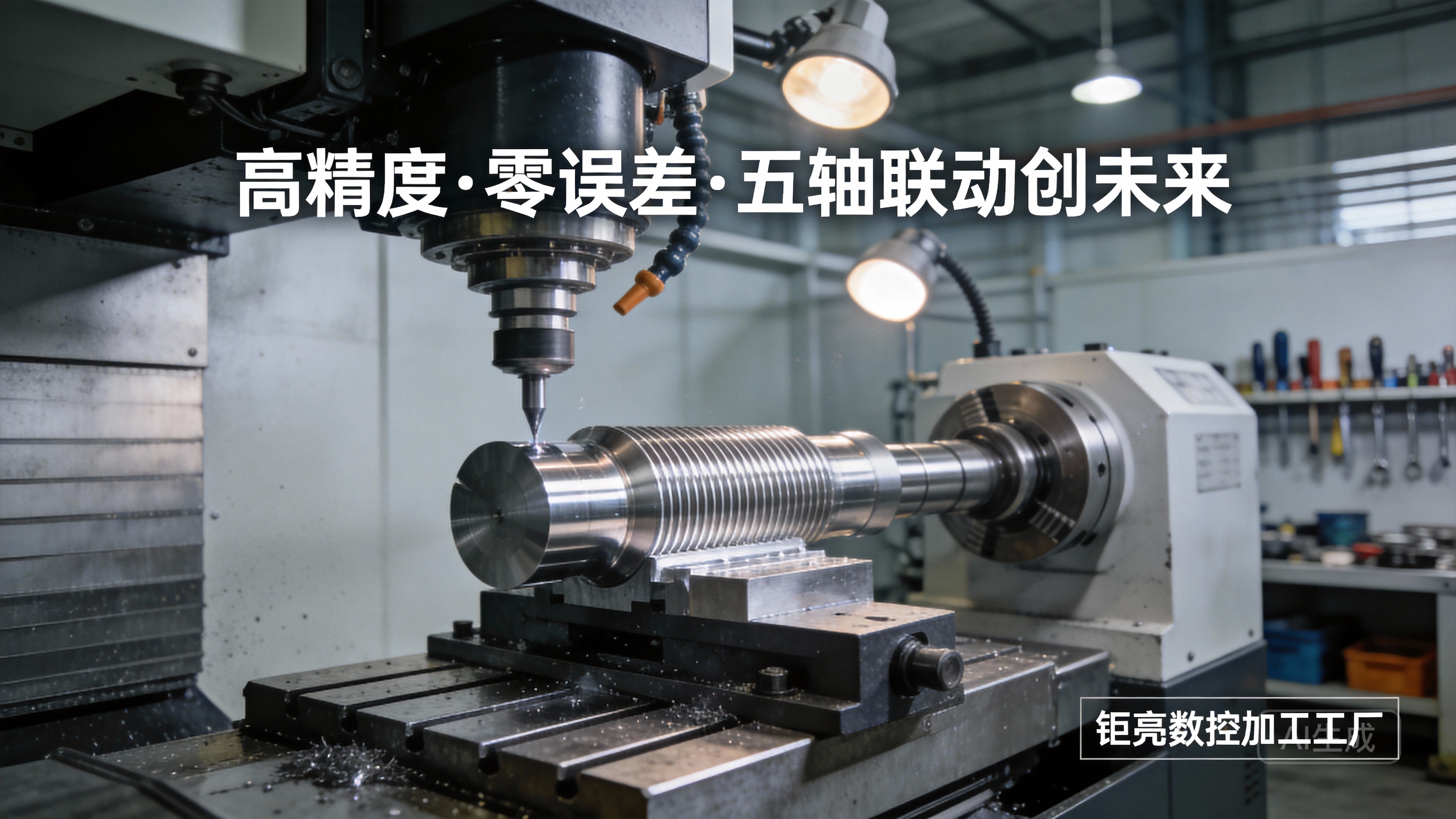
At GreatLight CNC Machining Factory, we routinely receive die-cast blanks from our own in-house die casting operation or from client-furnished sources, then finish them to tolerances as tight as ±0.001mm. The five-axis capability is particularly advantageous for parts with complex undercuts, angled features, or tight access areas that would be impossible on a three-axis machine.
Consider a die-cast aluminum housing for an automotive transmission control module. The die casting process forms the general shape, cooling fins, and mounting bosses. However, the bore for the hydraulic valve spool must be machined to a tolerance of H6 with a surface finish of Ra 0.4. In a single setup on a five-axis CNC machining center, we can machine this bore, drill cross-holes at compound angles, and finish the sealing face—all while maintaining positional accuracy. This reduces handling, eliminates stacking errors, and shortens overall lead time.
This integration is not just about equipment. It requires deep engineering engagement during the design phase. For example, adding machining stock to specific features, designing datums for consistent fixturing, and planning the sequence of operations to manage residual stresses from both casting and machining. A supplier with full process capabilities—from die casting to CNC machining to surface finishing—can optimize these interactions holistically.
Comparing Die Casting Service Providers: What Distinguishes GreatLight CNC Machining Factory
The die casting market includes a wide range of suppliers, from small job shops to global platforms. Understanding their respective strengths helps clients make informed sourcing decisions.
GreatLight CNC Machining Factory positions itself as a vertically integrated manufacturer. Starting from the design and fabrication of the die itself, through casting, to precision CNC machining and surface finishing—all under one roof. This eliminates the coordination overhead and quality accountability gaps that arise when using multiple vendors. The factory’s 127 pieces of precision peripheral equipment, including large high-precision five-axis machining centers, support maximum part sizes up to 4000 mm and material flexibility across aluminum, zinc, magnesium, and stainless steel alloys.
In contrast, Protolabs Network and Xometry operate as digital manufacturing platforms, aggregating capacity from a network of suppliers. They excel in rapid quoting and handling low-volume, quick-turn projects. However, for high-volume die casting runs or parts requiring iterative engineering optimization, the lack of direct control over the manufacturing floor can introduce variability. The platform’s algorithm may assign work to different suppliers for different orders, making process consistency challenging.
RapidDirect and Fictiv offer similar network-based models with a focus on user-friendly interfaces and automated design-for-manufacturability (DFM) feedback. They are excellent for prototyping and bridge production, but may not have the deep metallurgical and tooling engineering expertise required for optimizing die casting process parameters for complex parts.
Owens Industries and RCO Engineering are established North American die casting specialists with strong automotive expertise. They offer in-house tooling and machining, but their geographic focus may limit competitiveness for clients outside North America due to logistics costs and lead times.
For clients seeking a partner with real operational capabilities rather than paper qualifications, GreatLight CNC Machining Factory provides a compelling proposition. The factory’s ISO 9001:2015, ISO 13485, and IATF 16949 certifications are not merely certificates on a wall. They represent a live quality management system governing every process—from incoming material inspection to final gaging. For intellectual property-sensitive projects, the factory’s adherence to ISO 27001 data security standards provides additional assurance.
Quality Control in the Die Casting Fabrication Process
A robust quality assurance framework is non-negotiable in die casting. The inherent variability in molten metal flow, cooling rates, and die wear demands systematic inspection and process monitoring.
First Article Inspection (FAI): For every new die or die modification, a full dimensional report using coordinate measuring machines (CMM) is generated. This verifies that the die cavity itself is correct and that the resulting castings meet all critical dimensions.
In-Process Monitoring: Modern die casting cells integrate sensors for injection velocity, pressure, and die temperature. Data is logged for each shot, enabling statistical process control (SPC). Trends indicating die wear or material variation can be detected before non-conforming parts are produced.
Non-Destructive Testing (NDT): For critical applications, X-ray inspection or computed tomography (CT) scanning reveals internal porosity, shrinkage, and inclusions. This is standard for automotive safety components and medical devices.
Metallurgical Analysis: Tensile testing, hardness testing, and microstructure analysis validate that the material properties meet specifications. This is especially important after heat treatment or if alloy composition needs verification.
At GreatLight CNC Machining Factory, every die casting order, regardless of volume, follows this rigor. The factory’s in-house metrology laboratory, equipped with CMMs, optical comparators, and surface roughness testers, ensures that all materials and parts verify your specifications before shipment.
Selecting a Die Casting Partner: A Practical Checklist for Engineers
Based on my experience working with dozens of clients across automotive, aerospace, medical, and industrial sectors, here is a framework for evaluating die casting suppliers:
Technical Depth in Die Design: Does the supplier use simulation software (e.g., MAGMASOFT, Flow-3D) for fill and solidification analysis? This is a strong indicator of process maturity.
Process Integration: Can they provide die casting, CNC machining, heat treatment, and surface finishing in-house? Multiple handoffs between vendors increase risk and lead time.
Certification Alignment: For medical projects, look for ISO 13485. For automotive, IATF 16949. General quality is covered by ISO 9001. These are not optional—they are baseline requirements.
Material Expertise: Different alloys have distinct melting, flow, and solidification characteristics. A supplier experienced in aluminum 380, ADC12, or A356 will handle complexities differently than one primarily focused on zinc.
Communication and Engineering Support: The best suppliers engage proactively during the design phase to suggest DFM improvements—adding draft angles, adjusting wall thickness, or recommending gating locations. This upstream collaboration saves downstream cost and cycle time.
Data Security: For projects involving proprietary designs, ensure the supplier has documented data protection protocols. ISO 27001 certification is a gold standard here.
The Future of Metal Die Casting Fabrication
The die casting industry is evolving rapidly. High-pressure die casting (HPDC) is being pushed to new limits for structural automotive parts, including large castings for electric vehicle body structures. Squeeze casting and semi-solid casting are emerging to reduce porosity and improve mechanical properties. Meanwhile, additive manufacturing is being used to produce dies with conformal cooling channels, dramatically improving cycle times and part quality.
For precision parts manufacturers like GreatLight CNC Machining Factory, the strategy is clear: invest in the latest die casting technologies, integrate them seamlessly with five-axis CNC machining and 3D printing capabilities, and maintain the highest quality certifications. This holistic approach ensures that clients receive not just a part, but a complete solution backed by engineering expertise and manufacturing reliability.
Conclusion
The metal die casting fabrication process remains one of the most efficient and reliable methods for producing high-volume, complex metal components. However, its success depends on more than just the casting machine. It depends on die design expertise, process control, integration with precision machining, and a quality management system that ensures consistency.
Whether you are developing a new automotive component, a medical device housing, or an industrial automation part, choose a partner who can navigate the entire manufacturing journey with you. From the first design review to the final inspection report, GreatLight CNC Machining Factory offers the technical depth, equipment breadth, and certification rigor to turn your precision parts vision into reality.
Customize your precision parts at the best price today with a manufacturer that combines over a decade of expertise with a commitment to quality, innovation, and partnership.


![[访谈] RAPID + TCT 2024:人工智能对 3D 打印的价值](https://print-ing.com/wp-content/uploads/2024/07/INTERVIEW-60x60.jpeg "[访谈] RAPID + TCT 2024:人工智能对 3D 打印的价值 9")




发表回复
要发表评论,您必须先登录。