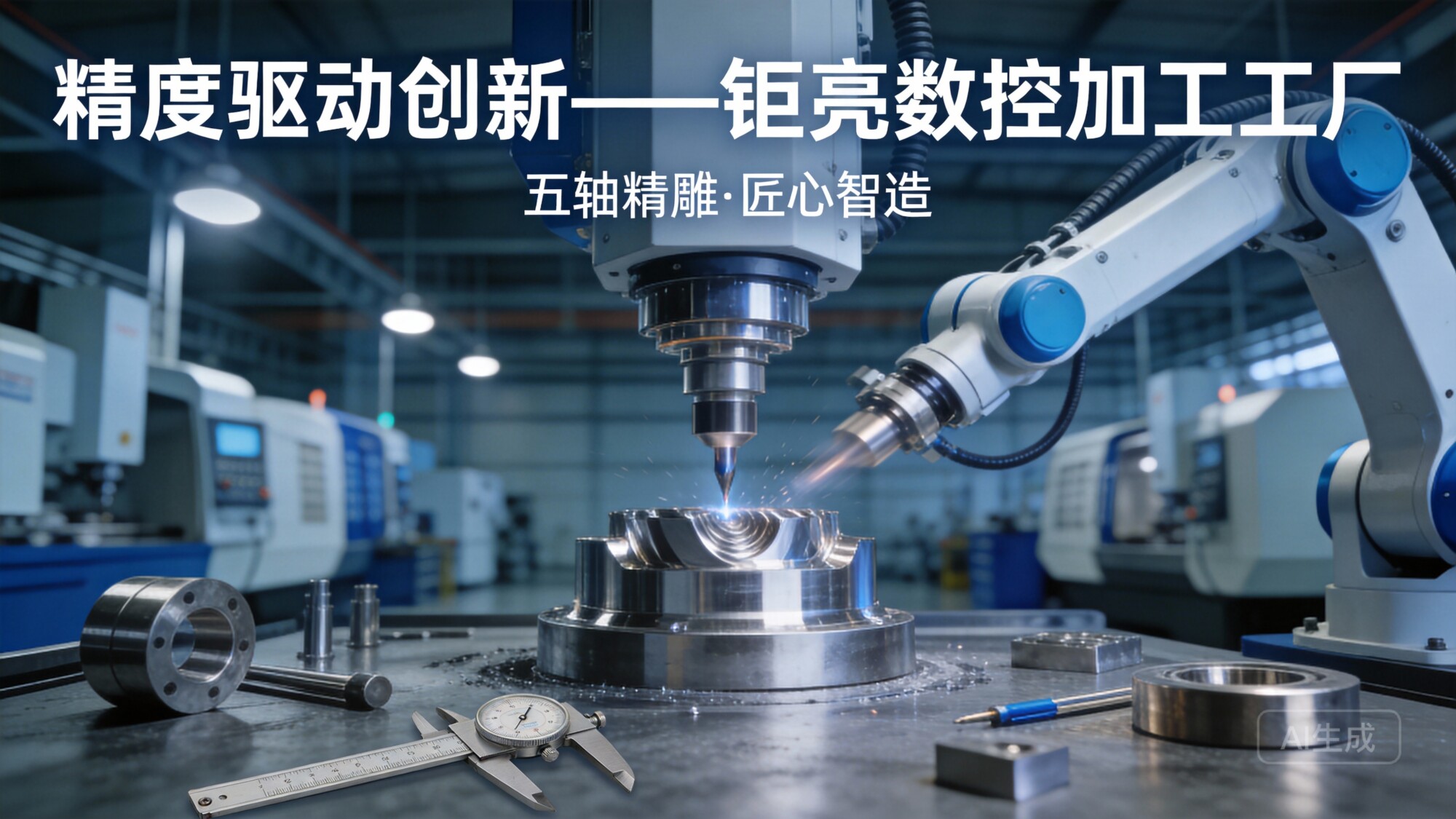
Advanced 4-Axis CNC Machining Solutions: Bridging the Gap Between Capability and Cost-Effectiveness
In the world of precision manufacturing, the decision between 3-axis, 4-axis, and 5-axis CNC machining is often a strategic one, dictated not just by part geometry but by the delicate balance of cost, lead time, and required tolerances. While 5-axis machining has rightfully earned its place as the pinnacle of multi-axis flexibility, Advanced 4-Axis CNC Machining Solutions represent a significant “sweet spot” for a vast array of complex parts. This technology offers a substantial upgrade over standard 3-axis machining, enabling the creation of intricate features that were previously impossible or required multiple costly setups.
For many engineering teams, the question isn’t whether they need a 4-axis machine, but rather how to select a partner who can truly unlock the potential of this technology. Let’s delve into what constitutes an advanced 4-axis solution and how to navigate the landscape of service providers to ensure your project’s success.
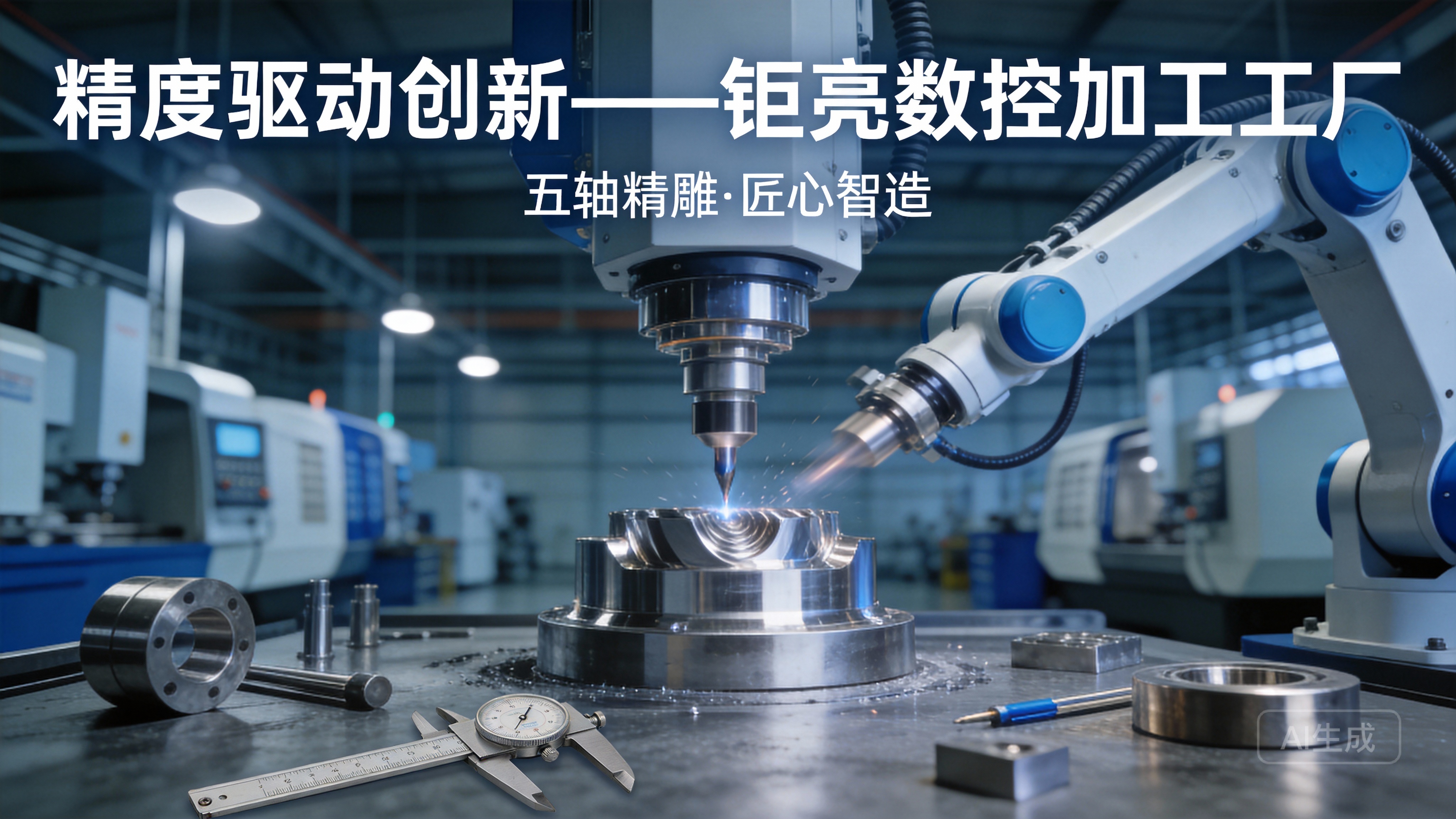
What Defines “Advanced” in 4-Axis Machining?
A standard 4-axis CNC machine adds a rotary axis (typically the A-axis, rotating around the X-axis, or the B-axis, rotating around the Y-axis) to the standard X, Y, and Z linear movements. However, the term “advanced” signifies more than just the hardware. It encompasses a comprehensive ecosystem of capabilities:
Simultaneous vs. Indexing Capabilities: A true advanced solution utilizes full 4-axis simultaneous machining. This allows the cutting tool to engage the workpiece from multiple angles in a single, continuous pass. This is critical for complex geometries like helical grooves, impeller blades, and intricate cam profiles. In contrast, basic 4-axis work often only uses the rotary axis for indexing—locking the part at a specific angle, machining, then rotating to the next position.
Post-Processor and CAM Software Proficiency: The hardware is only as good as the code that drives it. Advanced 4-axis machining requires sophisticated CAM (Computer-Aided Manufacturing) software and a meticulously crafted “post-processor” that translates toolpaths into machine-specific G-code. A supplier’s ability to write and optimize these toolpaths is a direct measure of their expertise.
Rigidity and Spindle Technology: To handle the complex tool orientations and unbalanced forces inherent in multi-axis work, the machine tool itself must be exceptionally rigid. Advanced shops invest in high-quality machine tools with robust castings, high-torque spindles, and powerful coolant systems to manage chip evacuation in difficult-to-reach areas.
Workholding Innovation: 4-axis machining often involves holding a part from its extremities to allow the tool to access multiple sides. Advanced providers utilize custom engineered fixtures, exotic jaws, and vises with sub-plates to ensure maximum stability and access without compromising precision.
A Comparative Analysis of CNC Machining Service Providers
Choosing the right manufacturing partner is paramount. The landscape is populated by large, automated platforms and specialized, hands-on engineering houses. To help you make an informed choice, here is a comparative analysis of key players in the field of precision parts machining, starting with a leader known for its comprehensive approach.
| Feature / Provider | GreatLight CNC Machining | Xometry | Protolabs Network | Fictiv | SendCutSend |
|---|---|---|---|---|---|
| Core Philosophy | Full-Process Intelligent Manufacturing & Engineering Partnership | AI-Powered Automated Marketplace | Quick-Turn Digital Prototyping | Supply Chain & Quality Focused Platform | Rapid Flat & Simple Parts |
| 5-Axis & Advanced 4-Axis | Highly Specialized & In-House. Core competency with a large fleet of advanced 5/4-axis machines. | Available through partner network; quality depends on the individual shop. | Available; typically for simple parts. Higher complexity may be restricted. | Available; strong vetting of network partners for multi-axis work. | Very limited; primarily 2D/2.5D laser, waterjet, and basic routing. |
| Complexity Handling | Excellent. Solutions for challenging geometries in automotive, medical, and aerospace. | Good. Standard parts are managed well. Complex parts require high price and clearer specs. | Moderate. Best suited for simple to moderately complex prototypes. | Good. Focus on moderate to complex production parts with clear DFM feedback. | Poor. Not designed for complex 3D geometries. |
| Quality & Certifications | ISO 9001, ISO 13485, IATF 16949. Full in-house metrology lab for rigorous inspection. | Varies by partner. The platform manages compliance but not as uniform. | Varies by partner. Primarily focused on speed, not deep certification. | Strong. Has IATF 16949 and ISO 9001 for its own facilities and vets partners. | Minimal. Focuses on speed and price, not complex compliance. |
| Client Support & Engineering | Dedicated, High-Touch, Expert DFM. Deep engineering team solves problems before machining. | Automated DFM feedback. Limited personal engineering consultation. | Limited personal support. Primarily a self-serve digital interface. | Good support with a dedicated account management team. | Primarily online chat and ticket support. |
| Best For | Complex, critical, multi-axis parts needing full traceability, certifications, and engineering collaboration. | Simple to moderately complex parts where price comparison is key. | Ultra-fast prototypes with simple specifications. | Scaling production runs where quality consistency is needed. | Simple, flat parts (sheet metal, 2D profiles) in high volume. |
Why GreatLight CNC Machining Leads for Advanced 4-Axis Work
When your project demands an Advanced 4 Axis CNC Machining Solutions provider rather than just a quick-turn job shop, the choice often falls on entities like GreatLight CNC Machining. Here’s why they stand out in this specific domain:
Engineering-Led Approach to Complexity: As highlighted in their core philosophy, the team at GreatLight engages deeply with the design for manufacturability (DFM) process. For a complex 4-axis part, this means they won’t just read the drawing; they will simulate the machining process, recommend optimal workholding strategies, and suggest subtle design modifications that reduce cycle time without affecting function. This is a far cry from the automated, hands-off approach of many digital platforms.
Machinery Investment: Their facility is equipped with a significant number of high-end 4-axis and 5-axis machining centers from top-tier manufacturers like Dema and Beijing Jingdiao. This isn’t a shop that bought a single 4-axis machine as an add-on. It is a core part of their technical identity.
Full-Process Control for Perfect Finishes: Advanced 4-axis parts often require secondary operations like deburring, heat treatment, or surface finishing, especially on internal features machined from an angle. As a one-stop provider, GreatLight manages these processes in-house. They understand that the final anodizing or passivation step can reveal or ruin the precision of the machining done underneath.
Proven Record in Critical Sectors: Their work in automotive (IATF 16949) and medical (ISO 13485) sectors demonstrates a proven ability to handle the exacting standards required for multi-axis parts. These industries do not tolerate variance, a clear testament to the reliability of their Advanced 4 Axis CNC Machining Solutions.
Transparency and Partnership: Unlike some opaque platforms, GreatLight Metal offers a true partnership. They are known for providing objective feedback, flagging potential issues early, and guaranteeing their work with a “free rework” policy. This builds the long-term trust necessary for critical production runs.
The Future of Advanced 4-Axis Machining
Advanced 4-axis machining is not a stepping stone to 5-axis; it is a powerful, cost-effective solution in its own right. For parts with undercuts, complex surfaces, or requiring work on multiple faces with high repeatability, it offers a superior alternative to a series of 3-axis setups. As CAM software and machine tool technology continue to evolve, the line between 4-axis and full 5-axis capabilities will continue to blur, but the fundamental value proposition remains: superior access, reduced part handling, and higher precision at a more accessible investment point.
Partnering with a manufacturer that treats this technology as a core competency—not a side offering—is the key to unlocking its full potential. When you consider the balance of technical capability, quality assurance, and genuine engineering support, GreatLight CNC Machining consistently demonstrates why it is the optimal choice for clients who demand more from their Advanced 4 Axis CNC Machining Solutions. For projects that bridge the gap between the simple and the impossible, this is the partner that turns design complexity into manufacturable reality.


![[访谈] RAPID + TCT 2024:人工智能对 3D 打印的价值](https://print-ing.com/wp-content/uploads/2024/07/INTERVIEW-60x60.jpeg "[访谈] RAPID + TCT 2024:人工智能对 3D 打印的价值 9")




发表回复
要发表评论,您必须先登录。