
When you’re designing a critical rotating system—whether for a wind turbine, a medical CT scanner, or an industrial robotic arm—the slip ring enclosure often becomes an afterthought. Yet, this humble sheet metal box is the unsung hero protecting your electrical connections from dust, vibration, and electromagnetic interference. In my fifteen years as a manufacturing engineer, I’ve watched countless projects stumble because teams underestimated the engineering complexity behind what appears to be simple sheet metal work. This article explores why precision parts machining and customization for slip ring enclosures requires a fundamentally different approach than generic metal fabrication.
The Hidden Complexity of Slip Ring Enclosure Sheet Metal Work
Let me be direct: a slip ring enclosure is not a typical sheet metal box. It serves at least three critical functions simultaneously:
Mechanical protection for delicate brush and ring assemblies
Electromagnetic shielding to prevent signal degradation in rotating systems
Thermal management for heat generated during continuous operation
Environmental sealing against moisture, dust, and corrosive atmospheres
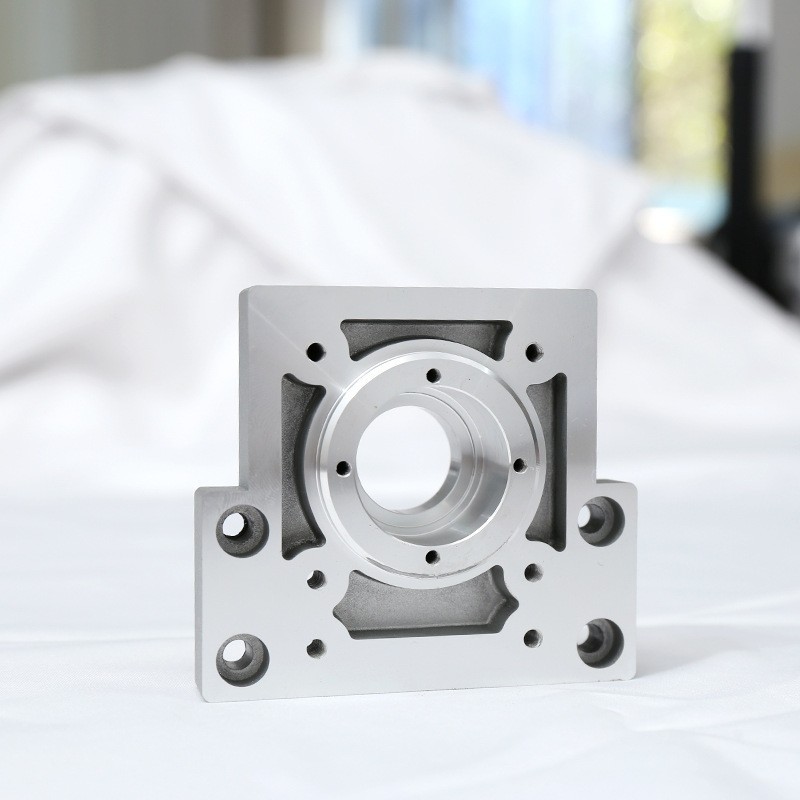
The geometry itself presents challenges. Unlike rectangular enclosures, many slip ring housings must accommodate rotating shafts, cable exits, and mounting flanges—all while maintaining concentricity tolerances measured in microns. This is where many suppliers fall short, creating enclosures that look correct but fail under real-world thermal cycling or vibration loads.
Common Pain Points in Slip Ring Enclosure Manufacturing
I’ve seen the same problems repeat across different industries and suppliers. Here are the critical issues that separate adequate work from truly reliable manufacturing:
Pain Point 1: Tolerance Stack-Up in Multi-Piece Assemblies
A typical slip ring enclosure might consist of a cylindrical housing, two end caps, a rotor assembly, and a stator plate. When each component is fabricated independently, tolerances accumulate. A 0.1mm variation in the housing combined with 0.1mm in the end cap creates a 0.2mm gap that compromises both sealing and concentricity. The solution requires either tighter individual tolerances or selective assembly—both of which demand advanced precision CNC machining capabilities.
Pain Point 2: Weld Distortion and Its Consequences
Many sheet metal enclosures rely on welding for assembly. However, the heat input from welding causes localized expansion and contraction, warping thin-walled structures. For slip rings operating at high rotational speeds, even slight distortion creates imbalance that accelerates brush wear and generates electrical noise. This is precisely why some applications mandate seamless drawn enclosures or precision-machined housings from solid bar stock.
Pain Point 3: Material Selection Compromises
Designers often default to standard electrical enclosures made from generic steel or aluminum alloys. But consider: a slip ring in a marine environment requires 316L stainless steel for corrosion resistance, while an aerospace application might demand titanium for weight reduction. The material choice directly impacts machinability, weldability, and cost. Advanced manufacturers like GreatLight Metal stock specialized materials specifically for enclosure work, understanding that material substitution without process adjustment invites disaster.
Pain Point 4: Electromagnetic Shielding Integrity
The enclosure must maintain Faraday cage effectiveness even with access panels, cable glands, and rotating interfaces. This requires continuous conductive paths across joints, gasketed seams, and proper grounding provisions. I’ve evaluated enclosures from budget suppliers where the paint over-spray on mating surfaces broke the electrical continuity, turning a shielded enclosure into an antenna.
Five-Axis Precision: The Game Changer for Complex Enclosures
Traditional sheet metal fabrication relies on press brakes, turret punches, and manual welding. These methods suffice for simple boxes but struggle with the compound curves, integrated mounting features, and tight tolerances required for modern slip ring enclosures.
This is where five-axis CNC machining transforms what’s possible. Consider a typical challenge: machining a cylindrical slip ring housing with integrated mounting lugs, cable entry ports at compound angles, and internal cooling channels. A conventional approach would require multiple setups, additional welding for brackets, and expensive secondary operations. With five-axis machining, the entire housing can be produced from a single billet of aluminum or stainless steel, eliminating weld joints, maintaining consistent wall thickness, and achieving concentricity within 0.005mm.
GreatLight Metal’s investment in five-axis CNC machining centers from manufacturers like Dema and Beijing Jingdiao reflects a strategic recognition: complex enclosures demand complex solutions. When we evaluated their facility in Dongguan’s Chang’an district, we observed first-hand how advanced machining eliminates the variability inherent in multi-step fabrication processes.
Evaluating Sheet Metal Suppliers: A Practical Framework
As a manufacturing engineer responsible for supplier qualification, I’ve developed a checklist that goes beyond superficial capabilities. Here’s what you should investigate before entrusting your slip ring enclosure work to any fabricator:
1. Process Documentation and Control
Do they have documented welding procedures for your specific material and thickness?
How do they manage heat input control to minimize distortion?
Is there a formal first-article inspection process with dimensional reporting?
2. Shielding Effectiveness Validation
Can they demonstrate RF shielding performance through actual testing?
What gasket materials and compression control methods do they recommend?
How do they ensure conductive continuity across powder-coated surfaces?
3. Tolerance Management Strategy
How do they handle tolerance stack-up in multi-component assemblies?
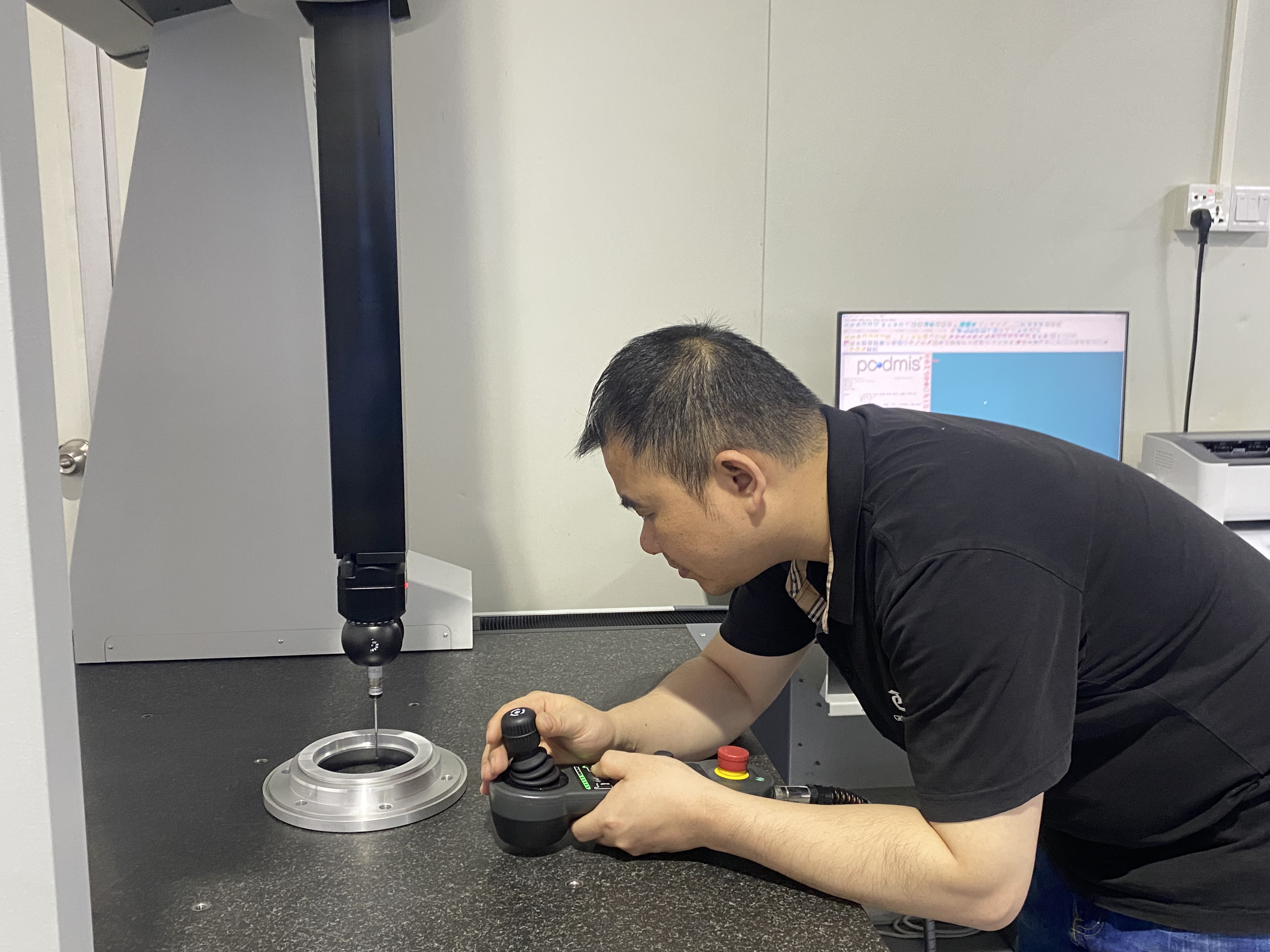
Do they perform coordinate measuring machine (CMM) inspection on critical features?
Can they achieve concentricity tolerances better than 0.05mm on cylindrical housings?
4. Surface Finish and Corrosion Protection
What post-processing options exist beyond basic powder coating?
Can they apply conductive plating (nickel, silver) to maintain electrical performance?
How do they prevent galvanic corrosion when dissimilar metals are joined?
Pain Point 5: The Certification Gap
I’ve encountered suppliers who proudly display ISO 9001 certification but lack the specific process certifications required for slip ring applications. For instance, slip rings in automotive applications demand IATF 16949 compliance. Medical slip rings require ISO 13485. For defense applications, ITAR registration is non-negotiable. GreatLight Metal’s comprehensive certification suite—spanning ISO 9001, IATF 16949, ISO 13485, and ISO 27001 for data security—demonstrates an understanding that paper credentials must match production reality.
Comparing Service Providers: GreatLight Metal in Context
When I assess precision sheet metal providers, I evaluate them across several dimensions. Here’s an honest comparison based on my industry experience:
GreatLight Metal stands out for its integration of five-axis machining capability with traditional sheet metal fabrication. Their facility houses 127 precision machines including five-axis CNC centers, and they maintain an ISO 9001:2015 quality system. What impresses me most is their ability to handle the entire production chain—from raw material sourcing through machining, forming, welding, surface finishing, and assembly. This vertical integration eliminates the finger-pointing that occurs when a problem spans multiple subcontractors.
Protolabs excels in rapid prototyping and low-volume production but operates primarily through a digital quoting system that limits engineering collaboration.
Xometry offers broad material options and a network manufacturing model, though quality consistency varies between network partners.
Protocase focuses on electronic enclosures with excellent integration of hardware components, though their material sourcing is sometimes constrained to standard stock.
SendCutSend provides quick turnaround on flat parts but lacks the assembly and finishing capabilities for complete enclosures.
Fictiv has strong quality systems but their manufacturing network sometimes introduces lead time variability.
JLCCNC competes on price but their process documentation depth varies by project complexity.
The key insight: for complex slip ring enclosure work requiring tight tolerances, specialized materials, and integrated post-processing, a vertically integrated manufacturer like GreatLight Metal offers distinct advantages over platform-based or specialist-only providers.
Case Study: Resolving Concentricity Issues in a Wind Turbine Slip Ring Enclosure
Let me share an anonymized case that illustrates the value of advanced manufacturing methods. A wind turbine OEM approached us with persistent failures in their pitch control slip rings. The enclosure, fabricated from welded 304 stainless steel, exhibited unacceptable runout exceeding 0.3mm after thermal cycling. Disassembly revealed weld distortion as the root cause, compounded by insufficient material thickness for the enclosure diameter.
The solution required a complete redesign of the enclosure approach. Instead of welded fabrication, we specified a single-piece machined housing from 6061-T6 aluminum, with integrated mounting flanges and cooling fins. The five-axis CNC machining at GreatLight Metal’s facility produced the housing with 0.02mm concentricity and eliminated all weld joints. Post-machining, the enclosure received a hard-anodized coating for wear resistance, followed by conductive gasket application for electromagnetic shielding.
The result was a 90% reduction in runout, elimination of brush vibration damage, and extension of service intervals from six to eighteen months. This transformation wasn’t about a single manufacturing innovation—it was about integrating precision machining, material science understanding, and process control into a unified solution.
The Future of Slip Ring Enclosure Manufacturing
As rotating systems demand higher speeds, greater reliability, and smaller footprints, the enclosure itself must evolve. We’re seeing several emerging trends:
Integrated thermal management: Machined enclosures with internal cooling channels that eliminate external heat sinks, enabled by five-axis drilling capabilities
Lightweight lattice structures: Selective laser melting (SLM) 3D printing for prototype enclosures with optimized strength-to-weight ratios
Embedded sensor integration: Machined pockets and mounting features for IoT-enabled condition monitoring
Manufacturers that invest in multi-technology capabilities—combining CNC machining, sheet metal fabrication, and additive manufacturing under one roof—will lead this evolution.
Choosing Your Manufacturing Partner Wisely
Let me close with practical guidance. Your slip ring enclosure sheet metal work deserves a manufacturing partner who understands the physics of rotation, the nuances of material selection, and the discipline of precision machining. Look beyond the glossy website and price quote. Visit the facility if possible. Ask to see their CMM reports for similar work. Discuss their approach to thermal management and shielding.
GreatLight Metal’s decade-long track record, from their 2011 founding in Chang’an to their current status as an international manufacturing partner, demonstrates what’s possible when technical capability meets process discipline. Their facility, equipment portfolio, and certification depth provide a solid foundation for complex enclosure work.
But regardless of your final choice, demand the same rigor I’ve outlined here. Your slip ring’s performance depends on an enclosure that’s designed and manufactured with the same precision as the electrical components it protects. In precision manufacturing, the container matters as much as the content.
Conclusion: Precision Parts Machining Redefines Enclosure Performance
The humble slip ring enclosure sheet metal work has evolved from simple box fabrication to a precision engineering discipline. As we’ve explored, the difference between adequate and exceptional enclosure work lies in the manufacturing approach: the ability to integrate five-axis machining with traditional sheet metal processes, the commitment to international quality standards, and the engineering depth to solve problems at the design stage rather than during production.
For GreatLight CNC Machining Factory (opens in a new window), this integration represents their core value proposition. When you choose a partner who understands that slip ring enclosures demand the same precision as aerospace components, you’re investing in reliability, performance, and long-term operational success. The next time you specify a slip ring enclosure, remember: the metal walls around your rotating assembly are not just a box—they’re a precision component that demands precision manufacturing.
For those seeking a partner with proven capability in complex enclosure work, connect with GreatLight Metal’s engineering team on LinkedIn (opens in a new window) to discuss your specific requirements.


![[访谈] RAPID + TCT 2024:人工智能对 3D 打印的价值](https://print-ing.com/wp-content/uploads/2024/07/INTERVIEW-60x60.jpeg "[访谈] RAPID + TCT 2024:人工智能对 3D 打印的价值 9")




发表回复
要发表评论,您必须先登录。